
Briefs: electric sheep, pilot COVID-19 isolation program
Electric sheep: Grazing in solar arrays supports economy
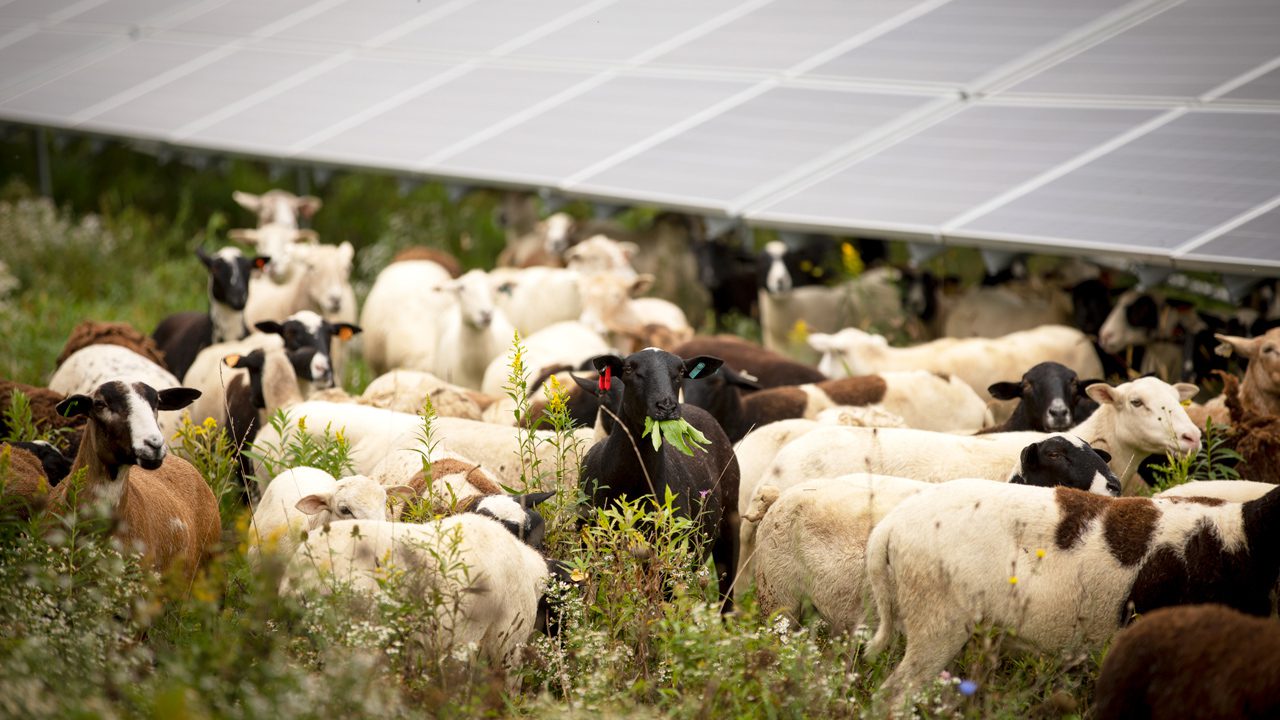
As industrial-sized solar installations pop up throughout New York and New England states, residents fear the loss of agricultural land. One solution is simple: sheep. Cornell University associate professor Todd Schmit is partnering with farmers, solar companies and the American Solar Grazing Association, a nonprofit trade group that connects solar companies with shepherds, to explore the economic benefits of a business cooperative or producer-owned organization that could provide coordination and logistical services for farmers grazing under solar arrays. “This idea complements the goals of reducing fossil fuel use in New York state and throughout the Northeast,” Schmit said. “There are literally thousands of acres going under new solar production, and I think increasing renewable energy production is a great thing, but it’s a little ironic if we’re promoting renewable energy production and then, because we need to control the vegetation, we’re going out there with mowers that are using fossil fuels or spraying it with pesticides that are killing the plants.” Lexie Hain, a farmer in the Finger Lakes region and executive director of the American Solar Grazing Association, sees this as a boon for shepherds, but part of the challenge is coordinating between a few large multinational solar companies and many small farmers. Schmit believes this problem could be solved by helping farmers create a producer-owned business cooperative that could negotiate contracts and share transportation equipment. Beyond grazing, the project also will explore potential benefits of farmers collectively producing and marketing lamb, including sharing processing equipment and creating a value-added brand for marketing “sheep produced under solar arrays.”
Cornell pilots shortened COVID-19 isolation program
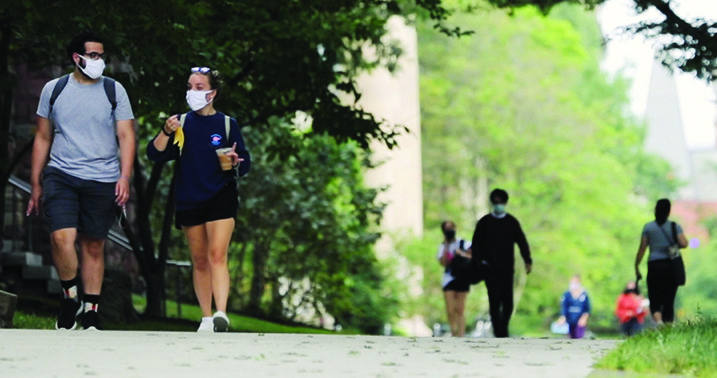
In a pilot program recently launched by Cornell University, a limited number of fully vaccinated students with breakthrough but asymptomatic COVID-19 infections will be able to test out of their mandatory 10-day isolation periods early after receiving two negative tests. The pilot, which applies only to students who live in and undergo their isolations in Cornell-sponsored housing, was developed in consultation with and approved by the New York State Department of Health and the Tompkins County Health Department (TCHD). Cornell and the TCHD will assess the program’s success after 25 students have been enrolled, which could take time, given the current low rates of breakthrough infections at Cornell. “It’s clear that some people clear the virus [from their bodies], and they’re no longer infectious and are no longer able to transmit the virus,” said Gary Koretzky, vice provost for academic integration and a professor of medicine at Weill Cornell Medicine. “Isolation of positive individuals is a key part of controlling COVID-19 transmission, but we also recognize that a 10-day isolation is really disruptive for students’ educations and their lives. So, we’re trying to develop a strategy to identify people for whom it’s perfectly safe to leave isolation earlier.” Cornell Health determines that vaccinated students who test positive are truly asymptomatic (they must have no symptoms of any kind) before they are enrolled in the program. The Cornell COVID-19 Testing Lab has devised a protocol to test enrolled students remotely, from their rooms, as they won’t be able to leave isolation until they are cleared, and these tests will be processed as quickly as possible. Visit https://tinyurl.com/yfqv6wj9 for more information.
Related Articles
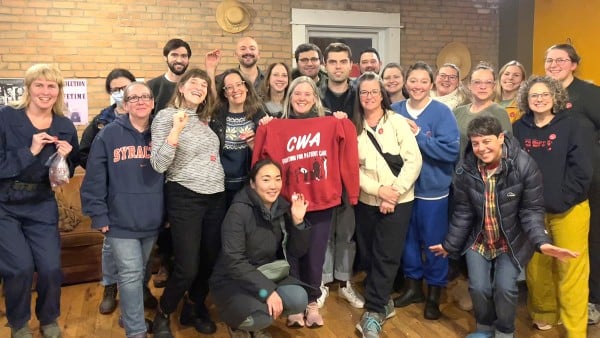
Cayuga Medical Center nurses to rally, alleging anti-union tactics by hospital management
CMC nurses plan a rally, alleging unsafe staffing and illegal anti-union tactics as the hospital highlights recent patient-safety gains.
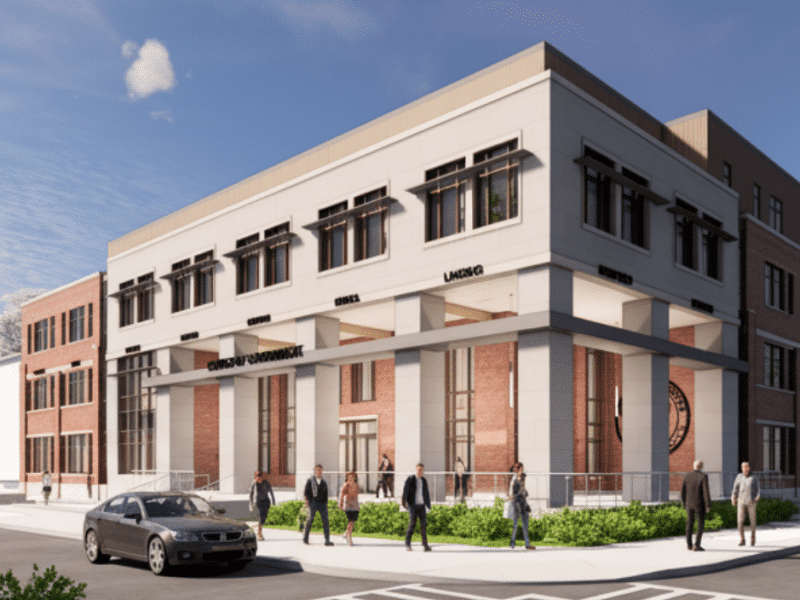
Design details unveiled for new Center of Government
Design details for the Tompkins County government building in downtown Ithaca are now public, with a county survey open for feedback.
Holiday traditions bring community cheer
Tompkins County holiday traditions light up homes, farms, and schools with festive cheer and community spirit.