
Briefs: New Cherry gallery, Cornell works to reduce methane
The Cherry unveils new gallery, studio at Ithaca Arthaus
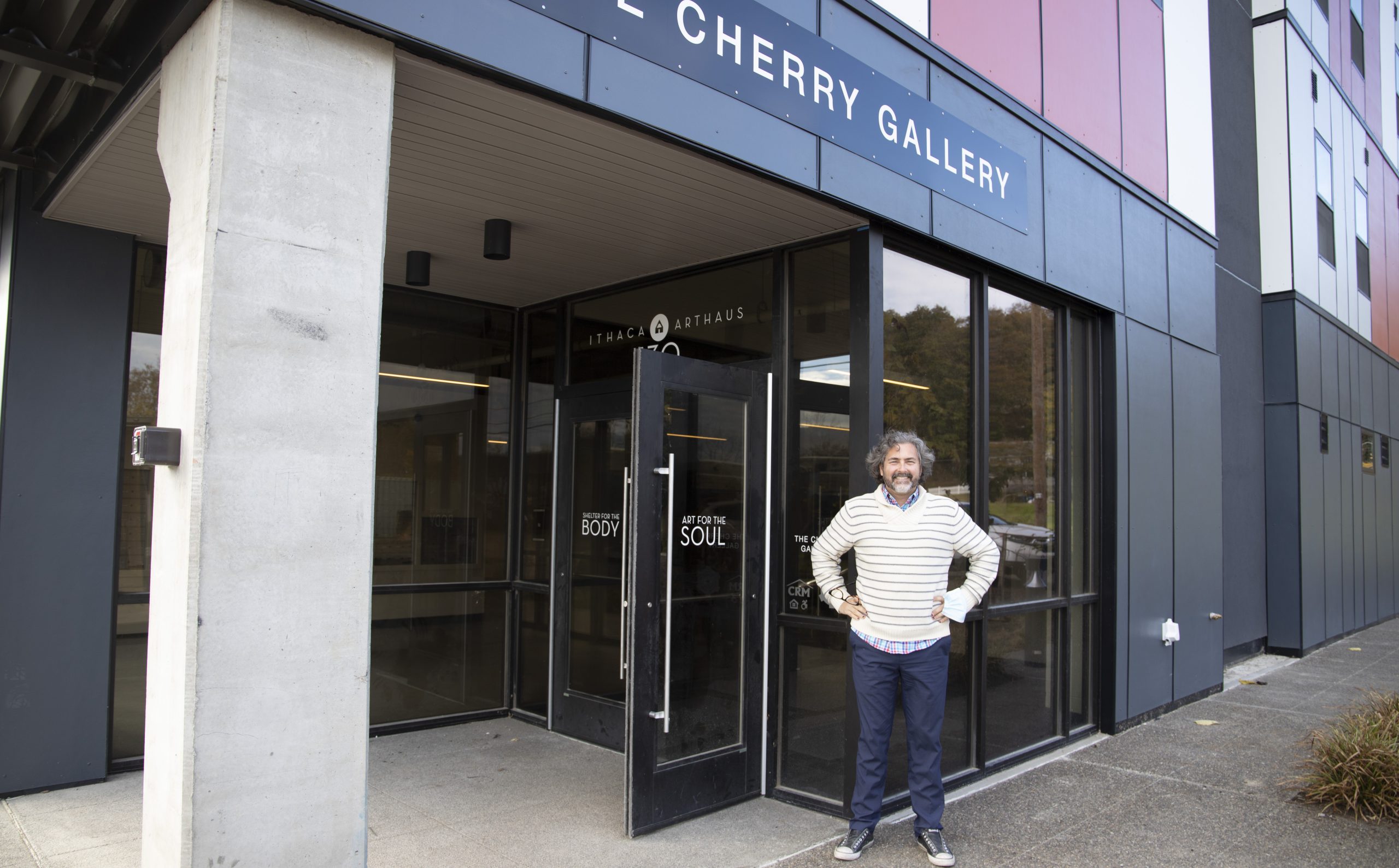
A new adventure is on the horizon for The Cherry Arts, Inc. of Ithaca. Last month, the multidisciplinary arts organization took occupancy of the Cherry Gallery and Camilla Studio, both on the ground floor of the brand-new Ithaca Arthaus, a five-story affordable housing development with an arts focus. The Arthaus is located at 130 Cherry St., next door to the 4-year-old Cherry Artspace, promising an even more dynamic center of artistic activity on Cherry Street. Public programming for the Cherry Gallery will begin in early 2022 or sooner. The Camilla Studio will be put to use very shortly. The new endeavor is a welcome addition for the visual arts community of Ithaca, creating more spaces to showcase artists’ work, take part in workshops and connect with peer creators and supporters. On the floors above the artistic spaces, Ithaca Arthaus provides 124 units of affordable housing, including 40 dedicated apartments for transition-aged youth. Arts organizations across the U.S. have historically been challenged with connecting to lower-income communities, and the Cherry is excited to be in the early stages of planning arts-based educational programming to engage the families who will live in the Arthaus, as well as young people across the community. “We see this as an incredible opportunity to create access and foster engagement in the arts for Ithaca’s diverse young people, working alongside other arts education organizations to build an even more vibrant, inclusive and sustainable arts community for Ithaca’s youth,” said Aoise Stratford, Cherry Arts director of education. The Cherry Gallery is a 1,600-square-foot gallery space that will be used to exhibit visual art and house informal salon performance. Admission to the gallery will always be free to the public during open hours. Programming will be curated by Cherry Arts staff, working with an independent cooperative committee of local artists and arts supporters. The Camilla Studio is a 900-square-foot studio for classes, rehearsals, workshops and intimate performance. In addition to housing the developmental work of the Cherry Arts, the Camilla Studio will be made available for the use of arts organizations and artists throughout the community. Samuel Buggeln, founding artistic director of the Cherry Arts (above), said, “The Cherry could not be more honored to be entering into this collaboration with Ithaca Arthaus. We’ve always been a multidisciplinary company, and the Arthaus spaces will enable us to serve the visual arts community as we’ve had the joy of serving the performing arts over the past half decade. The Arthaus model puts lower-income households in direct contact with artistic spaces, which I think is brilliant, and provides us with an amazing opportunity to redouble our arts education and community outreach programming.” People interested in being involved with the Gallery committee are encouraged to contact the Cherry Arts at info@thecherry.org.
Cornell to build facility aimed at reducing methane emissions
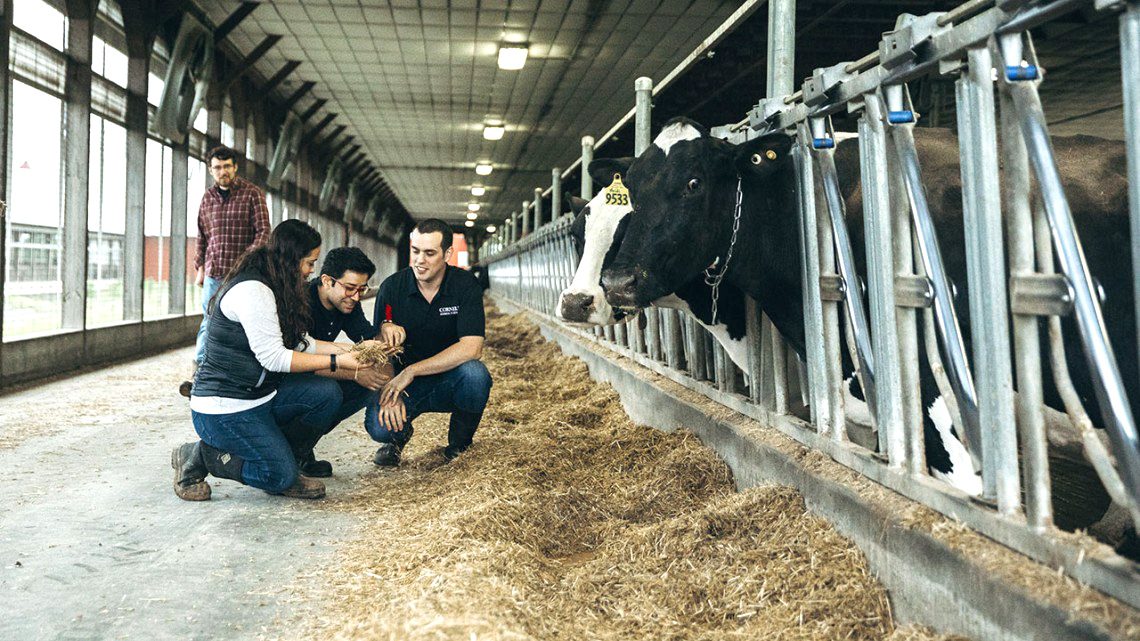
A partnership between industry, government and academia is bringing a state-of-the-art lab upgrade to Cornell University’s Department of Animal Science. Four climate-controlled respiration chambers will be built in the Large Animal Research and Teaching Unit to study gas exchange of dairy cattle and other livestock. The chambers — the first of their kind to be built in the United States — will help Cornell and industry researchers develop solutions to reduce climate-warming methane emissions from cattle and other domestic animals. “These chambers are important because they’re the most accurate, gold-standard approach to measure methane emissions from dairy cattle,” said Joseph McFadden (pictured, right, with Cornell students), associate professor of dairy cattle biology in the College of Agriculture and Life Sciences (CALS). “You can measure methane using other types of equipment, but they’re less accurate, or they don’t measure all the greenhouse gases animals emit or consume, and they don’t allow you to control the environment.” McFadden announced the project at the 83rd annual Cornell Nutrition Conference, held last month. Cargill provided $355,000 toward the respiration chamber system. The Genesee Valley Regional Market Authority, a local authority of New York state that supports agriculture in nine western New York counties, provided $200,000, and CALS and the Department of Animal Science are providing approximately $150,000. The respiration chambers are individual climate-controlled rooms made of stainless steel with glass windows. Cornell’s system will be composed of four individual units, each big enough to comfortably hold one cow, a couple of sheep or multiple chickens. Researchers will use the new facilities to understand how animals respond to changes in their diet — with the goal of optimizing livestock nutrition for efficient milk and meat production, minimum greenhouse gas emissions and nutrient waste, and enhanced animal health. Learn more at tinyurl.com/yzepfcou.
Related Articles

5 things to do in Tompkins County this weekend
Plan your visit and discover what’s happening this weekend.

Holiday traditions bring community cheer
Tompkins County holiday traditions light up homes, farms, and schools with festive cheer and community spirit.
Newfield nonprofits prepare for community meals, festivals and new traditions next year
Newfield Community Events in 2026 include Old Home Days, town meals, and local traditions highlighting volunteerism and community service.