
BIPOC business owners see continued challenges, success

Last year, Tompkins Weekly spoke with BIPOC business owners to see how they were faring during the pandemic, with the ultimate results being mixed but with some common challenges (read full article at tinyurl.com/ya5mn47f). This year, in honor of Black History Month, we’re once again talking with BIPOC business owners to hear about their progress.
In the year since that first report, many business owners have seen considerable growth and success with their business, but like last year, they also shared a host of common challenges.
Successes
Most of the sources interviewed for this story own businesses that were established either during or not long before the pandemic, so much of their success recently has been around growing their business.
One such business owner is Serenna McCloud, who owns her own law practice, The Law Office of Serenna L. McCloud, Esq., PLLC, in Ithaca (slmesq.com). While McCloud has a long history as a paralegal both in Ithaca and beyond, it wasn’t until last April that she finally opened her own practice.
“I like to call it a heart-centered practice,” she said. “The three areas of law that I practice in are real estate, trust and estates and business. All three of those, I’m dealing with people at these junctures in their lives, where they’re making important decisions or they’re making these big transitions.”
Since then, McCloud has seen significant progress, which she said comes both from her hard work and the fact that the pandemic has made folks focus more on things like wills.
“My growth has been exponential,” she said. “I started with six clients and I have 83 open matters now. As I continue to practice, I’m becoming more and more of an expert. And so, I would like to continue to add depth to my expertise in those chosen areas and also to really consciously expand in a way that is both smart in terms of business mindedness, in terms of efficiency.”
Another recent business owner is Via Carpenter, owner of Via’s Cookies (viascookies.com). Her love of baking cookies goes all the way back to high school, when she perfected her recipe and sold her cookies on the side. Via’s Cookies was born during the pandemic, and in addition to selling her cookies, Carpenter also donates some of her proceeds to support LGBTQ students and students of color.
While Via’s Cookies is still a one-woman operation, Carpenter is proud of her progress.
“I’ve had what I would call success,” she said. “I’ve been selling to Greenstar weekly. Ithaca Bakery, sometimes it’s bi-weekly. … I think the most growth definitely came from summer, when I started meeting all of these people and just realizing the community here is amazing. And people will support you — no matter what, they will support you. So, once I tapped into the community, that’s when things just started going like ‘whoa.’”
Moving from the culinary world to apparel, business owner Adrina Dietra has seen considerable growth since opening her business in late 2019 (full article at tinyurl.com/ya7mlh9x). Dietra owns Adrina Dietra Luxury Lingerie and Apothecary Goods (adrinadietra.com), which offers unique undergarments and goods like soaps at Press Bay Alley in Ithaca.
Dietra’s business has seen a lot of ups and downs since opening due to a multitude of factors, but community support has helped to keep her afloat. For one, Circus Culture helped organize a Kickstarter for Dietra’s business, successfully raising $35,000, which allowed her to hire more staff. In addition, her products have been very well received, she said.
“Folks have been very receptive of the brand in different stores,” she said. “Right now, we’re being sold in not only Ithaca but around the U.S. Around the world, there’s places that are carrying either apothecary goods or garments. So, that’s definitely a really huge highlight. … I’m eternally grateful for how much folks have been praising my work because. of course, it’s a thing that I’ve been dreaming of them wanting to do or having since I was little.”
In the dining world, business owners KC Sawyer at Rashida Sawyer Bakery (rashidasawyer.com) and Jed Ashton at Northstar House (northstarpub.com), both in Ithaca, have seen a lot of progress over the past couple of years. Sawyer in particular said that the pandemic actually helped to boost his business, especially after the resurgence of the Black Lives Matter movement.
“Everything’s shutting down all over the place, so we obviously weren’t baking at the time, but we figured let’s do some limited offerings,” Sawyer said. “And then right around that time was when the George Floyd thing happened. And people were looking for Black-owned businesses. And so, we had a lot of sympathy buyers. … Sympathy buys quickly turned into, ‘These guys are good, so I might as well get their dessert.’ So, it kind of worked out that way.”
For Ashton, his business made a lot of positive changes last summer.
“We have a large outdoor area, and so, that was great to see that up and running this summer,” he said. “And it went really well. So, we’re looking forward to adding that to our repertoire for this upcoming year. We took the time in the last year to make some structural changes to the restaurant, so things that we might not have had the time to do if we were needing to be open as much as we normally do. And then the last couple of months, … we started having people back inside the restaurant for indoor. And that has been going pretty well.”
Challenges
While all sources had plenty of success to share, all acknowledged that the journey hasn’t been easy, and challenges continue for many. Some cited hurdles specifically relating to their ethnicity, while others described setbacks they said are common among most business owners throughout the county.
McCloud, for example, said that she faced considerable opposition in her journey, and there are still many inequalities in the local legal sphere for people of color.
“It’s stunning,” she said. “If you were to do a poll, I don’t think there’s one paralegal of color in Tompkins, Tioga, Broome, Chenango. … And is it deliberate? Is it accidental? I don’t know. But there also doesn’t seem to be any effort to change it. There’s no diversity in recruiting. And, in fact, whether by design or by happenstance, practices are perpetuated.”
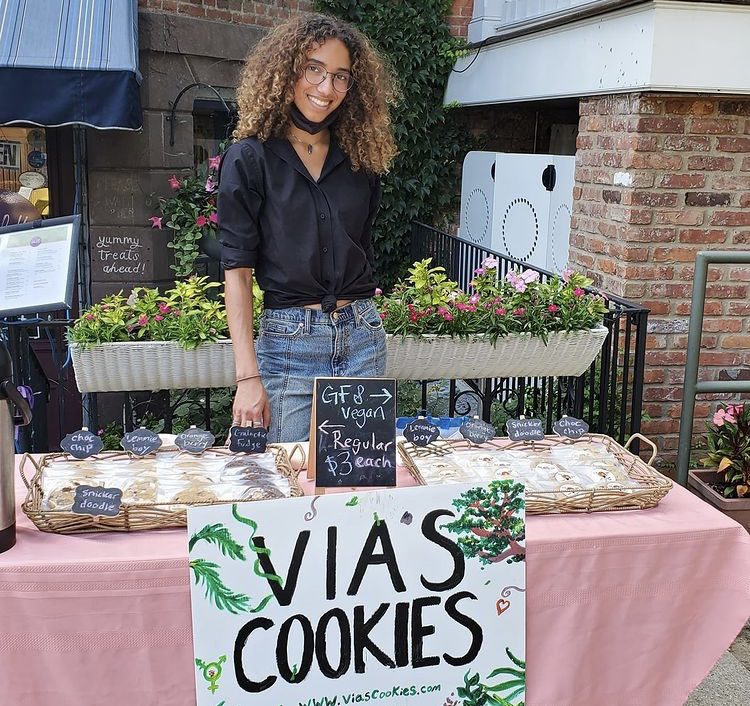
Carpenter faced similar obstacles when she was first trying to sell her cookies at Ithaca College, but her efforts have finally paid off.
“When I initially tried to get [my cookies] into college, there was someone standing in my way,” she said. “And they weren’t helping me at all. And I was like, ‘Why am I running into this?’ And I was just reminded of how I appear in society. I do not have as much privilege as other people do. And so, I think I was reminded of that, and I was like, ‘OK, sometimes, as a person of color, you have to work a little harder for these things.’ And so, I got around that issue. And now, I’m going to get into Ithaca College.”
As far as challenges relating to business in general, all sources shared some difficulties, like staffing and rising costs of goods.
“The labor market is tough, and I don’t think it’s going to get less tough,” Ashton said. “The cost of everything is going up, which, so far, has been OK. But it’s one of those things where it’s hard when you’re looking at what we have to charge for stuff and thinking about, ‘OK, well, that’s about an hour of somebody’s work.’ But we also want to pay our staff better than we ever have. … So, I expect that we’ll have some challenges getting fully staffed going forward. We’re OK right now but want to be open more.”
Sawyer added that minority-owned businesses in particular are disproportionally affected by the strain the pandemic has put on residents’ pocketbooks.
“We’re not like a Wegmans that has everything you’d ever want or need; we’re just doing desserts,” he said. “And a lot of minority-owned businesses are kind of the same thing — they’re doing a specialty. So, you end up running into situations [where] people are just making choices. So, it affects those kinds of businesses when your customer base is having to make choices about how they spend their money.”
As far as the boost Sawyer saw over the summer of 2020, Dietra said she saw a similar uptick, but that hasn’t stuck.
“It was nice to have the boost, … but the issue was, of course, it seemed to be taken as a hype, in the moment thing, like, ‘We have to support now because this happened,’” she said. “And then a month later, if even that, everyone acts as though this thing has never happened before. So, of course, business goes down after that. And if you weren’t ready in that moment, then you didn’t get to ride that wave.”
Looking ahead
The future is generally looking bright for the business owners interviewed for this story, but many also offered changes they’d like to see to help make the business sphere more supportive of people of color.
“On the local level, folks [need] to make it a priority reach out to folks of color and to work with those businesses but also business groups that are connected to folks of color to disseminate information quicker,” Ashton said. “Specific loans, I know that it’s not popular to say that folks have different experiences, but we do. And to be able to focus loans for folks that have different experiences, different challenges accessing money, accessing experience, that would be on any level, federal, state or local.”
Dietra added that since she’s encountered a lot of broken promises, folks need to not just talk the talk of support but walk the walk, too.
“It will be amazing for people to focus on not only stating the want to support but following through with that support, knowing what resources folks have and being able to use those resources to assist folks that do not have those resources in place or access at all to those resources, making programs where there’s not so many stipulations that systematically really wipe away the vast majority of the people that actually need those programs,” she said. “A lot of what I want to see for growth are things that I think we’ve kind of been hollering for for a very long time.”
Sawyer said that he’d also like to see some significant reworking downtown to better entice consumers to patronize local businesses.
“You come downtown, you’re spending tons of money on parking or having to park far away,” he said. “For a lot of local businesses, … we’re very foot traffic dependent. Weather goes down; foot traffic disappears; your sales go off a cliff. And it would require some radical thinking, but even parking holidays, ways to work with the garages to increase accessibility for the people coming down so they … can be enticed to come downtown a little bit and check out local shops, … I think things like that will be very beneficial to downtown businesses.”
Support these and other minority-owned businesses by visiting their websites, listed previously. For a full list of minority-owned businesses in Tompkins County and neighboring areas, visit businessleadersofcolors.com.
Jessica Wickham is the managing editor of Tompkins Weekly. Send story ideas to them at editorial@vizellamedia.com.
Related Articles
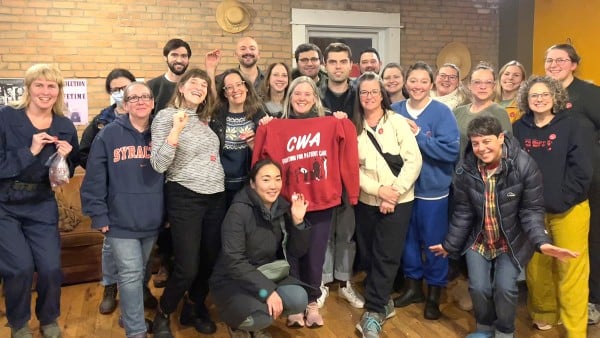
Cayuga Medical Center nurses to rally, alleging anti-union tactics by hospital management
CMC nurses plan a rally, alleging unsafe staffing and illegal anti-union tactics as the hospital highlights recent patient-safety gains.

Dryden Fiber looks back on another year of service
Dryden Fiber reflects on a year of growth as the municipal internet provider expands service across Dryden and Caroline.
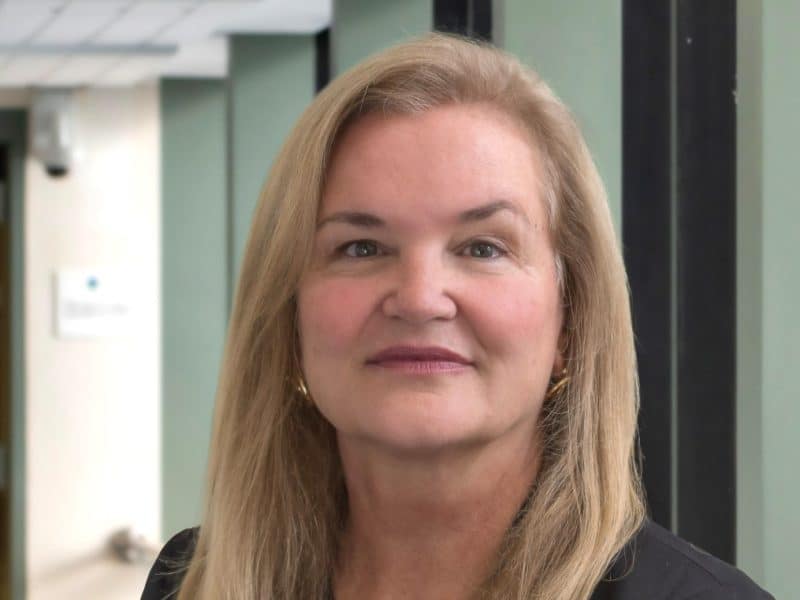
Cayuga Medical Center improves patient safety score
Cayuga Medical Center Leapfrog Grade rises to “B,” showing improved patient safety and nursing care quality.