
How natural burials help families, environment
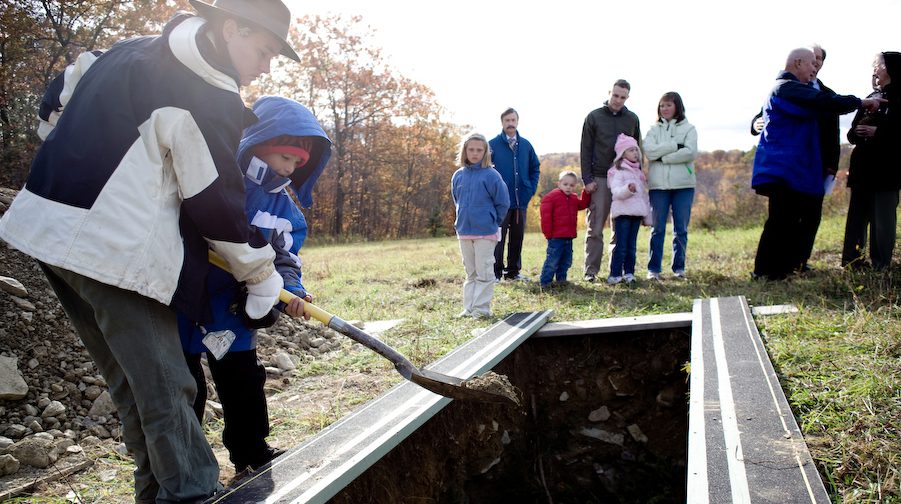
When many people picture a typical burial, it’s usually one where a person is embalmed, placed in a fancy hardwood casket and buried in a cemetery, where their grave then sits surrounded by dozens of upright grave markers across a perfectly manicured lawn. But there is also another option, one with a much more beneficial effect on the environment — natural burial.
Natural burial, as defined by the Natural Burial Council (greenburialcouncil.org), is “a way of caring for the dead with minimal environmental impact that aids in the conservation of natural resources, reduction of carbon emissions, protection of worker health, and the restoration and/or preservation of habitat.” Natural burials are also sometimes referred to as green burials.
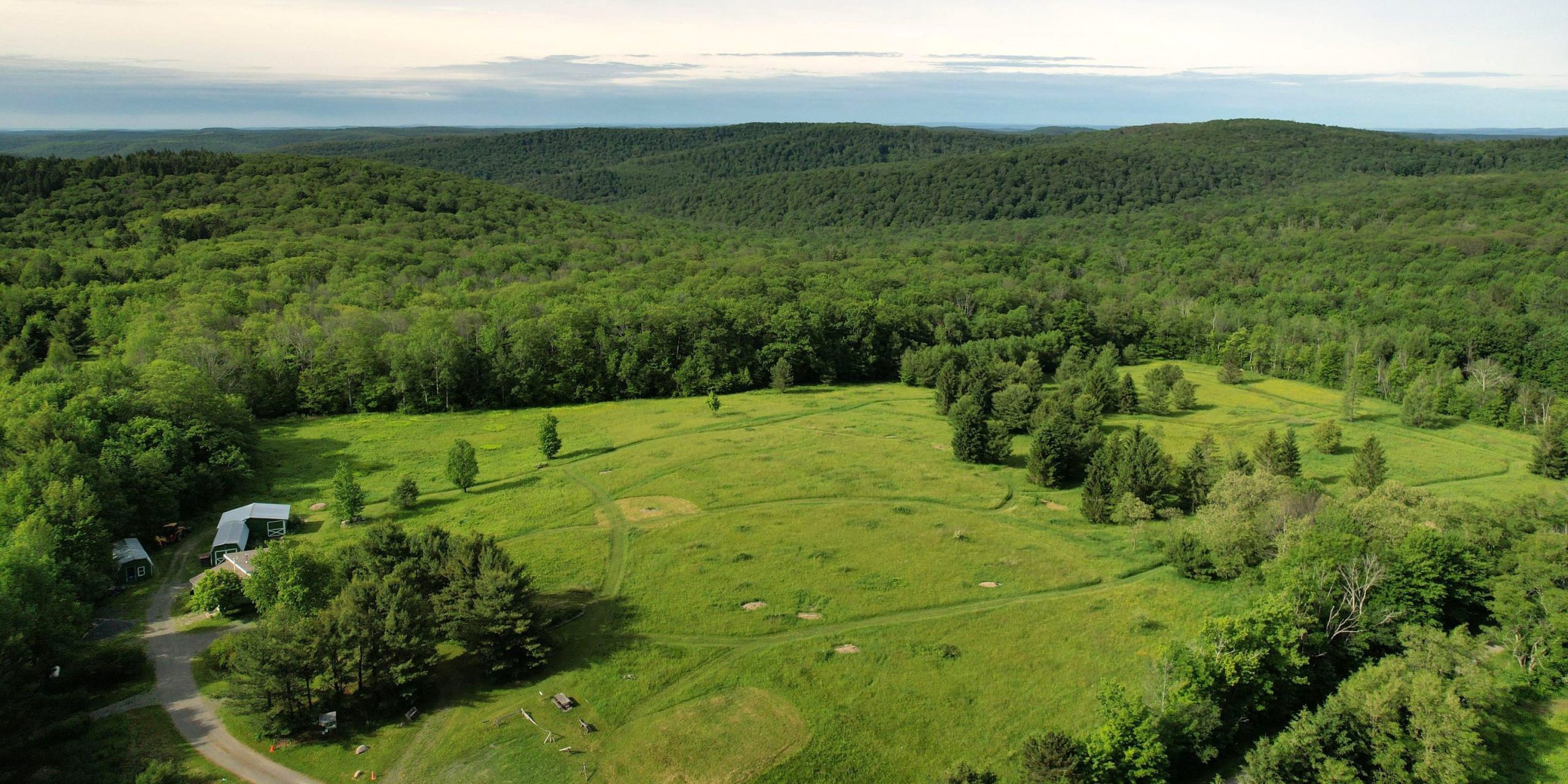
To help explain how this works, Tompkins Weekly spoke with Greensprings Natural Cemetery Preserve in Newfield, which is certified by the Natural Burial Council and specializes in this burial method. Greensprings includes 130 acres of grassland surrounded by two 4,000-acre forests and celebrated its 15-year anniversary last year (tinyurl.com/2yu77692).
As Greensprings Manager Michelle Menter explained, the specifics of natural burials change from person to person, but generally, what’s most important is burying someone in a way that promotes environmental sustainability.
“It’s the same thing that people were doing generations ago; it really is just opening up the ground,” Menter said. “At Greensprings, the ground that you’re being buried on is the nature preserve. … Sometimes, it’s also happening at conventional cemeteries. So, green burial means that there is not a concrete vault liner. And the amount of concrete that is used for vault liners is some ridiculous amount per year in North America.”
Menter said that typical burials take “an awful amount of concrete” that is then put into the ground, whereas in a natural burial, there are no concrete liners. There are also no “fancy caskets with bronze buckles and hinges or gold,” she said.
“You could be buried in a shroud or in a casket,” Menter said. “Your casket could be made [out of something] like local pine because we specifically don’t want to have mahogany and other rainforest hardwoods and further take stuff that we shouldn’t be taking. … Or you can be in a cardboard box.”
Once a person is buried, their grave either goes unmarked or is marked with something like an engraved field stone or native plants. Over time, the grave starts to blend in with the natural surroundings, and the person’s remains decompose to help sustain the preserve.
Natural burial is often practiced by Jewish and Muslim families but is otherwise not the norm, Menter said. However, for those that decide to go with a natural burial, the benefits can be significant.
“It’s just not good for the people or the planet,” Menter said. “At Greensprings, it’s simple. And it’s not just something more loving for our own bodies and something more simple, lower costs for the loved ones. But it’s also taking place on a 130-acre nature preserve. So, anytime you’re buried, that spot that you chose is going to be your spot forever in perpetuity. But at Greensprings, you’re using your body to help conserve a nature preserve for grassland birds and pollinators. So, it becomes also this environmental choice that lives beyond you.”
Menter added that because a natural burial is much simpler than a typical burial, it can also be a better emotional choice for families. She told the story of a family who was particularly fond of the experience, with children commenting on the surrounding flowers and butterflies and other family members embracing each other among the grass.
“Had we been at a conventional cemetery and we’re all standing on that fake AstroTurf stuff and we’re cranking the coffin into a concrete vault, I don’t know if any of those things [would have happened],” she said. “I don’t know if the sons would have cried. These are adult men. I don’t know that they would have hugged each other. And I doubt that there would have been butterflies flying all over because there’s not all these little flowers [in a traditional burial]. It’s a manicured, flat lawn sprayed with pesticides.”
That effect is very much what drew Menter to Greensprings in the first place, she said. Menter joined Greensprings in 2018 after a friend suggested doing so. At first, Menter declined, thinking she’d be too busy, but then, she was invited to the burial of a 7-month-old at Greensprings. She said the experience changed her mind almost immediately.
“It was like making stone soup, kind of,” she said. “Each person just brought their own ordinary piece, but together, we made something so loving and beautiful as ever a person could be sent off. … We sent that little baby off with a lot of good energy. A lot of loving stuff went into it. So, after that, I was like, ‘Oh, gosh, I can’t not be a part of this organization.’ So, I kind of changed around my schedule so that I could [make it work].”
Ever since joining, Menter said her experience at Greensprings has been a regular reminder of “how brief life is.”
“Sometimes, it’s incredibly short, like seven months, and other times, it’s … a great grandma,” she said. “And yet, I guess it’s always, in a way, too short. And so, it’s a reminder of not giving energy to the really dumb stuff that doesn’t really count. It’s a reminder to be generous and compassionate and forgiving. And it’s this opportunity also to do something loving for people that I don’t know.”
That dedication didn’t stop even through the pandemic. As Menter explained, Greensprings has stayed open the past two years, with the pandemic having little impact on burials.
“We never stopped doing burials,” she said. “When you lose someone, your heart’s broken, and the act of coming together and being with other people and crying and burying your dead is part of healing. So, no, it changed maybe some of our approaches like we stayed a little bit further apart, but we never stopped doing [burials].”
Looking ahead, Greensprings is looking to grow in the coming months, Menter said, particularly by increasing its sustaining members.
“If you believe in the mission, then becoming a sustaining member is a lovely way to support our continued growth,” she said. “And people do it with a donation of $5 a month or $25 a month. And it makes a big difference.”
Menter said that Greensprings is also looking to bring on more volunteers, so she encourages folks to reach out.
“If people think that being a part of burials … might be a really wonderful experience for them, then we would be happy to give a training and then have them join our crew of eager volunteers and staff,” she said. “Or if they just love being out doing gardening work, then we have demonstration gardens that show the plants that people can put on the burial mounds. And that’s because we’re working on re-claiming all 130 acres for native plants. And we’re well on our way, but there’s a lot of opportunity for involvement.”
For more information about Greensprings, visit its website at naturalburial.org.
Thinking Ahead appears in the fourth edition of each month in Tompkins Weekly. Send story ideas to editorial@VizellaMedia.com.
Related Articles
Cayuga Medical Center nurses to rally, alleging anti-union tactics by hospital management
CMC nurses plan a rally, alleging unsafe staffing and illegal anti-union tactics as the hospital highlights recent patient-safety gains.
Design details unveiled for new Center of Government
Design details for the Tompkins County government building in downtown Ithaca are now public, with a county survey open for feedback.
Holiday traditions bring community cheer
Tompkins County holiday traditions light up homes, farms, and schools with festive cheer and community spirit.