
Trinket or Treasure: Local finds letter from Alexander Hamilton to Washington
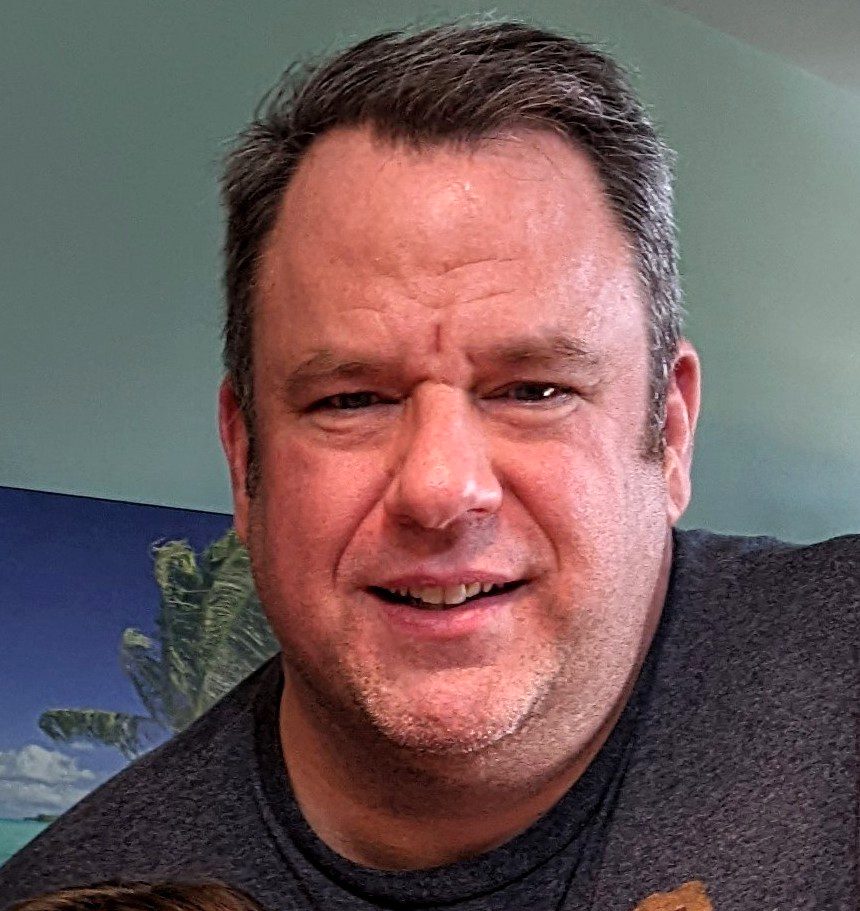
Do you have a family heirloom that you have always wanted to have looked at, a unique collection you would like to talk about or maybe a piece of local history you would like to know more about? My name is Steven Daly. I am a qualified, independent, personal property appraiser and I hope to talk about many of these stories in this monthly “Trinket or Treasure” column.
The writer Oscar Wilde has been quoted as saying, “Nowadays, people know the price of everything and the value of nothing.” I would like to go beyond the price of any items we feature and bring you the fascinating stories of how they got here. That is where the true value is.
By way of introduction, let me begin by telling you a little bit about myself. I live in Trumansburg, with my wife and 11-year-old daughter, where I own and operate Ithaca Vintage Appraisals. As mentioned, I am a “qualified, independent” appraiser. Qualified means that I have met certain criteria of experience and education, which includes many years working with several auction houses and a certificate in Appraisal Studies from New York University, and independent because I offer an unbiased opinion of value.
Unlike real estate, there is no license for personal property appraisers, so an antique dealer, gallery owner or whoever can give you an appraisal then turn around and offer to buy your item based on the value they gave you. This can quickly muddy the water because it is in their interest to buy at the lowest possible price. Some even charge a percentage of the total they appraise as a fee. This was once standard practice but is now considered highly unethical.
My obligation is to give my client my fair opinion of value with no financial interest. I started doing this because I heard many stories of people who had been taken advantage of by unscrupulous people, usually at a vulnerable time, after a death or some kind of disaster. I realized that there was nobody in this area providing this kind of service, so I went about building my credentials.
I practice as a generalist; I don’t specialize in one particular field. In an area this size, I pretty much have to be. That’s not to say I know everything about everything — far from it. My work is very much research based, and I’ve learned where to look for information. I enjoy the puzzle-solving aspect and finding solutions to little mysteries. I do have more experience in some areas than others, and my background is focused on books, comic books and works on paper.
One of the questions I get most often is, “What is the best thing you have ever found?” or some variation thereof. Of course, it’s subjective, but, in my opinion, the most interesting item I’ve come across was in my own collection.
When my daughter was born, I stayed home with her for the first few years. To help make ends meet, I started digging through the boxes of things I had accumulated over the years looking for things to sell on eBay, etc. In a box of assorted “junk books,” I found a broken up copy of “The Life of Alexander Hamilton vol. 1” by his son, John Church Hamilton, from 1834.
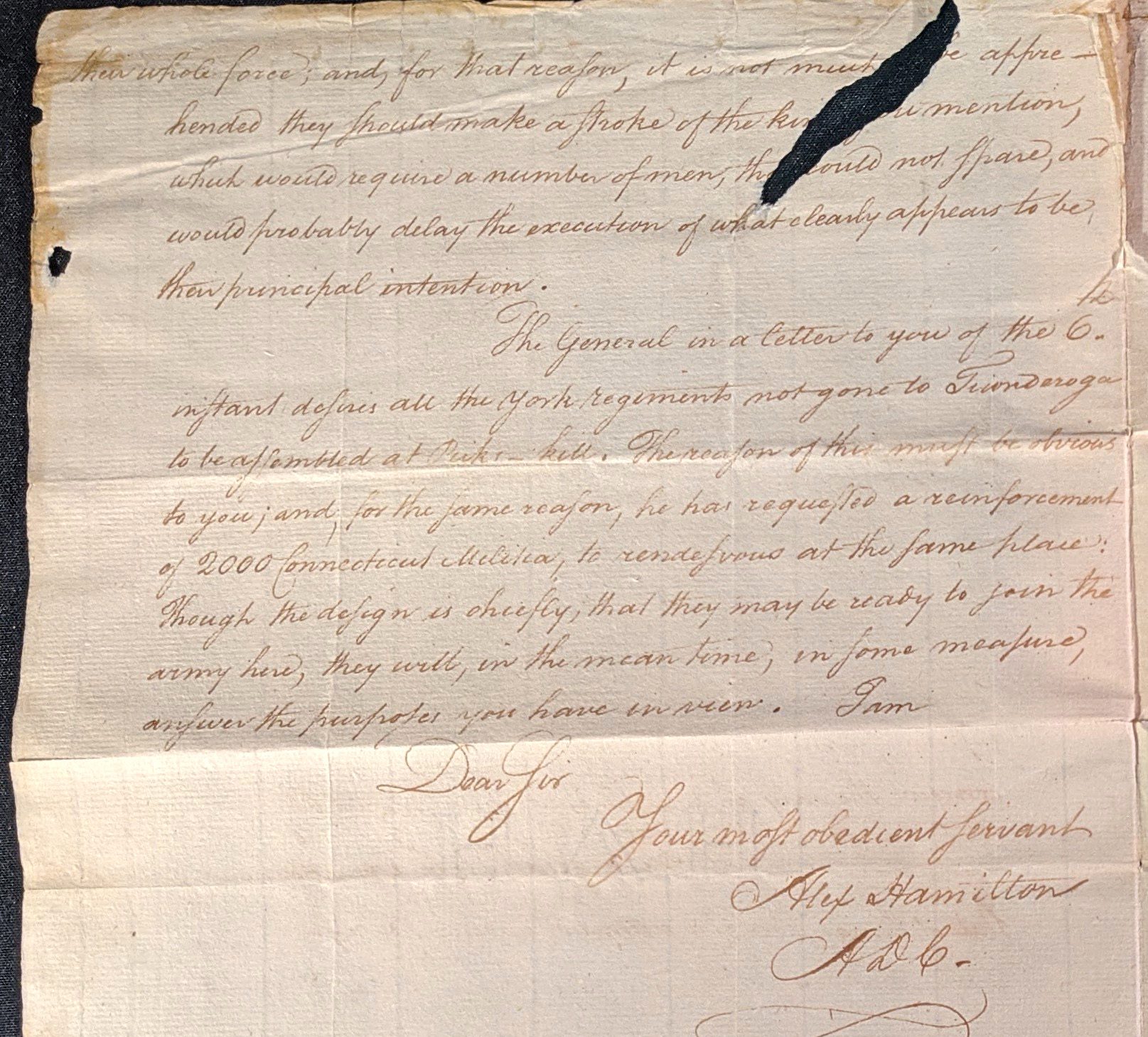
It was in a plastic bag with the covers detached, loose pages and missing the spine cover. I noticed that the front free endpaper was stuck to the front cover, and there appeared to be something in between. I pulled them apart and found a letter with a broken, red, wax seal written on 18th-century linen paper. I saw that the writing had a slightly rusty color showing oxidation due to iron-rich ink used at the time.
The letter was written during the American Revolution on March 10, 1777, by then Lt. Col. Alexander Hamilton acting as aide de camp to Gen. George Washington, a position he had taken just nine days earlier, in response to a letter to Washington from Gen. Alexander McDougall requesting more troops. Washington was ill, and it was left to the young aide to answer the brigadier general.
It is what is referred to as an “autograph letter signed,” or ALS, meaning it was written in the hand of and signed by the author, in this case “Alex Hamilton ADC.” It is the letter actually received by General McDougall in the field. A draft copy would have been kept by Hamilton for reference, and a quick search online found it in the papers of George Washington at the Library of Congress, where you can read it in its entirety (tinyurl.com/2edfcaug).
I discussed the content of the letter with a professor of American history at Cornell several years ago. She told me, “This letter is quite important. It’s written from the Morristown HQ of the army near the end of Washington’s difficult winter encampment there. He set up camp in Morristown after the campaign of 1776, during which he lost control of much of New Jersey till he struck back at Trenton and Princeton in December 1776 (when he crossed the Delaware, famously) and very early January 1777.”
She continued, “To me, what is interesting about the letter is Hamilton’s/Washington’s speculation about the British army’s intentions in the coming months. They realized that the redcoats were most likely going to attack Philadelphia, and they were right. General [William] Howe’s army did move against Philly, though disastrously badly, in summer 1777.”
There is also mention of troops being sent to Ticonderoga, the fort in upstate New York captured in 1775 by colonial generals Ethan Allen and Benedict Arnold, which would be retaken by the British months later in the summer of 1777. The letter is a glimpse into the thoughts, concerns and plans of Hamilton, MacDougall and Washington at a pivotal point in the American Revolution.
In 2015, several years after I discovered the letter, Lin-Manuel Miranda’s phenomenal musical, “Hamilton” premiered on Broadway and became a pop culture sensation. The play, inspired by Ron Chernow’s 2004 biography “Alexander Hamilton,” which includes an excerpt from the letter, brought interest in the largely overlooked founding father to unimaginable heights.
To most, Alexander Hamilton wasn’t much more than the face on the $10 bill up to this point. Now, he was on the tip of everyone’s tongue in hip-hop form. A spike in prices of memorabilia related to a historical figure is rare. Suddenly, people couldn’t get enough of the first secretary of the treasury. In January 2017, a New York auction package consisting of 77 lots of Hamilton’s letters and manuscripts fetched over $2.5 million.
I still have my letter. I enjoy being the custodian of a small piece of history. I guess it comes with the job. I’m looking to have it conserved. It’s still glued to the book cover, and I’ll eventually look to sell it. Prices for Hamilton items are still elevated from where they were before the show but have waned from their peak. I’m sure that I missed getting top dollar for it now, but it’s something that means a lot to me, and sometimes value is greater than price.
I’d love to hear about and see some of the fascinating, significant and unexpected items you have out there. I’m looking forward to sharing these stories and answering your question here in the months to come.
Steven Daly can be reached at steven@ithacavintage.com and (607) 591-2395. Learn more about Ithaca Vintage at ithacavintage.com.
Related Articles
Sponsored Sponsored content A holistic approach to wellness
William George Agency offers youth recreation programs that boost fitness, mental health, and confidence through holistic activities.

Sponsored Sponsored content Can the Grid Handle EVs? Debunking the Myth
Explore how Dovi Motors is leveraging modern infrastructure and smart EV technology make charging safe, efficient, and manageable for drivers and utilities alike

Sponsored Sponsored content Tech gifts for the holidays – and why fiber internet makes them even better
Explore the best holiday tech gifts and see how fast fiber internet from Empire Access helps your new devices perform their best this season.