
City, county work to address opioid addiction in communities
Earlier this fall, the Tompkins County Health Department relayed that there has been a significant increase in opioid-related deaths in the region in recent months. While opioid usage and addiction have existed in the county for some time, there has been increased emphasis on addressing the issue over the past few years.
Between more funding and new projects, there have been plenty of recent developments to address the epidemic that is opioid addiction, so Tompkins Weekly spoke with experts about the severity of the problem and what’s being done to help those most in need.
Scope of the problem
The Tompkins County Health Department reported in a recent press release that there had been 12 drug-related deaths in the county as of June of this year, which is aligned with trends noted locally over the past five years. In addition, 911 call data during that same time showed 25 overdose calls, compared with a total of 67 overdose calls made in 2021 and 31 calls in 2020.
“They definitely seem to be on the rise,” County Sheriff Derek Osborne said in reference to the overdose calls his department has responded to recently. “I can say just looking at our stats for just this last month of October, we had nine calls that were handled just by the Sheriff’s Office. That doesn’t include state police, IPD or other village PDs. So, it seems to be quite a mix of different drug types as well. And, for several years, we carried Narcan in our cars, also [automated external defibrillators] and first aid supplies, just because of the fact [that] quite often, we are the first to deal with these issues.”
Osborne also said his department has seen an increase in calls involving a mental health crisis, which he said often goes hand in hand with addiction. Harmony Ayers-Friedlander, deputy commissioner of mental health and the director of community services for Tompkins County government, explained the mental toll addiction can take on both the users and their loved ones.
“It impacts people’s mental health because it’s such a big, all-consuming life problem,” she said. “And everyone’s trying to potentially figure out how to solve it, and it creates conflict in relationships. … So, there’s a lot of stress going on in that family system that can lead to mental health problems in and of itself. And then also sometimes, people are already having mental health problems, and now they’re getting exacerbated by the substance use.”
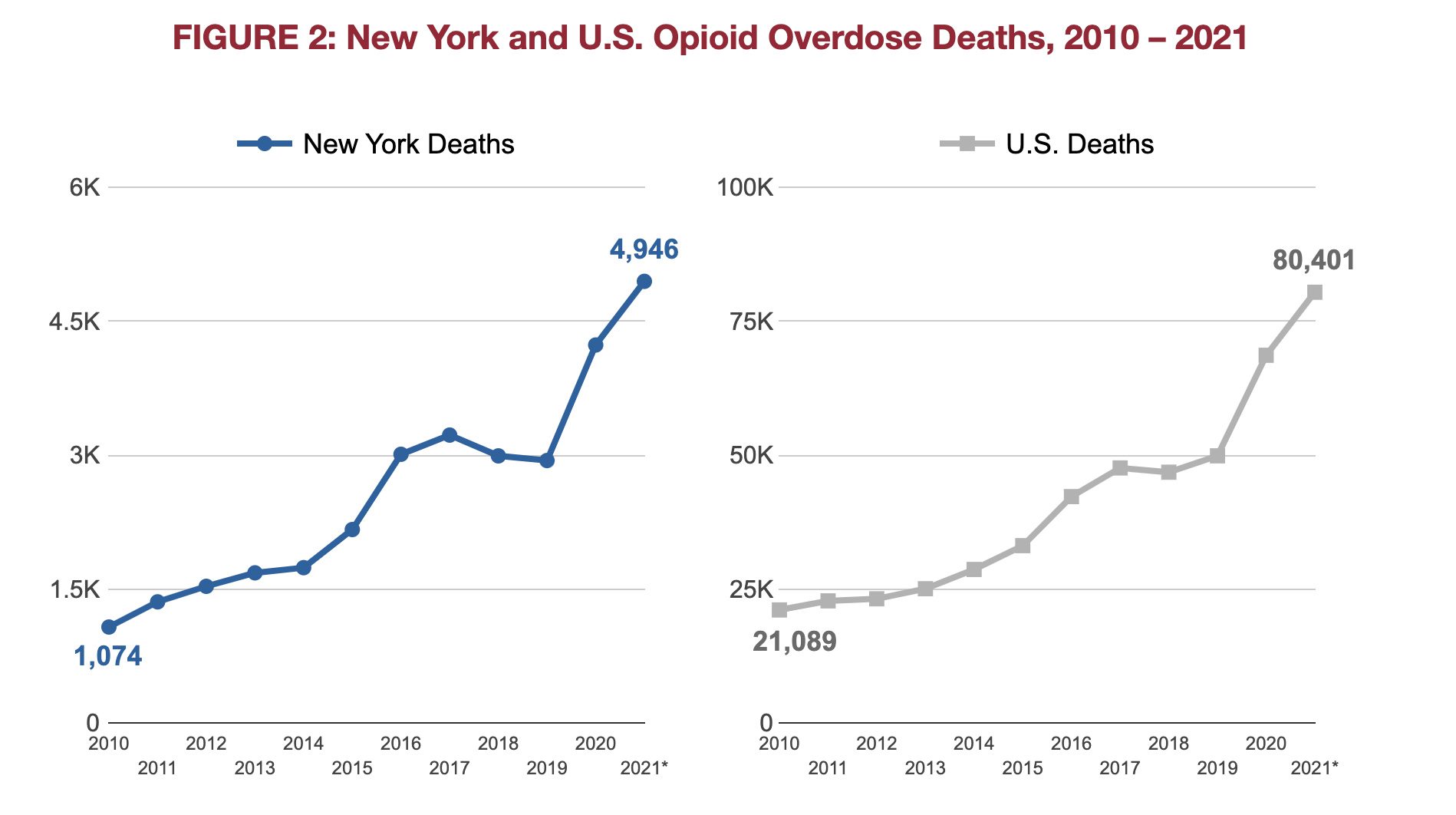
Looking specifically at opioid usage, the New York State Comptroller’s Office reported that, between 2019 and 2021, the state saw a 68% increase in opioid overdose deaths (tinyurl.com/2bb6ltwo). The New York State Department of Health (NYS DOH) reported that rates of overdose deaths involving synthetic opioids like fentanyl increased over 1,200% from 2010 to 2019, an increase that is only somewhat attributable to improved screening and education surrounding fentanyl (tinyurl.com/22ukgy7q).
When asked why there’s been such a dramatic increase in recent years, sources varied widely, with several admitting that they didn’t know all the reasons that could be contributing. One common reason sources cited was the pandemic, as COVID-19 required people to isolate — something that often worsens drug addiction.
“COVID exacerbated everything,” said Samantha Stevenson, director of operations at REACH Medical (reachprojectinc.org). “It caused abrupt shutdown. It caused isolation. It caused changes that people had no preparation for. And it takes a long time to recover from those things.”
Sources also cited economic stressors like increased costs across numerous sectors.
As far as why there is especially increased emphasis placed on addressing the problem now, sources interviewed provided a variety of reasons, including the increased prevalence of substances like fentanyl. Sources also addressed that there is likely a racial component to this boost in efforts.
“[Opioid addiction has] been a problem for some time,” said City Alderperson Phoebe Brown. “I think the focus is now who the problem is affecting, … which is, to be quite blunt, white communities. … I’m not saying it’s not a good thing [that there’s more attention]; it’s an absolutely good thing. It’s an important topic, but I think we also need to really connect that it’s important when addiction affects all communities.”
State data also points to this as a factor. The Comptroller’s Office reported that, between 2010 and 2020, while the total number of drug overdose deaths in the state among Black individuals steadily increased, overdose deaths among white New Yorkers at first increased steadily but decreased dramatically from 2017 to 2019 following the declaration of a public health emergency by the federal government. It wasn’t until 2020 that both demographics saw a dramatic increase in deaths, likely the result of the pandemic-related factors sources discussed.
Recent developments
The biggest piece of news on the opioid addiction front is Tompkins County and other counties in the state receiving the first round of settlement payments from the New York State Association of Counties for opioid recovery and prevention programs, the result of lawsuits resolved last year against various pharmaceutical companies.
According to Tompkins County Public Health Director Frank Kruppa, the county is expected to receive $700,000 in one-time funding by the end of this year, with a portion of that total having been received earlier this year. Kruppa said that the New York attorney general has not yet informed the county exactly how much the county will receive in total over the next few years.
Legislator Dan Klein added that while the county doesn’t yet know where or how to spend the settlement money, he’s fairly certain that the county will dedicate all of the funds to opioid-related efforts, as opposed to using some of the funds for matters not related to addiction.
“As I understand it, certain percentages have to be used for opioid treatment, and a certain amount can just go to the general fund, but we’re going to direct it all towards opioid treatment, I believe,” he said. “There’s also some guidelines in there that the programs and treatments and preventions and education, whatever those kinds of programs, they need to be new. In other words, you can’t just take the opioid settlement money and use it for programs that already exist and then take that money you were using and spend it on something else.”
To decide how to spend these funds, the Tompkins County Legislature recently formed a task force made up of community leaders with a stake in the issue, as some sources put it. The group began meeting late last month, and Legislature Chair Shawna Black explained how it’s gone so far.
“The focus of the conversations that we’re having are … based around health equity and realizing as well that there are many different ways that we can help people in our community,” she said. “It’s not just harm reduction; it’s not just rehab or detox. … So, I think our first meeting was really establishing that conversation, establishing some ground rules and also just making sure that we’re going to be open to the many different ways that opioids have affected our constituents, as well as the many different ways that we can provide funding for agencies in our area that are helping with the situation.”
Legislator Travis Brooks chairs the task force with Kruppa and explained that he’s glad to see such a supportive group dynamic so far.
“There’s folks from all over, and everybody recognizes the importance in where we are right now; people know that this issue has gone on too long,” Brooks said. “We’ve been throwing new money into old programs that have never proven to work. And I think the people that are gathered, they have skin in the game, from lived experience to working in this field to understanding what is happening to people in our community. And I think all of the folks in that group are committed to doing something different, doing something new.”
Kruppa also expressed optimism in light of the task force’s makeup.
“The task force that has been put together has a diverse group of people, including those that either are currently in recovery or perhaps still active users, to help us understand where those that are most directly impacted would see the most benefit,” he said. “So, I’m confident and extremely hopeful because that group, I think, is strong and will be able to really get some good recommendations on how we can have some immediate impact on this very complex issue.”
Local leaders expressed their hopes for the task force in the coming months. Legislator Veronica Pillar, for example, is hoping some of the money could go toward increased availability of fentanyl testing strips — allowing users to check their supply for fentanyl — and Narcan. They expanded on other hopes they have for the group.
“I’m hoping that both a better understanding of what this crisis looks like in our community will come out of that and, concretely, here are some things that we can do with the money that we have now to make things better,” they said. “I know make things better is very general, but to both stem the progression of this epidemic and assist and heal and repair harms done to people because of it, whether it’s folks who are using opiates, have used opiates, or have otherwise lost loved ones to overdoses or things like that.”
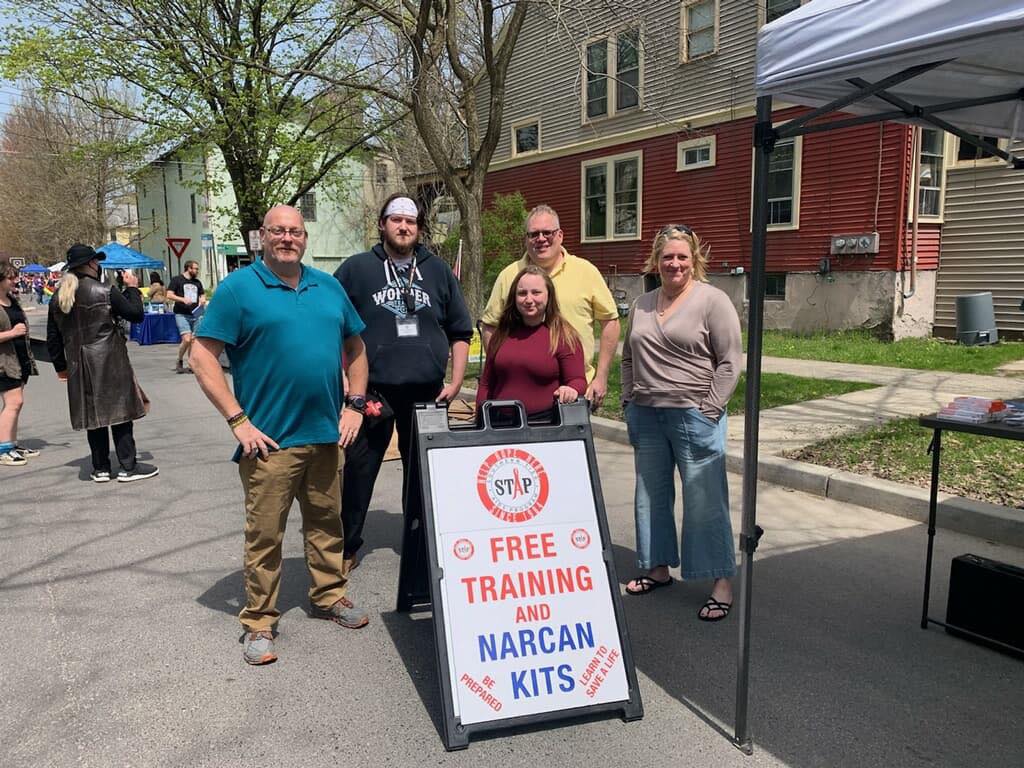
John Barry, executive director of the Southern Tier AIDS Program (stapinc.org), voiced that however the funds are distributed, it’s important that they be set up in a way where the program or organization receives funds over the course of several years.
“In organizations like mine that work with people who have substance use difficulties, the most expensive part of your budget … is always people,” he said. “And so, if I get a chunk of change for a year, it’s very difficult for me to make changes within my organization or set up some sort of new programming because here’s the scenario. I’m talking to people that I’m trying to hire to do the work. And I’m saying, ‘Yeah, you’ll have a job for a year,’ and that might not be attractive to most people.”
Also among the most recent developments related to opioid addiction is the NYS DOH’s announcement of a statewide pharmacy standing order for Naloxone, better known as Narcan, which is “a medication that can be easily administered to block the effects of opioids,” according to the county Health Department. Now, as long as a person has insurance, they can receive Narcan from pharmacies or community agencies for free. To learn more, visit tinyurl.com/2byg9rjj.
Another positive change came, as ironically as it seems, from the pandemic. Stevenson explained that prior to the pandemic, providers like REACH weren’t allowed to prescribe what she referred to as the “gold standard” of treatment for opioid use disorder, buprenorphine (brand name Suboxone) and methadone.
“When COVID hit, the regulation changed from ‘you must see somebody in person’ to ‘you can now perform telemedicine visits,’ and that changed the game for our patients,” she said. “So now, we’re able to induce people on buprenorphine the day that they get out of jail and the day that they are released from a rehab or detox center. These are the days where people are nine times more likely to overdose and die. And so, when you’re talking about every drug user … they need zero-barrier access to the medication that’s going to keep them alive.”
Looking ahead
Aside from the possible influx of monies from settlement funds, another upcoming development sources expressed hope for is the expected opening of the Open Access Detox Center, a project led by the Alcohol and Drug Council of Tompkins County (ADC, alcoholdrugcouncil.org). The detox center is currently under construction at the previous location of ADC’s open access center, which, when it was in operation, was open only on weekends.

ADC Executive Director Angela Sullivan said Open Access, unlike its predecessor, will be a 24/7 center to support individuals in different stages of substance abuse. Open Access will include three levels of care — open access, detox and residential stabilization — and the building’s staff will include representatives from a wide variety of service providers so visitors will have a “one-stop shop,” of sorts, Sullivan said.
“The good thing about this model is they can walk in the door in crisis or whatever, and they can walk in the door with the need, they can go upstairs and detox,” she said. “And they can stay upstairs until whatever they need next is … available or [they] could be just discharged back to community or it could be a long-term residential like [Cayuga Addiction Recovery Services], or it could be harm-reduction services like REACH. So really, it’s just making sure that we’re wrapping the services around them, as opposed to just doing the old sort of give them a brochure and a business card and off you go.”
Sources also shared hope for other efforts going forward, with several sources placing an emphasis on housing efforts to address addiction challenges.
“When we look at the issue with opioids, we’re looking at the issue of mental health, people for some reason think sobriety comes, abstinence comes, before housing,” Brooks said. “If you don’t have housing, you know how difficult it is to live abstinence based, not to indulge in these things? And you’re living in the streets, you’re living in the encampments, you’re living under a bridge, I can’t imagine trying to do that sober. So, we really have to as a city and as a county get serious about what we’re going to do about housing.”
Others also pointed to the need to include those struggling with substance abuse in the conversation.
“Those of us who work inside the system — and I’ll include myself when I’m throwing this rock — evidently have not been very successful at stopping things like opioid poisonings and deaths,” Barry said. “The people that we really should be talking to are the folks who are actually using the substances. And that’s where the genuine insights probably lie. … We need to be much better about saying to people, ‘What level of engagement can you manage?’”
Jessica Wickham is the managing editor of Tompkins Weekly. Send story ideas to them at editorial@VizellaMedia.com.
Related Articles

Holiday traditions bring community cheer
Tompkins County holiday traditions light up homes, farms, and schools with festive cheer and community spirit.
The gift of an experience: Local businesses offer hands-on holiday fun
Holiday experience gifts in Tompkins County include candle making, gourd crafts, and pottery workshops for creative seasonal fun.
Code Blue shelter opens amid praise, concerns and ongoing debate
Ithaca’s Code Blue shelter opens with larger space, showers, and case management to help residents during cold weather.