
Support center seeks to help with substance use disorder, recovery
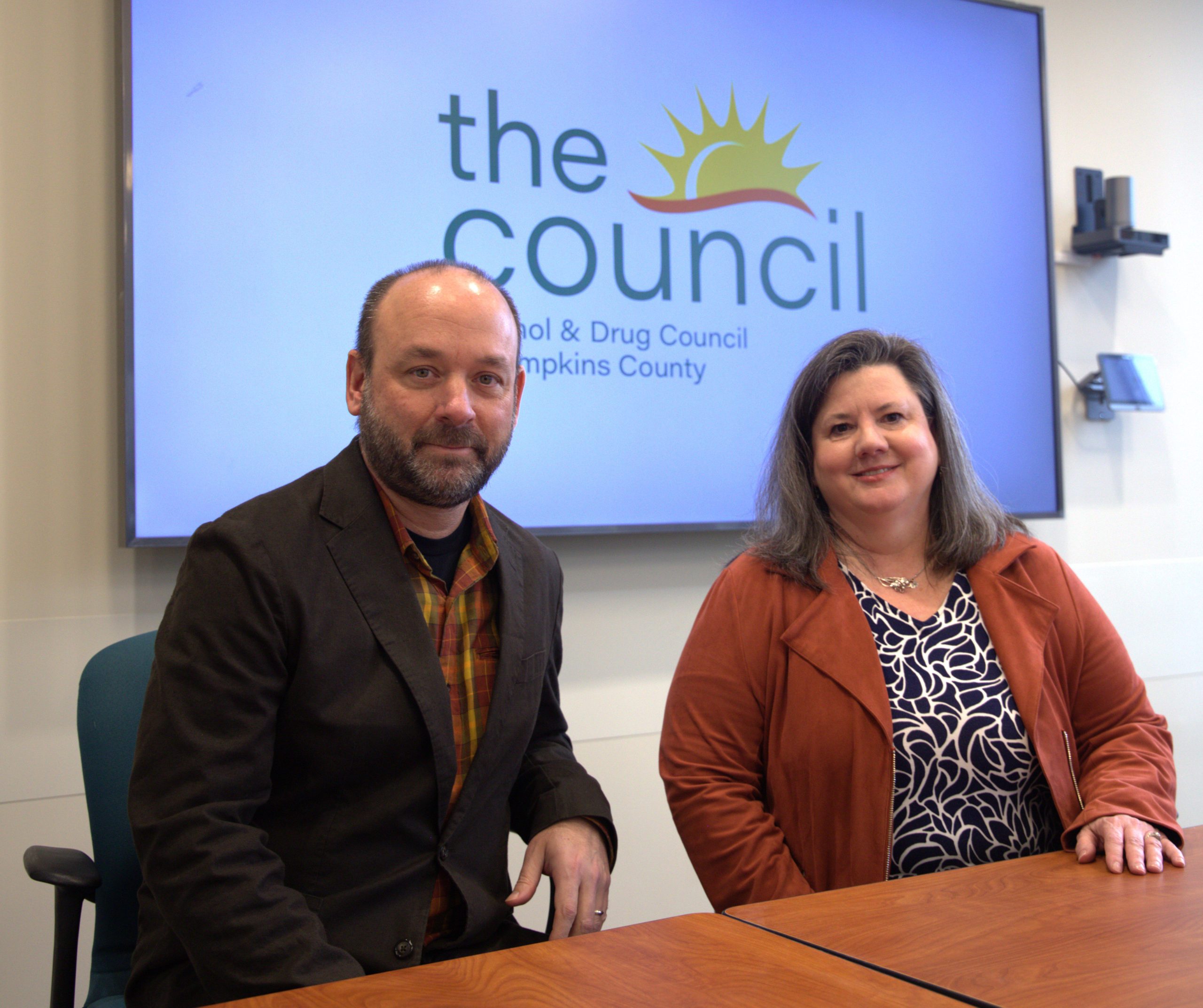
The Alcohol and Drug Council of Tompkins County’s (ADCTC) new center, which will provide open access to detox and stabilization services, is setting its sights on a May opening in the village of Lansing.

The center, located on North Triphammer Road, will offer three types of service for people in the nine counties surrounding Cayuga Lake who are struggling with substance use disorder, according to ADCTC Executive Director Angela Sullivan. These services include open access, detox and stabilization.
First is an open access service that provides ample information on treatments.
“This service is 24/7, 365 days a year,” Sullivan said. “This is a walk-in center where people can get information on things like Narcan for fentanyl test strips. People can also get assessments and referrals to other treatments or referrals to our treatment. That can include family or friends who want to access a Narcan kit because they know their friend is using.”
The second type of service, detox, entails removing alcohol and drugs from the body through medically supervised withdrawal.
“Detox would be a combination of medication, nutrition and counseling,” Sullivan said. “So, we try to get people as comfortable as possible with withdrawal, helping them through those symptoms of withdrawal.”
Detox, Sullivan noted, would be a three-to-five-day process at the center.
“Then, people can be discharged from detox and, for example, either go to a service provider like Cayuga Addiction Recovery Services to get methadone,” Sullivan said, adding that methadone is a drug used to treat opioid use disorder. “[Or] they could also go to their home community – for example, Cortland – and find services there.”
Third, the stabilization service is for individuals who seek more counseling after detox.
“We expect those stays to be about two to three weeks,” Sullivan said. “In that part of the program there’s more skill building, more group counseling, individual counseling, vocational work and vocational counseling.”
The center will have a capacity of 40 beds split between its detox and stabilization services.
The overarching mission of the center, Sullivan said, is to “have a community response to substance use and misuse.” Plans for the center have been in development since at least 2016.
“The center is designed with community partner spaces in it and other community partners providing services,” she added.
For example, Sullivan said that the center and its partners can work with someone going through stabilization to find a bed at whatever the next step of their recovery can be.
“Or potentially a housing unit comes available or something like that,” she added. “So, we will be working with other providers, other services to keep people engaged. This is about us working through and navigating the system with them.”
There have been instances of people admitted to a recovery service then later discharged with little guidance as to what the next steps are, Sullivan said.
“The intent of the center is that we’re bringing a lot of those services here, and we’re working really hard to make those connections or warm handoffs to whatever the next step is,” she said.
Its community-oriented model makes the center one of a kind in New York state, Sullivan said.
“We want to last longer than whatever is the most recent substance that is pervasive in our community,” she said. “So, for sustainability reasons and responsiveness reasons, the center was really built in response to the need that was expressed in Tompkins County and our closest surrounding counties.”
As ADCTC prepares the center for an early May opening, they are also dealing with challenges of logistics and staffing.
“We are having a couple of supply-chain issues with some of the things that we need to have to open – just like everybody else,” Sullivan said. “We’re in the process of staffing, and we really need nurses. We need six registered nurses to open, and we need a nursing supervisor. Those are the big challenges for us right now.”
The shortage of health care workers isn’t exclusive to ADCTC. The American Nurses Association estimated that more registered nurse jobs were available through 2022 than any other profession in the United States, according to an article in the National Library of Medicine. The U.S. Bureau of Labor Statistics projects that more than 275,000 additional nurses will be needed from 2020 to 2030.
“Within our budget, we’re trying to offer wages that are higher than the median,” Sullivan said of ADCTC’s efforts to recruit workers.
For people struggling with substance use disorder or individuals close to them, Sullivan encouraged seeking services.
“People still should access care, even if we’re not open yet,” she said. “People shouldn’t be waiting to access care – things are too dangerous out there. We still have a great outpatient clinic where people can get information and referral to other programs until detox is up and running.”
In brief:
Building Bridges, sponsored by the Lansing Historical Association
The Lansing Historical Association is sponsoring an evening program to be held on April 20 th at 7 p.m. in the Lansing Town Hall at 29 Auburn Road, Lansing. The program, Building Bridges, will highlight how the Salmon Creek Bridge was built. Included in the program will be a slideshow detailing the construction of the bridge with both past and present construction information. Time will be provided for questions and additional discussion.
Author

Related Articles

Local representatives push HEAP as winter nears
Lansing HEAP program applications are now open, helping low-income households cover heating costs and access energy assistance this winter.
Lansing’s $17M capital project advances amid construction challenges
Lansing Central School’s $17M BOBCAT capital project upgrades schools, athletic facilities, HVAC, and infrastructure.