
Colorado company proposes solar battery energy storage system in town
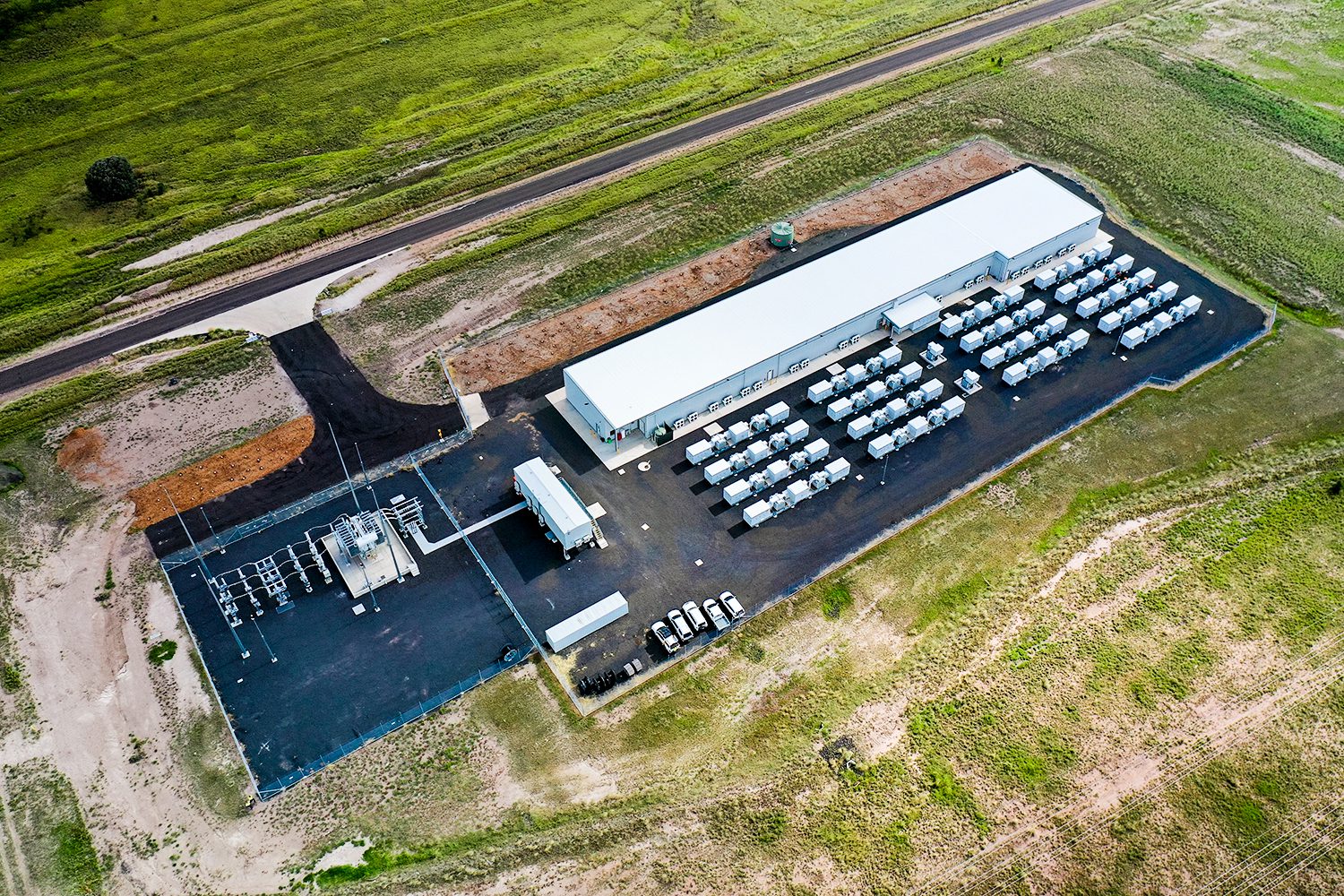
Bear Peak Power, a Colorado company, has announced a plan that would bring a battery energy storage system (BESS) facility to the town of Lansing by mid-2026.
The project, which was announced July 20 at the July meeting of the Lansing Town Board, would be located at the former Cayuga Power Station site on Cayuga Drive. It could bring significant revenue to the town in the form of a lucrative Payment in Lieu of Taxes agreement (PILOT), as well as a sum negotiated as a host community agreement.
A BESS is a type of energy storage system that uses batteries to store and distribute energy in the form of electricity. These systems are commonly used in electricity grids and in other applications such as electric vehicles, solar power installations and smart homes. At a basic level, a BESS consists of batteries that store electrical energy for use at a later time. The stored energy can then be drawn upon when needed to meet various demands for power across different applications.

The Bear Peak project could store up to 200 megawatts in four hours. Ben Broder, a representative from the company, addressed the town board at the meeting. He noted that this type of storage could provide electricity to 100,000 houses for four hours.
“This is very exciting because we are able to use an existing interconnection and substation that was used by the Cayuga coal plant,” he said. Broder said the project would occupy 5.7 acres of already-disturbed land.
“We are going to be connecting to the existing substation switchyard,” Broder said, explaining how the BESS project would look. “The system consists of several BESS containers, which will interconnect to the existing substation. These systems are made up of battery cells, which are then put together into modules about the size of an ice pack. Those are then on racks, and then those racks are in stacks. Inside one of these contaminant systems, they look like a data center. Instead of computers inside, you see batteries.”
The purpose of these systems in Lansing, Broder said, would help utility companies defer costly upgrades to energy transmission and distribution infrastructure.
“Our BESS would provide key grid services and support integration of renewable energy generators like solar and wind,” he said. “They reduce brownouts and blackouts by alleviating congestion in the grid. Smaller systems can also provide utility bill management and backup power for homes and businesses.”
As far as safety is concerned, the company plans to have a battery management system that is monitored for safety 24 hours a day, seven days a week, 365 days of the year. Broder said he has spoken with local first responders about the prospect of bringing in the BESS project.
The project would create 170 construction jobs during its construction period. Beyond that, it would employ five to 10 part-time workers for operation.
“Jobs will pay a prevailing wage, and we will source the materials we can locally,” Broder said. Materials that can be locally sourced, he noted, are soil, gravel and fencing.
Broder said New York state and the Cayuga site in Lansing are particularly attractive to renewable energy developers.
“New York is a leader in clean energy jobs. There were 165,000 clean energy jobs as of 2021,” he said. “The state has the largest energy storage goal in the country. It is expected the energy storage sector alone will create 30,000 jobs by 2030.”
At the federal level, the Inflation Reduction Act (IRA), which provides $500 billion to projects that address subjects like renewable energy and was signed by President Joe Biden in 2022, was also a factor.
“This particular site is located in what is known as an energy community,” Broder said. “Under the 2022 IRA, because it is located in the property of a decommissioned coal facility, that encourages the development of renewable energy projects. It’s another reason why this is a good site.”
The company will start looking to secure equipment for the project in the first quarter of 2025. It will also apply for a building permit at that time. Building should wrap up in late 2026.
The project is undergoing review from the town planning board and will be further detailed at an upcoming meeting. Bear Peak will soon start working with consultants on environmental assessments of the project in order to eventually clear the state Department of Environmental Conservation State Environmental Quality Review, which would need to be approved by the town board before proceeding with construction.
Lansing at Large appears every week in Tompkins Weekly. Send story ideas to editorial@vizellamedia.com. Contact Eddie Velazquez at edvel37@gmail.com or on Twitter @ezvelazquez.
In brief
Chasing Neon to rock Myers Park
The Music in the Park summer concert series continues July 27, when Chasing Neon takes the stage. The band, which got its start in 2019, tours around central New York and is known for its energetic and distinctive live performances. The band’s website states that Chasing Neon offers a high-energy night of diverse dance/party music. The show will start at 6:30 p.m.
Author

Related Articles
Local representatives push HEAP as winter nears
Lansing HEAP program applications are now open, helping low-income households cover heating costs and access energy assistance this winter.
Lansing’s $17M capital project advances amid construction challenges
Lansing Central School’s $17M BOBCAT capital project upgrades schools, athletic facilities, HVAC, and infrastructure.