
Addressing homeless encampments: safety is the goal
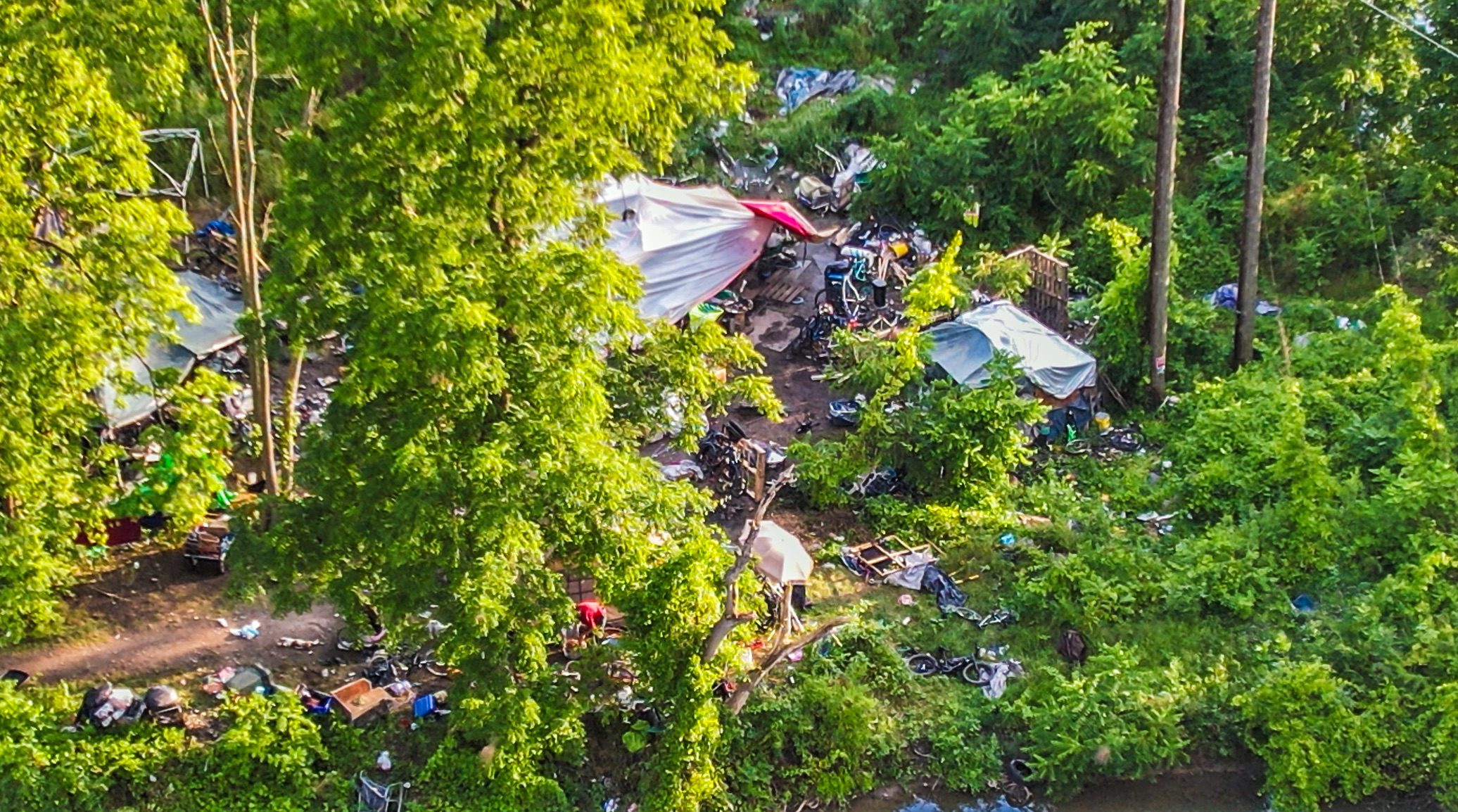
The homeless encampment, commonly referred to as “the Jungle,” has existed in some form since the mid-1920s. Almost 100 years later, tensions around the homeless encampments are heightened as city officials and the Ithaca Police Department (IPD) discuss how much they can, and should, help unhoused individuals.
Safety for both the unhoused and housed residents of the city is a concern across the board, but so far there has not been a consensus on how to address the issue. While the city is working to address these concerns with the designation of accepted camping areas using a red, yellow, and green zoning system, they cannot enforce the policy on railroad-owned property. This is a concern of both the Common Council and IPD.
Alderperson George McGonigal shared details about the efforts the city wants to take, but has yet to start.
“It’s illegal to camp on city property, period, but, what we’re proposing is allowing camping in a very large area in the Southwest, behind Walmart, and not allowing camping in the area between Brindley Street and Cecil A. Malone Drive,” McGonigal said. “In the last couple years, a lot of people camped there and there was a lot of environmental damage, not to mention people didn’t feel safe anymore walking through there. In the winter, when people left the camps, the county paid to help us clean up the area, but they won’t do it again so we have to keep it clean and so far that hasn’t been too much of a problem.”
One of the barriers in enforcing this zoning-like policy is letting unhoused individuals know where permitted camping locations are and then they must be incentivized to move to these green zones. In order for both barriers to be addressed, the city, IPD, and workers within the homeless encampments have to work together to spread the information, and to help with the move to new locations.
Part of the incentive for unhoused persons to move into the green zones will be the establishment of sanitary facilities – toilets and showers – for people to utilize when living in these zones. While it has been discussed for some time, a plan to implement the facilities has not started.
“This is the meager remnants of the TIDES proposal which was going to be an organized safe encampment,” McGonigal said. “And all we’ve got left is the idea that a couple trailers would be brought into the green area behind Walmart. One would have toilets for men and women and the other would have showers with hot, running water. Each night they would have to be moved back to the Department of Public Works.”
McGonigal continued that it has been difficult to find someone to lease the trailers and subsequently to provide insurance. He said they have considered buying the trailers to mitigate part of that issue. There would also be jobs created because someone would need to clean and watch the facility during the day and then do the moving in the evening.
“Another incentive for people to move into these zones would also be the consolidation of resources. Outreach workers would have an easier time reaching people and vice versa,” McGonigal said. “To get people to move, we’re really hoping the incentives do most of that work and we have people who are willing to help them move. It will be a period of nagging, basically, to get everyone to move and it will take some time at first. I think people are really worried about police involvement here.”
McGonigal said that IPD is involved in these conversations and that many officers have positive relationships with people who live in the homeless encampments. In the case of police involvement in the moves to green zones, no one would be imprisoned or have their belongings taken for not moving. He said that the occasional police presence will help discourage the more violent offenders from acting out, but will also be a resource for those who are trying to live their life and comply with the rules.
The hope is that the incentives and outreach workers can do this without needing the police. Many outreach workers and volunteers are also part of the Human Services Coalition of Tompkins County (HSCTC).
HSCTC proposed a 48-page plan in March to tackle homelessness in Ithaca, which included its commitment to building 100 single units of permanent supportive housing, low-barrier shelter, a cash for trash program and professional development opportunities.
Instead of approaching homelessness in a more traditional model, which offers housing at the last step after unhoused people become clean from substance and find employment, HSCTC believes that housing must come first. The program does not require addressing behavioral health or substance issues as the first step because access to housing and food is vital to survival and can create positive shifts in a person’s mindset. This shift can make it easier to then address other issues such as substance abuse, and put people on the best path to finding a job and becoming stabilized.
Housing First is “a homeless assistance approach that prioritizes providing permanent housing to people experiencing homelessness, thus ending their homelessness and serving as a platform from which they can pursue personal goals and improve their quality of life. This approach is guided by the belief that people need basic necessities like food and a place to live before attending to anything less critical, such as getting a job, budgeting properly, or attending to substance use issues. Additionally, Housing First is based on the understanding that client choice is valuable in housing selection and supportive service participation, and that exercising that choice is likely to make a client more successful in remaining housed and improving their life.”
In addition to Housing First, there is also the Tompkins County Needs Assessment, which contains data and information to guide the city, county, and human services programs so that they may best help housed and unhoused people throughout the county.
A potential interim solution to housing was included in the TIDES Proposal and McGonigal said that he would like to see the idea revisited.
“The TIDES proposal was modeled on an encampment that’s active in Missoula, Montana. What it would have been is showers and toilets and a communal room for cooking and eating, et cetera. A permanent building surrounded by small, simple cabins. Much more simple than what’s at Second Wind on Newfield Hill, but still similar,” McGonigal said. “Requirements would be extremely loose. People could still use drugs but they couldn’t be violent or make drugs on the property, but that was basically the only rules. It would be staffed full time by managers that are part of the group or organization managing the facility, which we never got that far.”
Whether or not TIDES will be revisited is unknown but for now, there are many conversations about the best ways to address Ithaca’s and the county’s homelessness issue. McGonigal concluded that the hope is to have everyone working together for the better of the community as a whole.
Related Articles

Holiday traditions bring community cheer
Tompkins County holiday traditions light up homes, farms, and schools with festive cheer and community spirit.

The gift of an experience: Local businesses offer hands-on holiday fun
Holiday experience gifts in Tompkins County include candle making, gourd crafts, and pottery workshops for creative seasonal fun.

Code Blue shelter opens amid praise, concerns and ongoing debate
Ithaca’s Code Blue shelter opens with larger space, showers, and case management to help residents during cold weather.