
Village at Ithaca seeking community engagement
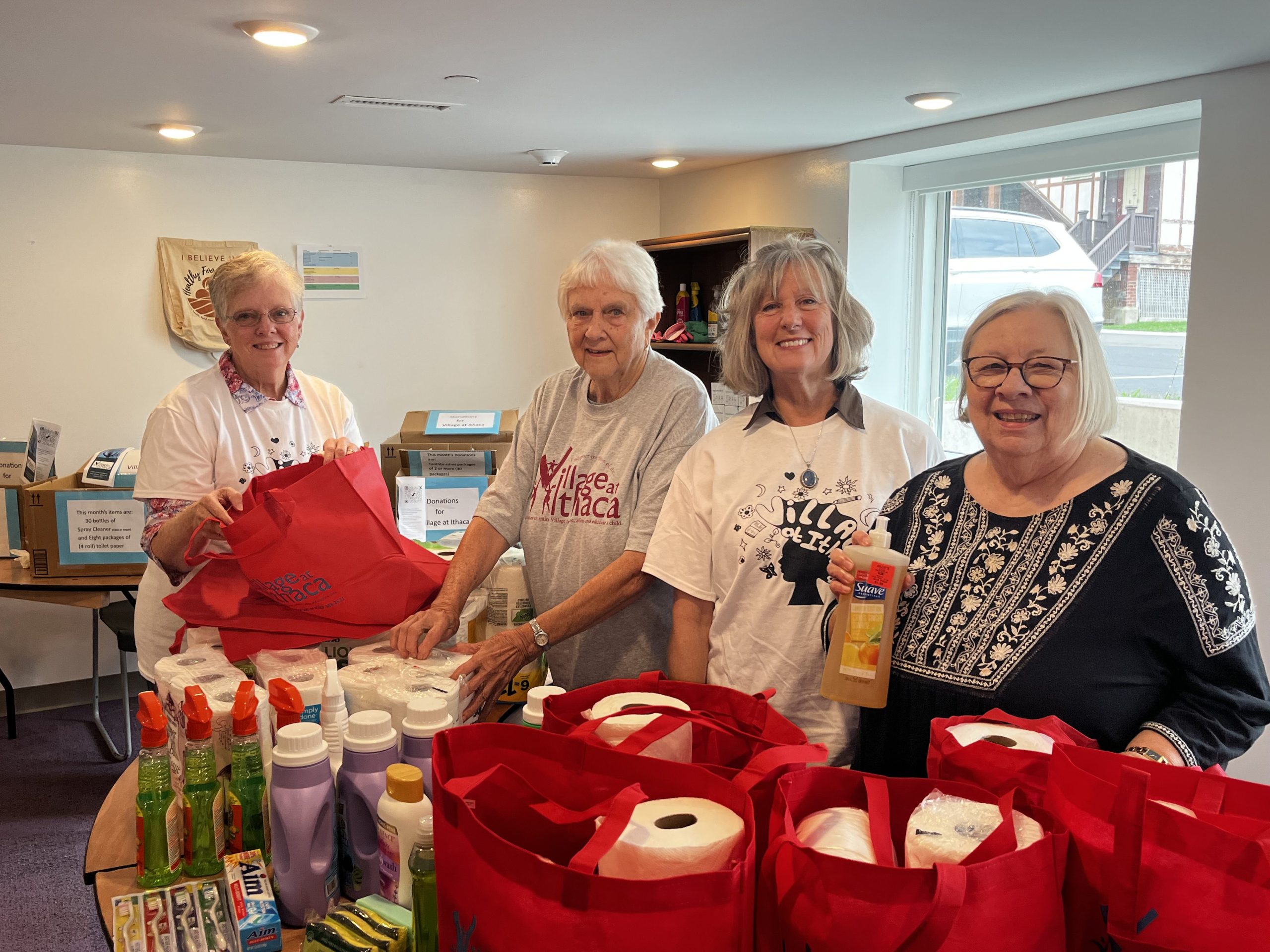
“It takes a village to raise, educate, affirm, and inspire a child.” These are the words shared dozens of times by the Village at Ithaca and their volunteers and it is true, it does take a village to support one another.

The Village’s mission is “to advocate for educational equity and excellence for all students, particularly Black/African American, Hispanic/Latino/Latinx, low income, and any other underserved students within Tompkins County, through strategic community relationships, assessment of the local district’s practices and policies, and responsive programs and services,” and for over twenty years they have consistently worked to uphold this mission. They also work to address essential needs like food, housing, and internet access along with more complicated needs such as advocacy within the school system and culturally responsive programming.
When the pandemic began, the Village had to close to the public, so the agency began to brainstorm how they could continue to reach their families. Director Meryl Phipps said she polled her families to see what the immediate needs were. From there, Phipps and her son went to the homes with bags of food that included requested household items.
“We want to continue the trust that we have with these families we serve because they have often been let down by the systems in place over and over again. As the world shut down, it was our goal to stay connected and see how we could help,” Phipps said. “We had to close our doors, but we couldn’t pause what we were doing.”
At that same time, Judy Jones heard of the work that was happening at the Village at Ithaca and partnered with Temple Beth-El because they felt like something had to be done, not just for the community, but, as Jones said, to find ways to address racism and oppression within our systems. The First Unitarian Society of Ithaca (FUSIT) had this same drive to do something helpful.
“At the onset of the pandemic, particularly around the death of George Floyd, our church was going through a self-examination with regard to messages of racism in our all-white church and we said, ‘we need to be out there doing something for these communities,’ and I heard hear Meryl talk about the need for support for families of color because of mistreatment in schools and racism in schools,” Jones said. “When I learned about Village at Ithaca I said we need to go and participate, not with our notion of having read the website, but with what they tell us they need.”
After three years of managing collecting and delivering groceries weekly and purchasing and delivering household products monthly, Ithaca First Unitarian Society and Temple Beth-El reached out for other churches to join the household project.
After hearing of the need, St. Paul’s United Methodist Church’s Loving Care Ministries Coordinator Jami Breedlove-Crouch came up with a way to make the program easier, and more efficient in local churches.
“It’s a daunting task to take on for one person, even just one or two churches, and so I had this idea where if we could get ten downtown churches to join us, we could be a village and help with this and they would have to do one item a month,” Breedlove-Crouch said. “We spoke with Meryl to create a list of the top ten things people need so we could prioritize items. For the last six months we have been operating with three churches: St Paul’s, the First Baptist Church of Ithaca and FUSIT. Temple also has a bit of money left that they share with us for products as well.”
Interested congregations collect thirty of one item plus 8 four packs of toilet paper per month with each congregation having an assigned item. One church might collect thirty bottles of body wash while another collects 30 household disinfectants. Each church would have a contact person who works with Jami to collect the items and to share the new item for the next month. At the end of the month these items are then joined together at the Village Hub and packed to be delivered on the first Friday of each month.
Breedlove-Crouch added that to be able to give families ten items each month and for the program to be completely successful, ten churches or organizations would make a commitment each month. Each month the item would change but the cost could stay the same.
“Sometimes we have this thing where we question what people are asking for because it’s not what we would buy, whether it’s about cleaning chemicals or being more ecologically minded, whatever it is, but that’s not the point here,” said Shella Chace, a member of the First Baptist Church, “it’s about helping people by getting them what they know they need, what works for them. It’s not about us, we’re just here to help.”
Breedlove-Crouch and Phipps both added that all items can be purchased at a reasonable price for anyone to be able to participate and with more churches or organizations’ involvement, the “ask” of each group would be minimal. They said the hope is that by making the program affordable to all people, more groups will participate.
Jones added that this is not a “meet the need of the poor” project, it is a “social justice” issue. She said we are striving to even the playing field and build community as we help those in need. Breedlove-Crouch emphasized that they are not calling for just financial or item donations, but that they are trying to connect people and build more community through this Village program.
If your church or organization would like to participate in this program please contact: Jami Breedlove Crouch at: lovingcare@stpaulsithaca.org or by phone at 607-592-9804. To learn more about Village at Ithaca visit www.villageatithaca.org.
Related Articles
Cayuga Medical Center nurses to rally, alleging anti-union tactics by hospital management
CMC nurses plan a rally, alleging unsafe staffing and illegal anti-union tactics as the hospital highlights recent patient-safety gains.
Design details unveiled for new Center of Government
Design details for the Tompkins County government building in downtown Ithaca are now public, with a county survey open for feedback.
Holiday traditions bring community cheer
Tompkins County holiday traditions light up homes, farms, and schools with festive cheer and community spirit.