
New website invites public to explore the county’s Underground Railroad
Did you know that Tompkins County is home to multiple sites on the underground railroad? A new website called Underground Railroad Hub lays out an astounding array of stories from locations throughout the Finger Lakes, providing information on the history of the Underground Railroad in the area in a way that has never been done before.
“I think the big thing for us is being able to work with community partners, because usually we get rewarded, and rightfully so, for the research and writing, especially in the humanities,” said Gerard Aching, retired professor of Africana and Romance studies at Cornell. Projects like the website, which make the information accessible to the public, are somewhat less common.

Managing Editor
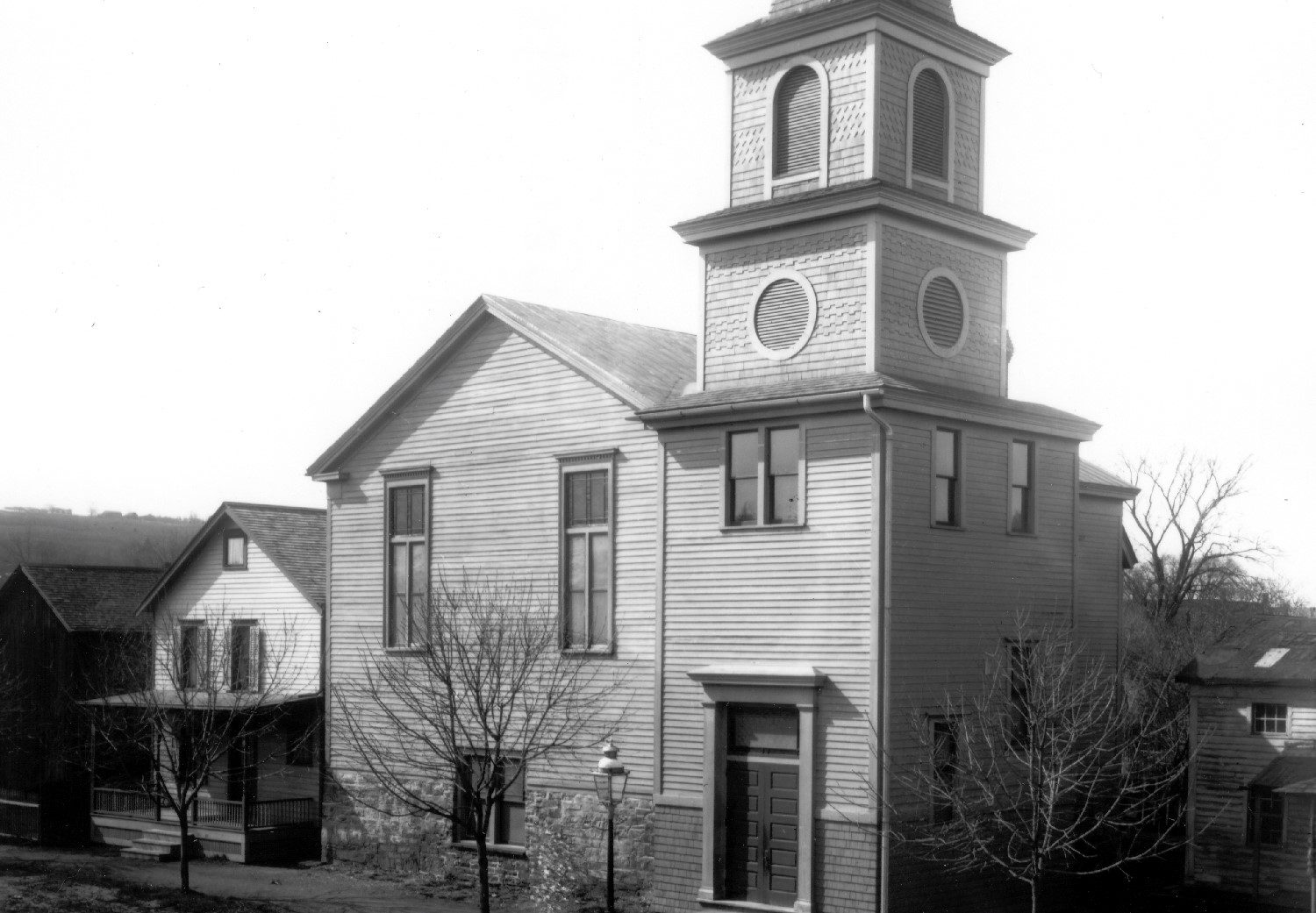
St. James AME Zion Church, for example, is a two-story frame church built on Wheat Street, now known as Cleveland Avenue in Ithaca. The marker in front of the church notes, “it became the religious, political, and cultural heart of the community and, in 1841, the site of a school for black children. It was the home to Pastors Thomas James and Jermain Loguen and host to Harriet Tubman and Frederick Douglass.” The website adds, “the church was the site of many abolitionist meetings and was a station on the Underground Railroad between Elmira and Auburn/Syracuse, according to oral traditions.”
But the website, found at undergroundrailroadhub.net, goes many steps further than a mere cursory description, providing multiple layers to the learning experience.
On the web page dedicated to the church, a user can listen to a reading of “The Life of Minnie Barnes,” a 12-minute fictional narrative inspired by the church’s history.
Next to the audio player is a gallery of images related to the church, including old newspaper clippings, historical photos, and aerial views of what the church looks like now.
The site also includes a 3D model and virtual tour of the St. James AME Zion Church station.
There is a similar page dedicated to the Simeon Dewitt Ferry.
“Perhaps the most famous and certainly one of the most resourceful rescuers in Ithaca was George Johnson,” states a quote from “The Underground Railroad in Tompkins County: Searching for the Path to Freedom,” information that was compiled by History Center volunteers in 2005.
In his barber shop on State Street, Johnson gave fugitives haircuts and new clothes in order to change their appearance, according to the website. He reportedly arranged their voyage on the steamer The Simeon DeWitt, which took the refugees to Cayuga Bridge at the northern end of Cayuga Lake.
Designed by Ithaca web design firms Iron Design and Ancient Wisdom Productions, the Hub’s landing page currently features eight research projects representing the collective enthusiasm and work of researchers, community partners, and citizens interested in learning about and imagining this important part of American history.
Aching said that getting his students excited about the project by allowing them to see the actual physical locations of the Underground Railroad is almost akin to putting on a play.
“You can’t make the magic happen,” Aching said. “You have to provide the basic information, but the magic—seeing their minds engaging, and them asking the important questions—that has to be self-guided just by being on the site.”
“When people have the resources to imagine what that must have been like, being on or helping someone on the Underground Railroad…the power of that imagination is really in the hands of the people who go to the site,” he added.
For Aching, one of the most exciting aspects of the project is seeing people come forward with their own stories.
“It’s always moving when people come up from the neighborhood and have stories themselves about what they know about the homes in the vicinity,” Aching said. “People come with the information they know about and want to share, so it’s very moving that people from all walks of life come up to you afterwards and say, ‘I know this house,’ or about somebody else in the neighborhood, adding to the much larger picture of what the Underground Railroad was, historically.”
He hopes that in the future he will be able to help facilitate a way for people to share those stories.
“I’m very much for people being able to record those stories, because it gives them entrance to delve into a lot of difficult issues that were present back then and still,” Aching said.
A call-in number where people could record their stories comes to mind as a potential solution, he said, but that is a ways down the road. For now, he is happy celebrating all that his partners in this project have achieved over the last three years.
The Virtual Hub includes links to a resource that documents the presence and livelihoods of Ithaca’s Black residents from 1820-1870 and a page that provides an overview of rural humanities projects in the central New York region.
Educators may especially be interested in the link to a teaching model for researching and writing about the Underground Railroad.
The resources featured on the Hub’s landing page are especially relevant for users at schools, colleges, libraries, museums, history centers, heritage tourism centers, and community groups and can be accessed at https://undergroundrailroadhub.net/.
Funding for the Underground Railroad Virtual Hub has been provided by a New Frontier Grant awarded in 2021 and administered by Cornell University’s College of Arts and Sciences.
Author

Related Articles
5 things to do in Tompkins County this weekend
Plan your visit and discover what’s happening this weekend.

Tompkins Chamber announces Rob Montana as new vice president
Rob Montana, community leader and communications professional, has been appointed vice president of the Tompkins Chamber, where he will help drive economic growth, workforce development, and community engagement.