
Re-Thinking Thanksgiving
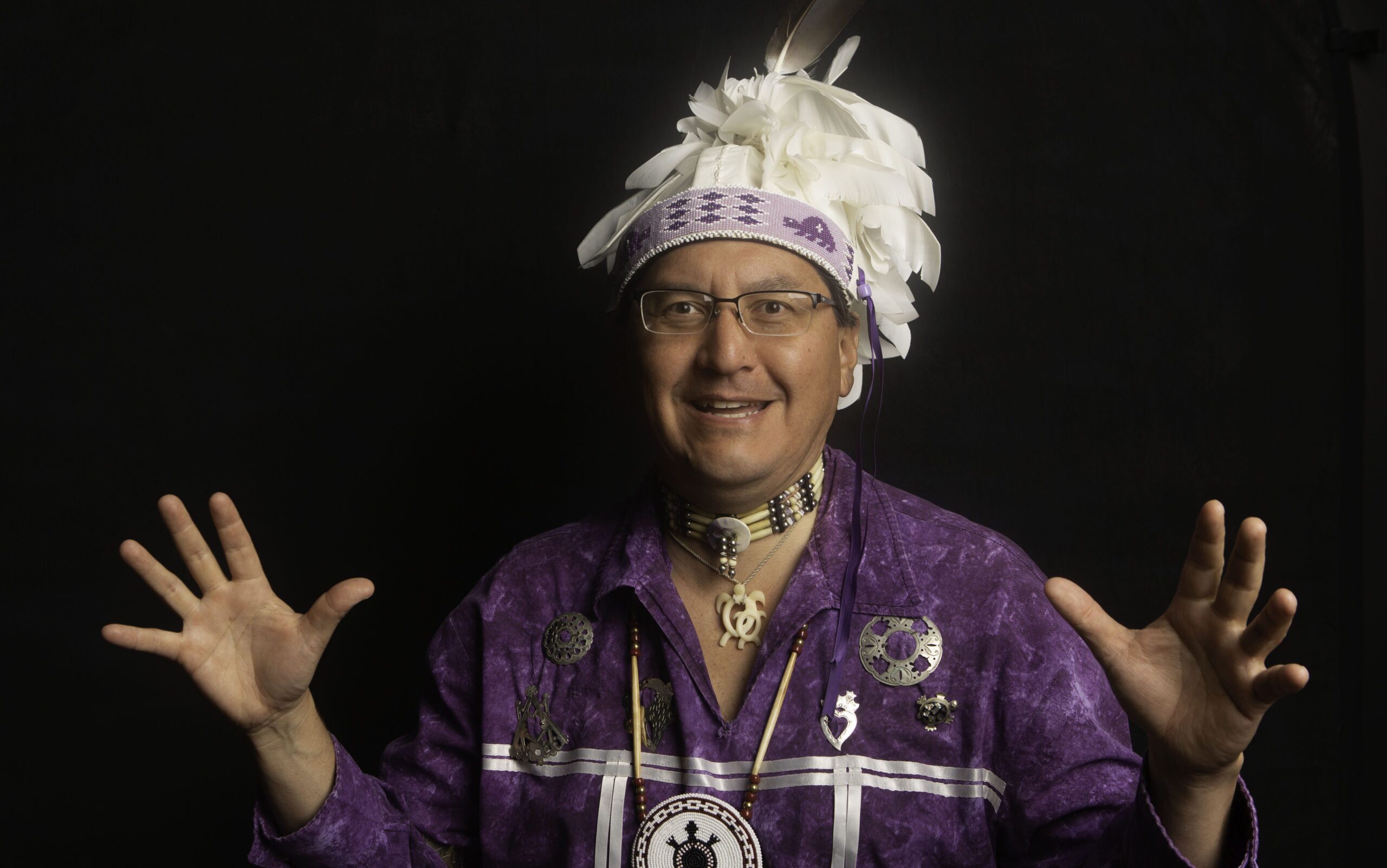
November is Native American Heritage Month, with the Friday after Thanksgiving being designated as Native American Heritage Day by President Obama in 2009. This is also a time of year that people associate with Native Americans in relation to the first Thanksgiving and a good time to educate ourselves about the real history of that event.
Perry Ground, professional storyteller and member of the Turtle Clan of the Onondaga Nation, gave a presentation at the Groton Public Library on Nov. 8, titled “Re-Thinking Thanksgiving, A Native American Perspective of an American Holiday.”
By Cathy Shipos
“One of the things I talk about is sort of the uncomfortable history,” Ground said. “Many Native American people today view it as a time when the stereotypes and story of Native America are mistold. The vast majority of tribes in the US really had nothing to do with this feast or the creation of this holiday, but it is a time when we are often asked about how we celebrate and what we do.”
Though Ground says the Haudenosaunee (called Iroquois by the European settlers) in Central New York were not directly involved in the first Thanksgiving, he welcomes the attention as an opportunity to help people better understand both the historical and cultural accuracy of this event.
“Many things within the story of this bucolic feast between the Pilgrims and the Wampanoag peoples in what we now call New England are simply not true,” Ground said.
Using primary source documents like letters and diaries from people who were actually in attendance at the historic feast in 1621, Ground challenges his audience to identify fact from fiction.
“I do this in a fun and interactive way by giving people a little quiz,” Ground said. “People guess what they think really happened and they find out that almost everything they think is incorrect. For example, the foods eaten at this event were vastly different from the foods that people eat at Thanksgiving now.”
While there might have been a turkey at the original three-day feast, it was likely supplemented by venison, pigeon, eel and lobster. There would not have been any potatoes or yams, nor any pastry crust for pies. Cranberries may have made an appearance, but nothing resembling the sweet concoction we know today.
What were the settlers and indigenous people drinking at this harvest meal? Probably water or sassafras tea. The Wampanoag would have shown them which native plants to gather for tea, but the settlers would not yet have had materials for replenishing their beer supply.
“One of my questions for the audience is whether English settlers stopped in Massachusetts because they were out of beer,” Ground said. “Everybody thinks that is crazy, but is 100% true. They were headed to the Virginia colony, but their drinking supply ran low. Everyone on board drank beer and wine because they were unable to carry enough fresh water for the long journey. Beer changed the history of North America.”
Corn, a staple of the Wampanoag diet, did play a central role at the first Thanksgiving in the form of breads and porridge. In fact, corn is one of the main reasons for the celebration.
“The whole reason for this feast is what [Edward] Winslow wrote in his letter–’God be praised we had a good increase in Indian corn.’ They are celebrating the fact that they have enough in storage to get through the winter,” Ground said. “They will not starve to death like half of the company did the previous winter, when they arrived too late in the year to plant or harvest crops.”
The corn they grew is an indigenous variety called white corn, a much hardier and more nutritious variety than the sweet yellow corn we grow today. It is also an example of the exchange of knowledge and sharing of resources between the native peoples and the settlers.
“The Wampanoag people in New England were growing the same type of corn that was grown here in New York,” Ground said. “Everyone has heard of the three sisters—squash, beans and corn. Of these, corn is the most vital. Why? Because it can be dried and eaten through the winter. It was a critical component of the Haudenosaunee diet as well.”
The seeds for this type of corn had been lost for a while due to the domination of yellow sweet corn varieties. Thanks to efforts like the White Corn Project at Ganondagan State Historic Site and the heritage seed conservatory at Onondaga Nation Farm (braidingthesacred.org) to bring back indigenous plants and crops, Haudenosaunee white corn has made a tremendous come back.
The public can purchase dried white corn and white corn flours under the “Iroquois” brand name in the bulk section at GreenStar in Ithaca. These versatile products can be used to make breads, puddings, soups and salads. Recipes like Pumpkin Cornbread or Three Sisters Harvest Vegetable Soup can be found at the Ganondagan website (iroquoiswhitecorn.org). This might be a fun and easy way to introduce an indigenous flavor to your Thanksgiving feast.
You might also choose to incorporate a Haudenosaunee Thanksgiving Address at your gathering.
“The term ‘thanksgiving’ means something different to Native Americans because we don’t think of it as just one day,” Ground said. “We give the address whenever we gather for a religious ceremony, a board meeting or a social event to show our gratitude for everything in the world around us. It is different every time, but there is a pattern. We start with the Earth and work our way up to animals, trees, birds, sky and spirit world. We do it to show thankfulness, but it is also a collective coming together. When everybody is hearing the address, it is supposed to focus people’s minds. Now we come together as one.”
Ground is quick to say that he doesn’t want to take away anyone’s turkey, in fact he indulges in all the usual Thanksgiving fare himself. He does want to correct some of the misconceptions people have about the origins of the holiday.
“When I give this talk, some people think I’m trying to take away their Thanksgiving. That is not true,” Ground said. “I applaud that people have their family traditions. But I think the more we can understand the culturally accurate and sensitive materials that I am sharing, the better we see that this event was an example of peaceful co-existence between two very different groups of people. If that is the example that we use for Thanksgiving then that is something worth being thankful for.”
Related Articles
New bakery and coffee shop brings community and homemade treats to Newfield
Morning Moon Coffee and Bakery opens in Newfield, offering homemade treats, coffee and a cozy community space run by Amy Heffron.
End of an era: Sisters and family say goodbye to Royal Court
Royal Court restaurant Ithaca closes after 50 years, ending a family-run legacy built by sisters Marilyn Ryan and Dorothy Sturtevant.