Lansing Town Board votes in favor of climate change fund
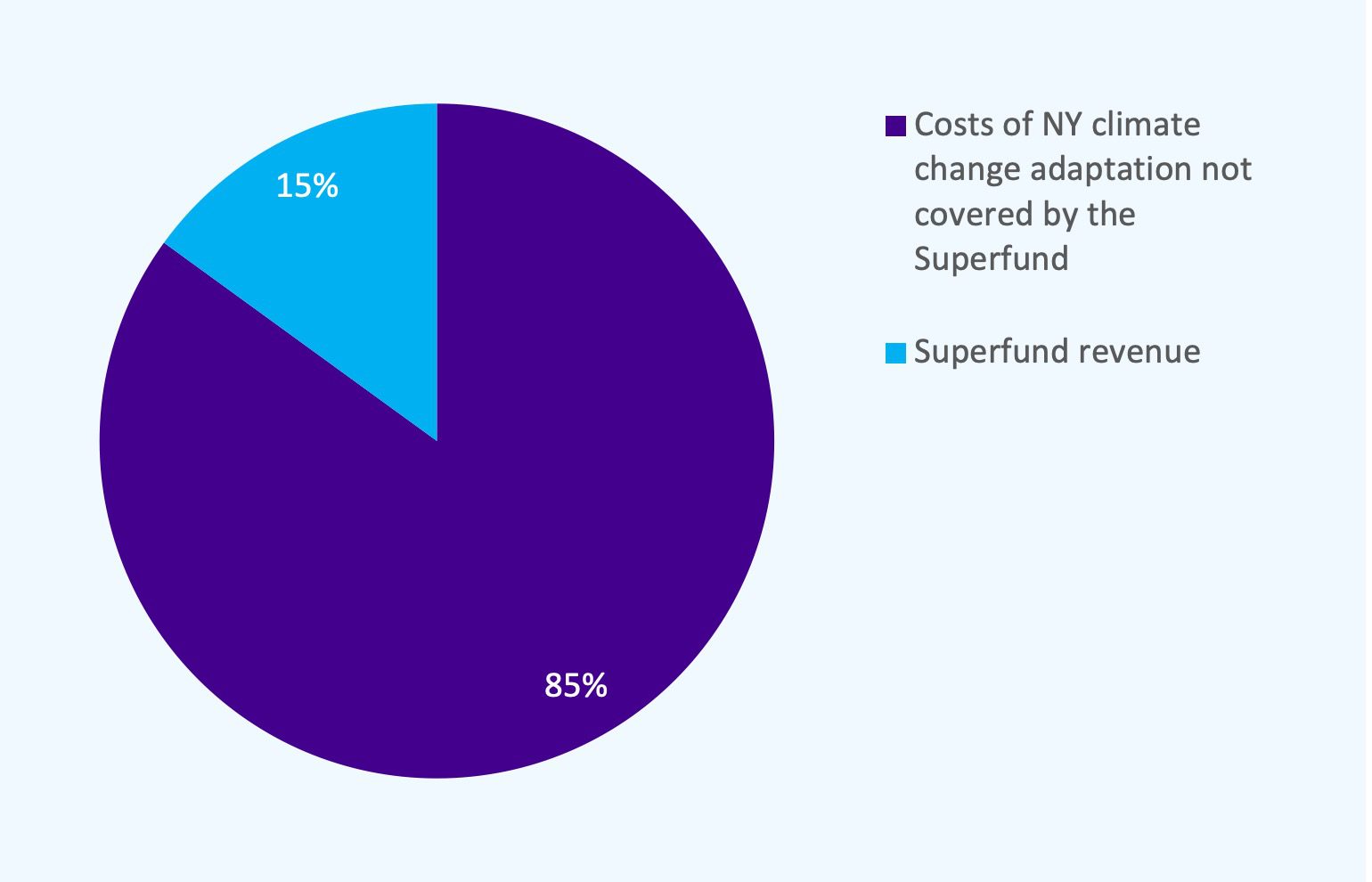
Revenue from the Climate Change Superfund Act as a proportion of estimated climate adaptation costs for New York State. Image by Fiscal Policy Institute
The Lansing Town Board is advocating for a statewide measure that could ensure state funds go toward helping localities mitigate and recover from damages caused by the effects of climate change.
The board unanimously approved a resolution at its Nov. 20 meeting urging Gov. Kathy Hochul to sign the Climate Change Superfund Act, a bill that passed both the State Assembly and the State Senate earlier this year. The bill awaits the governor’s signature and has been on her desk for about six months with no movement.

“It creates a fund to help mitigate the issues that come about from climate change,” said town board member Joseph Wetmore. “It won’t necessarily affect us unless we have problems resulting from climate change, in which case there will be money available to help us with it.”
Proponents of the bill with the New York Public Interest Research Group (NYPIRG) say that the bill would make polluters pay for potentially devastating consequences of natural disasters ushered in by climate change. Currently, rebuilding and strengthening local communities falls on municipal governments and everyday taxpayers.
“In 2023, New York taxpayers paid $2.1 billion for climate repair and resiliency efforts; the
Climate Change Superfund Act would raise $3 billion annually from the state’s largest oil and
gas polluters,” NYPIRG officials wrote in a press release.
Over 100 local elected officials from across the state; 250 environmental, labor and faith organizations; and 180 youth organizations supported passage of the Climate Change Superfund Act back in the spring, NYPIRG officials say.
According to the resolution approved by the Lansing Town Board:
- The total cost of climate change adaptation will be well over $500 billion for the state of New York. New Yorkers will face increased costs of about $4,000 per person over the next 25 years.
- The total revenue from the Climate Change Superfund Act will cover less than 15% of estimated state climate change adaptation costs.
- The superfund bill applies only to companies that emitted over 1 billion metric tons of CO2 between 2000 and 2018. The largest eight of these fossil fuel companies collectively earned $389 billion in profits in 2022 alone, meaning that an annualized fee of $3 billion amounts to less than 0.8% of industry profits.
- The assessed fees imposed on companies by the bill will not be passed on to consumers and will not raise energy costs. The superfund is designed to impose an assessment on the past actions of mega emitters. This methodology is similar to that of the 1998 Tobacco Master Settlement Agreement. Because these assessments are based on previous behavior, they do not influence current or future decisions of these companies.
Environmental Advocates of New York, a group that lobbied for the bill’s passage during the previous legislative session, noted in a memo that the funds collected would be used for infrastructure projects such as coastal wetlands restoration, storm water drainage system upgrades and energy-efficient cooling systems in public and private buildings. Disadvantaged communities would receive at least 35%, with a goal of at least 40%, of the overall benefits of program spending.
State Sen. Lea Webb, a Democrat representing the State Senate’s 52nd district, said that the governor should sign the bill, as the costs of recovery from these natural disasters are rising. Webb cosponsored the bill in the State Senate.
“The Climate Change Superfund Act, will establish the Climate Change Adaptation Cost Recovery Program and the Climate Change Adaptation Fund, which will help our region and state to address the growing challenges posed by climate change, ensuring that the costs of necessary adaptation efforts are distributed fairly and effectively,” Webb said in a statement issued to Tompkins Weekly. “Climate change is not a distant threat — it is a present reality that requires immediate and sustained action. By signing this legislation into law, Gov. Hochul will demonstrate that New York intends to tackle the climate crisis head-on, providing our communities with the resources to prepare, while prioritizing the health, safety, and economic well-being of New Yorkers.”
Lansing at Large appears every week in Tompkins Weekly. Send story ideas to editorial@vizellamedia.com.
In brief:
The annual election in the Lansing Fire District will take place on Dec. 10 between 6 p.m. and 9 p.m. at the Central Fire Station, located at 80 Ridge Rd., for the purpose of electing one fire commissioner for a five-year term. There is also a second position, electing one fire commissioner for a year-long term.
Any candidates for office must notify in writing the intent to run for office, and which term of office, to be placed on the ballot for said office, with the district secretary.
Author

Related Articles
Village of Lansing wins more than $500K for new sidewalks
Lansing sidewalk funding exceeds $500K as the village earns state support through New York’s Climate Smart Communities program.
TeraWulf AI data center wins zoning appeal in Lansing
TeraWulf’s proposed AI data center at the former Cayuga Power Plant site in Lansing moves forward after winning a key zoning appeal on Dec. 22.