
Children’s literacy advocate extends her reach
By Sue Smith-Heavenrich
Katrina Morse is passionate about reading, which is good because she’s been working at Family Reading Partnership for the past 15 years. Morse, who began working as a program director, shares the position of Interim Co-Executive Director of Family Reading Partnership with Elizabeth Stilwell. Her work is helping to create a “culture of literacy” in the community.
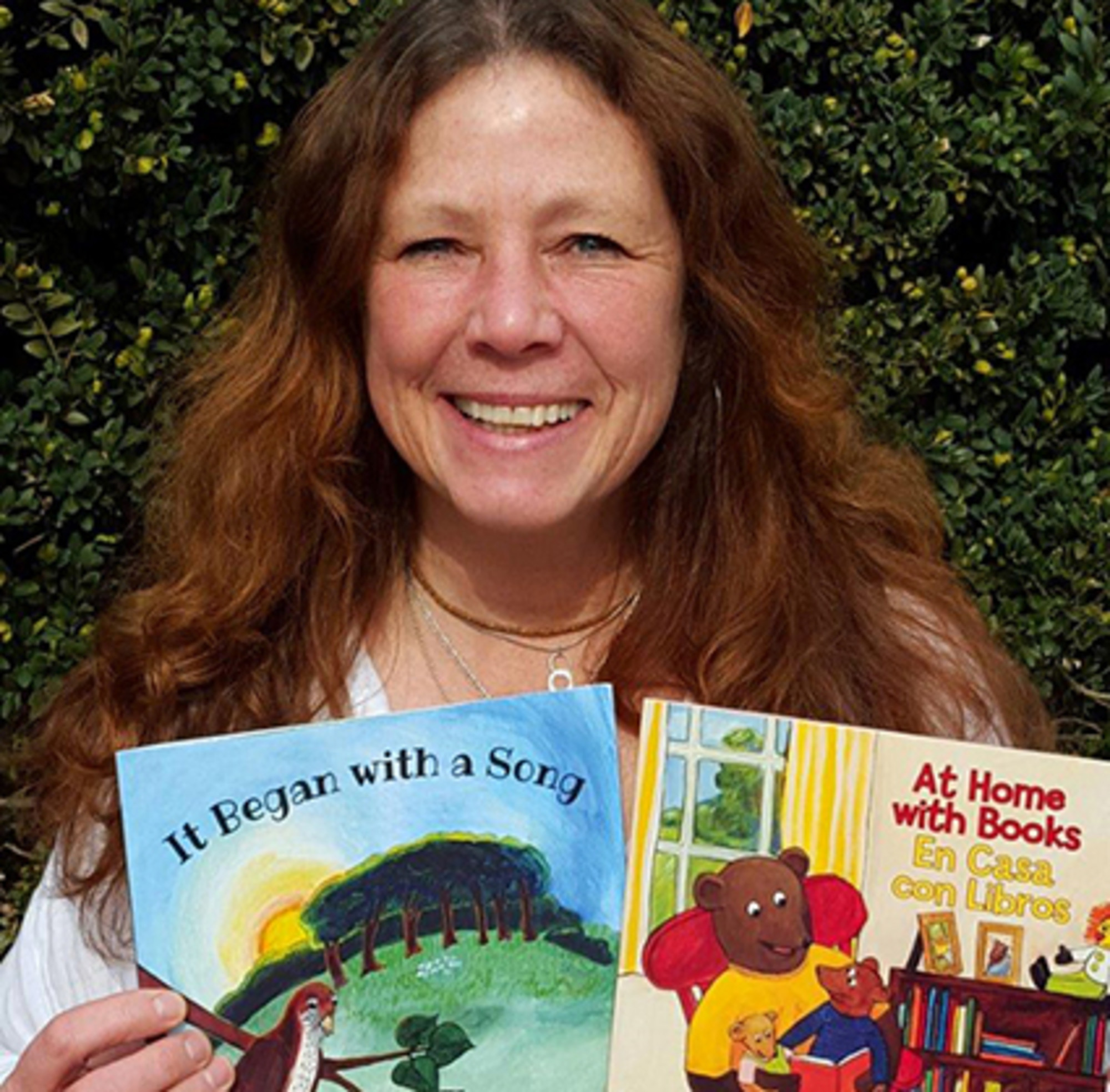
What does that look like in action? For Morse, it means visiting the library to read aloud for family story hour, which is exactly what she was doing on March 12. March, it turns out, is National Read-Aloud Month, and Morse had the perfect story to share: “At Home with Books.” It’s about brother bear and his sister who love to listen to stories. They listen at the breakfast table, sitting with grandma in her rocking chair and after getting tucked in for bed.
Morse published the book in 2007 as a resource to help families find a variety of ways to share books. In addition to the story, she included lots of reading-related activities at the back of the book. She read the book at story hour because reading aloud is important.
“It creates a relationship between you, your child and the book,” Morse says. If children have a positive relationship with books, it helps them later when they are learning to read.
Reading aloud also increases children’s vocabulary, says Morse. “It introduces them to words they wouldn’t normally hear in everyday conversation and gives them an opportunity to hear how words are pronounced.” It also enriches their knowledge of the world by sharing experiences and information they might not otherwise gain.
There are so many ways to share a book. Children can create their own stories based on the illustrations in a book. That helps them learn expressive language and develop their own ideas. Or parents and children can act out the entire story or part of a story, make noises, or read dialog in funny character voices.
“My father read us “Chitty Chitty Bang Bang,” and he would put a playful emphasis on “bang bang” every time he read it,” Morse recalls.
Some books open up possibilities for further exploration. For example, a book about ducks might lead to a trip to Stewart Park where kids could look for ducks. It’s also fun to play around with language. If there’s a character named Mike, you might come up with a list of words that rhyme with his name.
Literacy skills—the ability to read, write, and communicate clearly—are important to a child’s success in school. Building those skills starts at home, Morse says. And early experiences with books are what build a strong foundation for learning.
Nationally, about 40 percent of parents read to their children on a regular basis. “That percentage is higher in the Ithaca area,” Morse says. “Even so, in our own community nearly a quarter of our children enter school with little or no contact with books in the home.” Family Reading Partnership works to change that by increasing book ownership. That includes partnering with services that work directly with families, including doctors’ offices and the hospital.
Morse has also been hard at work on another project: translating “At Home with Books” into Spanish. This month the bilingual edition of her book hit the shelves. The project grew from a conversation Morse has with the National Head Start organization while she was compiling resource guides for them. Would she be willing to translate her book? Fifty percent of the children in Head Start programs are from Spanish-speaking homes.
Rather than create a Spanish edition, Morse decided to go bilingual. This way, Spanish-speaking readers can strengthen their English, and readers who want to learn Spanish can reinforce their language-learning.
“But I don’t speak Spanish,” says Morse. She needed someone who could do more than simply translate word for word. Fortunately, local resident Juan Brache was able to help. “I decided to put Spanish and English on the same page,” Morse explains. This presented with two challenges. First, she had to fit extra text on the page in a way that didn’t obscure any of the illustrations. Then, she had to figure out a way to distinguish between Spanish and English text.
“I didn’t want to use different fonts, because font styles seem to have different personalities.” In the end, Morse decided to go with color: English in black, Spanish in red.
The bilingual version of the book has been available since the beginning of the month, and already Morse has received positive feedback. One parent told her that while she could “figure out” how to do the activities, having them written in Spanish is “very respectful”. As for Morse, she knows presenting it in two languages makes her book accessible to more families.
Morse has written another children’s book as well. “It Began with a Song” brings a day to life through the lives of the plants and animals that wake up with the sun. “I included a meadow song and dance, too,” Morse says. You can find more of her work at www.katrinamorse.com.
To get a copy of “At Home with Books/En casa con libros” visit the Family Reading Partnership website at www.familyreading.org or visit their office at 54 Gunderman Road in Ithaca. For the remainder of March (National Read-Aloud Month) there is a special price of $4 per book.
Related Articles
5 things to do in Tompkins County this weekend
Plan your visit and discover what’s happening this weekend.


Tompkins Chamber announces Rob Montana as new vice president
Rob Montana, community leader and communications professional, has been appointed vice president of the Tompkins Chamber, where he will help drive economic growth, workforce development, and community engagement.