
Lawmakers review state budget
By Jay Wrolstad
There is much to like in the $156 billion state budget approved April 1, say two local lawmakers representing opposite sides of the aisle in Albany, but they both have bones of contention regarding the spending plan and the state’s fiscal policies.
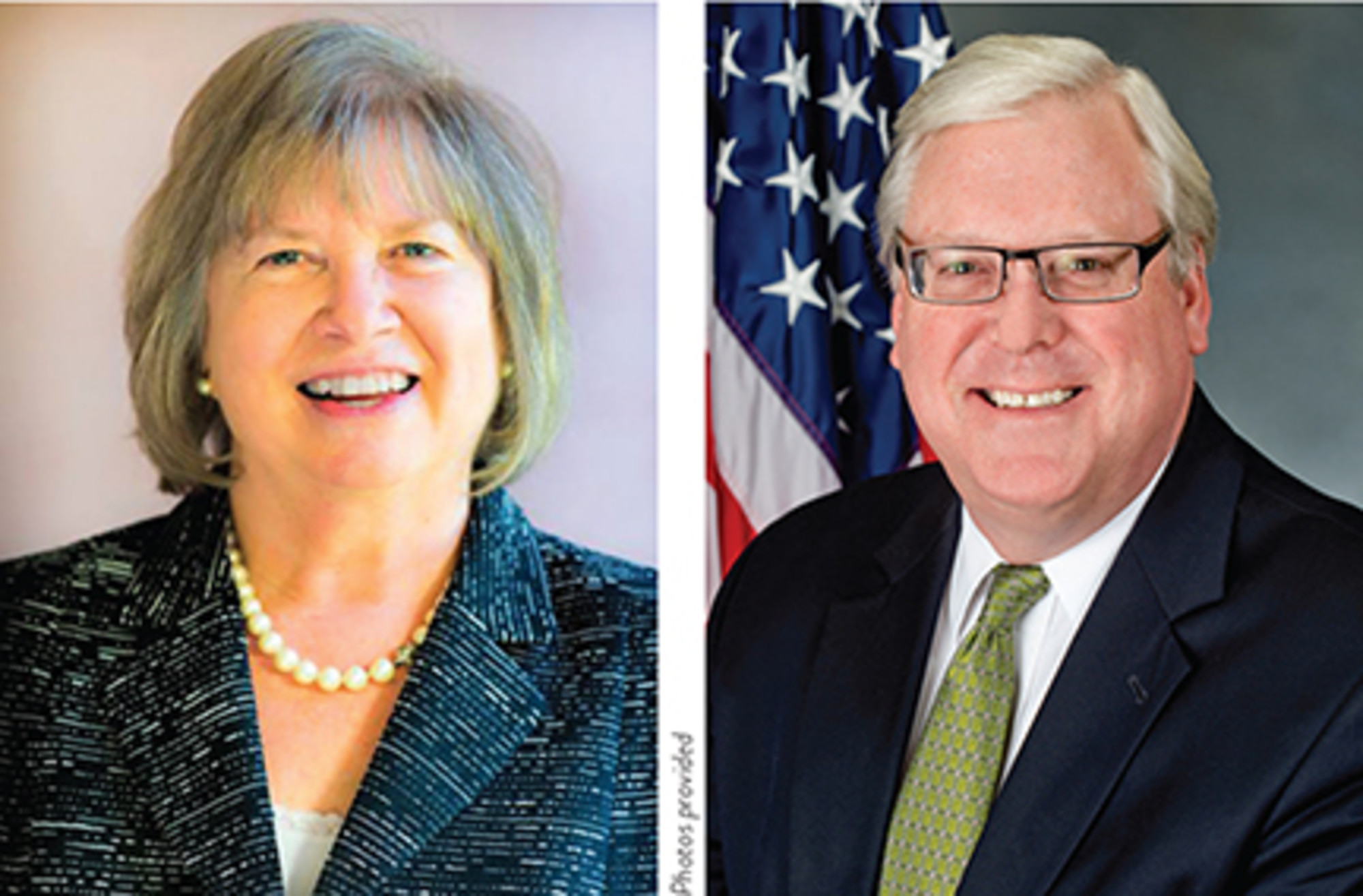
“There is always some compromise involved with our negotiations, and there were some things in the Assembly budget that were not included in the final proposal, but I am satisfied overall with the result,” says Assemblywoman Barbara Lifton (D/WFP-125th District).
She cites $1.47 billion in new state aid for education, for a total of $24.7 billion in school funding for 2016-17, as a big step in the right direction. “It’s still not quite enough, but we are on the right track toward providing adequate funding for our schools. Poor school districts still lack the resources for providing a good high school education, but we are making progress,” Lifton says.
“It’s critically important that this budget continues to drive badly needed funding to help localities across the Southern Tier and Finger Lakes regions address challenges for local schools, local environments, local economies, local taxpayers, and local health and safety,” says
State Senator Tom O’Mara (R/C/I-58th District). “The budget includes significant middle class tax relief. It increases funding for local roads and bridges, something that I’ve been proud to help lead the fight for over the past several years.”
He, too, applauds the increase in state funding for education, as well as the elimination of the Gap Elimination Adjustment (GEA), enacted in 2009 to help the state close a multi-billion dollar budget gap but has cost school districts statewide billions of dollars in state aid, as well a $627 million increase in Foundation Aid.
For Tompkins County, Lifton notes, the budget includes funding for communities impacted by the loss of revenue from the shutdown of power plants, based on payment in lieu of taxes (PILOT) agreements, which would provide compensation for Lansing and other areas where companies close their energy operations.
“There is $640 million in aid for the homeless and affordable housing, some of which will come to Tompkins County. And there is $27 billion in the DOT capital plan over five years for roads and bridges, and $5 million for upstate transit, which includes TCAT,” says Lifton. A freeze on higher education tuition will have a positive impact on students at schools such as SUNY Cortland and TC3, she adds.
Lifton and O’Mara both applaud increased funding for environmental protection in the state’s spending plan. “This year’s budget is being recognized as one of the strongest environmental budgets in New York’s history,” O’Mara says. “I’m especially pleased that the actions we’ve taken to fully fund the Environmental Protection Fund and to strengthen the Water Quality Infrastructure Improvement Grant Program, to name just a few, make great economic and environmental sense. There’s a great return on these investments to the state and localities.”
“The Environmental Protection Fund added $120 million this year, which funds solid waste and parks and recreation programs, among other concerns, and we now have a climate change account for the state,” says Lifton.
A new Middle Class Income Tax Relief Program is supported by both Lifton and O’Mara. Beginning in 2018, middle income tax rates will begin a phased-in reduction that will drop rates to 5.5 percent when the cuts are fully effective after seven years. The lower tax rates will save middle class taxpayers nearly $6.6 billion in the first four years, O’Mara states, with annual savings reaching $4.2 billion by 2025, or an average savings of $700 per year per taxpayer.
One issue that the two legislators don’t agree on is the minimum wage hike. As approved in the budget, the minimum wage will grow incrementally to $15 an hour by 2018 in New York City, while in the upstate region it will rise to $12.50 an hour by 2021.
“I was pleased that this wage hike was approved, along with paid family leave. These are huge victories for workers and are issues the Assembly has been working on for many years,” Lifton says. The minimum wage increase includes an understanding that provisions will be made for non-profits and others who are hardship cases, she notes, and under the approved budget measure, all employees in the state will contribute $1 a week in the form of a payroll deduction to establish the family leave fund, she explains.
O’Mara offers a sharply different perspective, saying, “Unfortunately, this budget includes a dramatic increase in the minimum wage that threatens to overshadow what’s enormously positive about this budget. I’ve argued against imposing this minimum wage burden on our farms, small businesses, schools, not-for-profit sector and others, and I’m deeply concerned about the potential job and other economic losses that could result.
“I strongly opposed this action, fought against it until the bitter end, and helped achieve some concessions to try to ease its impact upstate. But we were outnumbered and all the while threatened by Governor Cuomo that he would institute a $15 minimum wage across the state through the wage board like he did with fast food workers last year,” O’Mara adds.
The senator cited an additional $166 million to strengthen the state’s commitment to local heroin and opioid addiction prevention, treatment, recovery and educational services as a highlight of this year’s state budget.
“In Ithaca, in Penn Yan, in Hornell and throughout my legislative district, the heroin epidemic is spreading and placing increasingly heavier burdens on our systems of criminal justice, health care and social services—to say nothing of the devastation on individual lives and the lives of families,” he says. “Through the work of the Senate Task Force on Heroin, on which I serve as a member, and in other ways, we’re taking important steps with local input. But there’s much more work to be done to combat heroin.”
Looking ahead, Lifton sees a need to re-examine New York State’s spending policies. “There were important gains in this budget, but the 2 percent state cap on state spending enacted following the recent recession has resulted in billions of dollars in aid being cut from all municipalities and schools, and state agencies ranging from the DMV to the SUNY system,” she says. “They are holding the line, but they need to get beyond just making ends meet.”
Says O’Mara, “All of these actions and many more will benefit constituents and communities throughout Tompkins County and across the 58th Senate District and, most importantly, put in place important foundations that we can continue to build on for the future.”
Related Articles
Crystal Young prepares to become Groton’s new town supervisor
Groton town supervisor Crystal Young shares her plans to continue community service, green energy initiatives, and local improvements starting January.
Town of Lansing drops proposed moratorium on large-scale development
Lansing moratorium withdrawal clears the way for large-scale development projects, including the proposed AI data center near Cayuga Lake.