
Lansing debates year-long construction moratorium amid controversy over proposed AI data center on Cayuga Lake
The Town of Lansing is considering a year-long construction moratorium as officials begin a zoning code rewrite, sparking controversy over a proposed AI data center on Cayuga Lake. Supporters say the project could bring jobs and investment, while opponents warn of environmental risks and long-term impacts.
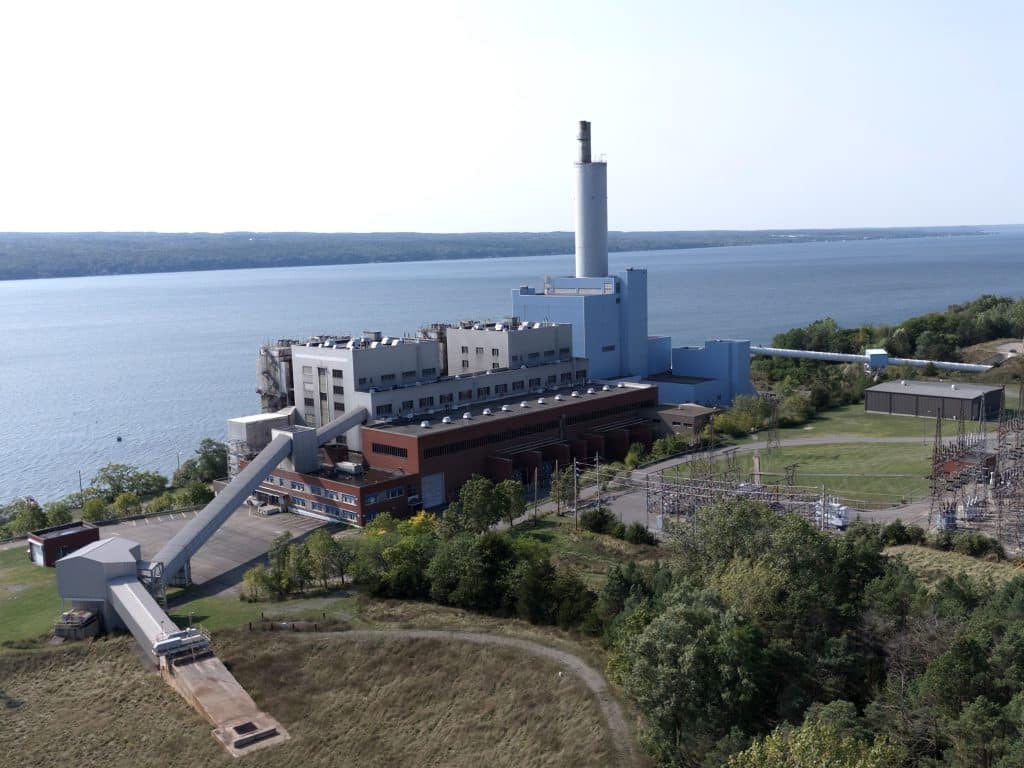
Cayuga Operating Company LLC, the company that owns the site of the former fossil-fuel powered electric generation plant, and Terawulf announced in August that they were entering an 80-year lease to rent the 183-acre site.
UPDATE: TeraWulf and IBEW Local 241/Tompkins-Cortland Building Trades Council are hosting an open house on Oct. 7 from 6 to 7:30 p.m. at the Lansing Middle School Auditorium. For more information, visit eventbrite.com/e/lansing-community-open-house-cayuga-data-center-project-tickets-1761488011059?aff=oddtdtcreator. To watch a livestream of the open house, visit www.youtube.com/@terawulf.
The town of Lansing is mulling a year-long moratorium on some new construction projects while town officials and consultants devise an overhaul of Lansing’s zoning code, but the timing of the move, coinciding with a proposal from a tech company to build an artificial intelligence data center on the shores of Cayuga Lake, has thrown the town into a storm of controversy and resident skepticism.
Town officials say that the move to rezone Lansing has been in the works since 2018 and has been propelled by $100,000 in state funding, refuting claims that local officials’ plans to further overhaul zoning laws are a direct response to the proposal to build the AI data center at the former Cayuga Power Plant. But that hasn’t stopped residents, trade unionists, elected officials and proponents of AI from vehemently opposing the proposed year-long moratorium.
Their opposition has created a flashpoint, with AI skeptics and environmentalists, who fear the potential environmental harm the center could cause to Cayuga Lake, on the other side of the clash.
Both camps presented their arguments at an almost three-hour-long town board meeting Wednesday. The public comment section was mostly treated by both sides as a referendum on whether or not the AI data center, proposed by Terawulf in August, would be good for the town.
Todd Brewer, the president of the Tompkins-Cortland Building Trades Council, said that the moratorium would be harmful to workers in the short term. It would also cripple the economic future of Lansing and Tompkins County. Brewer represents around 3,500 trades workers and is also the business manager for the International Brotherhood of Electrical Workers Local 241.
Cornell University, one of Tompkins County’s biggest employers, is likely to cut back employment in the coming years, Brewer said. That, he said, makes Terawulf’s data center proposal even more vital.
“We’re going to need these jobs. There’s going to be at least 100 electricians, and then all total with the job, there’s going to be at least 300 people on this job at one time,” he said. “This is going to create jobs afterward.”
Brewer added that he is not worried about potential environmental effects of the data center on the lake, noting that he doesn’t foresee wastewater going back into the lake.
But environmentalists in Tompkins County disagree.
Caroline Ashurst, a resident of the town of Ithaca, said she opposes the construction of the Terawulf AI data center and is in favor of the moratorium. She cited the massive water consumption these centers typically demand. A report from Bloomberg notes that an average 100-megawatt data center uses more power than 75,000 homes combined. It also consumes about 2 million liters of water per day, or about 530,000 gallons, according to the Bloomberg report, which uses figures from a study from the International Energy Agency (IEA) released in April.
The IEA report estimates that by 2030, data centers will consume 1,200 billion liters of water.
“Do we want to live in a world where AI and computers take everyone’s job? Is that what you want for your future, for your children, your grandchildren?” Ashurst asked. “Where are they going to get that water from? This area is a natural resource haven. It’s why I moved here — because this area considers ecological sustainability for health, for human and families and children and their health. Why are we selling it down the river?”
Business leaders opposed the moratorium on the basis that it is too broad. Along with other speakers at the public hearing, business leaders said that they would support amendments to the bill that would shield local businesses from any negative impacts.
“I am concerned that having this moratorium for a year is going to have a negative impact on the small businesses that want to be operating here in the town of Lansing,” said Peggy Coleman, president of the Tompkins Chamber, the county’s chamber of commerce. “I’m just encouraging you that if you do decide to move forward with a moratorium, that you reconsider the length of time or create more carve-outs for businesses to be able to come and invest in this beautiful town.”
The overwhelming number of impassioned comments and presentations from residents regarding the AI data center at the Sept. 24 town board meeting on the town’s budget pushed the town to delay its vote on the moratorium to Oct. 15.
“Because there were so many comments received in a short amount of time, we will not be voting on the moratorium tonight but will move it to the October meeting,” said Town Supervisor Ruth Groff. “We feel that we need time to review all comments so as to give thoughtful consideration to each and every one of them.”
Zoning re-write
The moratorium on some new construction stems from a tenet of the town’s comprehensive plan that calls for updates to the zoning laws in Lansing. That process started in 2018 and moved forward in 2019, when the town board created a Conservation Advisory Council, a body of volunteers that helped create an Open Space Conservation Plan and other conservation tools.
Those tools called for zoning districts to be split into Rural Agricultural (RA) zoning districts and agriculture zoning districts (AG) to better align zoning with land use goals, Groff said in an email to Tompkins Weekly.
“As work continued to revise additional districts, it was determined that updating one district at a time was inefficient and slow,” she wrote. “A budget proposal of $100,000 to hire a consultant for a total zoning rewrite [in 2024] was declined due to lack of funding.”
The town was then granted the $100,000 in February as part of state funding from the New York Department of State’s Smart Growth Community Planning Zoning Grant program for the purpose of a full rewrite of the zoning code.
In April, state representatives met with the Groff, Lansing’s director of planning and the town’s deputy supervisor to review all aspects of the contract, including reporting requirements.
Then, a resolution authorizing Groff to sign the contract for the $100,000 grant was passed by the town board on April 28. That contract stipulated that the town needed to create a citizen Zoning Advisory Committee.
A request for applications from the community for this committee was posted, and all applicants were accepted and appointed at the August town board meeting, Groff said.
Then, the town put out a request for proposal in that same month to procure a consultant for the zoning rewrite, eventually awarding the bid to Colliers Engineering and Design on Sept. 17. At that same Sept. 17 meeting, the board discussed whether to move forward with a moratorium as the zoning rewrite process gets underway.
What is the moratorium?
The moratorium is a local law that prohibits some new construction in the town. It does not apply to village of Lansing projects or to large-scale solar projects — those that generate more than 25 megawatts — as these are regulated by the state. It also features several exceptions for projects underway or not governed by town laws.
The law does not affect projects approved by the town’s planning board prior to the law’s passage. It will not stop any project that is under construction. The moratorium also exempts the following:
- “Traditional agricultural activities protected by law,” Groff wrote in a statement.
- Construction of single-family and two-family homes, including accessory residential buildings.
- Projects permitted through an existing zoning permit or special use permit.
- Residential subdivisions of eight lots or fewer in residential zones one, two and three.
- Small retail, commercial or office spaces under 3,000 square feet.
- Certain sign permits for existing businesses or facilities.
- Appeals or reviews of previously approved actions.
- Projects under the jurisdiction of New York state or the federal government.
- Modifications, upgrades or permits for cellular and digital service towers regulated by the Federal Communications Commission or recognized state utilities.
- Projects granted variances that support walkable communities, recreational amenities, tourism-related businesses and development of the town center.
Groff also noted that any proposed development not covered by the listed exemptions may appeal to the Zoning Board of Appeals.
“The moratorium was intentionally delayed until the zoning revision process officially began, ensuring development could continue until the review framework was in place,” Groff wrote in a statement.
Ultimately, the moratorium and the zoning rewrite are tools to support smart and sustainable growth, Groff noted.
“For years, the business community has voiced concerns that our current zoning is overly complicated, difficult to interpret and sometimes contradictory,” she said. “This pause gives us the opportunity to create clear, modern and consistent zoning regulations that support thoughtful development and reflect the needs and values of our community.”
Terawulf’s proposal
Cayuga Operating Company LLC, the company that owns the site of the former fossil-fuel powered electric generation plant, and Terawulf announced in August that they were entering an 80-year lease to rent the 183-acre site.
“This transaction marks a major step forward in the Company’s expansion of high-performance computing (HPC) and AI data center hosting,” according to a press release issued by Terawulf.
The lease includes reciprocal purchase and sale options exercisable for $100 beginning in year 50. The lease provides TeraWulf with exclusive rights to develop up to 400 megawatts of digital infrastructure capacity, with 138 megawatts of low-cost, predominantly zero-carbon power expected to be ready for service in 2026.
“Located on the site of a former coal-fired power plant, the Cayuga property features robust existing electrical infrastructure, an industrial-scale water intake system, and redundant fiber connectivity — critical components for supporting enterprise-scale computing workloads,” Terawulf officials wrote in the press release.
Kerri Langlais, a company executive, noted in the release that the lease provides the company with access to large-scale, sustainable infrastructure in attractive power markets with predominantly zero-carbon energy and robust fiber connectivity to key hubs, such as New York City.
“With 138 megawatts expected to come online in the second half of 2026 and scalable capacity up to 400 megawatts, Cayuga further reinforces our position as a destination of choice for enterprise and hyperscale customers seeking low-cost, next-generation compute infrastructure,” Langlais said.
Terawulf says that nearly 90% of the electricity in upstate New York comes from zero-carbon sources, noting that the Cayuga Lake site benefits from one of the cleanest energy profiles in the country.
“The property’s existing substation and four transmission lines support near-term scalability, while electricity costs averaging below $0.05 per kilowatt-hour reinforce Terawulf’s low-cost operating model,” company officials wrote. “An approximately 67 megawatt solar installation is planned, and an 800 megawatt/per hour battery energy storage system is in advanced development on parcels adjacent to the leased area.”
Sean Farrell, Terawulf’s chief operating officer, was present at the public hearing. He said the company’s facility in Somerset in Niagara County is proof that the company can deliver on promises of green energy and sustainable development. Several Somerset residents spoke in favor of the development and against the moratorium at the hearing.
Farrell said that the Somerset facility is built with recycled materials. He also said that the center would bring in jobs for local workers.
“We’re not bringing in new people. We want to support the local community,” Farrell said.
He also noted that modern data centers, like the one Terawulf plans to build, are not the same as the ones that eat through natural resources such as water.
“I fully agree that a data center of yesterday … was horrible. We have an industry-leading [center], one of the best efficiencies of any data centers built in the United States at Somerset,” he said.
That center, Farrell added, also uses ultra-low-noise fans.
“If we do the full build-out, this site has $3 billion of fair market value assets. That goes directly into the community.”
But some residents were not convinced. They say it is too soon to contemplate the development of the data center.
“I don’t understand how this can be a meeting today to decide something so tremendously huge for all of us,” said Sarah Lounsbery, a town resident. “There can’t possibly be enough information. This is our community.”
Lounsbery cited an article from Hunterbrook that she noted disputes some of the company’s claims.
“First of all, they are backing down on their sustainability [claims],” she noted. “That is not their issue anymore. It’s less obvious in their social media and a little bit about their energy that Terawulf uses [in Somerset] … over three quarters of its total energy consumption cannot be legally claimed as renewable.”
Hunterbook reported that the New York Power Authority (NYPA), which supplies 45% of the energy used at the Somerset facility provided by NYPA, cannot be claimed as renewable.
“What are we supposed to believe?” Lounsbery asked. “So absolutely, a moratorium, probably a year, won’t be enough, and if Terawulf is that powerful, they can wait a year.”
Author

Related Articles
Cayuga Medical Center nurses to rally, alleging anti-union tactics by hospital management
CMC nurses plan a rally, alleging unsafe staffing and illegal anti-union tactics as the hospital highlights recent patient-safety gains.
Dryden Fiber looks back on another year of service
Dryden Fiber reflects on a year of growth as the municipal internet provider expands service across Dryden and Caroline.
Cayuga Medical Center improves patient safety score
Cayuga Medical Center Leapfrog Grade rises to “B,” showing improved patient safety and nursing care quality.