
Sponsored Sponsored content Protecting Lansing’s future starts with progress
Lansing future progress is supported by TeraWulf, reusing the Cayuga Data Campus to bring jobs, clean energy, and community growth.

Visitors to Ithaca Falls take in the view.
By Kerri Langlais
Change isn’t easy — even when it’s good. It brings uncertainty, and it’s natural to want to hold on to what we know. But sometimes change is how we protect what matters most.
I’ve known Lansing for more than ten years. Some of my closest colleagues and friends live here — people who helped build our company, TeraWulf, and who care deeply about this community.
I understand why some folks see us as outsiders. Lansing looks out for its own. That pride and protectiveness are part of what make this place special. But the truth is, we live and work here too – and we want what you want: a strong future for the town.
For generations, the Cayuga site has been a fixture on the lake. It powered this region as a coal plant for decades. Now, it has the opportunity to power a new kind of progress — one that’s cleaner, quieter, and longer-lasting. The Cayuga Data Campus will reuse that existing industrial site to support the computing and research industries driving today’s economy.
When the coal plant shut down, it left a hole — in jobs, in tax revenue, and in the town’s sense of direction. That’s why, at the time, both the Town Board and Assemblymember Anna Kelles supported the idea of a data center at the site. The goal was simple: find a modern use for old infrastructure that could benefit Lansing again.
The project will bring steady, good-paying jobs, expand local broadband, strengthen the power grid, and generate meaningful tax revenue for the school district and town.
Still, I know some people remain uncertain. That instinct to protect what’s familiar is understandable. But when people take the time to learn the facts, I see curiosity replace concern — that moment when they realize something new doesn’t have to erase what came before; it can build on it. That’s what we’re trying to do here.
What’s troubling is that, rather than leaning into progress, some Town leaders have chosen to stall it. A hastily announced moratorium — aimed squarely at a single project — is not a strategy for responsible growth; it’s a reaction that risks lasting consequences. It’s remarkable that the Board would consider such a sweeping measure, one that halts investment and limits future tax revenue, without any clear understanding of its long-term impact. I think many residents share the same question: where is the Town’s five-year plan? What’s the strategy to close the growing revenue gap? To date, the Supervisor has been unwilling — and perhaps unable — to articulate one. That uncertainty should concern everyone who cares about Lansing’s future.

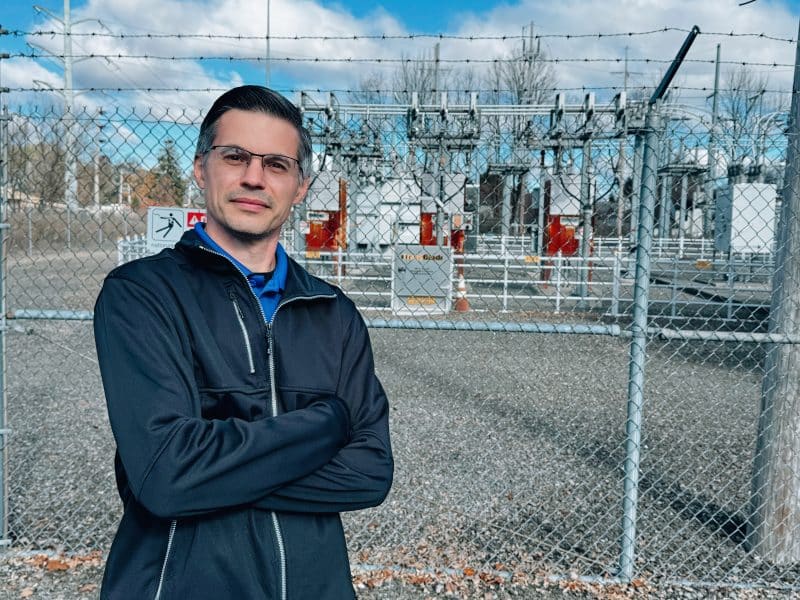
Kerri Langlais, Chief Strategy Officer for TeraWulf.
Tuesday’s election results sent a clear message: Lansing residents have had enough. Roughly 72% of voters supported candidates opposed to the moratorium. That includes long-shot write-in candidate John Duthie, who entered the race only after the moratorium was proposed — and barely lost to moratorium proponent Joe Wetmore. Instead of acknowledging that outcome, Town leadership has dug in further.
As Town Board member Judy Drake — the leading vote-getter in Tuesday’s election and an opponent of the moratorium — said at last week’s meeting: “Two of our planning boards have said we don’t think we need to do it. We’ve had staff say we don’t think we need to do it. So why are we doing it? What are we targeting? What are we trying to prevent?”
Across the country, small towns like Lansing are asking the same question: how do we hold onto our identity while adapting to a world that’s moving faster every year? In places that have embraced new opportunities — carefully and with community input — jobs came back, families stayed, and tax bases grew. Where change was shut out entirely, things only got harder.
Change will always feel risky. But standing still carries its own risk too. If a town isn’t moving forward, it’s slowly falling behind — not just economically, but in what it can offer the next Generation.
The Cayuga Data Campus isn’t a cure-all, and it won’t solve every problem overnight. But it’s a step in the right direction — one that reuses what’s already here instead of sprawling outward, that supports families and schools, and that respects the quiet and the lake that define Lansing.
We won’t all agree on every detail, and that’s okay. What matters is that we keep talking — respectfully, honestly, and face-to-face. That’s how good communities make decisions.
Before I close, I’ll share a note I got from my colleague and good friend Jerry on Sunday. He wrote, “Kerri, life is busy, I know — but please bring your kids here for a weekend. There’s a ton of hiking in Lansing and Ithaca.” He attached a photo he’d just taken of the falls — the one you see above.
I may live in New York City now, but every time I visit upstate, I’m reminded why it’s worth protecting and investing in. Lansing has something many places have lost — a genuine sense of community, connection and balance. That spirit is what makes Lansing’s future worth building on.
You can find more information and supporting documents at www.cayugadatacampus.com.
TeraWulf is a leader in digital asset mining and high-performance computing (HPC), delivering next-generation data center solutions. We design, build, and operate state-of-the-art infrastructure that fuses advanced computing technologies with sustainable energy.
Author

Related Articles

Sponsored Sponsored content A holistic approach to wellness
William George Agency offers youth recreation programs that boost fitness, mental health, and confidence through holistic activities.
Sponsored Sponsored content Can the Grid Handle EVs? Debunking the Myth
Explore how Dovi Motors is leveraging modern infrastructure and smart EV technology make charging safe, efficient, and manageable for drivers and utilities alike

Sponsored Sponsored content Tech gifts for the holidays – and why fiber internet makes them even better
Explore the best holiday tech gifts and see how fast fiber internet from Empire Access helps your new devices perform their best this season.