
Almost Pitch Perfect
By Jamie Swinnerton
Tompkins Weekly
In an effort to increase youth programs throughout the county the Tompkins County Youth Services Department (TCYSD) awarded eight non-profit organizations a total of $20,000, but first, they had to argue for it. Similar to the popular show Shark Tank, where entrepreneurs pitch their one-in-a-million idea to a group of investors, the TCYSD held a pitch contest to give away up to $20,000.
Long before these pitches were created, years before they were even asked for, the TCYSD did an in-depth study of what youth in Tompkins County needed, and created goals to be achieved based on the findings of that study. Thus, the Achieving Youth Results needs assessment was born. When it came to budget season the county legislators gave TCYSD $20,000 to distribute where it saw fit. All pitches combined, the funds asked for totaled more than $30,000.
Applications for the pitch contest were due by Jan. 17, but the contest wasn’t held until the afternoon of Friday, Feb. 15 at the Hotel Ithaca. Each applicant was given 10 minutes to discuss the opportunity that comes with their program, the project overview, the underlying magic, project partners and sustainability, the project management team, key metrics, financial analysis, and overall summary. The panel judges for the contest include Randy Ehrenberg from the Community Foundation of Tompkins County, Tierra Labrada from the Human Services Coalition, Dominick Recckio from the Chamber of Commerce and Center for Transformative Action board, Ian Schachner who previously served on the board of Alternatives Federal Credit Union, and Karlem Sivira, who was a member of the Ithaca College Student United Way allocating grants. Amy Wilcox, from TCYSD, and Kathy Servoss, chair of the Youth Services Board, served as unofficial judges on the panel.
The rules of the pitches, said Servoss, were that they could not ask for more than $5,000, and whatever the organizations are asking for must be matched by at least 50 percent.
Pitches
• The YMCA of Ithaca and Tompkins County started off the pitch contest with presenter Ryan Allen, outdoor education director for the YMCA. The pitch asked for $3,800 to offset the costs of a bus to bring Ithaca area kids to the already in place and free YMCA outdoor education program, Nurture by Nature, that run every day of the week. Allen started off by telling the panel about the pitfalls of nature deficit disorder, a term coined by author and researcher Richard Louv in his 2005 book, “Last Child in the Woods.” As Allen described it, youth who aren’t introduced to outdoor activities tend to have higher rates of drug use, criminal activity, and lower rates of education.
• For the Enfield Community Council, presenters Ann Rider and Vera Howe-Strait told the panel about their proposal for two family trips sponsored by the council. The goal of the trips, to the Corning Museum of Glass and the Gifford Park Zoo in Syracuse, is to strengthen family ties and create lasting positive interactions between youth and their parents. The council asked for $1,288.75.
• To fill a need in Tompkins County, the Alcohol and Drug Council requested $1,200 for a therapy program specifically aimed at supporting family members of youth who are struggling with addictive disorders. The group, Families Helping Families (name subject to change), the program would be free and open to the public because insurance companies are currently reluctant to cover family services. “Once or twice a week I get a call from a very distressed, crying parent who wants to connect but they’re not able to get there because insurance doesn’t cover it,” said Helen Kaplan, clinic director for the council. The goals of the program are to prevent hospitalization and jail for youth fighting addiction, educate families about substance abuse and treatment, and reduce family stress.
• Dale Schumacher and Monalita Smiley from The Learning Web asked the panel for $4,175 for a Youth Clothing Closet. Currently, The Learning Web works with Tompkins County youth to provide hands-on, experiential learning. The clothing closet was prompted by a need they saw with the youth they work with: a judgment-free space to find youth appropriate clothes, possibly professional clothes for interviews and job experience. The closet would operate like a business and would be staffed by youth to gain customer service and retail experience. The organization has already started creating relationships with local vendors for clothes and reached out to the Ithaca College and Cornell University campuses for donations. “We believe this will be a national phenomenon,” said Schumacher. “We believe that this is a program that others can use and take to other communities.”
• From the Youth Farm Project, presenters Ann Piombino and Laura Arias asked the panel for $2,975 for some upgrades to the organization’s Mobile Market. The pitch explained that the mobile market needs to be more efficient, maintained for safety and longevity, and a little more attractive. Currently, the mobile market doesn’t have a back door, making it difficult for the staff and youth who run it to operate efficiently. With adequate signage and advertising, the market could increase its reach. The youth program aims to teach Tompkins County youth about food production through a social justice lens, which includes teaching participants about the lack of access that many county residents have to fresh, healthy produce, which the mobile market aims to provide.
• Ithaca Underground presenters Jeff Wilkinson and Taimur Gibson talked up the organization’s promotion and support for local bands, especially bands made up of local youth. Their youth-friendly events are open to all ages and are guaranteed safe spaces for all. But, these vents are largely supported and run by youth volunteers (mostly high school and college-aged volunteers). Their pitch asked for $5,000 to increase youth participation in their events by 15 percent by “improving our programming, documentation, outreach, and programming frequency,” according to the pitch contest application.
• Coddington Road Community Center (CRCC) presenters Jennifer Dean and Isaac Piha asked the panel for $1,500 to offset transportation costs for a new program that aims to connect youth from the local middle schools that would likely otherwise not meet until high school, which can segregate youth by geography. This summer, the CRCC is developing a plan with Southside Community Center to create programs at both centers that focus on teambuilding and peer engagement between youth from all across the Ithaca area.
• Weave Community Inc. pitch was centered around the goal of engagement. Presenters Kathrin Achenbach and Elizabeth Wolff spoke to the panel about the importance of giving teens and youth a space to gather and talk without being judged. They asked the panel for $2,003 to create a youth “café” much like the Dryden Community Café and the World Café. The aim would be to reach out to youth in the community whose voices are not often heard and give them the chance to share their ideas, concerns, and dreams and turn them into actionable ideas.
• The Greater Ithaca Activity Center came prepared to not only share their ideas but to let the teens they work with speak for themselves. Along with presenters Rahmel Mack and Travis Brooks, GIAC’s 10 minutes included input from teens Tidaysha, Akasha Black, and Aysia Louis. The GIAC group asked the panel for $5,000 to bring together a teen council tasked with creating several pop-up teen community centers once a month for eight months. They would be responsible for nearly every aspect of putting together the vents, including planning, advertising and organizing.
• A familiar face came back again when Jessica Dean spoke to the panel again, this time arguing for the Village of Groton to receive $500 to help sustain the Groton Free Community Night. This time Dean was speaking not as a staff member of the organization pitching, but as the scout leader for the Girl Scout troop that originally created the Community Night. Since the Girl Scouts put together the first community night in 2015, the event has grown considerably larger and, as Dean told the panel, “Girl Scout cookie money doesn’t fund all this anymore.”
• The evening’s final presentation was given by teacher and play enthusiast Beth Myers. Just Play Days is an eight-week summer program that is completely free for all children who participate. The idea is simple, trained play workers will provide children with a variety of things to play with and the kids can do whatever they want. According to the pitch “Loose parts empower children to participate in the development and design of their play area, creating a sense of place.” Myers asked the panel for $5,000 to help expand the reach of the project and engage more youth, their families, and older community members.
After deciding to try the pitch contest the TCYSD made sure to make it a learning opportunity for the non-profits looking for funds. Community Coaches were provided for all the pitch groups to help keep them to the allotted 10 minutes and work out how to best get their message across.
“Everyone that touched this contest, as far as a coach or a judge, has done this,” said Amie Hendrix, TCYSD director, “has sat in one of these rooms at some point at time and made funding decisions locally or nationally.”
Judges were not allowed to give any group more than they asked for but were allowed to give partial funds.
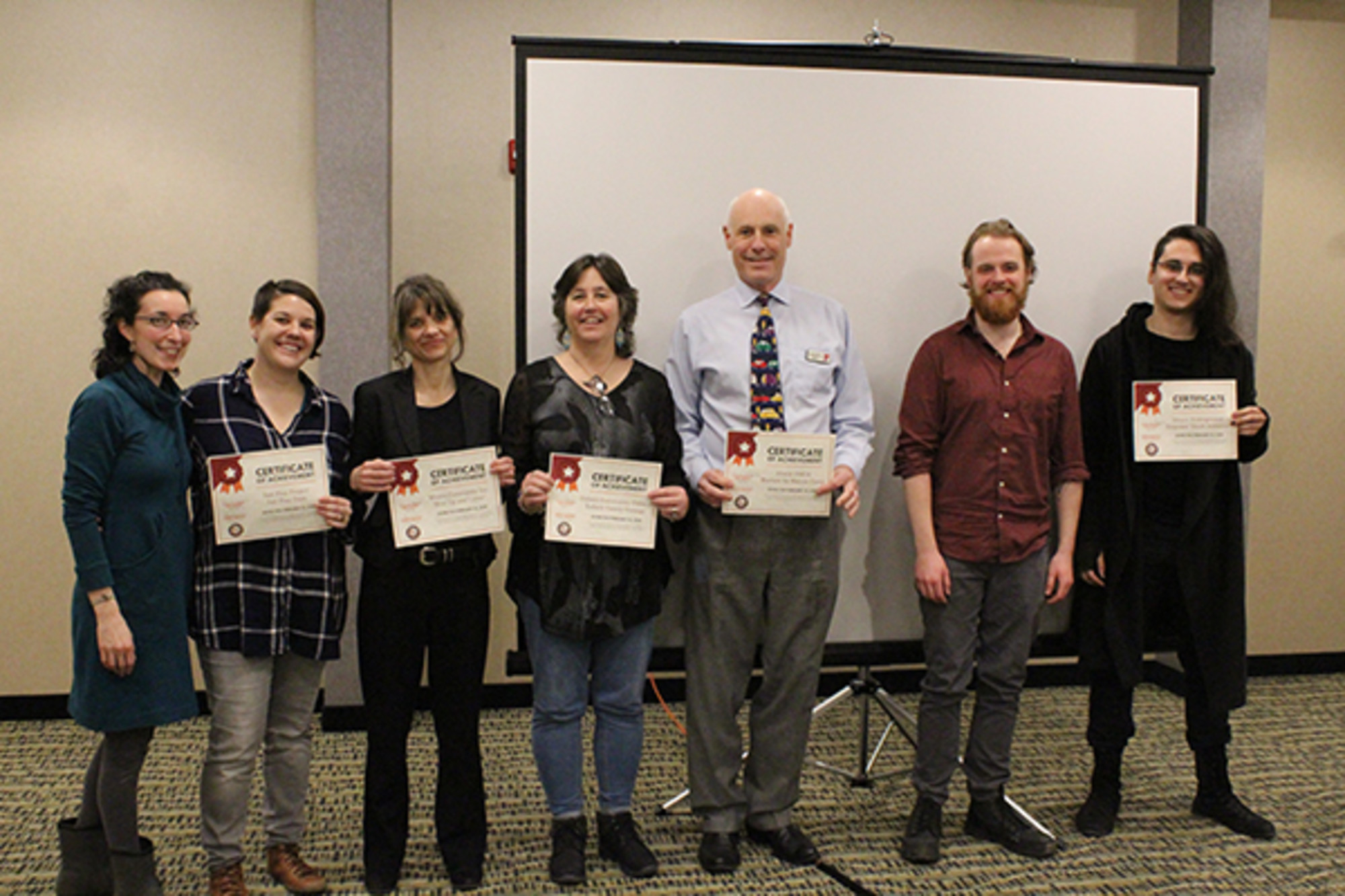
In the end these were the winning pitches: the YMCA of Ithaca and Tompkins County received $1,900, Enfield Community Council received $1,200, the Alcohol and Drug Council received $1,200, the Youth Farm Project received $1,500, Ithaca Underground received $5,000, Weave Community Inc. received $1,600, GIAC received $4,000, and the Just Play Project received $3,600.
Related Articles
5 things to do in Tompkins County this weekend
Plan your visit and discover what’s happening this weekend.

Tompkins Chamber announces Rob Montana as new vice president
Rob Montana, community leader and communications professional, has been appointed vice president of the Tompkins Chamber, where he will help drive economic growth, workforce development, and community engagement.