Into the Great Outdoors: Spring has arrived, but who are we missing?
By Erin Marteal
Tompkins Weekly
Instead of, “Has spring arrived?” The question worth asking may be “Who’s missing?”
The snowdrops know spring has arrived, even if we can’t feel it through our thick winter jackets or the frozen fingers of the hand whose glove didn’t make it through the winter. If we open our ears we can hear the chirp of the robins, migratory warblers, vireos, and more, telling us the days are longer even though the water bottle I left on my bike overnight will be a block of ice by morning.
A familiar March time routine, we begin to wonder if and when spring will actually arrive, and why it is taking so long. It’s a question we ask as Tompkins County residents because the relentless gray is too familiar, and we’ve done our share of hibernating. We’re ready to live again already! Folks returning from some tropical getaway gaze at us with a mix of concern and aversion because we look pasty, sunken-eyed, downright ill. We don’t recognize it in ourselves until we might have the opportunity to leave and return.
We need some color, some contrast, some shades from the color wheel. We’re ready to emerge from our dens and reconnect with the living world. And we need a good dose of vitamin D, the kind of vitamin D that bathes more of our skin than the tip of our nose poking out between the hat and scarf.
But one thing we know – whether we have lived here one year or 20 – is that spring does come. Eventually. And along with spring come the birds, the spring peepers, the daffodils and forsythia, and the long-awaited sunshine.
This spring, a different question comes into sharper focus for me- Who will not come outside, even when spring finally arrives, and why not?
Recently, Children & Nature Network presented a webinar on Equitable Access to Nature. I’m not much of a webinar fan but this one was superb. It was chock-full of research that revealed a full picture where before I had only puzzle pieces.
The benefits of spending time in nature have been well-documented and understood for some time, ranging from stress reduction, improved mental health, and improved academic performance to obesity and diabetes prevention among many others.
Perhaps less understood is how inequitable access to nature actually is. One study discussed in the webinar that focused on parks in Denver, Colorado shows that the parks in the top quartile of safety were 689 meters away from communities with 0-25 percent ethnic minority population and 2334 meters away from communities with 75-100 percent ethnic minority population. Also, the highest quality parks – those that get the most public support and those with the best variety of healthy play options for kids – were one and a half times further away from neighborhoods with a high percentage of ethnic minorities than those with a low percentage of ethnic minorities. In other words, better parks are further from communities of color.
Other recent studies on barriers to access show that many ethnic minorities do not feel welcome in parks, feel limited by cultural and language restrictions, prices, feel they experience discrimination, or simply feel they don’t belong.
Pile on that low-income people and people of color disproportionately experience worse health and educational outcomes than others, and it is easy to see that nature access has the potential to either help mitigate some of these disparities, or, with unaddressed barriers to access, widen the gap. Currently, with significantly more white and middle to upper-income families utilizing parks and green spaces, the gap is widening. However, what if we could use green spaces to narrow this gap?
Research shows that nature access provides statistically more positive outcomes for low-income and communities of color than for other groups. One study shows that more greenness near a pregnant woman’s home predicts healthier birth weight. The positive effect is strongest for babies of low-income mothers or mothers with lower education. Another study of 20,000 residents in 34 countries found the disparity between socioeconomic inequality and mental well-being was less for people with access to green space. A study of fifth-grade students showed that access to school gardens reduced the extent to which demographic variables could predict test scores.
In other words, school gardens can reduce gaps in academic achievement, access to green space can reduce gaps in health starting pre-birth, and mental well-being is more equal regardless of income when the most disenfranchised have access to green space. To put it another way, the benefits of green space are greater for those who experience more life stressors through poverty, marginalization, and other systemic oppression than for white, middle-class folks.
Equigenesis – a term coined by the Centre for Research on Environment, Society, and Health – refers to the leveling up (or down) in overall health – through interruption. It could be reasonably extrapolated that investing more in serving low-income people and communities of color, rather than equally distributing investment across demographics, would yield more overall health benefits for the community.
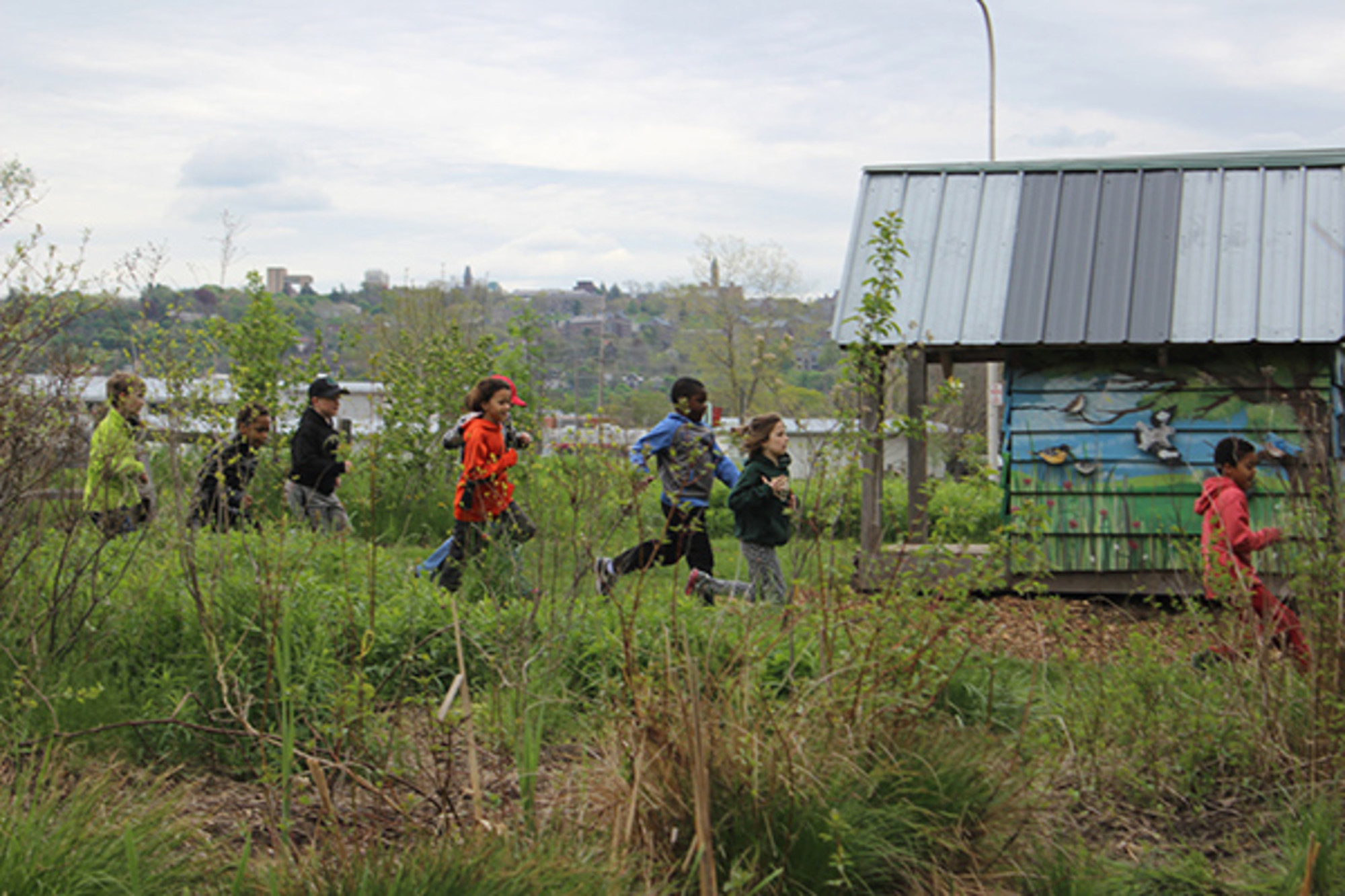
Nature access is not going to change systemic oppression, eliminate poverty or eradicate disease. But maybe it could help build equity within and among communities, improving health and well-being for all. Certainly, those in charge of determining how we allocate resources for our own county’s development and green spaces should be considering these angles of the power of green space and how we can best leverage it for the good of all Tompkins County residents.
How are we doing as a county at serving our entire community – particularly those with low and very low incomes and particularly our communities of color with high-quality nature access?
How could we do better? Lucky for us, Ithaca Mayor Svante Myrick serves on the board of the Children and Nature Network, so we have informed leadership at a time when change perhaps holds the power to do the most good.
Related Articles
Affordable housing hiding in plain sight
Tompkins County Housing tackles affordability with MHCs. Explore solutions for 298 vacant pads in 2025!