On the Hunt: Fly rods and lines
By Cosmo Genova
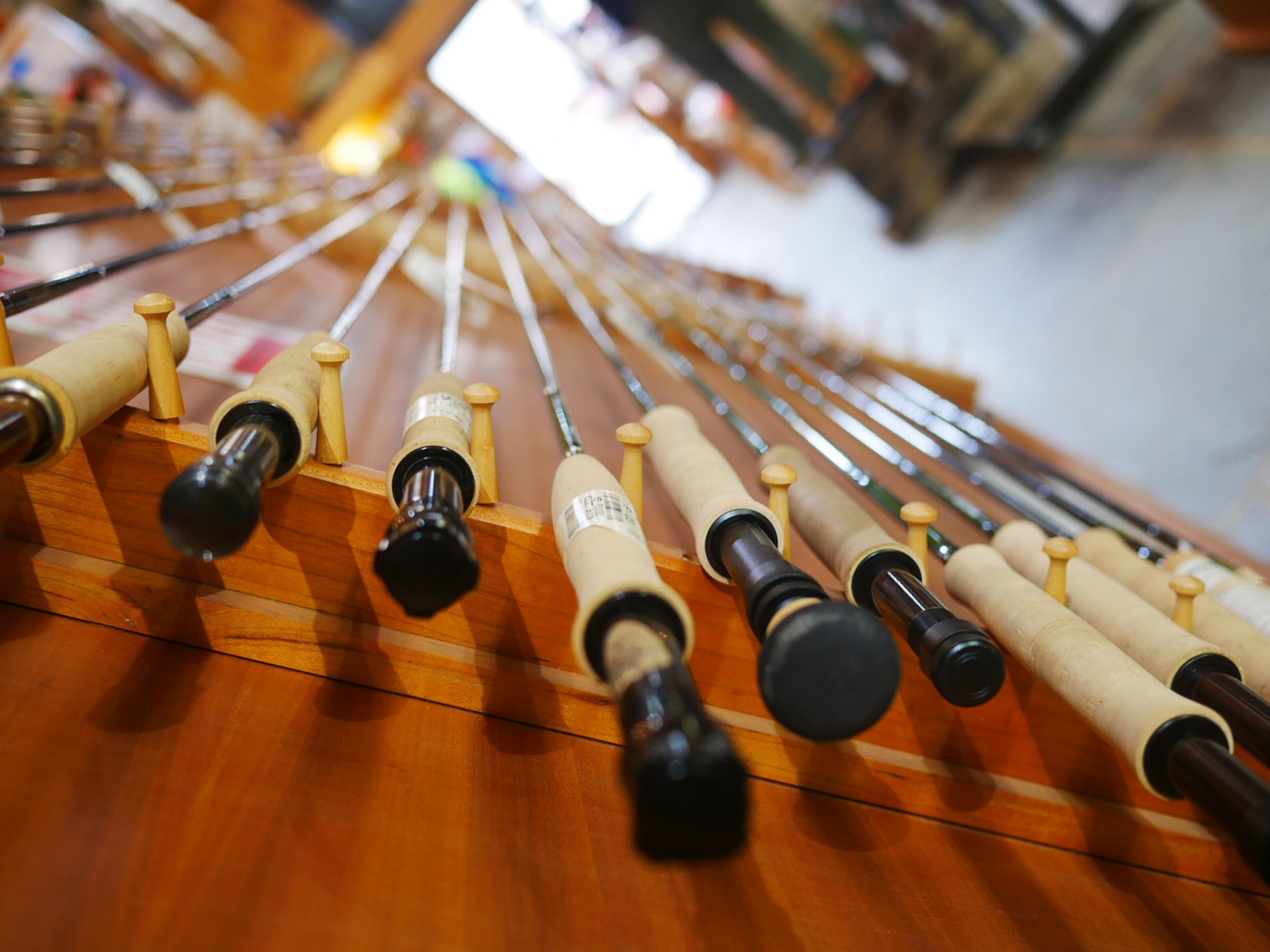
As a beginner, choosing a fly rod and line can be a daunting task. The options seem endless and the jargon can be thick. Here’s an explanation of some of the terms you will encounter as you shop around.
While there are many materials used to build fly rods, graphite is by far the most popular. Regardless of the material, rods are described as having a certain weight (wt) and action. A rod’s weight will give you an idea of how heavy of a fly you can cast and how large of a fish you can handle; a rod’s action explains the “feel” you can expect the rod will have, and what type of casting style will work best for that rod. Rod length is another factor, but a nine or 10-foot rod will be the most versatile. Shorter rods will be stiffer and punchier, and longer rods will flex more gradually and sport finer tips.
Rod weights use a simple numerical system. Where a two, three, or four weight is suitable for smaller flies for smaller fish on smaller water, a five weight will give you a bit more power and cover a larger variety of fishing situations. A 9-foot, six weight is universally recognized as the go-to trout rod. Six, seven, and eight weights will cover bigger water, larger flies, and fish like salmon, bass, pike, etc. As we approach the nine, 10, 11, and 12 weights, we start getting into the largest freshwater fish and most saltwater applications.
Rod actions are loosely categorized as fast, medium, and slow. Fast action rods are better for anglers with an aggressive casting stroke- where quickly picking up and accurately throwing flies is the game. Medium action rods maintain the backbone of a fast action, while also allowing a more relaxed casting stroke and softer fly presentation. A slow action rod is softer and flexes more gradually, working best for advanced casters requiring long casts with the most delicate landings.
The tricky thing about fly rods is that nobody can agree on them. With companies pushing the limits of materials and technology and using different standards from their competitors, there’s no objective way to describe what makes a certain weight or action. Some three weights might perform like a five weight, or a five like a seven, etc. A combination of factors including rod length, taper, where it flexes, line choice, etc., contribute to the overall character and “feel” of the rod which can then be described as having a certain action and weight.
As much as anglers focus on the rod, it is nothing without a line to match it. A rod weight paired with the right line weight will get the most out of a cast, and the style of taper will give you an idea of how a specific line will perform. Modern fly lines are generally made of two parts: the core, and the coating. The core is most often made of dacron, but other materials such as nylon monofilament, braided nylon multifilament, and even lead are used for different purposes. Line coatings are made of any number of plastics and polymers with various qualities that aid in the floating, sinking, and casting of the line.
There are countless tapers and head styles for every rod, caster, and fishing scenario. The main tapers are weight forward (WF), double taper (DT), and level taper (L). Weight forward lines are the most popular and are tapered with the majority of the weight at the front of the fly line. A double taper can be thought of like two weight forward lines fused together, with the tapers on opposing ends of the fly line. Hypothetically, you could take your Double Taper fly line off the reel, turn it around, and functionally be using a brand new line. A level taper is a line without a taper, meaning the weight is distributed evenly throughout the length of the line. All lines will either float (F), Sink (s), or be somewhere in between (intermediate (I)). Some lines will combine these features, so for example, you can have a line with a body that floats, but its tip sinks. For easy identification, lines are abbreviated by their taper, weight, and style, so a standard trout line would read: WF5F, to denote a weight forward, five weight, floating line.
The tip of the fly line and the belly, or the heaviest part of the fly line taper, are referred to jointly as the head. Depending on the length and weight of the head, you can expect the fly line to perform in different ways. For example, a line with a long head (say in the 40-50 foot range) will be easier to cast at distance, but won’t pick up and load as quickly as a line with a shorter head (say in the 20-30 foot range).
Now that you’re thoroughly overwhelmed, its best to think of every rod and line as individuals. Every manufacturer is different, and every caster and rod/line combination will have a different end result. The more experienced you become, the more you will develop your preferences. For freshwater fishing in the United States, a medium-fast action 9-foot, 5 weight and a 9-foot, 7 weight paired with weight forward floating line with a longer head will be the most user-friendly and suit the overwhelming majority of fishermen and fish.
Related Articles

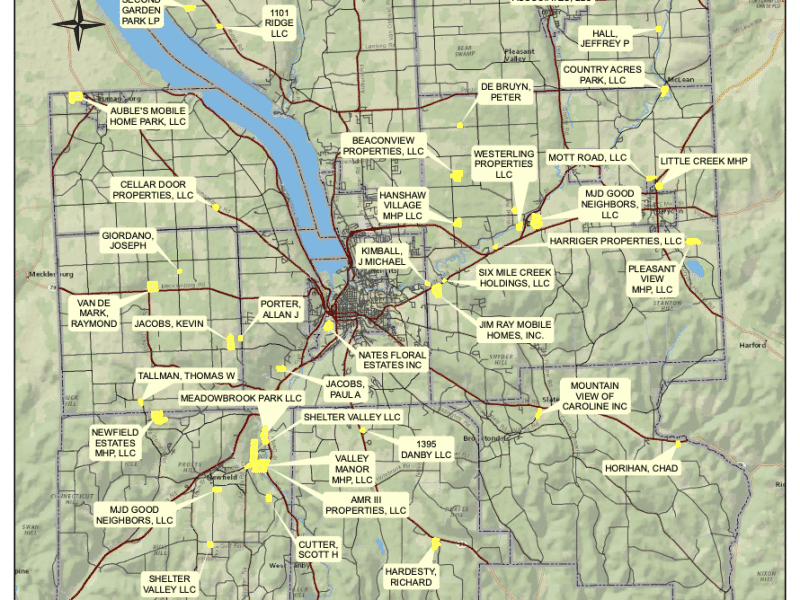
Affordable housing hiding in plain sight
Tompkins County Housing tackles affordability with MHCs. Explore solutions for 298 vacant pads in 2025!