
Girls learn entrepreneurship at Alternatives
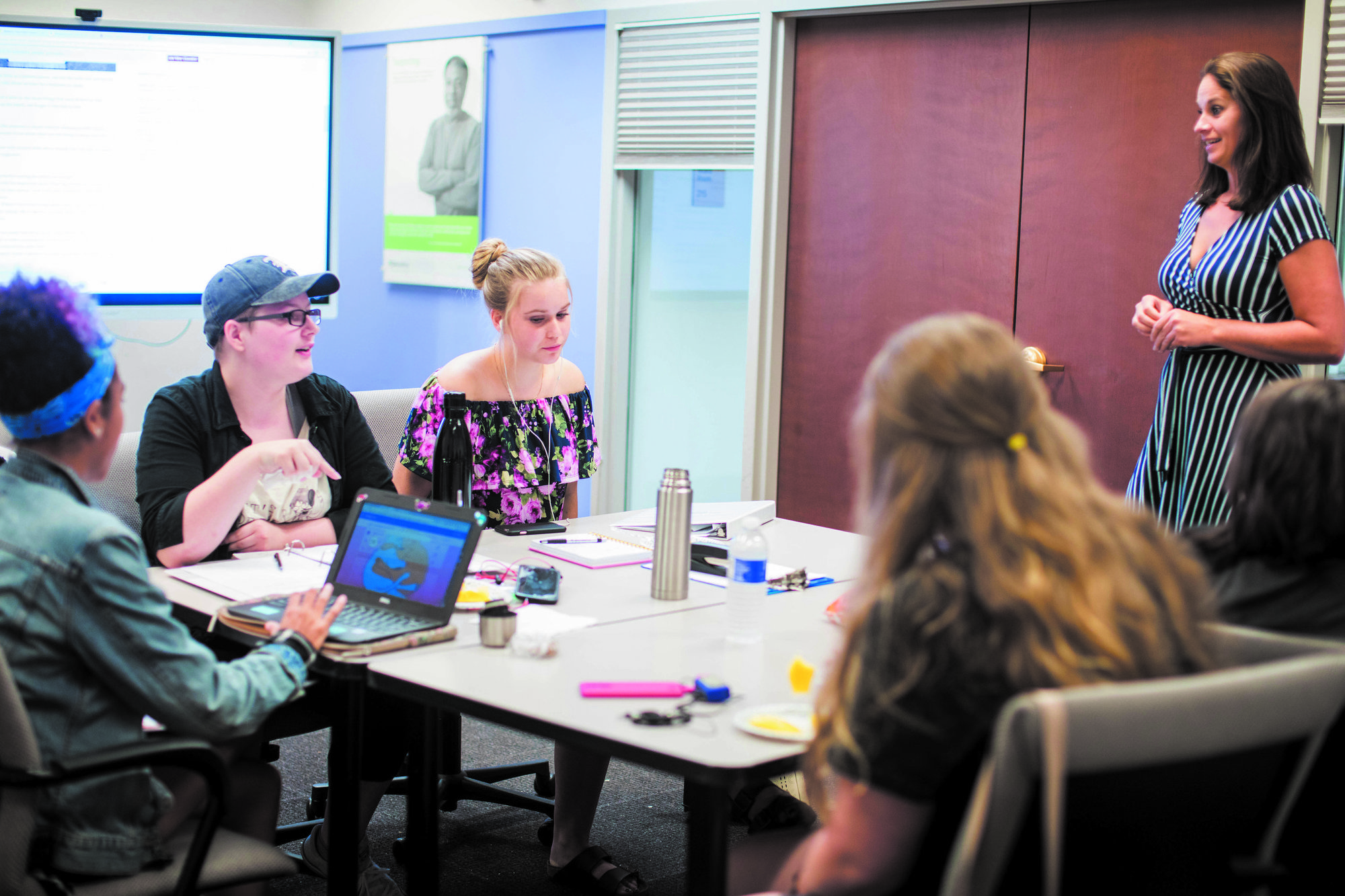
From July 22 through July 26, from 9 a.m. to 4 p.m., the upstairs of Alternatives Federal Credit Union in Ithaca was filled with teenage girls, all there to learn how to create, maintain and succeed in their own business as part of Alternatives’ third annual She Means Business program.
She Means Business, co-founded by Kathleen Clark and Beverly Wallenstein, is a collaboration between Alternatives’ Business CENTS (Community Enterprise Networking and Training Services) and Wallenstein’s Girls Mean Business and is designed to teach entrepreneurial skill-building to a younger audience.
“I think it’s super important to be introducing the idea of leadership and business ownership to girls at this age,” Clark said. “Introducing the ideas, the concepts, to girls at this age is just going to strengthen … our community and our economy in the future.”
Five years ago, Wallenstein started Girls Mean Business, a program with various activities designed to teach girls about entrepreneurship. She was inspired by an entrepreneur summer camp she had attended when she was a teenager that got her interested in business at a young age. Two years later, she connected with Clark, business development manager at Alternatives, to create She Means Business.
Wallenstein said she has seen firsthand how hard a girl’s teenage years can hit, which is disheartening but also why a program like this is important to start early.
“Trying to let them know that this is an option before life gets to them is really important to me,” Wallenstein said. “You get to know about it at a young age and bypass all of the life that gets in the way.”
Liz Hudson, director of development at Alternatives, said the goal of She Means Business meshes with Alternatives’ mission to provide opportunity to those who previously have not had it. Women and girls specifically, she said, have traditionally been left out of the business world, which she hopes Alternatives can help to change.
“Girls are left behind in a lot of different ways, but they’re certainly left behind in terms of entrepreneurial skill building,” Hudson said. “We make real possibility where people thought none existed, and this is one of those places.”
The workshop is a week-long entrepreneurial training program for teenage girls ages 13 to 16. It covers the many steps necessary to developing a successful small business, from generating and evaluating business ideas to analyzing the numbers and finances involved and, finally, presenting the finished business development plans to a mock funders’ panel.
Local female business owners, including Jamie Love of Jamie Love Photography, presented to the girls about how they became successful businesswomen.
Love said she has been a presenter at the workshop for the past two years, and it has always been inspiring and rewarding. As someone who was once financially dependent on a partner, she can attest to how important it is for girls and women to become self-sufficient, and entrepreneurship is a great way to achieve that.
“For me, personally, it feels important because there are a lot of women who are in maybe financially subservient situations, … so I think creating a program where women can get educated on how to start a business and how to be their own leader is just important to shifting a little bit of the paradigm,” Love said. “I wish there were a program like this when I was a teenager.”
Wallenstein and Clark said that the girls have come out of their shells through this program, with many reluctant at first but then opening up once they solidify their idea. Opal Dietrich (12) and Virginia Marion (16), two girls in this year’s workshop, both said their mothers signed them up for the program, which made them uncertain at first.
“I was nervous,” Marion said. “I wasn’t sure it was going to be fun, and then, when I got here, it was a lot of fun. The ladies here are really nice, and they make sure we have a lot of fun.”
Dietrich expressed a similar sentiment.
“When I first came, I was really nervous, but after a while, you get to know the girls who are in it, and they’re really nice,” she said. “It expands what you think about what you want to do when you get older.”
Dietrich said that she never knew so much went into running a business, but learning more gave her hope for the future.
“Just getting the experience of getting to know how to run my own business, it’s a really good opportunity,” Dietrich said. “It’s really interesting knowing what you have to think of when you want to actually start a business.”
Marion said she most enjoyed presenting the final product and seeing how it all works out.
“When you think about it, it doesn’t sound like you can actually do a real company at this age, and you come to this course, and you feel like you actually can,” she said.
The program was made possible through numerous donors. The $150 registration fee covered gear, supplies, lunches and snacks for the week. Funding from the Legacy Foundation of Tompkins County provided scholarships to girls that needed it. Additional funding came from the Ithaca Business Women’s Network and community donors.
Love said she has already seen the impact She Means Business has on the girls involved.
“She Means Business is about empowering and educating teenage girls to become strong businesswomen in the community,” she said. “I feel like the end result was a lot of confidence and clarity from the girls.”
Wallenstein, too, has received plenty of positive feedback from the girls who attend. Though many attend simply because their parents signed them up, by the end of the week, most are wishing the program could be longer.
“They seem to really enjoy it and get a lot out of it, so that really stands out to me,” she said. “I just have so much fun every year that we do this, and I am so inspired after the week is over.”
Wallenstein said being able to spend some of her time at She Means Business has been enjoyable and a worthwhile experience.
“Every time I come, I’m so inspired by all the girls, and it’s just really awesome to get to watch them take that same journey that I was able to,” Wallenstein said.
As for the future of the program, Wallenstein and Clark said they are always evaluating ways to improve She Means Business to help as many girls as possible. Hudson said she would like to see it expand to community centers in neighboring towns and cities.
Related Articles

Legislature unanimously adopts the 2026 budget
Tompkins County 2026 budget passes unanimously, raising taxes 3.59% and funding key programs and community services.

From smartphone bans to building plans, Tompkins County schools adjust
As the school year begins, local districts roll out smartphone bans, major capital projects, attendance policy changes.

Groton Olde Home Days: Connection, fun and food
Groton’s three-day festival begins with the opening of the Playland Amusements Carnival Midway at 6 p.m. Thursday, Aug. 22 in the Speedway lot on Main St.