
Local couple celebrate long legacy of love
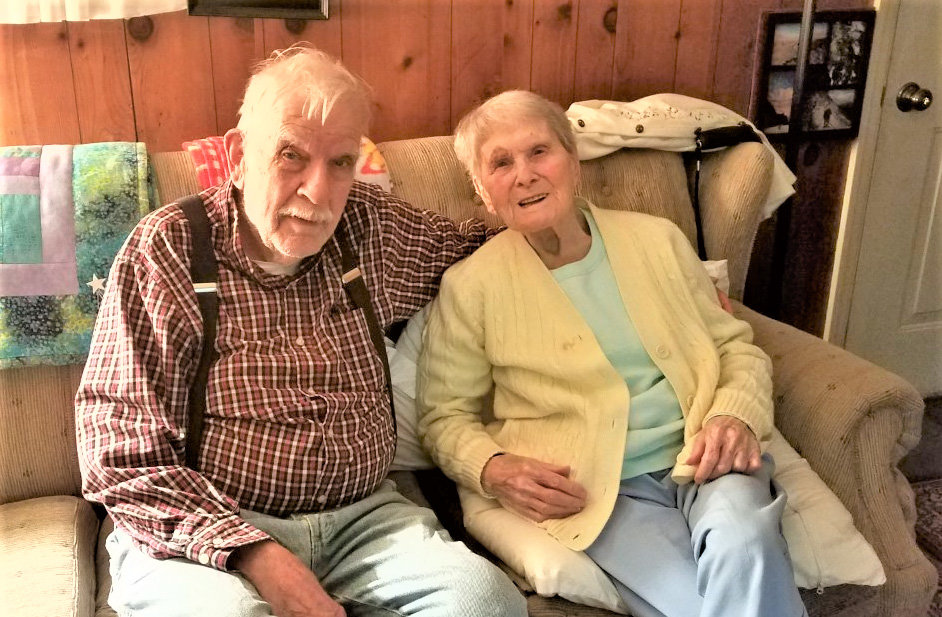
While they didn’t quite make it for a Valentine’s Day wedding, a very special pair of Groton sweethearts celebrated their 66th anniversary last month on Feb. 27.
Richard (Dick) and Yolanda Mestler, who are 91 and 98 years old respectively, met and married in Italy in 1954, yet they ended up here in Groton, where they live to this day.
Dick was born in Whitehall, New York, where he lived as a young boy until his parents divorced. He lived with his father in Lockport, New York, for a while and then Rochester. When Dick was 13 years old, his father made plans to remarry, upsetting Dick tremendously, so he ran away from home.
He took off on his bicycle from Rochester. Dick knew his mother lived in Cortland and was determined to get himself there. He stopped at a diner in Geneva to get something to eat, and it was there that he encountered some kind people who purchased a bus ticket for him to travel the rest of the way.
Dick’s mother was the matron of a children’s home in Cortland, so he was able to live right there with her until she got a job teaching school. After that, they moved to Groton and Dick attended the old schoolhouse at Salt Road and Elm Street and then went to Groton High School when it was located on Main Street.
Unfortunately, Dick was not able to complete his high school education because he was very busy working on Herbert Karn’s farm until 10 p.m. daily, so he found himself sleeping at his desk during the day more than he was learning.
Dick also worked on the Clara Stevens Farm (Stonehedges Golf Course today) and then at the Portzline Milk Bottling Company until he was drafted at age 21.
This was a pivotal point in Dick’s life. As he stood in a line of soldiers who were being called up alphabetically to fight the Korean War in 1950, Dick said, “They stopped at the letter ‘L’ and sent the rest of us to Italy instead.”
Meanwhile, Yolanda was born in Trieste, Italy, in 1921, where she spent her childhood working on her parents’ farm. Her days were spent milking cows and cleaning stalls until she turned 17 when she said she “got tired of working like a man.”
Yolanda fortunately acquired a position as a nanny for a wealthy family for the next two years of her life, but that came to an abrupt halt for her.
“The family was Jewish,” Yolanda said. “They suddenly just sent me away.”
It was not until a few years later that she realized they had spared her being in their home when German forces came at the start of WWII and occupied it.
Nonetheless, Yolanda needed another job. She ended up finding a position in Milano, where she cared for a paralyzed woman in a villa by a lake for the next eight years.
Yolanda recalled many stories of things she witnessed and endured during that time, including seeing German soldiers kill all the Jewish occupants of a hotel near their villa and being so desperate for food that she stole, killed and cooked a chicken.
“By then, the lady’s son and wife and two children lived with us too,” Yolanda said. “I used every part of that chicken, but the feet and the beak and made five meals out of it.”
She was remorseful about the theft, but those were desperate times.
Then 32 years old, Yolanda missed her family and moved back home to Trieste, where she took a job as a waitress in a hotel that was operated by the American military.
One day, Yolanda looked toward the door and saw “a tall handsome man in a uniform – the tallest one in the place.”
That handsome soldier was Dick, who then went to the hotel every single day for weeks, made sure he asked for Yolanda to be his server and ordered a bottle of milk and a ham and cheese sandwich every time.
Working up his courage, Dick one day left a note on his milk bottle that said,
“You’re cute and I like you.” Sadly, it got wet from the condensation on the bottle and Yolanda threw it away.
Crushed, Dick didn’t come back for a while, but once he did, the confusion was ironed out.
Yolanda walked home one and a half miles every night after work, which was usually midnight or later. It took Dick more than a month to ask Yolanda if he could walk her home, but soon that became a nightly ritual.
Their romance continued to blossom, but when Dick’s tour of duty ended in 1952, he had to return to America. They wrote back and forth feverishly until Dick returned to Italy in September 1953.
To their mutual devastation, the ship Dick was on was quarantined due to the measles when it arrived in Italy, but just like a scene out of a romantic movie, Dick distracted the ship’s workers and ran down the gangplank as Yolanda ran up. They met in the middle, kissed and embraced, and everyone around clapped and cheered.
They were married in the Catholic church on Feb. 27, 1954, with the entire ceremony spoken in Slovano, one of the dialects spoken in Trieste due to the Slovenian influence from nearby Yugoslavia. Yolanda spoke the language, but Dick said he didn’t understand a single word except “the part when I said ‘si.’”
They lived in Italy for a while, but Dick could not continue to work there, so he returned to America, sending for Yolanda and their two children, John Duelio and Evelyna Maria, sometime later.
Dick had returned to his roots in Groton, initially washing dishes at Bill’s Luncheonette in Ithaca, earned his high school equivalency in 1961 and obtained a degree in architecture through a correspondence course with Chicago Technical College, after which he worked for a firm in Syracuse for over 27 years.
When Yolanda arrived, she started out babysitting and baking and doing anything else she could to earn money. She also worked at Smith-Corona and later was a custodian for 11 years at Groton Central School.
Both Dick and Yolanda are particularly proud of the fact that they purchased their property on Elm Street, and Dick was able to design the home they built themselves – literally – from foundation in 1959 to completion in 1962.
They are more proud of their grandchildren, four from their son (one who is deceased) and two from their daughter and their twin great-grandchildren.
It was such a joy to meet this wonderful couple and hear all their stories.
There were so many more than could be written for this column, but the most delightful part of the time I spent with them was how clear the spark of love for each other still shines in their eyes.
Groton on the Inside appears weekly. Submit news ideas to Linda Competillo, lmc10@cornell.edu or 607-227-4922.
In brief:
Clothing Closet unlimited items month
The Clothing Closet, 160 Main St., where women, children and men may receive gently used clothing completely free of charge, will be lifting the “10 items per person, per month” limit for the entire month of March.
Bring your own reusable bags and stop by during its regular hours from 10 a.m. to noon on the second and fourth Wednesdays and Saturdays of March and help yourself to whatever you can use.
Donations of spring and summer clothing are also gratefully accepted during these hours. They are particularly in need of clothing for girls, size 4 through junior sizes. Clothing should be clean and odor-free with no rips or stains.
Rotary pancake breakfast
The Groton Rotary Club Pancake Breakfast, to benefit programming for youth at Groton Central School, will be held from 7 to 10 a.m. Saturday, March 14 at Groton Community Health Care, 120 Sykes St. Cost is $5 per person.
Alumni meeting
The Groton Alumni Association will hold its next meeting at 7 p.m. Tuesday, March 10 in the Village of Groton office, 143 Cortland St. All alumni interested in planning the 2020 All-Class Reunion are encouraged to attend.
Related Articles
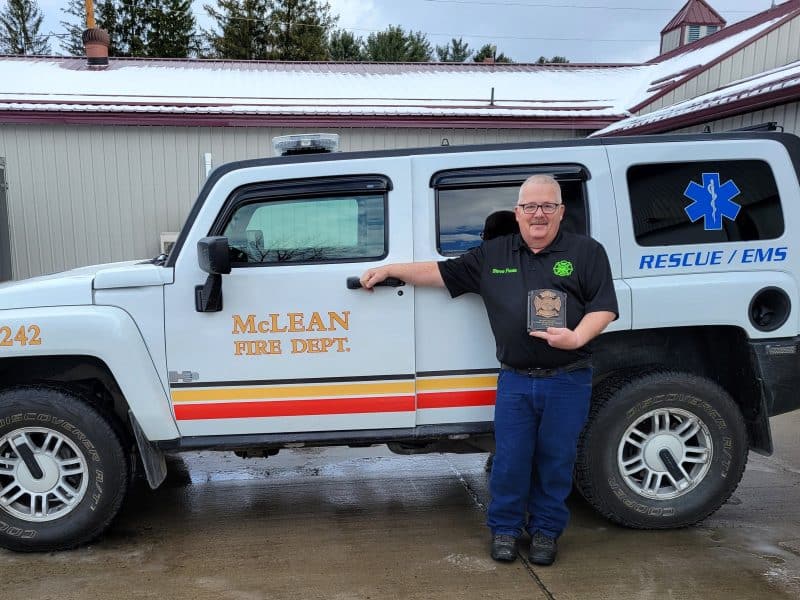
Steve Foote honored for 50 years of service to the McLean Fire Department
Steve Foote McLean Fire Department service spans 50 years as an EMT, firefighter, and mentor serving the McLean community.
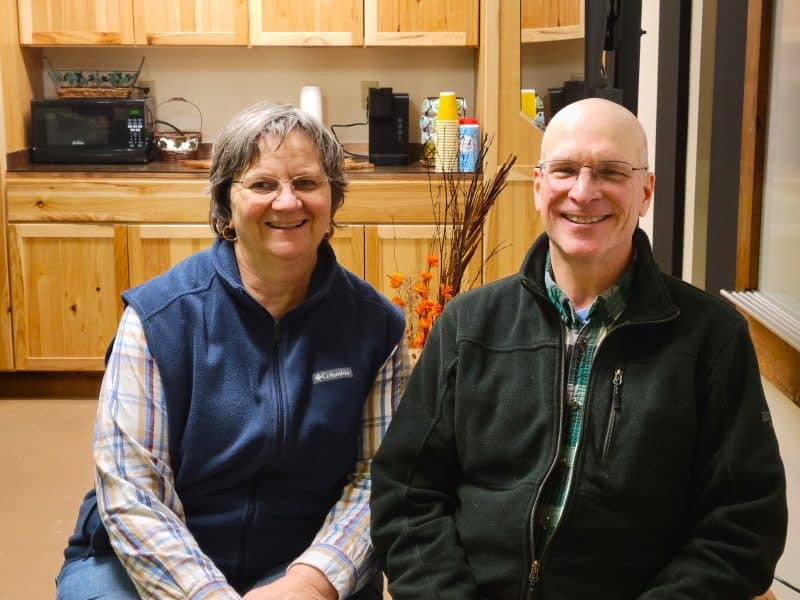
REBOOT Recovery offers help for those dealing with crisis or trauma
REBOOT Recovery in Groton helps community members heal from trauma through a faith-based, supportive 13-week course.

Scottland Lights: 15 years bringing Christmas in lights and music to Groton
Scottland Lights Groton offers 15 years of synchronized Christmas lights and music, a beloved holiday tradition in the Groton community.