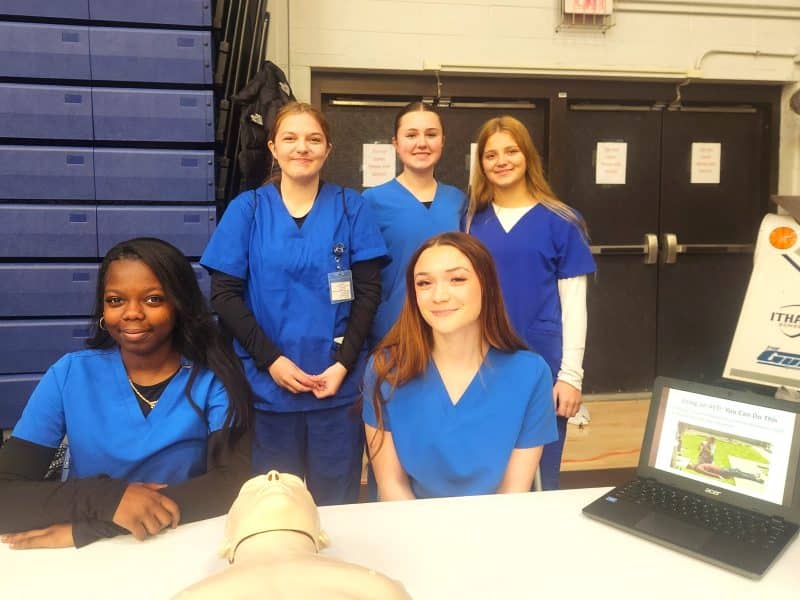
Educators face financial challenges as classes begin

Earlier this year, Gov. Andrew Cuomo announced that economic fallout from the COVID-19 pandemic in the state would dictate at least a 20% reduction in state aid to localities, funding that goes to schools, cities, towns, villages, counties and some nonprofits. With the loss in aid looming, and with little word on whether federal assistance will come and make up for the deficit, local educators are already feeling the economic effects of the pandemic.
When Tompkins Weekly last covered COVID-19’s effects on the economy, we focused largely on municipality funding and challenges facing businesses and nonprofits. But with the K-12 fall quarter starting this month for area districts, we’re focusing this investigation on the economic effects on educators — primarily schools and the libraries that provide so many resources for area students.
Looking at school districts, the financial challenges facing each district vary, though most interviewed for this story shared that, even if their current finances are sufficient, looming cuts and high costs associated with reopening during the pandemic have created an unstable future.
“Years of effective fiscal management by our Board of Education and team has placed us in a strong fiscal position at the moment,” said Ithaca City School District Superintendent Luvelle Brown. “However, the utilization of reserves coupled with the ongoing state aid cuts has us in an untenable and nonsustainable position going forward.”
Newfield Central School District is facing a similar situation. Like Ithaca, Newfield has been able to cope with the financial challenges without it impacting the educational experience for students, but there are still losses.
“We don’t have a pre-K program right now,” said Acting Superintendent Eric Hartz. “That was hard not to run that. There were 41 kids in our district that should have been here and we should be teaching, but we can’t run it and be fiscally responsible without the funding and the guarantee from the state or the feds.”
Kimberly Bell, superintendent of Trumansburg Central School District, said her district is in a similar position. Bell said that CARES Act funding — coupled with the district redistributing its own funds — has allowed the district to stay above water for the time being. But that doesn’t mean the district isn’t facing financial challenges.
“[The] money through the CARES Act is to offset our COVID-related expenses, and we’re eligible for $232,000,” Bell said. “However, right now, our expenses are running about $230,000. And I know we have many more to add to that.”
The large increase in expenses largely comes from the requirements related to reopening while the pandemic is still ongoing.
State reopening requirements — including providing proper cleaning supplies and PPE, sanitizing regularly and having proper air circulation systems — have created new expenses for area districts. In addition, with many students learning remotely this fall, school districts have had to purchase new technologies like laptops to make access to education equitable for all students.
“We are, in some cases, needing to hire additional physicians, if needed, [and] support in our nurse’s offices,” Bell said. “We need additional people on our operations and more staff on cleaning and disinfection. We may need additional money for PPE expenses, more supplies in terms of hand sanitizer and paper towels and individual classroom supplies for students so that each child is using only their own supplies. So, the increase in expenses is what is hurting districts.”
For some districts, handling the increased costs meant decreasing other expenses, like cutting positions and putting some programs and offerings on hold. TST BOCES Superintendent Jeffrey Matteson said he’s seen these cuts firsthand in his work with other area districts.
“These kind of things, if they get shorted that kind of money, they have to look at personnel that may not be mandated, but they’re essential for a student’s education,” Matteson said. “It could affect class size. It could affect work for support personnel, [for] paraprofessional personnel. It’s a reality that if you potentially lose one in every $5 coming from the state that you’ve got some hard decisions to make.”
And TST BOCES itself has had to make some difficult decisions, complicated further by its relationship with area districts.
“We have frozen a lot of the type of personal development that we would do outside of our campus to save funds,” Matteson said. “We have had to invest a lot financially into safety equipment, PPE, temperature scanners, technology, all of that. And the problem for us is we have to try to do it within current budget funds because we can’t be raising the cost of tuition to a particular program to our local districts because they’re facing a severe financial challenge with state aid holdbacks.”
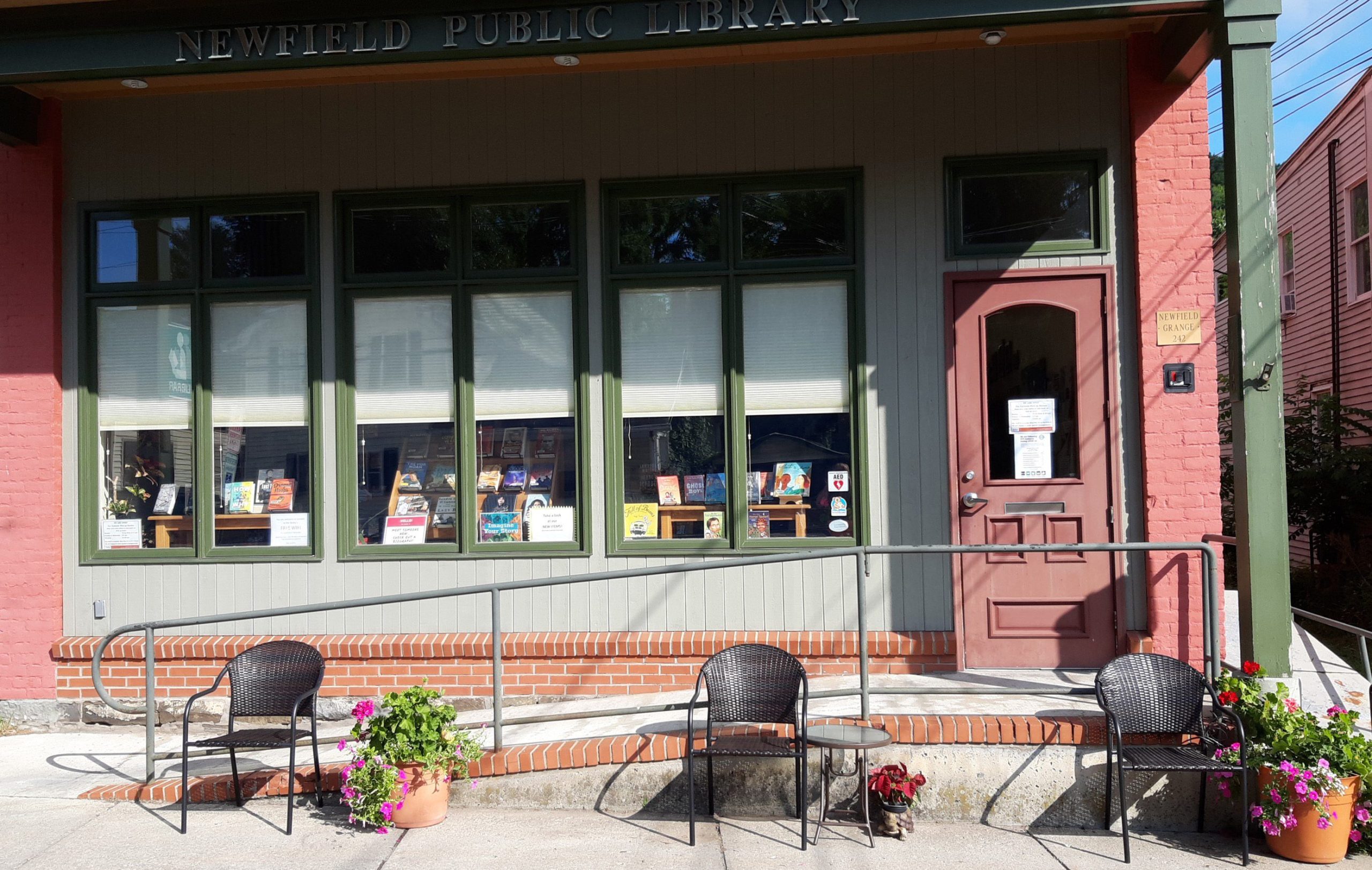
Area libraries are in a similar situation to BOCES, as they face their own financial challenges that, in turn, affect the resources made available to students.
Sarah Glogowski, executive director of the Finger Lakes Library System (FLLS), said that libraries within her system — which includes several Tompkins County libraries — are almost universally facing significant financial challenges due to the pandemic.
All FLLS libraries receive funding from the state through Local Library Services Aid, which is based on a community’s population, Glogowski explained. And with state funding reduced, libraries are also facing financial losses.
“Everyone’s been cut 22.6%, in line with what the state has been cut, so they’ve lost that type of state funding that helps them with operational funding, helps them with programming,” Glogowski said. “Some of them use that for their collection money. It’s mostly operational money.”
On top of that, libraries also receive county funding, and since the county is also facing budget shortfalls because of COVID-19, that loss is passed down to libraries as well, as Diane Pamel, library director of the Southworth Library Association in Dryden, can attest.
“Our projected funding from the state (through the library system) will be cut by 20 to 25%, the county funding will be a cut of 12% at least, and other funding from the town and village will most likely be reduced,” Pamel said. “The picture is still developing and is not clear.”
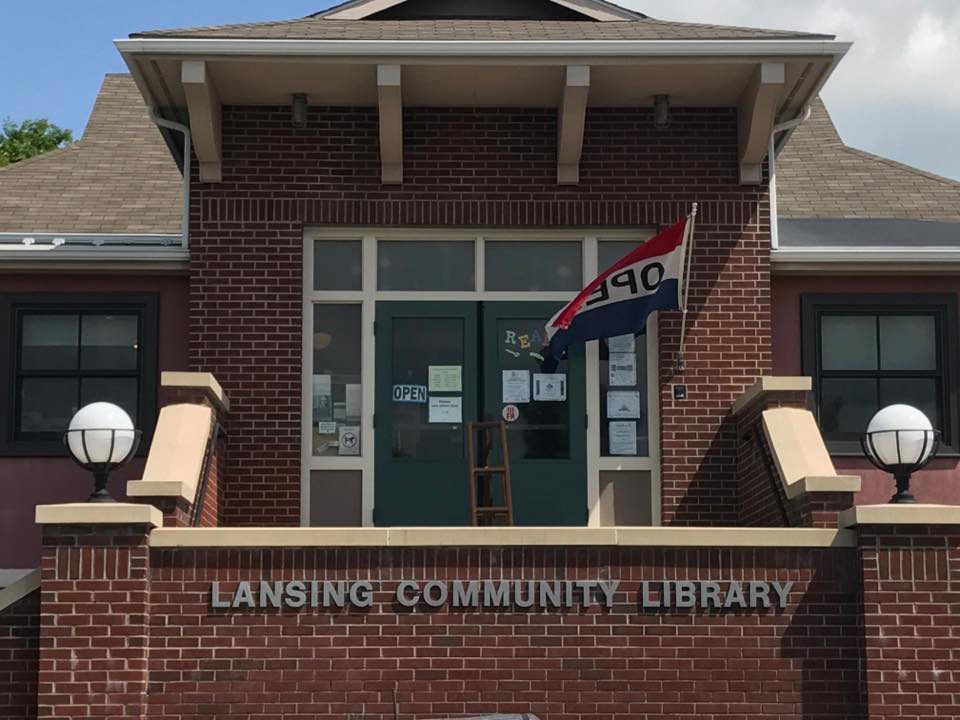
Susie Gutenberger-Fitzpatrick, director at the Lansing Community Library, echoed that uncertainty and added that those cuts have had significant effects on the programming the library can provide.
“The county has tried very hard to make their cuts minimal, but we are experiencing a decrease in both county and state funding,” she said. “So, we are having to find a way to do more with less, and how to provide these extra services to families with a reduction in funding and knowing that we will not be as successful with grants in the future.”
And like schools, libraries are facing increased expenses in addition to budget cuts. Shutdowns have further added to this burden, canceling in-person events that usually increase interest in the library and lead to additional community support. As Suzanne Smith Jablonski, executive director of the Tompkins County Public Library Foundation, explained, budget cuts have impacted what the Foundation can do to promote TCPL programming.
“Much of what we do in the Foundation is about bringing people together and giving people an interesting look at the library and what it’s doing,” Smith Jablonski said. “We have events where people can connect with one another and really feed off the energy and enthusiasm that comes with the collective assembling of library supporters. And so, with all of those things not available to us, we’re striving to find different and creative ways to replicate that.”
These financial challenges combined have created cuts in a variety of areas for libraries, like collection cuts, which affect the materials libraries are able to have and purchase. This, in turn, affects the resources available to area students as they try to navigate an uncertain school year.
“The cut in databases that we’re experiencing because of state cuts will be an impact on students that are needing to do schoolwork and homework assignments and reports and all of that type of stuff — access to online services, access to computers,” Glogowski said. “If you don’t have reliable Wi-Fi in your area, you would go to the library to do your schoolwork. With libraries having reduced hours, that might be harder for students. So, it’s all very tied in together with the cuts everywhere we’re seeing in the state.”
Moving forward, educators stressed that more federal funding is needed to continue providing the education and services so many rely on.
“We are in dire need of additional federal financial support for school districts who have been and will continue to be negatively impacted by the pandemic,” Brown said.
Matteson expanded upon this call for action.
“The state is saying they have a monstrous budget hole that could be supported by federal money, so we need federal money to temporary backfill that so that we can make sure that our budget hole is filled,” Matteson said. “We can’t go to a local taxpayer because they’re not going to fill a hole that day because there’s so much money that comes from outside entities.”
Already, local support has significantly aided educators during these difficult times. Sources interviewed for this story shared immense gratitude for the support and patience residents have shown.
“We’ve had an outpouring of people reaching out to see how they can help, to see what we need,” Gutenberger-Fitzpatrick said. “We’ve had more volunteers that have come around. Our friends group is really stepping up with this online auction. So, I’m really thankful for the support that we have in our community currently.”
Advocating for additional funding is another way for residents to get involved in this issue, sources agreed.
While educators are facing an uncertain financial future, those interviewed for this story shared a resilient attitude as they embrace creative solutions to cut costs and provide students with the resources and experience they need.
“It’s a real challenge right now, but we’re not going to let it get us down,” Hartz said. “We’ve got a new admin team here. And we’re all working really tough together. And we’re really trying to find a way to make sure that our kids get what they need to be educated.”
Related Articles

AmeriCU proudly connects students with annual scholarship opportunity
AmeriCU scholarship program awards $1,000 to students pursuing college or vocational education. Applications are open through March 15.
Trumansburg schools consider regionalization as TST BOCES plan advances
Trumansburg school regionalization remains undecided as TST BOCES outlines goals for shared services and student learning.