
Photo Briefs: tree planting, invasive species, Express Browsing
South Hill Recreation Way native tree, shrub planting
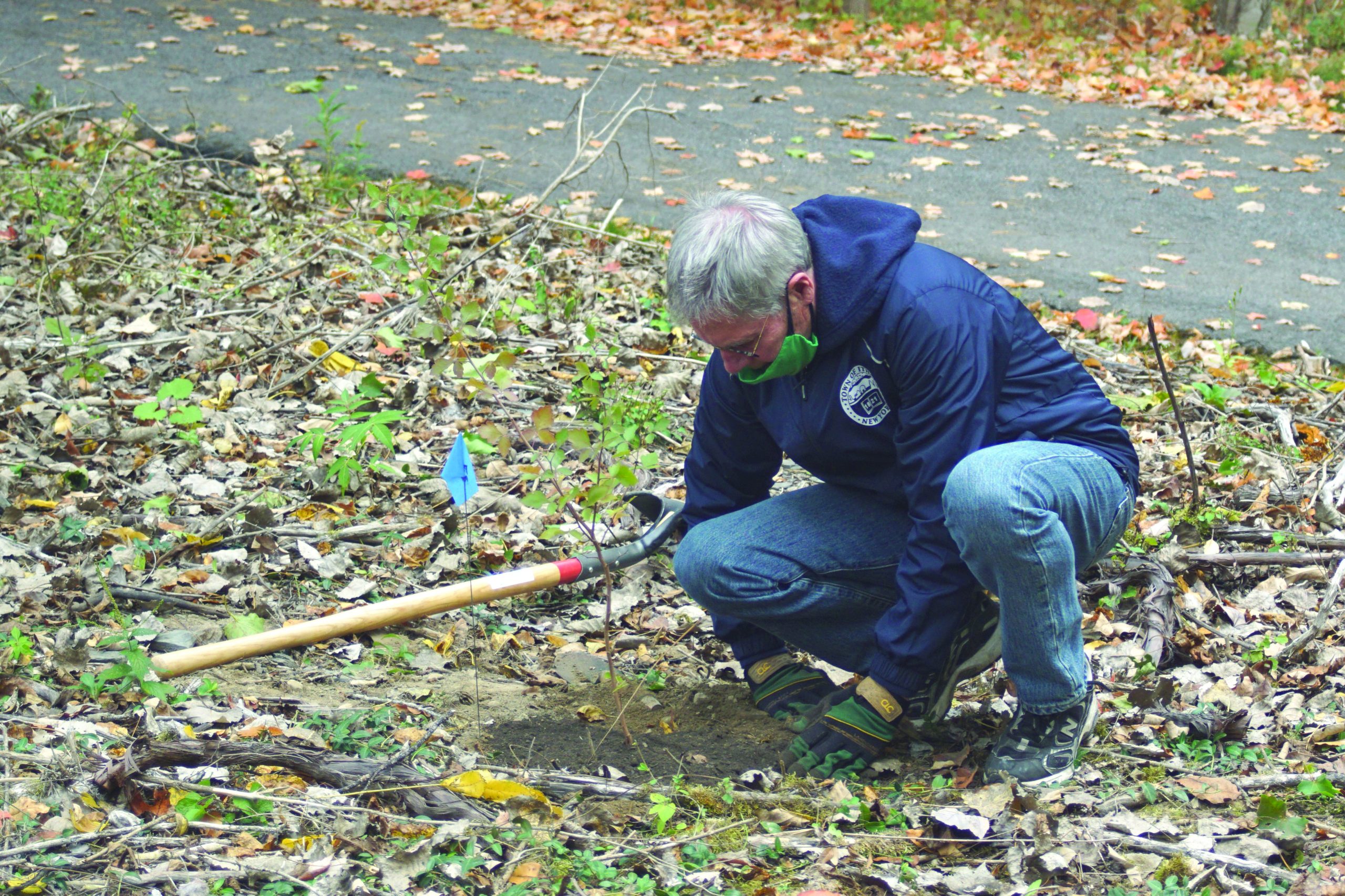
On Oct. 8, 2020, several Ithaca Town Board members, Conservation Board members and town staff helped plant trees and shrubs along the South Hill Recreation Way as part of a large project to remove invasive woody plants and plant native trees and shrubs along the entire trail. Thanks to funding from the 2018 Urban and Community Forestry Grants Program, administered by the NYS DEC, this past winter and spring a hired specialist cut down all the woody invasive plants and treated the remaining stumps with herbicide. Now with the invasives removed, the area is being replanted with approximately 900 native trees and shrubs, which will help prevent the invasive plants from returning. Some of the native trees and shrubs that the group helped to plant include Sugar Maple, American Sycamore, White/Red Oak, American Basswood, Tulip Popular, Black Cherry, Bitternut Hickory, White Pine, Bayberry, Fragrant Sumac, Nannyberry, Silky Dogwood, Black Elderberry and Arrowwood Viburnum. Town staff and the hired contractor will continue to plant the remainder of the trees and shrubs. The town is undertaking this project because invasive species have become well established along most of the trail and have altered the native ecosystem in the area. The invasive plants have spread quickly, displacing the native plants and preventing new native plants from growing. This creates a monoculture of invasives that do not provide food or habitat for native wildlife. Replacing the invasive species with native trees and shrubs promotes biodiversity, provides shelter and food (nectar, pollen, seeds, nuts, leaves, etc.) for wildlife and supports pollinators. In this photo: Town Supervisor Rod Howe plants a shrub.
Invasive Species Warning — Spotted Lantern Fly

A population of spotted lanternfly (SLF) has been found in Ithaca, just off the Cornell University campus. They were found on their favorite host plant, another invasive species, tree of heaven (Ailanthus altissima). However, SLF also feeds on many other trees and plants, which, unfortunately, includes grapevines. With New York state’s important Finger Lakes grape-growing region and wine industries so close to Ithaca, state agencies and researchers are particularly concerned about this pest’s impact in the region. SLF is not a fly, but rather a large planthopper. Adults are about an inch long. SLF does not bite or sting and is not a threat to people, pets or livestock. For most New Yorkers, it will be no more than a nuisance pest. Nymphal and adult SLF have piercing-sucking mouthparts that drill into plant phloem. SLF’s excrement — a sappy liquid called honeydew — makes things sticky and becomes a breeding ground for sooty mold, an annoying black fungal growth. Because SLF is a significant agricultural pest, research is underway even now, as Cornell investigates biological control and other management options. The goal is to develop a holistic integrated pest management (IPM) strategy to combat spotted lanternfly, incorporating a variety of research-driven techniques to supplement the use of pesticides wherever possible. This will minimize the downsides of a pesticide-first strategy, which include detrimental effects on humans, pets, livestock, and other non-target organisms, as well as the development of pesticide resistance (and resulting loss of effectiveness) in the target pest. Visit http://www.northeastipm.org/ipm-in-action/current-news/spotted-lanternfly-found-in-ithaca-ny/ for more information on the discovery of this pest in Ithaca, along with links to resources, maps and illustrated guides to help the general public recognize this pest and slow its spread.
TCPL to Open for Express Browsing Dec. 1

Tompkins County Public Library is pleased to announce its Dec. 1, 2020 expansion of services to include Express Browsing. The Express Browsing service allows patrons to select their own items for checkout. Browsing sessions are limited to 30 minutes, and patrons are asked to maintain 6 feet of social distancing and use hand sanitizer before and after touching items. Masks covering the nose and mouth are required for entrance into the TCPL building. TCPL is following the protocol laid out in New York’s Cluster Action Initiative. As the situation is continuously evolving, TCPL will post the latest information on tcpl.org and its Facebook, Instagram and Twitter feeds. Express Browsing is limited to in-lobby days and hours: Tuesday and Thursday from 10 a.m. to 1 p.m. and 2 to 6 p.m., and Saturday from 10 a.m. to 1 p.m. and 2 to 5 p.m. (note that in December, TCPL is opening one hour earlier during Tuesday and Thursday afternoon sessions). For safety reasons, returns must be made in the open outside bins on Green Street or the one by the south entrance. Due to the 72-hour quarantine requirement for materials, no items can be brought into the building or returned to staff. Patrons are asked to keep this in mind while they plan their trip to TCPL. More information is available at tcpl.org/express-browsing. Please send questions to askalibrarian@tcpl.org.
Related Articles
Cayuga Medical Center nurses to rally, alleging anti-union tactics by hospital management
CMC nurses plan a rally, alleging unsafe staffing and illegal anti-union tactics as the hospital highlights recent patient-safety gains.

AmeriCU proudly connects students with annual scholarship opportunity
AmeriCU scholarship program awards $1,000 to students pursuing college or vocational education. Applications are open through March 15.
Street Beat: What’s one of the best holiday gifts you ever received?
We asked five random people. Here’s what they had to say.