Schools look to build on fall successes in winter, spring
Just over three months ago, Liz Bierly, a senior journalism major at Ithaca College, was looking forward to an in-person fall semester, a welcome reprieve after having to go remote last spring. Then, IC changed plans, deciding to make this semester entirely remote to protect its students and staff. As much as she agreed with the college’s decision, Bierly said it was still challenging to adjust.
“I was really excited about the fact that senior year, I’d be able to come back and I’d be able to take my classes in person after a semester,” she said. “And then, it got canceled, … which was a good decision on their part but still a really hard one for students. And so, at that point, I was disappointed but just trying to make the best of it and trying to see it as a positive thing of one semester at home and then hopefully, come back for more normalcy next semester.”
Bierly’s situation of having to adapt on the fly but remain cautiously optimistic is emblematic of the experiences of so many students and staff in colleges and K-12 schools across the county this fall. While the past three months haven’t been easy, administrators and students alike said that past successes have shown that they’ll be able to handle whatever the pandemic throws at them the rest of the 2020-21 school year.
As Tompkins Weekly has covered before, school districts and colleges have faced a host of challenges trying to navigate education during the pandemic, and this fall was no exception. Administrators interviewed for this story said that overall, their district or college has fared better than expected the past few months, but it’s still been a struggle.
Luvelle Brown, superintendent of Ithaca City School District (ICSD), said that his district’s biggest challenge this fall has been staffing.
“When there is a positive case in a community, or a positive case with someone who’s connected to our school district, oftentimes, that creates a situation where we have to quarantine both young people and adults, and we have stretched to the max when it comes to staffing,” Brown said. “That is one [challenge] that continues to show its ugly head forth every single day.”
Margo Martin, superintendent of Groton Central School District (GCSD), said a lack of state or federal aid has made supporting pandemic learning all the more difficult.
“One of the big challenges that we’re trying to process through is around the financial impact that being open in a pandemic is costing the district,” she said. “How do you swing your finances to be able to continue to expand the money necessary to keep open in a pandemic when, at the same time, you’re losing some of your revenue stream?”
Jeffrey Matteson, superintendent of TST BOCES, said that a large challenge for his staff has been trying to replicate the usual teacher-student interactions in a virtual or hybrid setting.
“We have a pretty robust alternative school on this campus,” he said. “Part of its effectiveness is tied to the school culture. It’s tough to build really deep relationships and build a school culture that helps all students learn together with a social education model when you have some students at a distance.”
In addition to these challenges, all area districts and colleges have had to contend with COVID-19 cases within their staff or student population this fall. However, sources universally shared that their plans and willingness to adapt helped to make handling those cases easier.
At Cornell University, for example, Joel Malina, vice president for university relations, said that his college’s two COVID-19 clusters — one toward the start of the semester and one just recently — quickly dissipated thanks to Cornell’s science-oriented approach and contact tracing.
“A larger number than perhaps the county would be reaching through contact tracing, we’ve been able to add into the mix, which has enabled us … to identify, sooner rather than later, who is positive, who’s carrying the virus, get them into isolation, quarantine those who need to be quarantined,” he said. “And that has succeeded in those few instances where we’ve seen these bumps.”
For students, the challenges this fall varied, including issues like a lack of social life or motivation to complete assignments. IC senior Tessa Rossi said having all remote classes has made it difficult to have the same work ethic as past semesters, and she’s not alone.
“It’s harder to balance classes being online because there’s way more time for procrastination,” she said. “A lot of the people that I’ve spoken to have also felt that they’ve been procrastinating more this semester, with everything being online. It’s kind of harder to balance the work and to actually motivate yourself to go to class since it’s all online and you don’t really have that push of being in an actual classroom.”
Those who have been able to attend in-person classes this fall said that having at least some social interaction back has made a big difference in their experience.
“I like the social aspect of being back in school, like being able to ask our teachers questions in person and being able to see my friends,” said Groton student Michaeline Lauchle. “I also like how we are not on our computers as long as we would be if we were remote.”
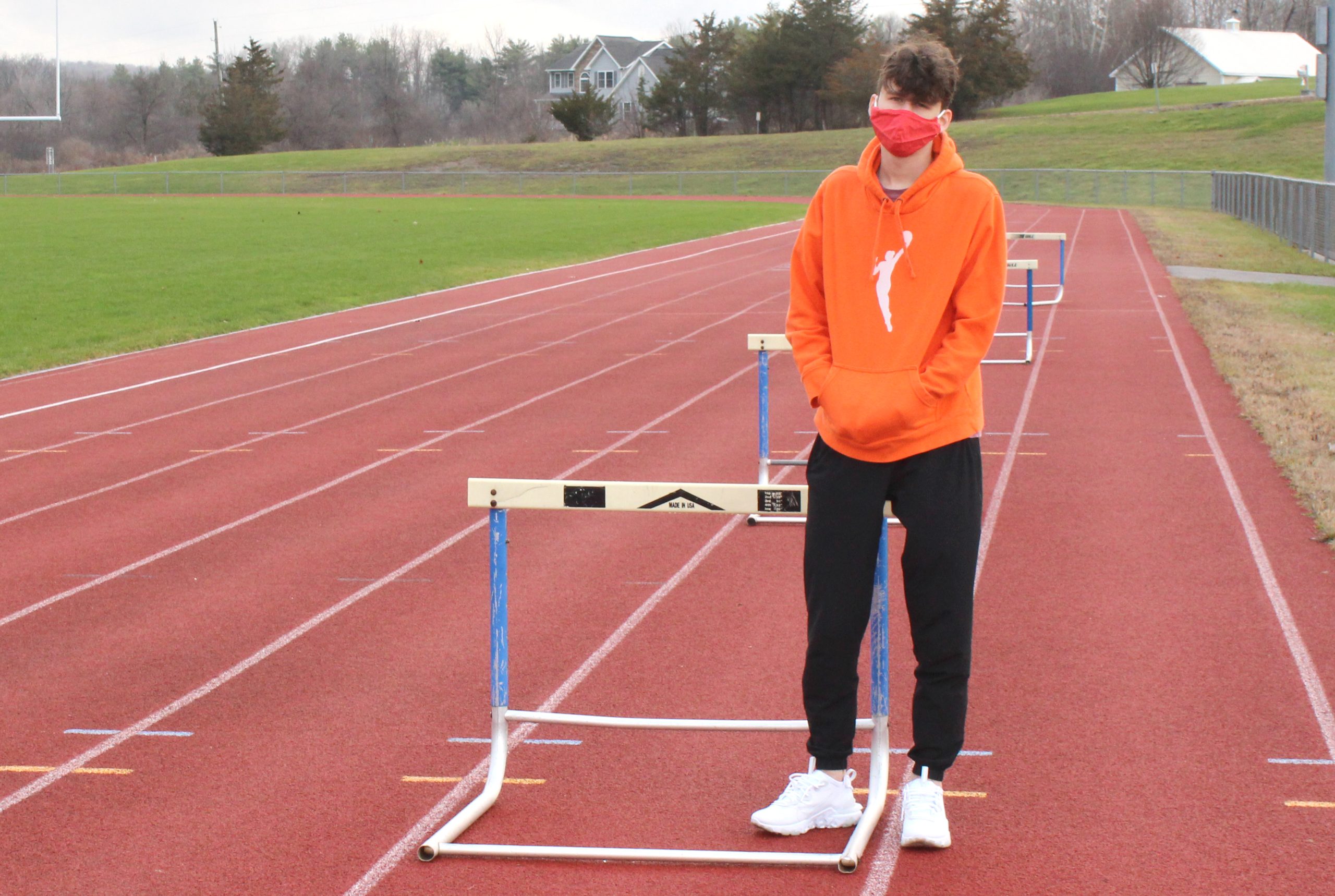
Miles Kimball, a senior at Lansing High School, also voiced his appreciation for being able to see his friends on a more regular basis. Knowing that he’s not the only one having to adjust to a constantly changing situation has brought some solace, he said.
“People are a little bit sad about everything being canceled and not getting to experience the whole senior year, but generally, people are understanding of the situation,” he said. “It’s a little bit bittersweet, definitely, but you’re also not alone during this.”
While managing school life this fall hasn’t been easy, sources said that the pandemic has provided opportunities to adopt more effective practices that will likely last long after the pandemic is over.
“Some of the habits that we’re developing, some of the mindsets we’re developing around just hygiene and cleanliness will be something that we will use forever,” Brown said. “What’s happened with this pandemic and with this virus has pushed us to be different. And I think that’s going to be different in a good way from now on out.”
At Newfield Central School District, the pandemic necessitated a change in the structure of the district’s bus circles that ended up being more efficient than in past years, said Interim Superintendent Eric Hartz.
“We’ve created a safer environment for our people to go into the parking lot, we’ve created a safer environment for dropping off our students and picking up our students, and the bus drivers are happy and the parents are happy,” Hartz said. “It was just an accident that we flipped it. That will probably never change again.”
Martin said having to adapt quickly to online learning has created new methods of education that will prove beneficial in upcoming years.
“The coronavirus provided a lot of opportunity for us to develop skill sets in terms of being able to do things using technology, using technology in a way that’s impactful,” she said. “Having a standard format for all classes across all grade levels has drastically improved parents’ ability to follow along at home with what’s going on at school.”
Sources said that they’ve learned a lot from their experiences this fall that will help make winter and spring more manageable. Dave Maley, director of public relations at IC, said that adaptability has proven to be essential to his college’s success.
“We’ve had an education in being adaptive. That’s something that we all have learned even more how to do,” he said. “There are forces that are obviously out of anyone’s control because of the pandemic that we know that we’re going to need to most likely to continue to adapt and adjust to as the semester starts and as the semester goes on.”
Several sources also said that this fall has shown the difference that in-person classes can make on students. IC senior Victoria Brooks, for example, said that having a remote semester has taught her why online education is difficult to handle long term.
“You can’t stay doing fully remote classes or even hybrid classes,” she said. “Even after COVID is over, we definitely need to transition to having some [in-person] classes again because I think a big thing is that the in-person experiences, they need to happen. And I think that’s an integral part of higher ed in general. … We can’t say remote however many benefits there are.”
This pandemic has also pleasantly surprised many administrators with the dedication and cooperation from both staff and students. Deborah Mohlenhoff, associate vice president of college relations at Tompkins Cortland Community College, expressed her appreciation for students’ efforts.
“Everyone was so compliant and thankful and supportive,” she said. “[I] just thank them for their patience and their compliance and their support of all of the college’s efforts and their support of one another. That’s what’s going to help us get to the other side of this.”
Malina said the cooperation of residents has also greatly aided schools’ success this fall.
“We’ve had over 400,000 surveillance tests administered by Cornell since the start of this semester, and the prevalence in terms of how many positives, it’s under .06%,” he said. “That doesn’t happen just by great, brilliant minds putting together an appropriate protocol. It happens from every community member doing their part.”
Moving forward, administrators and students alike expressed an uncertainty for what’s to come. Several sources referenced the incoming vaccines as a large determinate of plans for the winter and spring.
“In terms of what the instructional model will look like, [that’s] really going to depend on the vaccine,” Martin said. “And it’s going to depend on how many people have been vaccinated by next fall. And it’s way too early to say whether we’re going to have to continue with this hybrid model, or we’re going to be able to go back to class sizes of 20 or 25 kids.”
Despite the uncertainty, sources expressed hopefulness toward what’s to come. To help make next year go as smoothly as possible, sources offered several words of advice for students, parents and other residents.
“Don’t let your guard down, stay safe, and we can get back to normal sooner,” Matteson said. “Don’t think this is over, because it’s not. And even as people start to get back to normal, it’s not over until our public health experts tell us it’s over. So, I know it’s hard to persevere and do it, but we’re just asking for perseverance and understanding. And we’ll get through this together.”
Brown offered his own message to community members.
“I love you, and I want you to continue to cultivate love in this community,” he said. “That includes patience, forgiveness, trust, honesty, commitment. Those characteristics and those principles that make up this term and this approach we call love are going to be needed now more than ever, these next few months, as we go into an Ithaca winter in the midst of a pandemic.”
And students offered some thoughts to help fellow students make it through whatever challenges await them in the coming months.
“Take it day by day,” Kimball said. “Things change for this pandemic pretty quickly. But at the end of the day, don’t get too upset about missing a few days of school. It’s better in the long run.”
Bierly gave some final words of encouragement.
“[We should be] just giving ourselves the grace to understand that professors are doing their best and the school is doing their best and that we are doing our best, but that it’s allowed to kind of suck,” she said. “And it’s OK to be really disappointed about the fact that senior year or sophomore year, or junior year, or freshman year all looks so different than what we expected when we first came into college, but that [difference] isn’t necessarily a bad thing. It will just take us some time to adjust.”
Related Articles
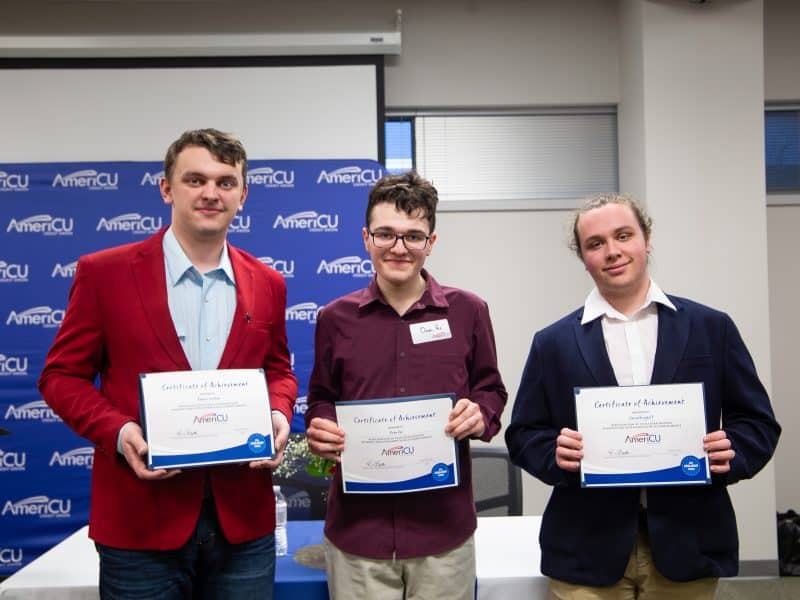
AmeriCU proudly connects students with annual scholarship opportunity
AmeriCU scholarship program awards $1,000 to students pursuing college or vocational education. Applications are open through March 15.
Trumansburg schools consider regionalization as TST BOCES plan advances
Trumansburg school regionalization remains undecided as TST BOCES outlines goals for shared services and student learning.