
Transportation services face changing landscape
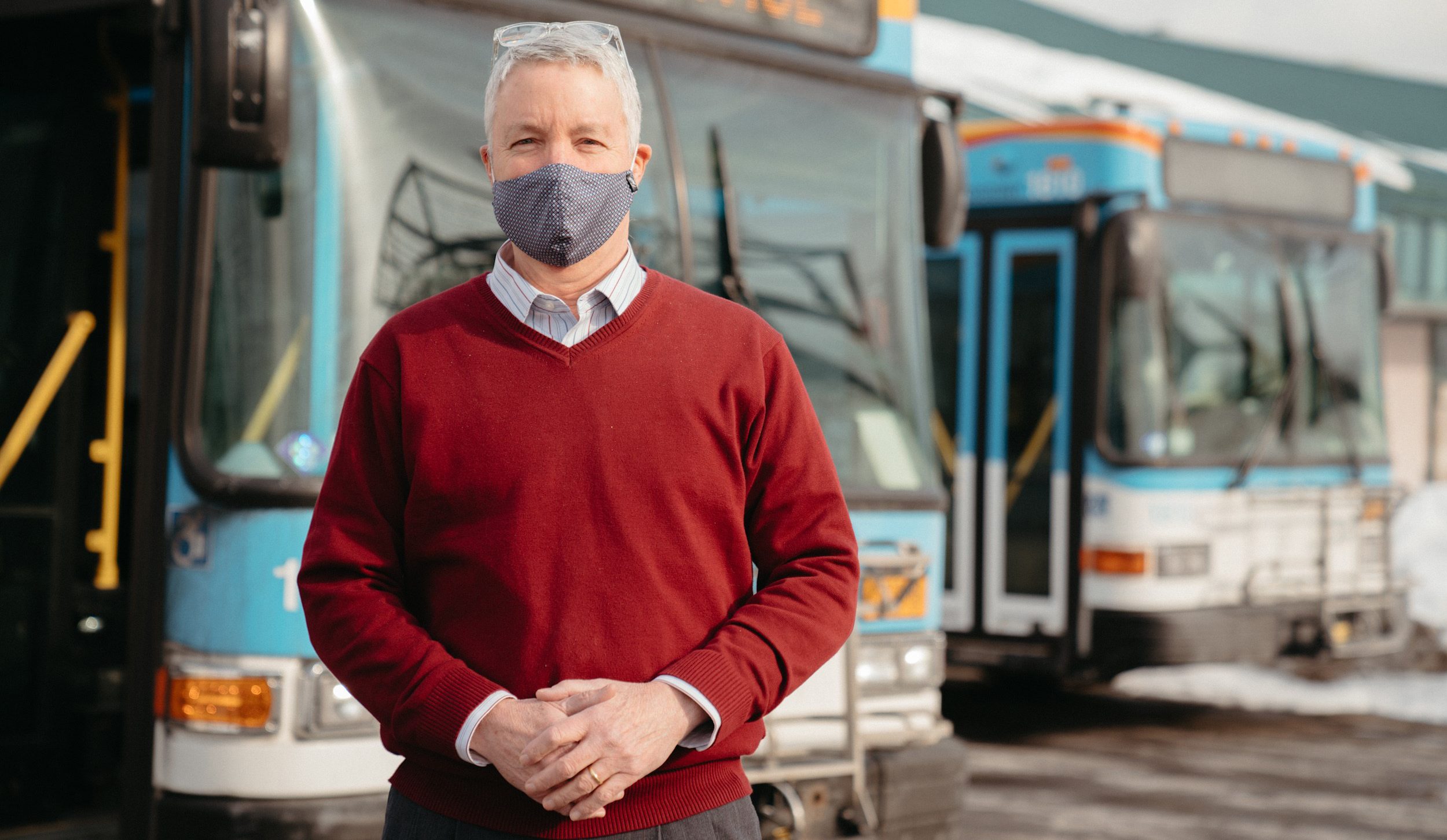
Earlier this month, the Ithaca Tompkins International Airport was awarded over $1.3 million in federal relief funding out of the $36.5 million secured for airports across the state as part of the recent COVID-19 relief bill.
While the funding is undoubtedly a big win for the airport, the news also highlighted just how challenging the pandemic has been for the airport and others in the transportation sector throughout the county.
For this dive, Tompkins Weekly asked leaders from various transportation modalities — planes, buses, coaches, cars and bikes — about how they’ve fared during this yearlong pandemic. Their experiences show that COVID-19 has completely shifted the demand for different modes of travel and will continue to shape the landscape in the coming months.
Impact on services
When the pandemic first hit the county back in March 2020, it rocked the transportation industry, bringing many services to an abrupt halt. Isolation orders greatly decreased ridership at the airport, TCAT, Gadabout and Ithaca Carshare, which subsequently decreased service offerings. And some, like Ithaca’s Swarthout Coaches, had to shut down offerings completely during those initial stages.
Since then, many months have passed and the county has eased restrictions, helping to bring back demand for various transportation providers as more residents feel comfortable traveling. But that doesn’t mean everything is back to normal.
“The pandemic really impacted transportation,” said Fernando de Aragón, executive director of the Ithaca Tompkins Transportation Council. “Transit, in particular, took a big hit. Our carshare system, which is another thing that we’ve worked hard to promote, … took a hit early on. Both of them have bounced back, somewhat. However, if you were to look at the graphs, we’re still at a lower level than we were pre-pandemic, even though it went down and back up.”
At the airport, flights are still limited and ridership is still down from this time last year, and it’s a similar story for TCAT and Swarthout.
Swarthout Coaches owner John Miskulin described how his business has been impacted by the pandemic throughout the past year.
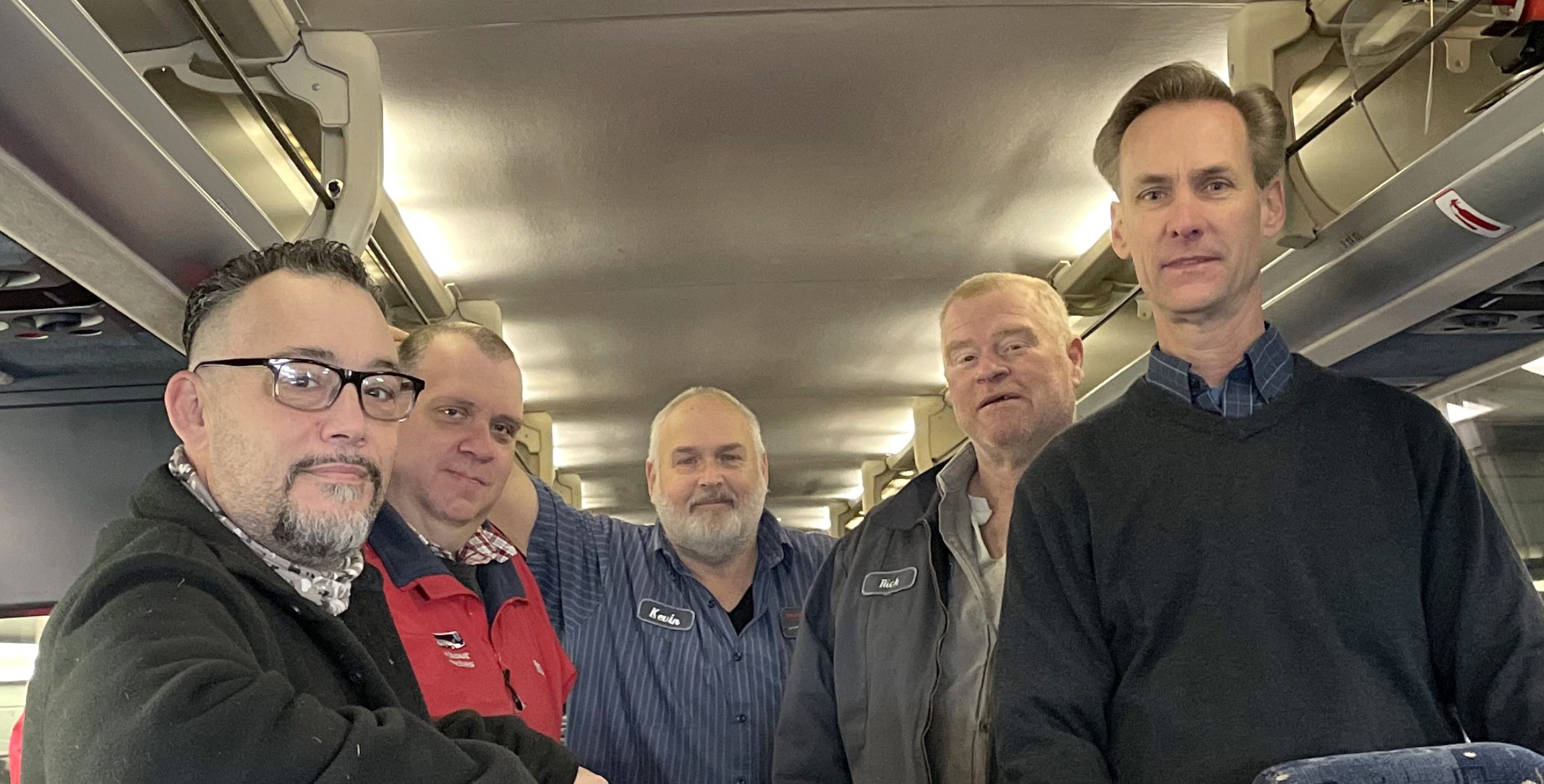
“The immediate impact of the shutdown (Mar 15-Mar 31) brought the 1Q performance at 21% less than the same period for the prior year,” Miskulin said in an email. “The 2nd and 3rd Quarter performance (year over year) were down 97% and 98%, respectively. The 4th Quarter provided us limited opportunities to support Cornell, Ithaca College and the Ithaca City School District — but even then, our 4Q performance was 90% less than the same period in 2019.”
Meanwhile, the pandemic has actually increased demand for other forms of transportation like biking and walking. Particularly in the summer, biking demand skyrocketed, and groups like Bike Walk Tompkins worked to meet the demand.
“In the summer, we really faced the issue of a lack of access of affordable bikes in Ithaca and Tompkins County and across the country,” said Grace Johnston-Fennell, communications and community outreach coordinator for Bike Walk Tompkins. “We were not alone in bike shops being out of stock. Even department store bikes that are usually more affordable were totally off the shelf right away as soon as they came in.
So, we pivoted to offer a ‘pop-up repair shop’ outdoors, under tents.”
The pandemic amplified the need for various transportation services, even those for whom services are still decreased. TCAT, Gadabout and Ithaca Carshare have become crucial to the fight against COVID-19 and keeping residents healthy.
“Our drivers, … they’ve brought essential workers, nurses and doctors to work, and they’ve taken people to essential services — doctor’s appointments, pharmacies and to shopping locations,” said Scot Vanderpool, general manager for TCAT. “It proves that transit is essential in a lot of ways.”
Anna Cook, associate director of Ithaca Carshare, described a similar situation for her organization.
“People are using Carshare cars to get to vaccines and even the testing site,” Cook said. “The whole test site situation presented a challenge [at the start of the pandemic] for people without a car because the only site was up by the mall and they weren’t accepting people to walk in or bike in, which creates an access issue for people who don’t own a personal vehicle.”
Gadabout also saw this need, and even more so, as it serves the elderly, a population very susceptible to the virus.
“People still had to go to the grocery store,” said Gadabout Executive Director Kristen Wells. “People still had to get their medicine, and telehealth doesn’t always work for everyone. People still had to go to their doctor’s appointments. So, we were there to take them where they needed to go.”
Challenges
While finances have been a challenge for services like Swarthout, services like Gadabout and TCAT have been fortunate enough to benefit from CARES Act funding, which has helped them remain financially stable throughout this pandemic. But the industry still faces other challenges.
TCAT, in particular, has faced numerous challenges with handling COVID-19 exposures on its routes.
“We have to figure out what buses and what times people took that were exposed and rode our bus,” Vanderpool said. “There’s a lot of research and a lot of work to do for some of our staff members, and then getting out the communication to everybody. … [The] communication piece and the research pieces are the other challenge for us. But we certainly want to do that and want to let folks know exactly what buses these folks rode on.”
At Gadabout, Wells said the nonprofit’s biggest challenge was getting its drivers vaccinated.
“Our drivers are transporting the most vulnerable population,” Wells said. “And if our riders get COVID, they’re the ones that are going to suffer greatly for it. So, keeping our drivers and our riders safe has been paramount. That’s been our top priority.”
And challenges persist for residents looking for transportation, as staff at GO ITHACA can attest. GO ITHACA has worked to promote alternatives to single-occupancy vehicles (SOVs) since its founding early last year, and while participation has remained steady, participants’ reports show how the transportation landscape is constantly changing.
“I’ve seen, even in our social media platform, people just saying that the changes in TCAT have impacted them, forced them to maybe change to carsharing or change to walking or using a different mode, even if it’s SOV,” said Darlene Wilber, outreach coordinator for GO ITHACA. “That’s been a struggle, to get people to continue their ridership, when that might not be a service that’s available to them right now because it’s been reduced due to the pandemic.”
Learning to adapt
The pandemic has required practically everyone in the transportation industry to change their practices and adjust their operations, but sources interviewed for this story said their employees were up to the task.
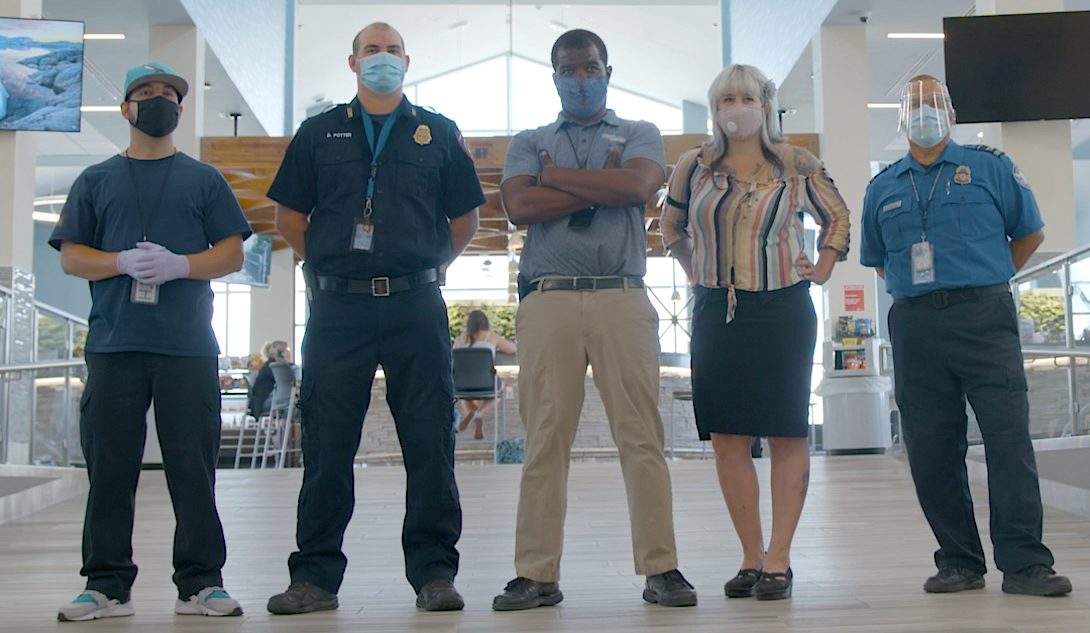
At the airport, Director Mike Hall described how airport staff has had to shift practices since the pandemic started, from sanitation to vaccination.
“We were very concerned early on that we might get an outbreak and that would shut down the airport. Our folks were really good about all the mitigating measures — wash your hands and don’t touch your face and wear a mask and all that sort of stuff — and so, that never happened,” Hall said. “Now, probably 95% of the airport is vaccinated, at least one shot, and probably 20% has been vaccinated twice. So, we’re getting pretty close to the point where some of the risk [of flying] has been taken away.”
At TCAT, Vanderpool said that while more buses are at maximum capacity nowadays — a good sign for TCAT — the switch to remote work across the county has continued to keep ridership below pre-pandemic numbers. This shift has caused staff to look for other ways to boost demand and cut costs.
“Technology is one thing that might help us,” Vanderpool said. “We have seven battery-electric buses coming to TCAT this spring. We now have Wi-Fi on most of our buses for the first time. … It’s going to be important to enhance the customer experience and make riding the bus more interesting.”
At Swarthout, staff has worked to increase residents’ confidence in the safety of coaches.
“Our efforts to address the concerns span the spectrum: from those [that] are widely promoted by the CDC (temperatures, masks, enhanced cleaning, etc.) to installing additional equipment/material such as air purification systems and enhanced HVAC filter material,” Miskulin said in an email. “Clearly, this new ‘norm’ is here to stay, and the procedural changes/equipment modification that we have implemented for the safety of our customers and our employees have been well received by all.”
Looking ahead
Transportation leaders are expecting the pandemic to continue to shape the sector in the coming months. Still, many expressed optimism for what’s to come.
For the airport, the federal funding isn’t the only news worth celebrating this month. While Delta and American Airlines have provided flights from Ithaca throughout the pandemic, United Airlines halted all flights last June. Recently, however, United announced that it would be resuming flight services in Ithaca come June of this year.
The airport is prepping for increased service offerings and demand in the coming months as a result, Hall explained, which is as exciting as it is challenging.
“The gearing up of the whole integrated operation to a higher tempo, I think, is the biggest challenge we have right now because there’s been a pretty good pause,” Hall said. “So, we’ve got a lot of startup work, if you will. And even though it’s something we’ve done before, in some cases, there’ll be new employees, new circumstances, [and] there’s still going to be a requirement for PPE to be worn for probably most of the rest of this year.”
Another development on the horizon is the result of a collaboration among many in the transportation sector. Gadabout has consistently helped to transport seniors to vaccination appointments, but soon, it will be doing the same for residents of all ages.
Working with other services like 2-1-1, Gadabout will transport any resident with a confirmed vaccination appointment facing a transportation barrier to and from their vaccination appointment. Wells explained why this service is so important.
“There’s been a lot of barriers with the rollout of the vaccinations — the vaccination shortage, the barriers that people face in trying to book their vaccination, people that have technological barriers that aren’t able to get on the website or babysit the website on a daily basis or an hourly basis to find out when those vaccines are released,” Wells said. “We don’t want transportation to be one of those barriers.”
The details for the service are still being finalized, but Wells and others are excited for the help it will bring to the county.
Several sources expressed their hopes for themselves and the entire transportation sector moving forward.
At the airport, Hall said he’s seen the pandemic push people “back to our respective rabbit holes,” and he wants the airport to be part of a change for the better in the area of diversity and anti-racism.
“There’s been some change politically in the country that’s in favor of inclusion, and our community most definitely has a role to play in communicating across differences, recognizing and respecting others,” Hall said. “And we have a leadership role to play. So, the airport’s right in the middle of that. And I think that’s the thing that we’re excited and look forward to most going forward.”
De Aragón said he’s hoping to see more financial investment from the federal government.
“Historically, the transportation sector of the economy has been a good job activator,” he said. “Whenever the economy was low and you wanted to reactivate the economy, one of the places you would put money in is in transportation because it generated a lot of economic activity. We’ll see if the feds do that. We just don’t know yet.”
For Ithaca Carshare and GO ITHACA, the goal for the next few months is to simply continue to serve the community however possible.
“We want to keep on just providing reliable, affordable access to vehicles for people who need it, just keeping in mind that not everyone can own a car and COVID has created a situation where transportation by personal vehicle is how a lot of people feel most safe moving through the world,” Cook said.
GO ITHACA Program Manager Lauren Gabuzzi said her organization seeks to continue its mission of promoting alternative modes of travel throughout the community.
“We really want to help shape Ithaca, from an infrastructure perspective, to try to make these modes the easiest modes, the most convenient,” she said. “We’re hoping to do that through working on policy that will require buildings, new development, redevelopment, infrastructure improvements, to have more of a sustainable transportation focus.”
For Bike Walk Tompkins, Johnston-Fennell said they’d like to see the collaboration that grew among those in the sector during the pandemic continue well into the future.
“There are channels that we want to keep moving forward on that we’ve developed through the pandemic, and then it seems like there’s going to be some new opportunities for growth,” they said. “[We want] to continue to be a resource for transportation access by offering opportunities to repair and that kind of more tangible support.”
Related Articles
Cayuga Medical Center nurses to rally, alleging anti-union tactics by hospital management
CMC nurses plan a rally, alleging unsafe staffing and illegal anti-union tactics as the hospital highlights recent patient-safety gains.

AmeriCU proudly connects students with annual scholarship opportunity
AmeriCU scholarship program awards $1,000 to students pursuing college or vocational education. Applications are open through March 15.
Street Beat: What’s one of the best holiday gifts you ever received?
We asked five random people. Here’s what they had to say.