
Challenges continue as development picks up in 2021
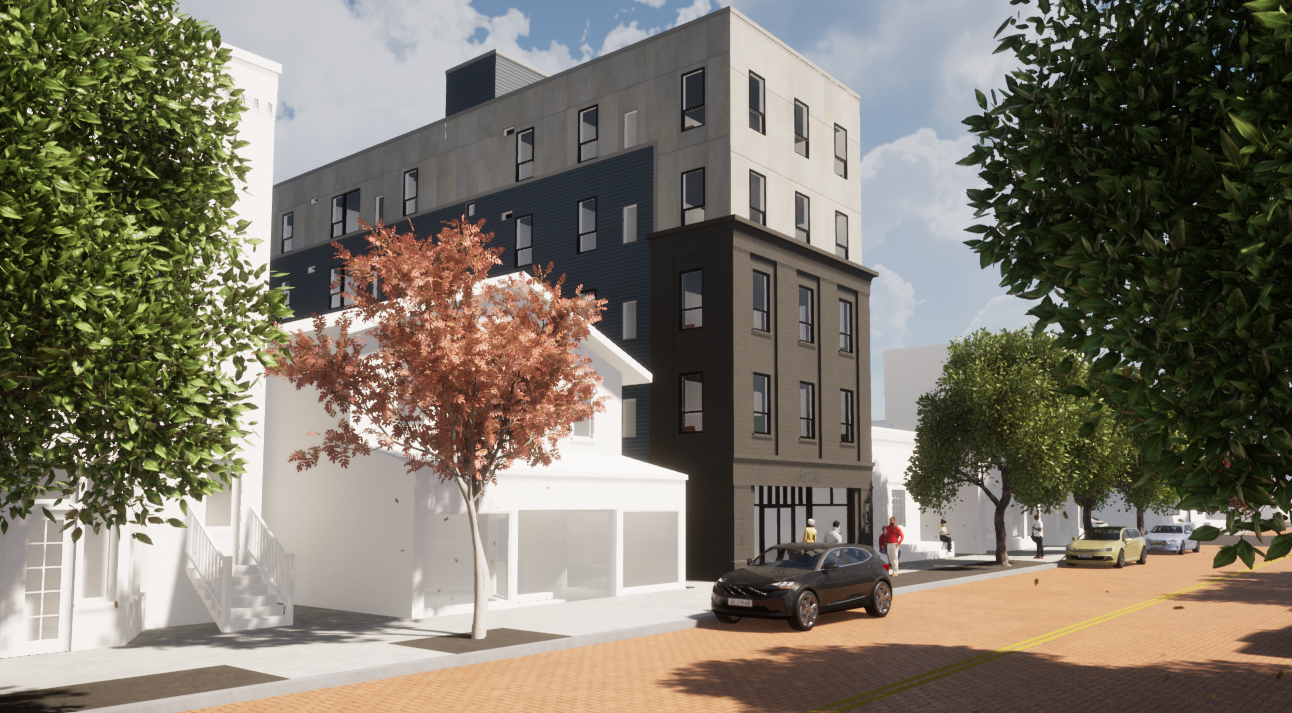
It’s been a while since we last covered development projects in Tompkins County in October 2020, and a lot has happened in the development world since then, including the release of the Ithaca Planning Department’s Annual Report and construction beginning on several projects.
With that in mind, we’re diving back into development to see how things have evolved since last year. As developers and county leaders describe, there’s been significant progress, but challenges persist.
Challenges
Developers interviewed for this story described a wide range of challenges, mostly depending on the type of project. Ithaca Neighborhood Housing Services (INHS), for example, is currently working on a few affordable housing projects in Ithaca, including the West End Heights apartments project and housing at 511 S. Plain St. and 110 Auburn St.
As Joe Bowes, INHS director of real estate development, explained, the biggest challenge INHS is facing is with the planned duplex at 511 S. Plain St., specifically with the cost of the project.
“At the end of last year, we started to put it out to bid and get pricing for what it was actually going to cost to build it,” Bowes said. “At that point, it was basically coming in much more expensive than we had anticipated. And we were having a very hard time — we are having a hard time — finding contractors who had the ability to do the project.”
Bowes explained that this rise in cost is likely because at the start of the pandemic, contractors had to halt work, but recently, things have picked back up, and contractors are backlogged. As a result, contractors only want to work on projects that will pay well.
Another factor leading to financial challenges for both Bowes and others is the cost increasing for many supplies needed for construction. Nels Bohn, director of the Ithaca Urban Renewal Agency, explained that supply is a common issue with developers he works with, which can especially affect affordable housing projects like those managed by INHS.
“That is very worrisome because it’s hard to do affordable housing under the best of scenarios, and when materials are hard to get, or increasing in price, that makes it all the harder,” Bohn said. “We’re hearing just lots and lots of stories of that, being concerned and the challenge for completing projects and getting them done on time and on budget.”
Between contractors and supplies becoming more expensive, several developers interviewed for this story said they’ve had to rethink their previous designs to make projects cheaper overall. Steve Hugo, principal at HOLT Architects, knows this problem well.
HOLT has created designs for several development projects currently planned throughout the county, including City Harbor, Library Place and the Dalai Lama Library and Learning Center. Hugo described how increasing costs have affected the designs of these and other projects.
“All of our projects across the board have experienced a spike in the market,” he said. “That often means, prior to projects going to bid, we need to put cost-control measures into our drawings. Sometimes that means changing our design, and then sometimes that means exercising what we call alternate.”
Alternate, Hugo explained, refers to having an alternative design on hand to present to contractors should the need arise.
And the initial wave of shutdowns last year has affected several projects, including The Haunt. The demolition of The Haunt’s old location in Ithaca began late last month to make way for the City Harbor project planned for the area. DSP Shows owner and founder Dan Smalls, who bought the name and assets of The Haunt, said finding another location for The Haunt has been difficult ever since COVID-19 halted performance tours.
“We weren’t able to be open with the club and be keeping the reputation going,” he said. “We had hundreds of shows that were canceled at the club over the year. So, there’s no continuity. Having continuity and being able to be open would have certainly helped the ability to move to a new location, I think, whereas right now, we’ve been shut down for a year and a half.”
Successes
While these and other challenges continue for many developers, the past several months have also been filled with many successes. For one, though many projects had to be put on hold due to the pandemic, developers have made good use of the time, as Laura Mattos, chief operating officer of Visum Development Group, described.
Visum is currently working on the State Street Apartments project, planned for 510 W. State St. Like other developments, the project was put on hold due to the pandemic, but Mattos and others decided to make the most of the situation.
“I feel like it was a good thing for us,” she said. “We were able to revisit the floor plans, see what were the needs right now for this community, so we were able to include a bit more inclusive types of housing.”
Costa Lambrou of Lambrou Real Estate, one of the developers behind the City Harbor project, reported a similar situation to Visum with his project.
“We were definitely slowed down a lot by COVID in the beginning, which made us very anxious because we wanted to hit the ground running and get going,” he said. “But it has turned out to be somewhat of a blessing in that we can take this time now, the past basically 12 months, and reflect and change the project in a way that better facilitates whatever the future looks like.”
In addition, some developers said that the increasing costs for their projects have been manageable. Jerry Dietz is the developer behind a few projects planned for the Aeroplane Factory campus in Ithaca. The hangar expansion recently broke ground, which Dietz sees as an encouraging sign for another portion of the project, Tabor Tower.
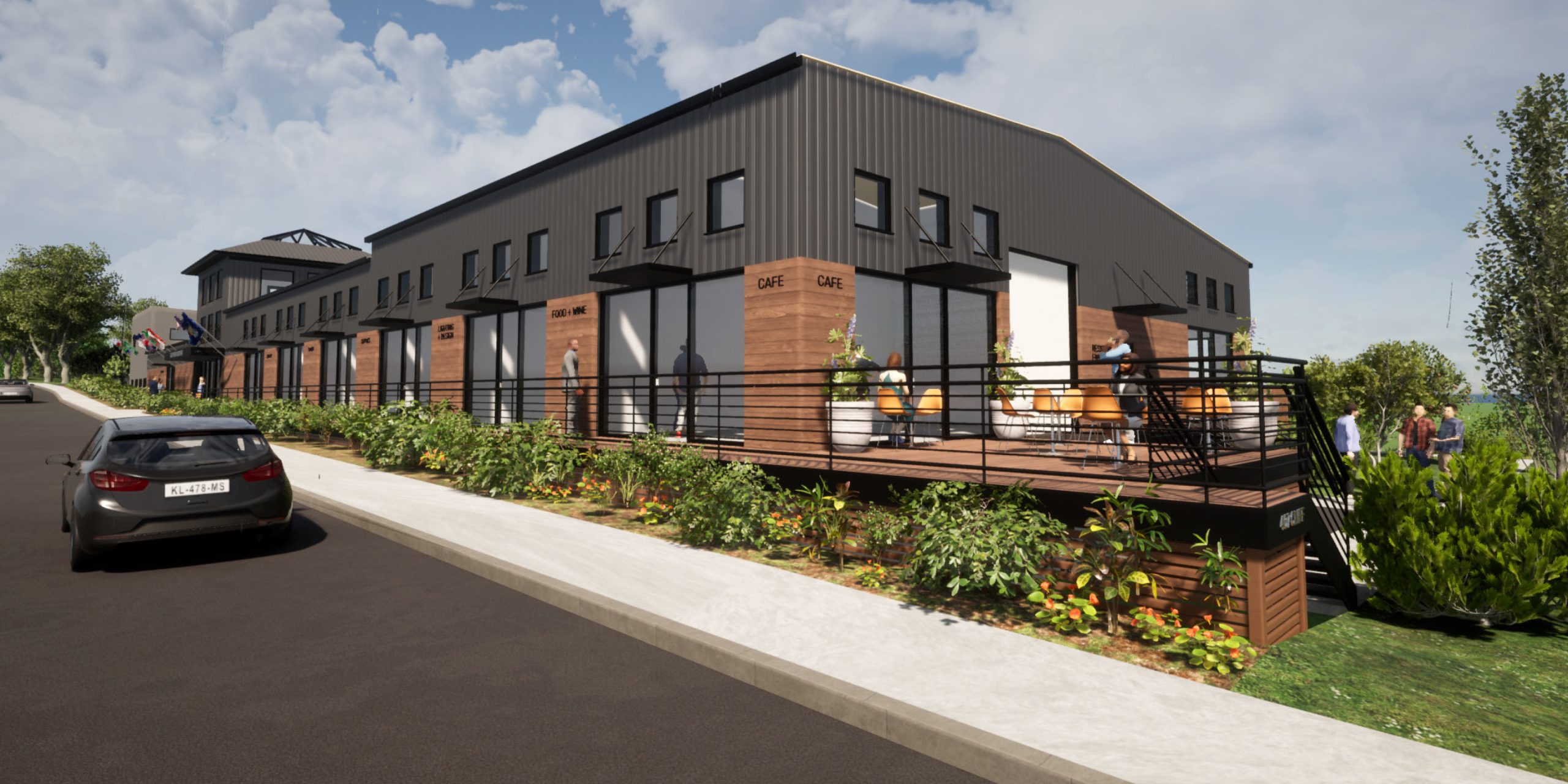
“The project has become more expensive just because materials have skyrocketed through this period of COVID,” he said. “That said, we’ve been able to find some good deals buying at the right time and in the right quantity to save some money, and I’m feeling that while this project will come in over what I budgeted, it’s not so drastically so that it gives me any concern.”
Noah Demarest, principal of STREAM Collaborative, shared a similar experience. STREAM is behind many county projects, including State Street Apartments and the Cliff Street Retreat project planned for the current Incodema building in Ithaca. Incodema plans to move to Dryden within the next year, vacating its Ithaca location.
“What we’ve witnessed is that the construction industry, despite cost issues, it hasn’t slowed down despite COVID,” Demarest said. “The work that is happening was planned, and the planning that continues to happen seems to keep going. So, I don’t know what the long-term impacts [of COVID-19] will be, but the immediate impact seems to be that people are really motivated to keep going and the workforce is moving.”
The pandemic also helped to highlight the importance of things that are features of a few planned projects, including State Street Apartments. Patrick Braga, vice president of development for Visum, explained that walkability is prioritized in the planned apartments.
“As much as we have to stay home, it’s so important to get outside and see life and fresh air, and having a project located in a central location where residents will be able to have that kind of easy access to the outdoors and not feel confined, I think, is a plus in case we have to face another pandemic in the near future,” he said.
Lincoln (Linc) Morse also spoke to this idea. Morse is the developer behind the Waterworks project on Taughannock Boulevard, the Cliff Street Retreat project and a proposed project for Inlet Island that would include a hotel and housing units. He said the Cliff Street Retreat and his Inlet Island proposal both prioritize recreation, based on his experience from this past January.
“We have a pop-up kayak shop that’s on 629 W. Buffalo St., the old Emmy’s [Organics] building,” he said. “In a normal season in January, we would sell maybe five to six kayaks. We’ve sold 55. So, there is an economic generator being caused by health and wellness and outdoor recreation.”
The Ithaca Planning Department’s Annual Report shows more positive signs in the world of development. Among the biggest findings from the past year of development is that despite the pandemic, Ithaca saw stronger interest from developers than in past years.
“In general, things are moving along,” said JoAnn Cornish, city of Ithaca director of planning and development. “We’re still dealing with applications for really large projects. Some of the projects that were lagging a little bit are seeming to move forward now, so things keep progressing.”
Lisa Nicholas, deputy director of planning for the Ithaca Department of Planning and Development, explained that a big reason for this boost in interest is that interest rates are low, so it’s a lot cheaper to borrow money to finance development projects. And there’s another factor as well.
“The other reason is that, although everything else was stopping, these projects are designed to go online when things will be picking back up again,” Nicholas said. “So, it’s a great time to do construction. It’s a great time to do projects because if we are supposed to be back to normal in 18 months, that works perfectly for these projects.”
Jennifer Tavares, president of the Tompkins County Chamber of Commerce, explained another reason for the spike in interest is that recently, new areas have been made available for development that weren’t before.
“If you think about the waterfront sites and some of the areas down in Ithaca, even on the Inlet, these are just areas where people are seeing land that can be developed for the first time shifting from industrial or municipal uses on the waterfront to multiple other uses, including business, commercial, residential, the arts, open space and parks,” she said.
Look Ahead
Overall, sources agreed that while the pandemic has created a host of challenges for developers, there is hope on the horizon. Continued vaccinations and the loosening of COVID-19 restrictions show that the progress seen recently will only continue in the coming months, as Hugo explained.
“People are optimistic, maybe for the first time in a year,” he said. “I think that was very encouraging that vaccines are becoming more readily available. And it feels like, where we thought getting back to normal might be later next year, that we might be closer to that.”
Heather McDaniel, president of Ithaca Area Economic Development, added that the county’s progress across multiple sectors will ultimately help development as well as the year continues.
“The real thing that we’re all hopeful for is the local sectors — the restaurant, the retail, the commercial service firms, arts and culture facilities — to open back up, and that’s going to generate increased room tax and sales tax,” she said. “That’s going to help the governments out, the municipalities and the county.”
Related Articles
Street Beat: What are you looking forward to in the new year?
We asked five random people. Here’s what they had to say.

5 things to do in Tompkins County this weekend
Plan your visit and discover what’s happening this weekend.