
Enfield Food Pantry seeks more space
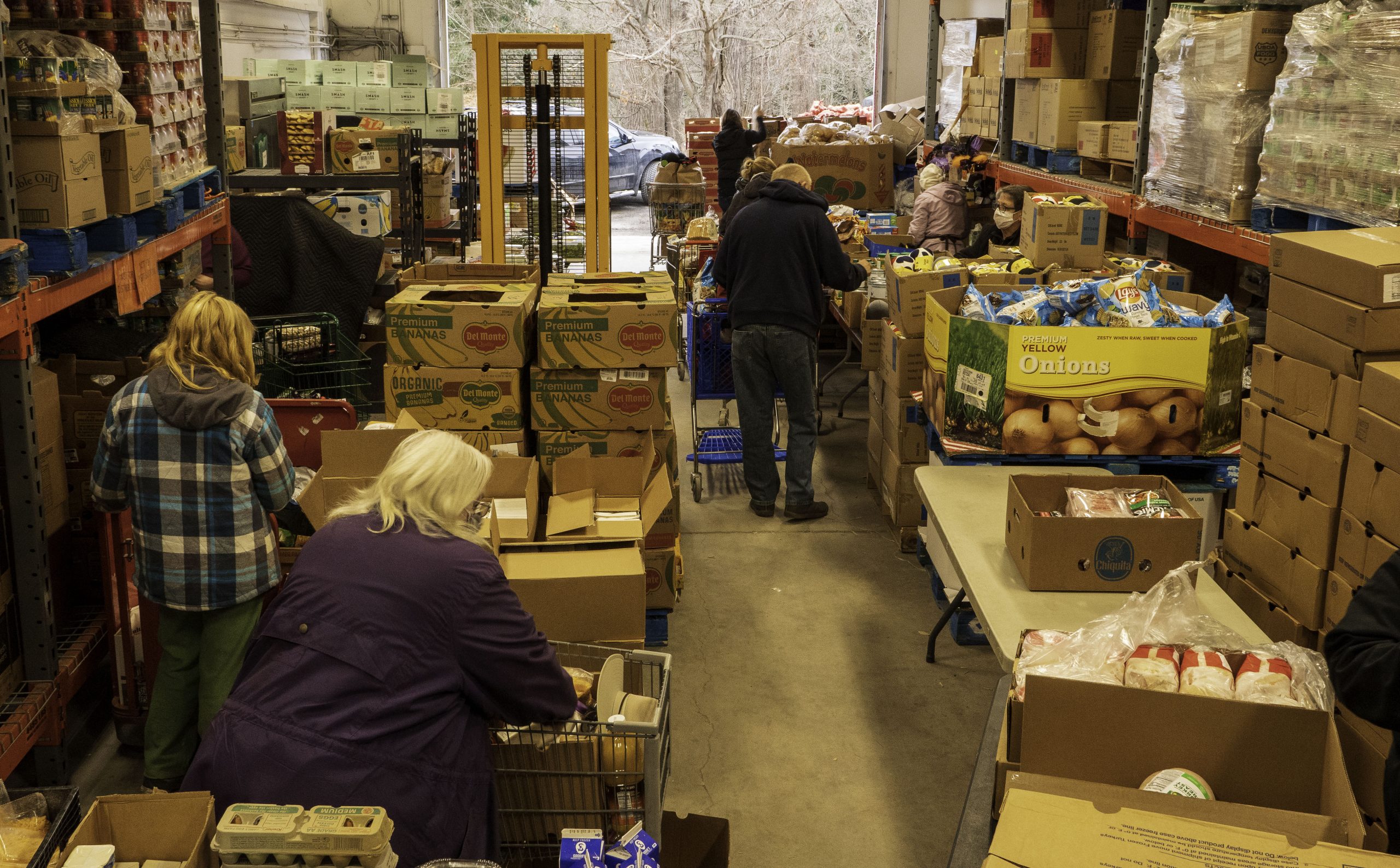
In order to more effectively combat the growing problem of food insecurity in Enfield, the Enfield Food Pantry is seeking a larger facility that will better serve its needs.
According to Pastor Jean Owens, who runs the food pantry, the program has been in existence for as long as the First Baptist Church of Enfield has been in town. It runs from 11 a.m. to 1 p.m. on Sundays and Mondays.
Owens has been involved with the food pantry since she was a teenager. She said helping feed Enfield residents is her passion and she “couldn’t get a better job in the world” than that.
“Nobody asked me to do it,” Owens said. “It’s always been a call for me to be there and make sure food is available to people, and as a teenager, I felt the same way.”
The food pantry has about 40 volunteers working at it every week, performing tasks such as unpacking, storing and handing out food. The volunteers handle roughly 30,000 pounds of food per week, for a total of about 1.5 million pounds per year.
Owens said the pantry has a large variety of food to offer people seeking its services, whom she calls “shoppers,” from staple goods to dairy products and meats, as well as other items such as shampoo and toothpaste.
She said the food pantry has plentiful produce available, with tables outside that put food on display like at a farmer’s market. She said the large selection helps the food pantry meet residents’ dietary needs and preferences.
“Basically, what you find in a grocery store, you find in the pantry,” Owens said.
Owens said Enfield’s food pantry is the largest in the Southern Tier, and its resources, including the volunteers and space available, allow it to serve many people who might otherwise go without help.
“We have a lot of support, local support, not only with volunteers, but all the local foundations,” Owens said. “It is truly a community effort.”
Demand for the food pantry’s services has increased over time, especially due to people losing their jobs during the pandemic. Owens said the pantry now serves 400 families per week, up from 200 families per week at the start of the pandemic and 60 families per month 20 years ago.
Tracy Davenport, who has volunteered for the food pantry for two years, said that in the first few months of the pandemic, the pantry served 570 families per week, many of whom had lost their jobs. She said this proves that people from all walks of life can suffer from food insecurity.
“At some point, we all need some type of help, and food insecurity is huge,” Davenport said. “You don’t know if you’re going to lose your job. You don’t know if you have a medical illness next week. For many reasons, you could be one of those people in need.”
Over the past year and a half, the pantry has waived the requirement for shoppers to live in Enfield so it can help people across Tompkins County and outlying areas who may not be able to get help where they live.
“I have people coming through routinely, every week, who will say to me, ‘Thank you for being here. If you weren’t here, I don’t know what we would have done,’” Owens said. “I didn’t used to hear that as much as I hear it now, so I think some people were running out of options to be able to provide food.”
Gail Gumbert, who has volunteered with the food pantry since last October, said she chose to join because she wanted to do something to combat food insecurity in Enfield. She said that while she faces the risk of contracting COVID-19 while volunteering at the pantry, as essential workers do at their jobs, she takes all necessary precautions.
“People’s needs were more important than my risk of getting COVID, that’s how I felt,” Gumbert said. “That’s why I volunteered.”
Owens said that the food pantry’s current base of operations, at the Enfield Community Building at 182 Enfield Main Rd., is not suited for the food pantry’s needs. She said the base provides inadequate freezer and cooler space to store food, especially produce.
“The fact is that it was never built to be a pantry, so we have to operate within the constraints of a 70-year-old fire station,” Owens said.
Davenport said that while the produce stands are located outdoors, hot days can shorten the shelf life of produce kept outside. She said she tries to keep the produce covered as much as possible, but this is a difficult task outdoors.
“With the number of clients, we’ve outgrown that facility by far,” Davenport said.
Owens said the muddy parking lot can become slick when it gets wet and is difficult for many shoppers to traverse. The parking lot can only hold six cars, while hundreds of cars pass through the food pantry each week, requiring volunteers to serve as parking attendants.
Owens believes that the ideal facility for the food pantry would be between 7,000 and 8,000 square feet, roughly twice the size of the current facility. She said that in order to obtain a facility that will serve the food pantry’s needs for decades to come, especially in the face of another pandemic, the pantry will need to build because there are no available buildings in Enfield that suit its needs.
According to Owens’ estimates, based on her experience with construction projects, the food pantry’s desired facility would cost about $1.2 million and take between two and five years to build. She said she wants a building that will last a long time, noting that rehabilitating an existing building can often cost more than building a new one.
“If you’re going to do it, do it right,” Owens said.
The pantry has raised $8,248 through a GoFundMe campaign and over $20,000 through checks and other donations. Owens said she prefers that people donate through the latter method if possible.
Owens said she hopes to move the food pantry onto a parcel of land where it can have community gardens to teach residents how to grow their own produce. She also wants a Health Department-approved kitchen where food preparation can be taught and that can provide hot meals to shoppers. She hopes to open the food pantry three to five days a week in order to shorten the lines.
Gumbert said the food pantry’s work is important and that many shoppers thank her for being there for them.
“I don’t think any of us want to see our neighbors and community members suffering,” Gumbert said. “[The food pantry is] a way to help.”
Owens said that as someone who had struggled to feed her family in the past, she knows how food insecurity affects people. She said people in those situations suffer from despair, and having a source of food can give them hope, which is why she dedicates her life to fighting food insecurity.
“When you have food in your house, all other things are possible,” Owens said.
Related Articles
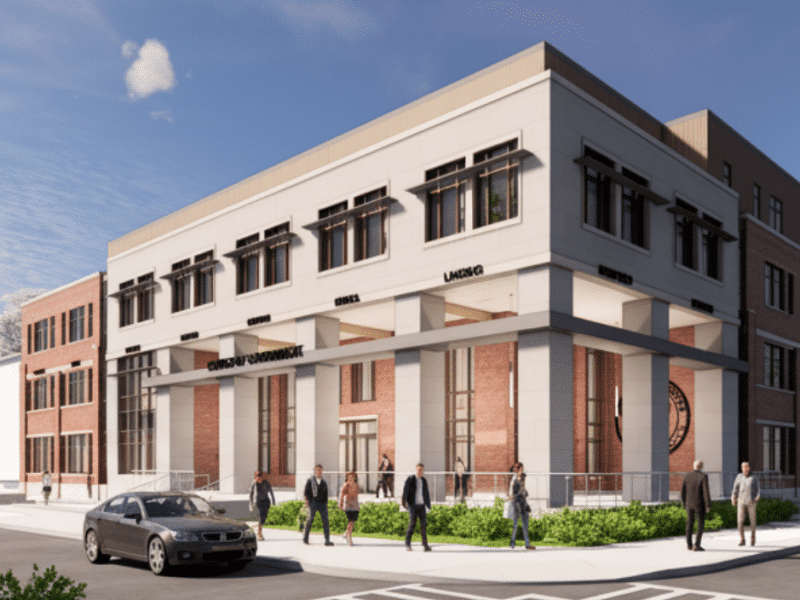
Design details unveiled for new Center of Government
Design details for the Tompkins County government building in downtown Ithaca are now public, with a county survey open for feedback.

Holiday traditions bring community cheer
Tompkins County holiday traditions light up homes, farms, and schools with festive cheer and community spirit.
Cayuga Medical Center improves patient safety score
Cayuga Medical Center Leapfrog Grade rises to “B,” showing improved patient safety and nursing care quality.