Broadband study shows Newfield lacking connectivity
That Newfield needs a better connection to the internet is no surprise to town officials. But now, an extensive, countywide study is confirming that.

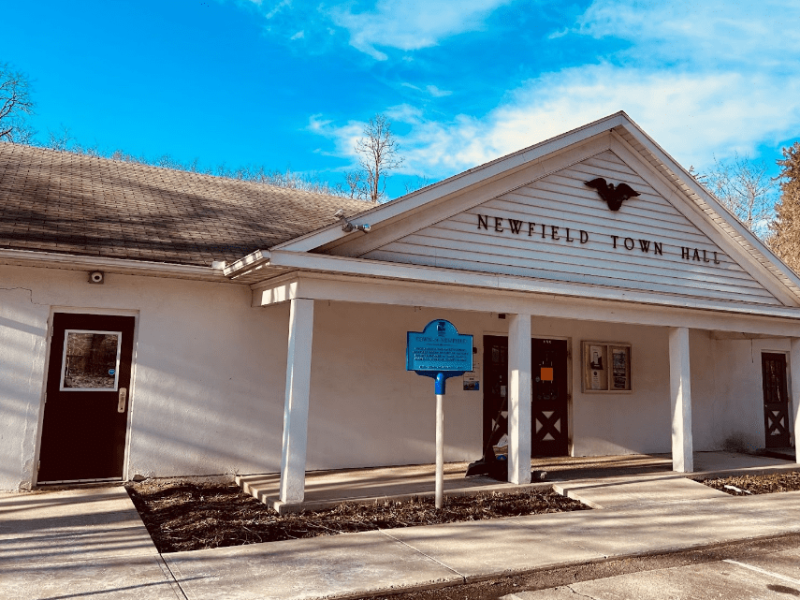
Newfield Town Supervisor Michael Allinger said Southern Tier Network has shared some preliminary data that shows the town is lagging the rest of Tompkins County in connectivity.
“Newfield is at the absolute top of the list when it comes to underserved or unserved areas of the county, probably double of any other town in Tompkins County,” he said. “We have realized this for a long time. There are areas where it is hard to convince internet service providers to provide service to because the cost to run service to these areas would not be recoupable. It’s a business decision on their part.”
According to its website, Southern Tier Network Inc. (STN) is a nonprofit that operates and leases bandwidth on dark fiber network infrastructure. It helps facilitate access to affordable broadband services to unserved and underserved areas. It was formed through a public-private collaboration with Southern Tier Central Regional Planning and Development Board, Corning Incorporated, and Chemung, Schuyler and Steuben counties.
Since its founding, STN has grown into a broader alliance with a total of eight counties that include Tompkins, Allegany, Broome, Tioga and Yates.
“We’re not sure what Southern Tier Network is going to be able to provide to us, but they’re asking, ‘How can we deliver high-speed broadband to every corner?’” Allinger said.
He said the timeline calls for the study to be complete in December.
“They should have recommendations with how we can move forward,” Allinger said.
He noted that Newfield Central School is working on a project that would help it get devices to students that would provide over-the-air access to the internet.
“That is still very much in the preliminary stages,” Allinger said.
Millard Hill Road is one specific area that has a need for connection, and the town had a study done there to try to convince providers to make something work.
“We were working with a couple of service providers to try to find them clients that would make it viable for them to invest in that area,” Allinger said. “More in general, with schools, we’re trying to figure out where the pockets were, trying to push one of these companies into taking it on.”
Cost is a prohibitive factor for companies, especially when they are considering whether to invest in infrastructure to serve rural and harder-to-reach communities.
“There is a distance factor,” Allinger said, noting that rural communities sometimes have geographic and topographic barriers. “If there are trees blocking the line, if they have to shoot it over a hill, it’s not going to work for some people.”
One potential source of funding to pay for expensive broadband projects would be coronavirus relief funds that will be flowing to municipalities. While there has been little guidance on how the money can be spent, broadband infrastructure is allowed.
“This funding, first and foremost, needs to be used to offset any shortcomings COVID caused for 2020. Other things mentioned that it can be used for are funding water projects, sewer projects or broadband, so that’s definitely on the table,” Allinger said. “But we need to figure out how to use the funding wisely. We also know we have some upgrades to do to the water district in Newfield and also to the sewer district.”
He said the town recently completed an “exhaustive” study on stormwater infiltration into the sewer district, which indicated better monitoring of the flow is needed.
“We don’t have a lack of uses, just in those three areas, for the money we’re getting from the federal government. We’re trying to figure out how to get the best bang for our buck,” Allinger said. “We know there are a lot of grants for broadband and lots of grants for sewer improvements and water improvements.”
With grant funding, however, applications from municipalities typically get a higher priority when a greater need is demonstrated.
“As it stands now, it’s not as much of a health issue that would trigger extra points to get ahead of someone else [on the grant list],” Allinger said. “We’re not in a situation where we have a dire need, but we do realize we have some infrastructure that needs maintenance.”
He said the town is still trying to find out more specifics about where other underserved or unserved parts of Newfield are located. That information could be available once the Southern Tier Network study is fully released.
“We’re also having a road-by-road study done, where someone actually comes through to see the termination points. That will give us an even clearer picture,” Allinger said. “That would give us exactly where we need to be looking to provide service.”
If Newfield residents do not have adequate internet access, he encouraged them to reach out to the town to let officials know.
“We know a lot of the people having broadband issues, but it doesn’t hurt to reach out to us ever, so we can update our inventory of people who need connection,” Allinger said. “We can’t help if we don’t know.”
Have Newfield area news? Connect with Rob Montana at rob.j.montana@gmail.com.
In Brief:
Newfield Harvest Market starting
Starting July 28, the student-run Newfield Harvest Market will take place from 4:30 to 6 p.m. every other Wednesday. The market will also take place on Aug. 11 and 25.
Tables will be set up outside the entrance to Newfield Middle School, filled with free fresh produce for people who attend.
Each of the markets will take place the same night as the Mill Park Music series. Kitestring is performing July 28, Janet Batch will play Aug. 11, and Erin and the Backwoods Blues Project will close out the summer music season Aug. 25.