An unusual first day of school at Lansing CSD
The pandemic made for challenging choices on the first day of school in Lansing this year, with some kids climbing on buses two days a week for the hybrid (in-school and virtual) learning model while others fired up laptop computers at home to join their classrooms completely virtually.
Each family had to make a decision, and Erin and Dennis Socha chose virtual learning for their daughters, Lily (fifth grade) and Autumn (third grade).

They opted for in-home learning, hoping to lower the density of students in the classrooms at school, Erin said.
“I also had reservations about my third-grader wearing masks,” Erin said. “When making her First Penance on our patio, Autumn would pull her mask down every time she talked and fidgeted with it nonstop. This helped in making the decision to keep them home.”
Erin said her main concern about school this fall is the “inequitable access to internet in this area.”
“During Lily’s first day of orientation, the meeting was dropped eight times before 11 a.m.,” she said. “This led to a very frustrating morning. I can only imagine the collective frustration of every household in the area expected to virtually learn, knowing how many areas have little to no internet access.”
Julia and John Phillips’ daughter Becca is a 10th-grader at Lansing High. Julia described why they chose virtual education.
“[It was] in part due to concerns about bringing the virus home despite the school’s best efforts, but mostly because Becca likes to know what to expect, and if she is already virtual, she won’t have any sudden and unexpected changes to her routine if the school is forced to close later,” Julia said. “I think the Lansing Central School administration has worked extremely hard to get students back into the building safely and with as much of a feeling of normalcy as possible under the circumstances.”
Rachel and Travis Hidlay said that Turner (third grade) and Jane (first grade) were noticeably more eager to return to school this year.
“I think they both are looking forward to seeing familiar faces, getting out of the house and, believe it or not, a structured learning environment,” Rachel said.
Rachel and Travis chose the hybrid option for their children. Rachel explained why.
“I feel very comfortable sending my children to in-person instruction at Lansing,” she said. “I know the teachers have our students’ safety in mind. The small size of our community makes me confident that we would be able to contact trace any incident of COVID and manage and contain it.”
Max Austin is “looking forward to seeing more of his peers,” his mom Tracey said, to “add some normalcy back into his life.” The family chose the hybrid model because “he wants his last year to be fun and not just about the virus.”
Tracey said that the Cayuga Health System’s preschool screening app was simple and quick to understand and complete, and she’s confident in the school’s efforts.
“There are, of course, concerns with COVID,” Tracey said. “But we feel that the school is doing a good job in preparing and educating the kids on what they need to do to stay healthy.”
Aziza and Chandler Benson’s six children are spread through the grades: 11th-graders Andra and Zora and eighth-graders Asher and Zane are in the hybrid system, while fifth-graders Abram and Zaylee are virtual students.
“My 11th- and eighth-graders are hybrid because I think they are mature enough to manage themselves with current COVID protocols at school,” Aziza said. “I think they have a better understanding of what’s happening in our world now and can hopefully internalize social distancing at school better.”
Aziza described some of her thoughts on the first day of school.
“[I wondered] if my kids would do the right thing and not hug friends they have not seen or would they be able to abide by the protocols without being upset or stressed,” Aziza said. “We gave them a pep talk about being patient and compassionate with everyone because there are so many unknowns.”
Between them, newlyweds Mike Sigler and Sarah Yunger have three children in three different schools: Avery Preston Sigler is in 10th grade at New Roots in Ithaca, Elena Gaffney is a ninth-grader at Lansing, and Cora Gaffney is in third grade at Lansing Elementary.
“In Lansing schools, we are going with the hybrid model,” Sigler said. “That was the right answer for us. We believed the girls need that human interaction and that we, as a group, were at less risk of serious illness if we were exposed to COVID-19 than perhaps other groups.”
Sigler said that every family had to choose the option that was best for their circumstances, and his is no exception.
“Each family has their own limit of how much risk they can accept,” Sigler said. “If we had my 80-year-old father living with us, for instance, the decision on school models might have been very different.”
Sigler shared his hope for his daughters to have a meaningful school experience that will “prepare them for the future, that they’ll learn in this new environment the skills that will put them on the road to adulthood.” He added that adjusting to this new normal is difficult for many students.
“I’m 50 and I struggle not meeting with people in person,” Sigler said. “It’s like reading an email versus having someone speaking with you. You miss the inflection, rate of speed in their speech. If I struggle with it, I have to imagine it’s even harder for a teen or an 8-year-old.”
Sigler, like others, praised the hard work of school administrators leading up to the first day.
“I don’t know how the Lansing administration could have done a better job,” Sigler said. “I was worried after the scramble when the schools closed back in March that the district would be able to pull together a virtual learning experience good enough to educate our kids. It didn’t seem like distance learning could be maintained. But the Lansing administration was able to put together the hybrid plan, which I think helped them solidify the plan for full-time distance learning.”
Related Articles
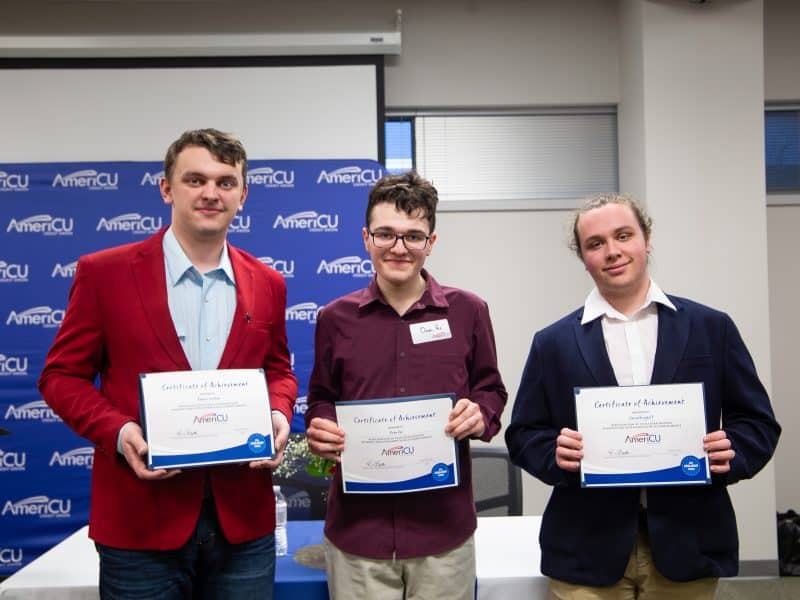
AmeriCU proudly connects students with annual scholarship opportunity
AmeriCU scholarship program awards $1,000 to students pursuing college or vocational education. Applications are open through March 15.
Trumansburg schools consider regionalization as TST BOCES plan advances
Trumansburg school regionalization remains undecided as TST BOCES outlines goals for shared services and student learning.