Apples in the offseason
By Jamie Swinnerton
Tompkins Weekly
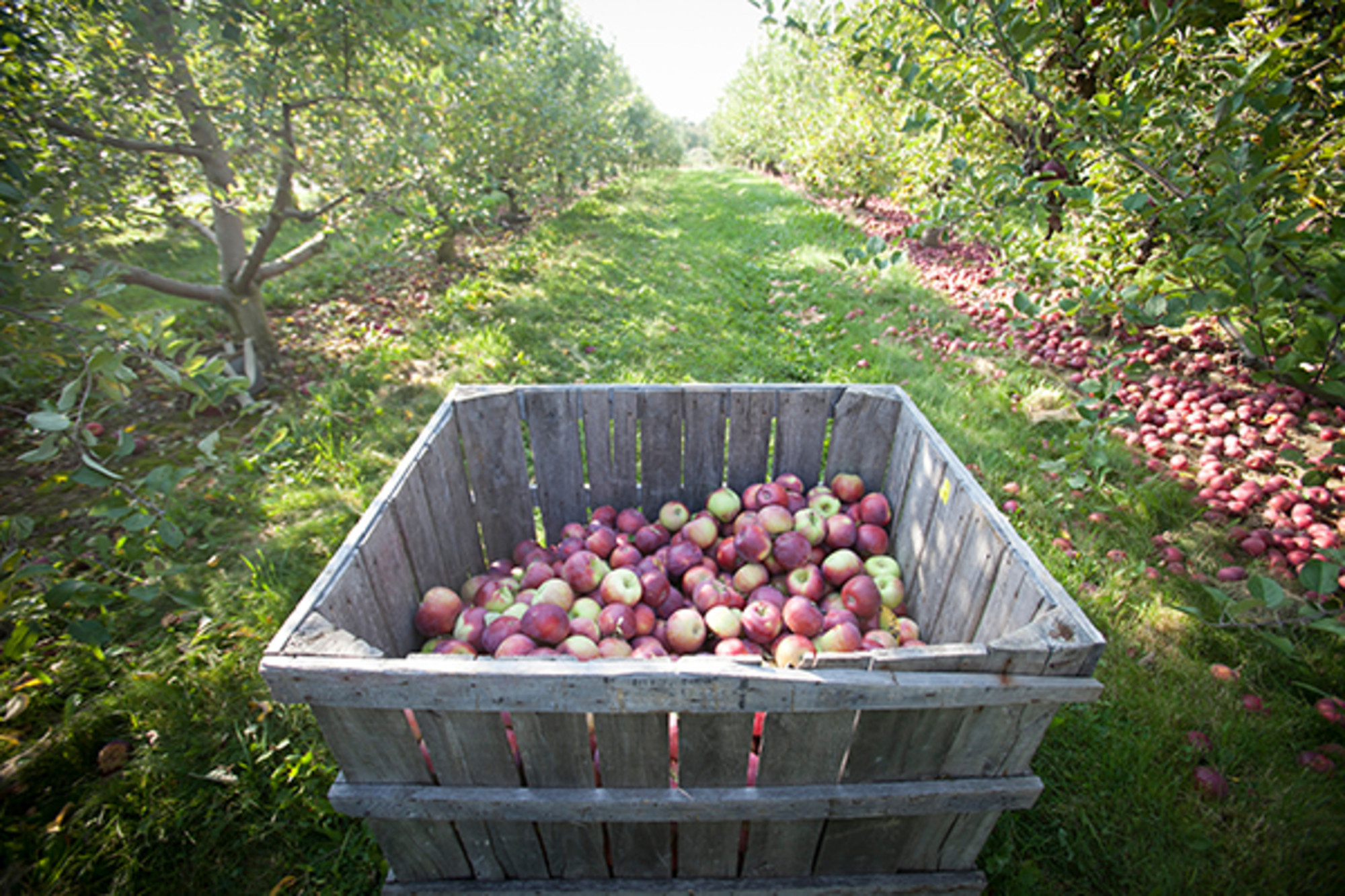
It’s nearly impossible to think of New York and not think of apples. While downstate boasts the Big Apple, upstate boasts the real apples. They are New York state’s leading fruit crop, closely followed by grapes, but that’s a different story. Across the country, New York is the second largest producer of apples after Washington State, with approximately 694 commercial apple growers producing an average of 29.5 million bushels a year according to USDA statistics. Apples, apples, everywhere.
Right here in the Finger Lakes, dozens of commercial apple growers help make the annual Ithaca Applefest a major success right around harvest season. While it’seasy to imagine that when the apples aren’t being picked the orchard is a quiet, peaceful spot, that’s just not the case. Harvest season typically starts around the third week in August and will last until around Thanksgiving, but outside of those weeks there is just as much work to be done to make sure that the apple trees are maintained, the harvest that will be stored is stored properly, and the numerous other chores needed to keep an orchard running are done.
“Starting in the winter we have to prune all the trees, that takes a lot of time,” said Eric Shatt, farm manager for the Cornell University apple orchards. “We’re out in the field pruning most of the winter from Christmas until April.”
April is the beginning of growing season, one of the business times of the year. If the orchard needs new trees this is when they will be planted, put up new trellises, and maintain the current orchards by mowing, spraying pesticides, thinning the fruits to the optimal crop level, and scouting for insect pests. This will be the majority of the work done at the orchard until harvest.
In the early spring months in April and May is full of time-sensitive work. If the work for early spring isn’t finished on time the schedule for the rest of the year is behind.
“Once you get behind you’re kind of done,” Shatt said. “So, you just have to keep up, and that creates this kind of stressful ongoing situation.”
Knowing when to start these time-sensitive spring tasks relies heavily on the weather and how quickly the spring season starts after the winter ends. This is when young buds can be in danger of fungal attacks, so being vigilant about management techniques to prevent losing young crops to disease is a big part of the early year work.
There is very little downtime at an orchard, Shatt explained.
“Between the end of harvest – which is around the first week in November – and Christmas, before we start pruning, that’s potentially slow,” he said. “At least, there’s nothing really pressing to do.”
The only other time, he said, that could be slow would be right around now. Most of the work around the orchard has been completed and now they are just keeping up with the daily maintenance. The busiest time, Shatt said, is around October, when there are numerous varietals of apples at the orchard ready to be picked.
“Keeping up with that is the hard part,” he said.
Each variety of apple has an optimal harvest window, Shatt said. But picking the fruit can also depend on what the fruit is going to be used for. Picking apples that are meant to be stored instead of sold quickly has to happen when their starch levels in the apples convert over to sugar, among other factors. That way, the apple will still be ripe and juicy several months down the line when it is taken out of storage.
According to Shatt, this year’s harvest is shaping up to be a good one, just like last year’s. Having two good years in a row is rare these days, he said.
“We’ve had a lot of good years and bad years over the last eight years or so, and we haven’t had many good years back-to-back,” he said. “So, assuming things are going to go well for us the next couple of months we should have another good year.”
The inconsistency can mostly be chalked up to unusual weather events like spring frosts. If the apple bloom comes out too early, an early frost has the potential to destroy a blossom so that it will not produce any fruit. While the residents of the area may not appreciate a long winter, the apples do.
“The later a bloom comes out on the trees, the less likely it is to get damaged by frost,” Shatt said.
But the Cornell orchard isn’t like every other orchard. Along with the usual work being done to produce crops, the orchard is used for academic research. Gregory Peck is an Assistant Professor of Sustainable Fruit Production who is using the orchard to do research related to the growing hard cider industry, as well as sustainable growing practices. Another researcher is focused on post-harvest work, the best ways to store fruit after being picked. Yet another researcher is studying what the trees need to be able to produce high-quality fruit. Students can also be found among the trees getting hands-on experience working with the trees.
So, while you may stop by the Cornell orchard store once or twice a year, the work to produce New York’s number one fruit product never stops. Just chew on that.
Related Articles

5 things to do in Tompkins County this weekend
Plan your visit and discover what’s happening this weekend.

TC3 reaches transfer agreement with Hobart and William Smith Colleges
TC3 transfer agreement guarantees acceptance and scholarships for graduates entering bachelor’s degree programs at Hobart and William Smith Colleges.