
Area teacher builds wildlife rehabilitation community
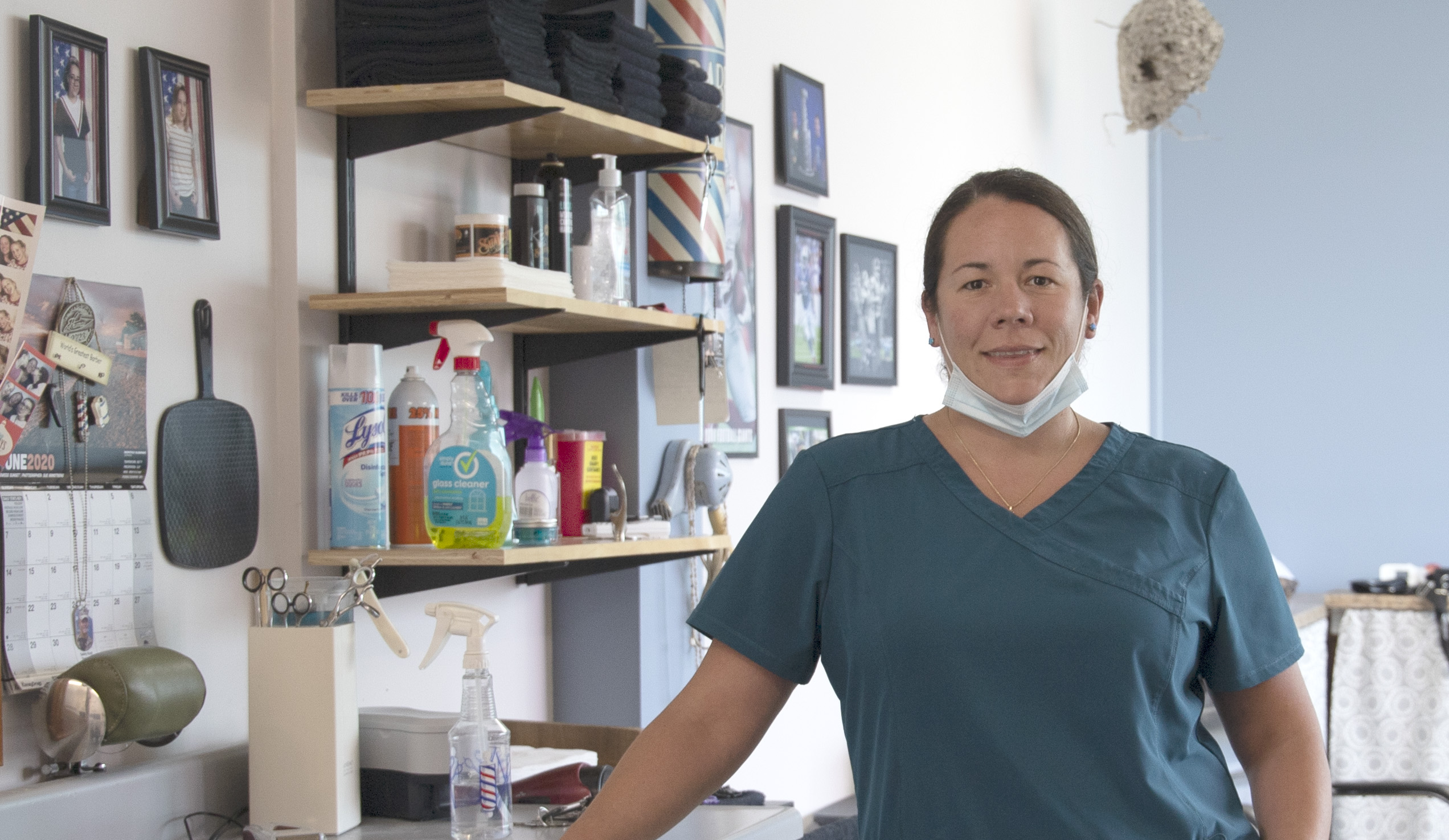
While educators across the U.S. worked quickly this past March to implement virtual learning due to COVID, many had to contend with kids and pets running around their new work-from-home spaces “like a zoo.” Trumansburg high school teacher Jane George knows the feeling.
“It’s very hard to teach a class with five fawns in the house crying for their bottles,” George said. “But I tried to make it fun. I’d let the kids see the fawns and the woodchuck. But it was hard to focus on school.”
On top of full-time jobs, George and her husband, Dan Soboleski, run Stay Wild Rescue and Rehabilitation, a service for wild and domestic animals, out of their home in Trumansburg. They respond to calls for injured or abandoned animals and care for them at their home and 5-acre property. They spend hours every day feeding baby animals and nursing animals back to health after accidents or mistreatment.
“For both of us, whenever we’re not doing work at our other jobs, we’re doing this,” George said.
Currently, they have 38 domestic animals living in permanent sanctuary and a pack of wildlife that’s waiting to be released. There are also 21 adoptable cats and kittens spread out across foster homes in the area. George says that on top of dealing with a pandemic, this year has been their busiest yet with animals.
“Luckily, we rarely have to turn animals away,” George said. “But every year, we get double the amount we had last year. Last year, we released 10 fawns. Now, we have 19.”
George grew up on a local dairy farm and said she has been helping animals since she was young. After taking in cats and kittens since about 2005, she got her Department of Environmental Conservation wildlife rehabilitation certification in 2015, which enables her to legally work with certain wild animals in her home. Since then, she and
Soboleski have watched the operation grow as more and more people found out about it.
“Social media has allowed people from all over to contact us and find out about us,” George said. “That’s something we weren’t really anticipating. I never intended to try to do this full time; it’s always just been a passion of mine. I was just content to do it as a volunteer in my spare time. But it’s grown so much. It could easily be a full-time job.”
The couple runs the operation with their own money and with the help of small donations, volunteers and discounts from vets and animal hospitals. This year, they received two grants from Trumansburg Rotary Club to help with their growing endeavor: one for better fencing for the fawns and another to expand the volunteer area, including money for a hand-washing sink.
George said she couldn’t help nearly as many animals without her dedicated group of volunteers — mostly students or former students.
“Teaching and this go really well together because so many of my students have become interested in it,” George said. “Quite a few students have gotten certified now to be wildlife rehabbers too. We have a group thread, and I just send a message out saying, ‘Fawn in Ithaca, who can pick up?’ and someone goes to get it. It’s been really great.”
Sisters Kelly, Jessica and Cassie Proctor and their mother Mary are all volunteers at Stay Wild. Kelly and Jessica have their DEC certifications, allowing Kelly to take in about 40 rabbits this year, making her an area expert on caring for the species.
The four currently live together and take turns feeding their many foster kittens. Kelly said she loves getting the chance to help animals in need and is happy to take some of the burden off of George.
“Three red squirrels were brought to us because they were found in water and their mom had drowned, and they had pneumonia,” Kelly said. “Now, they’re in the woods, enjoying all the pine cones they can find. Releasing them out into the world and knowing you helped them get to that point is the best part because if you didn’t step in, they might not have survived at all.”
Kelly, 19, attended the New Visions program in her senior year of high school and was placed at the Cornell Janet L. Swanson Wildlife Hospital, where she got her first experience with rabbits. This year, she attended one semester at Paul Smith College for fishery and wildlife sciences.
She is now gearing up to start her first semester at Ithaca College for English and writing and said she wants to learn to write to be able to bring awareness to important issues, including the welfare of animals. She’s even considering a career in education, she said, partly because of how much George influenced her life.
“Throughout high school, I felt a close bond with many of my teachers,” Kelly said. “Getting into the teaching field would be like a way to continue that on. If there’s a woman I want to become, it would be someone like Jane. She’s just so empowering.”
As the scope of Stay Wild grows, George looks to the future.
“At this point, we realize there’s a real need, and we want to meet that need, so we’re committed to trying to expand this,” George said. “We would like to go full throttle in becoming a nonprofit, make a really beautiful space and move some of it out of our home and have more volunteers be able to come help. If everything was in the barn, we could have volunteers spend the night to give us a break and not have so many overnight shifts.”
The more animals they take in, the more food, shelter and medical costs rise. George said that when things slow down a bit this winter, she hopes to start the paperwork to become a nonprofit.
By good luck, an anonymous donor recently sent money for the creation of a website, which will be live in the next few weeks. The site will help Stay Wild form a more organized cat adoption process, serve as a resource for community members with questions and become a landing page for donation collection.
Until then, donations can be made at the PayPal link on the Stay Wild Facebook and Instagram pages. George said she looks forward to being able to connect with more people and educate the public on how to take care of our furry friends.
“If everybody does their part and cares for wildlife, the wild world can coexist so much easier with the human world,” George said. “My philosophy is that every life deserves a chance.”
Related Articles
Cayuga Medical Center nurses to rally, alleging anti-union tactics by hospital management
CMC nurses plan a rally, alleging unsafe staffing and illegal anti-union tactics as the hospital highlights recent patient-safety gains.
AmeriCU proudly connects students with annual scholarship opportunity
AmeriCU scholarship program awards $1,000 to students pursuing college or vocational education. Applications are open through March 15.
Street Beat: What’s one of the best holiday gifts you ever received?
We asked five random people. Here’s what they had to say.