
Area unhoused remain homeless longer than the national standard
Local experts in the field blame housing market and lack of resources
The Tompkins County Community Mental Health Services Board, known as CSB, focused its most recent meeting on a panel discussion aimed at better understanding the issue of homelessness as it relates to community members experiencing mental health issues, substance use disorders, or developmental disabilities.
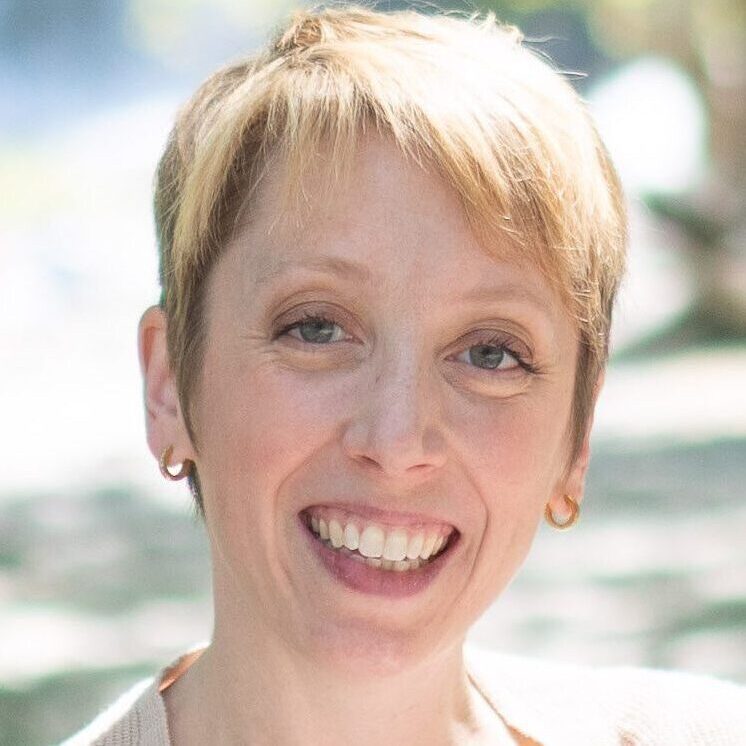
Liddy Bargar, director of housing initiatives at the Human Services Coalition of Tompkins County (HSC), detailed the state of homelessness in Tompkins County. HSC manages the local Continuum of Care (CoC), an agency that oversees the local homeless response system with a mission to achieve a community in which homelessness is “rare, brief, and one time,” according to a recent press release by Tompkins County Whole Health.
Data analyzed by the CoC in 2023 showed that of 599 unique individuals served by the local emergency shelter system, only 31% had a positive exit to a permanent housing destination.
Of those who exited homelessness to a permanent housing destination, 28.7% returned to homelessness within two years, Bargar said.
While the national standard of how long someone should be in an emergency shelter setting is close to 40 days, locally the average was 94 days in 2023.
“This metric here — this is one that really kills me a little bit,” Bargar said.
This discrepancy is due to housing availability and affordability, as well as a lack of financial resources to support housing people in need.
“We have an overrepresentation of BIPOC [Black, Indigenous, and people of color] folks in our system, both in the shelter and in our unsheltered locations. We have more BIPOC folks than would make sense for the composition of our community,” Bargar reported.
According to the CoC, in 2023 nearly 40% of the individuals entering shelter self-reported experiencing at least one mental health disorder, and 27% reported having a substance use disorder. Additionally, 15% of individuals reported a chronic health condition, 14% reported a physical disability and 6%reported a developmental disability.
“If I am going to be perfectly honest, I think that’s lower than the number of people who probably have a previous diagnosis of a developmental disability. I think that is lower than what we would actually see in the system — that’s our baseline of what people are saying their health and mental conditions are, coming into our system.”
Many conditions and disorders overlap, increasing the challenges they face seeking housing and supports. When someone experiences homelessness more than one time, they report mental or physical health problems more often. Bargar concluded that homelessness is traumatic.
Of those using emergency shelter, 40% self-reported being survivors of domestic violence. Of those survivors, nearly half were currently fleeing a domestic violence situation when they sought shelter.
“That is an alarming statistic to me, and one I hope we can work on together as a community,” Bargar said.
Bargar reported that the system of supportive housing coordinated through the CoC is operating at capacity, which is 204 units. Only one or two units are vacant.
Brian Coleman of St. John’s Community Services, which operates a local emergency shelter, talked about the need for increased access to mental health and substance use services. Coleman shared an anecdote that demonstrates the increasingly complex individual health and mental health challenges arising on a more frequent basis.
“This past Friday, we had a person in their late 60s who was dropped off at our shelter in a wheelchair,” Coleman said. “We’re not a skilled nursing facility, but meanwhile, it’s 7 o’clock at night on a Friday, so we took care of the person over the weekend and then this morning took them to the DSS [Department of Social Services]. These are the kinds of things that we’re seeing, unfortunately, more frequently.”
Tompkins Community Action (TC Action) Executive Director Danielle Harrington described how her agency serves the community’s most vulnerable individuals, providing 135 units of supportive housing and other community services for youth and people experiencing chronic homelessness with a housing-first philosophy and a harm-reduction approach.
TC Action is facing a lack of available substance treatment and mental health supports, she added. “I would love for things to be on demand because when somebody’s ready to make a change, if you can do it in the moment, it moves forward smoothly,” Harrington said. Still, clients are at risk of victimization. That is when they return to their own housing and are faced with people or habits from the past that encourage negative behavior that can put their housing and health at risk.
Heather Bradley-Geary, director of supportive housing at the Vecino Group, said that her organization shares the housing-first approach. The Vecino Group develops housing projects with both affordable and permanent supportive housing units, with the Arthaus and Asteri projects locally funded through low-income tax credits and public bonds through the New York State Office of Housing and Community Renewal.
“I’m not saying we can just put people in units. We have to bring in all the services to help people stay housed,” Bradley-Geary said.
“The last thing we want to do is cycle people back into homelessness,” she added. “The stigma that exists around homelessness is unacceptable … People aren’t unhoused or homeless because of something they did wrong.”
The Learning Web has 32 units for youth experiencing the transition from homelessness. Case managers are provided to all youth at The Learning Web, focusing on employment, education, physical or mental health needs, addiction recovery, and parenting — support that continues to be offered even after participants leave Learning Web housing.
Youth are provided no-barrier access to mental health support with all costs covered by The Learning Web.
Learning Web Youth Outreach Program Director Anthony Paolangeli cited the fact that there is no youth shelter in Tompkins County as a challenge. “It’s always been a dream here in Tompkins County… and it has not happened,” he said of the concept of a youth shelter, adding that the rental market in Tompkins County makes it difficult for youth to find housing due to a lack of rental or income history.
Coleman reiterated the need for continued collaboration. “We can’t be a one-stop-shop,” he said, “so bringing additional resources into the shelter is going to be significant for us as far as getting to provide the supports that are needed.”
Author

Related Articles
AmeriCU proudly connects students with annual scholarship opportunity
AmeriCU scholarship program awards $1,000 to students pursuing college or vocational education. Applications are open through March 15.
Street Beat: What’s one of the best holiday gifts you ever received?
We asked five random people. Here’s what they had to say.

5 things to do in Tompkins County this weekend
Plan your visit and discover what’s happening this weekend.