
As Juneteenth nears, local Black history recalled
As the Southside Community Center finalizes plans for Saturday’s Juneteenth — Food! Fun! Foundation! — we are fortunate that both its history and that of Black Americans in Tompkins County have been so ably captured by area residents and resources.
In a June 19, 2020, interview with North Country Public Radio (t.ly/6rp0), Margaret Washington, Cornell University professor of American history, provided welcome context on the roots of Juneteenth, as well as on Gov. Andrew Cuomo’s then-recent decision to make June 19 a state holiday. Washington is also a board member of the nonprofit John Brown Lives (johnbrownlives.org) based in Lake Placid.
When asked, “Why do you think all of a sudden it’s getting this broader recognition? Is it in light of current events or has it been slowly building over time?” Washington responded succinctly, “I think it’s in light of current events. I don’t think there was a move for Juneteenth before this. And it’s a symbolic thing. It’s almost like … an added way of saying ‘we’re sorry’ sort of thing.
“But African Americans have been celebrating this, and we’ll continue to celebrate it, whether it’s a holiday for the state workers or everybody or not. It’s meaningful to us. The most significant aspect of it is the way it has lived on.”
Washington also guested on Cornell Community Relations’ weekly radio show “All Things Equal” Tuesday. Hear her at whcuradio.com/podcasts/categories/podcasts-equal.
Two hundred years ago, the official Black population of Ithaca numbered only nine people, though more enslaved Black people lived and worked in the rural regions of Tompkins County. Gratefully, that changed when slavery was abolished in New York in 1827.
According to The History Center in Tompkins County (thehistorycenter.net),“More families and individuals self-liberated from slavery in the southern states and traveled north on the Underground Railroad, which had multiple stations and checkpoints in Tompkins County. Ithaca’s Black population gradually grew to over 200 by 1860, and the neighborhoods of Southside and along Wheat Street (now Cleveland Avenue) became established in the community.”
In addition to putting an informative, needed spotlight on local Black leaders, The History Center website also calls attention to significant landmarks, two with Cornell-related components.
Celebrated author Alex Haley (“Roots: The Saga of an American Family,” and “The Autobiography of Malcolm X”) was born in Ithaca on Aug. 11, 1921, at 212 Cascadilla St. Haley’s father was a graduate student at Cornell University, and his mother was taking music studies courses at the Ithaca Conservatory of Music, which later became Ithaca College.
In 1993, a year after his death, the Alex Haley Memorial Project raised funds to create a memorial pocket park at the home of his birth on Cascadilla Street. A carved granite marker and a hand-wrought iron bench with individual iron leaves made by community members were also installed in the park. Finally, a New York Historical Marker was placed outside his birthplace in August 2020 during a local unveiling ceremony honoring his life and legacy.
The Dennis-Newton House at 421 N. Albany St., Ithaca, is historically significant on a national level for its direct connection to the early formation of the Alpha Phi Alpha fraternity, the first Greek letter African American collegiate fraternity in the United States.
Alpha Phi Alpha was established in 1906 by seven Black Cornell students, celebrated by the “Seven Jewels” marker and bench off of Ho Plaza. Today, there are more than 850 chapters of the fraternity located around the world.
Of course, Saturday’s Juneteenth celebration will be focused on the aforementioned Southside neighborhood, anchored by two significant buildings — St. James AME Zion Church and Southside Community Center.
St. James AME Zion Church on Cleveland Avenue was built in 1833, is believed to be the oldest church structure in Ithaca and was one of the first AME Zion churches in the country St. James served as a station on the Underground Railroad, and famous Underground Railroad station masters were closely associated with the church.
Harriet Tubman played an active role in AME Zion church affairs in central and western New York and often visited St. James. Frederick Douglass is documented as visiting the church in 1852, and Jermain Loguen, who served as St. James’ third minister, was known as the “Underground Railroad King” for his prolific abolitionist efforts, which helped liberate hundreds of formerly enslaved people.
For the Southside Community Center, the “Southside House” began as the idea of the Frances Harper Women’s Club, inspired by the life of Francis Ellen Watkins Harper (1825-1911), an abolitionist, activist, poet and a founder of the National Association of Colored Women.
An interracial fundraising effort raised the money by 1932 to buy a house at 305 S. Plain St., which was destroyed by a flood in 1935. The property was deeded to the city of Ithaca, and ground was broken in 1936 for the Southside Community Center on South Plain Street, with First Lady Eleanor Roosevelt attending the 1937 dedication.
Finally, congratulations and thanks to all the organizers behind Saturday’s Juneteenth celebration.
East Hill Notes are published the first and third Wednesdays of each month in Tompkins Weekly. Gary Stewart is assistant vice president for community relations at Cornell University.
Related Articles
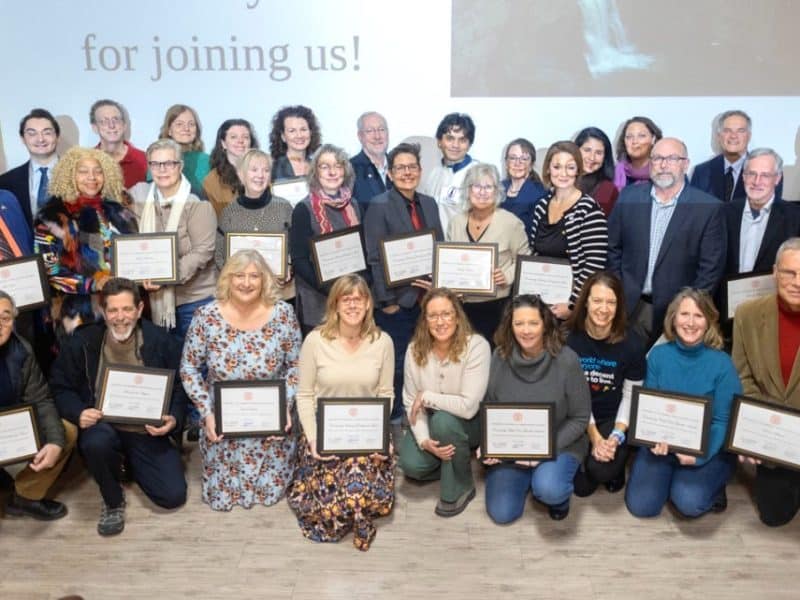
Town-Gown Awards honor housing, child care collaborations
Town-Gown Awards recognized Cornell and community partnerships supporting affordable housing and child care in Tompkins County.

Lorin Warnick to end term as Cornell Veterinary College dean
Warnick Cornell dean Lorin Warnick will step down in 2026 after leading the veterinary college through growth, innovation, and major public health milestones.
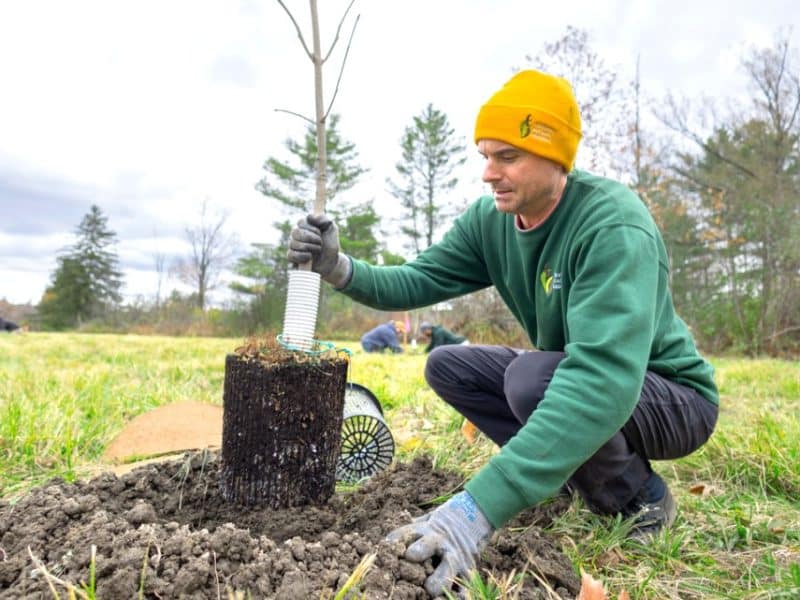
Cornell ash trees aim to beat back borer insects
Cornell plants ash trees with potential resistance to emerald ash borers, advancing statewide restoration through the Trees in Peril project.