
Assistance needed to handle increasing workforce demands
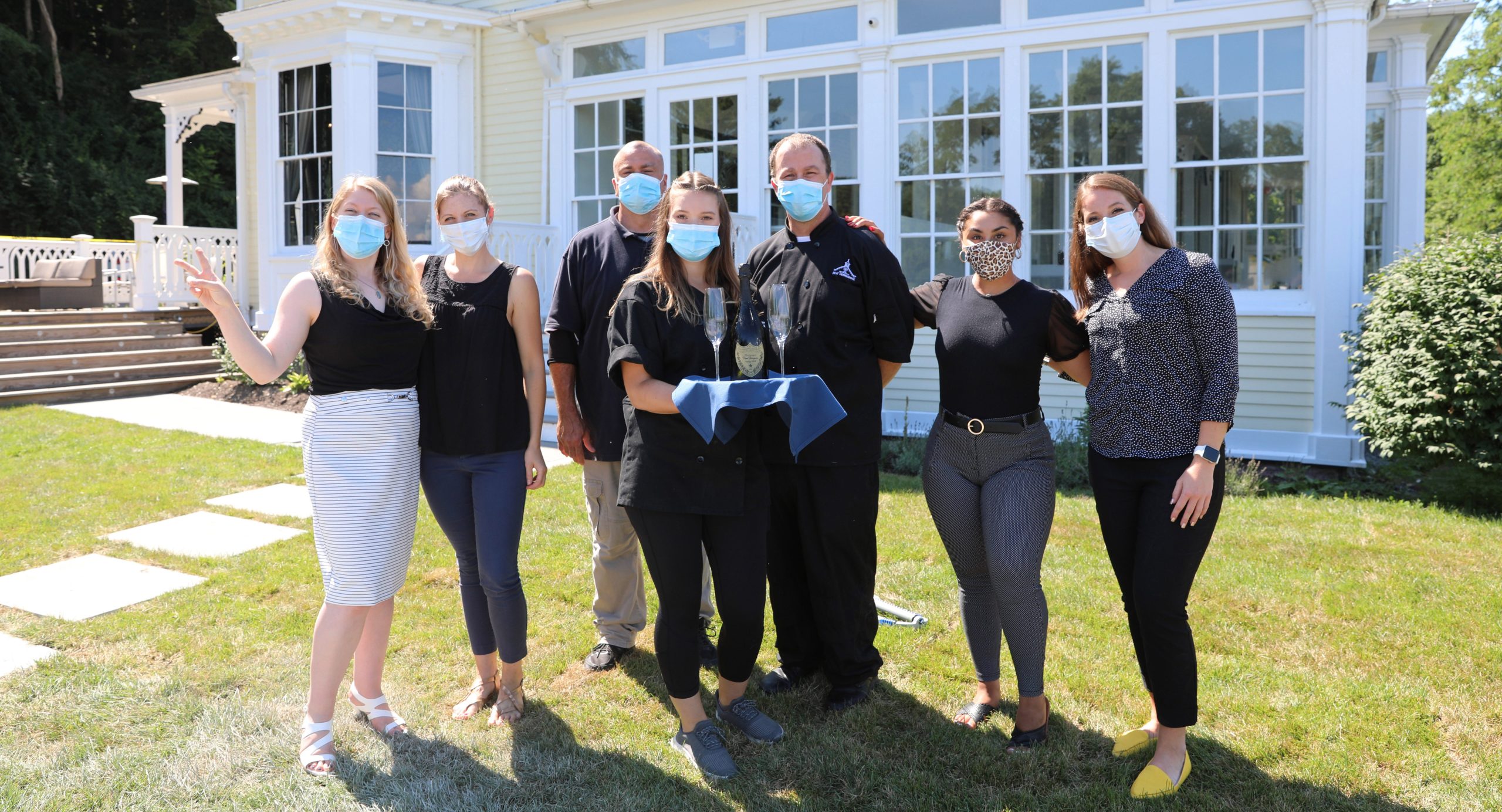
When Trumansburg hotel and restaurant Inn at Taughannock Falls shut down in mid-March due to COVID-19, nearly 100 employees were suddenly out of work. Three months later, on July 2, management reopened the hotel, but the challenges weren’t over.
“It was pretty devastating,” said Stephenie Monroe, a member of the event planning team at the inn. “We didn’t get to bring back as many staff members as we wanted to. And the ownership team had been very happy last year; we had 105 employees that we sent W-2s to. … This year, that number is going to be maybe half.”
Inn at Taughannock’s situation is not unique. Many area businesses had to shut down or downsize due to COVID-19, leading to a surge in unemployment for the region. As the county reopened, some of those jobs have returned, and federal unemployment supplemental benefits have helped those still out of a job stay afloat.
Those unemployment bonuses ended on July 26 in the state, a shift many believe will cause more residents to want to reenter the workforce, but a variety of challenges faced by employers means that there may not be enough jobs to meet that demand.
With an uncertain future ahead, Tompkins Weekly spoke with area leaders, businesses and employees to discuss how we got here, the challenges many residents and businesses are facing and possible ways forward that ensure stability for everyone involved.
Background
Prior to COVID-19, the county’s unemployment rate was among the lowest in both the country and state at around 3.5%. According to Natalie Branosky, executive director of the Workforce Development Board of Tompkins County, that number more than doubled within just two weeks of the pandemic hitting the county.
“Our unemployment rate in the county shot up by 4%, which is unheard of really in any local economy, in any national economy,” she said. “And what that meant is that, essentially, on Wednesday, people were employed, and on Thursday, they weren’t. And that is not what happens in a typical recession.”
Unemployment claims per week also jumped from around 30 to over 300, Branosky said.
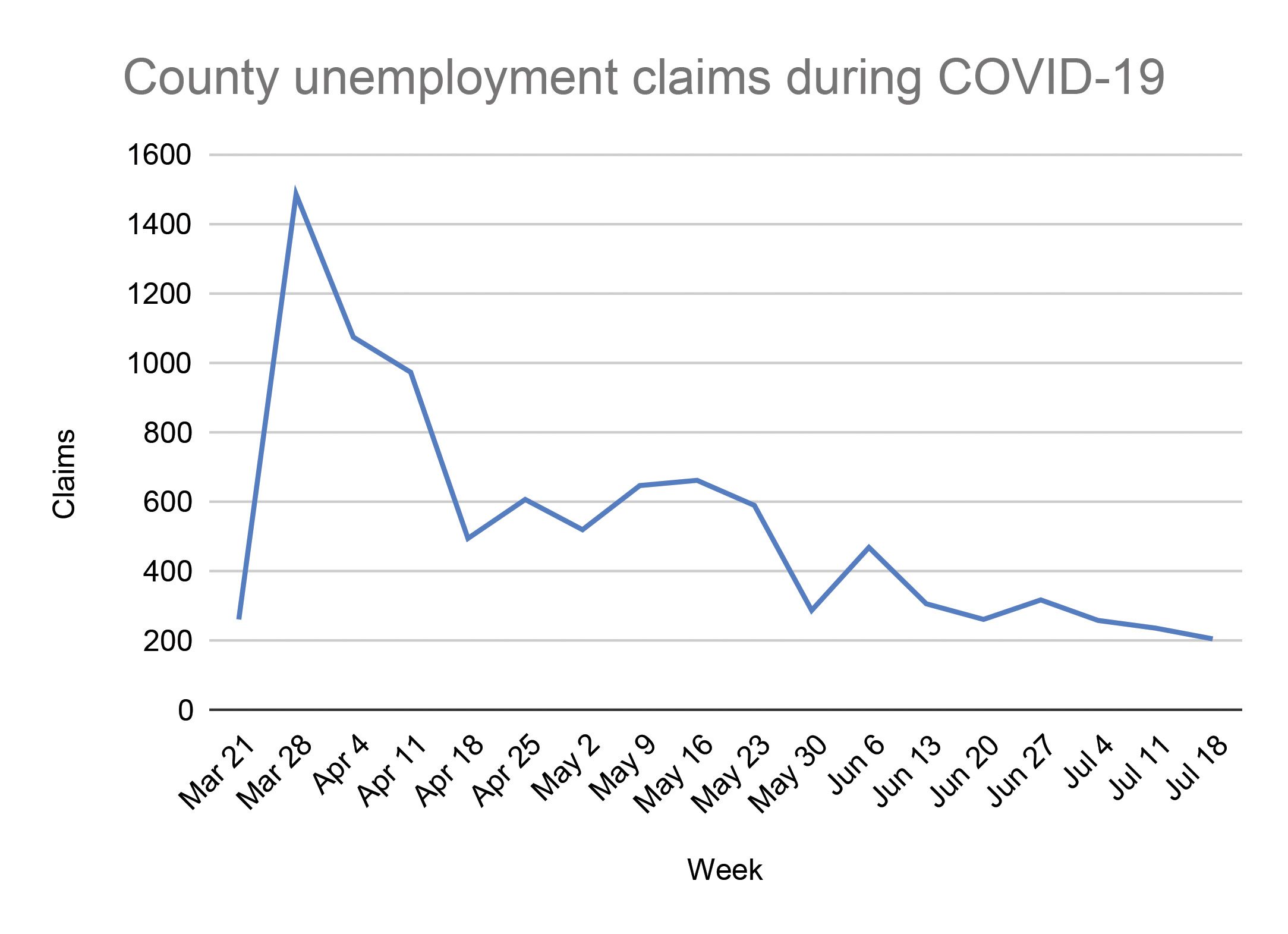
According to Russell Weaver, economic geographer and senior extension associate in the Cornell University ILR Buffalo Co-Lab, even though the county’s unemployment rate remains one of the lowest in the state, jumping from 3.5% to almost 9% in June was a drastic change. What’s more, May showed a 7.8% unemployment for the county, meaning unemployment rates for the county have actually been increasing in recent months.
“That might be reflective of businesses’ PPP funding drying up and then not being able to hold on and hire back at the workforce levels that they had before,” Weaver said. “These are all trends that we need to watch play out, especially as a lot of federal benefits for unemployed workers are set to expire.”
PPP, or the Paycheck Protection Program, was a lifesaver for many area businesses, as recent research from Tompkins County Area Development showed. In Tompkins County, 1,255 businesses were approved for PPP loans, which are projected to retain 12,739 jobs.
“When there’s a downturn in the economy, … it takes a long time to come back to those prerecession sort of levels,” said TCAD President Heather McDaniel. “So, the fact that PPP was able to help employers to keep that same employment level is just going to help them that much more as time goes on because they don’t have to climb that really negative slope back up.”
The CARES Act expanded unemployment insurance in a few ways, allowing those in the gig economy to qualify, allowing those on unemployment to collect benefits for longer and providing a $600/week unemployment supplement in addition to typical unemployment benefits (more information at dol.gov/coronavirus/unemployment-insurance).
Rachel Hogencamp, co-founder and owner of Rasa Spa in Ithaca, said she saw the benefits of those expansions firsthand.
“It’s kept [my employees] paying rent. It’s kept them fed,” she said. “And I’ve been able to have the services to keep my business going without having to shut down because there was no one to work.”
Weaver said that those expanded benefits account for a large portion of personal income for those unemployed in the county, helping to prevent an even greater economic fallout by putting money into consumers’ hands. This means that taking away those benefits leads to a huge cost for area residents and a spike in demand for work.
As of the writing of this article, no further unemployment benefits have been passed to provide further assistance after July 31.
At the federal level, there is still debate between the Republican economic recovery package, which would decrease weekly unemployment bonuses, and the Democratic proposal, which would extend the $600/week benefits through the end of this year.
Both parties’ plans would provide an additional $1,200 stimulus check to individuals and $2,400 to married couples. The Democratic plan would provide an additional $1,200 per dependent, while the Republican plan would provide $500. The Republican model is meant to incentivize those on unemployment to return to work.
Challenges
Optimally, when those on unemployment head back to the workplace in the coming weeks, their old jobs will be there for them. Branosky estimated that 200 people need to return to work per week for the rest of 2020 for the area to properly recover, but COVID-19 has complicated that situation.
As Bonita Lindberg, senior vice president and director of human resources at Tompkins Trust Company (TTC), explained, those in low-wage, service-sector jobs were among the hardest hit by unemployment and business shutdowns, but not all businesses in that sector have fully recovered.
“While we’re seeing a reopening of businesses and, consequently, employment recalls, I’m really concerned about those that remain unemployed because those same businesses haven’t reached their pre-COVID business level,” she said.
For employers, there are considerable barriers that prevent them from rehiring everyone they had to lay off or furlough during initial shutdowns. First, health and safety precautions require capacity reductions, leading to a subsequent labor reduction compared to pre-COVID-19 levels.
“We’re doing all that we can, but we can’t control how people are coming in, as we’re at around half of what we might normally be right now,” said Rose Hilbert, owner of the Inn at Gothic Eves in Trumansburg. “So, that also then, of course, translates into half the work for our folks.”
On top of that, whether due to capacity limitations or other reasons, revenue for many businesses is down significantly, limiting financial resources to hire back employees. Much of that is exacerbated by PPP funding running out for many employers, jeopardizing the jobs of those currently employed.
“Most businesses are working at a fraction of what they normally work at,” said Gary Ferguson, president of the Downtown Ithaca Alliance. “They are not receiving normal revenues, and that continues to be a struggle for many of them as they try to figure out, ‘well, how do I pay bills? How do I continue to bring back more employees, particularly if I don’t have the revenue to support them?’”
Adding to employers’ struggle is a lack of certainty for the future, as another outbreak could hit and send any employees who were rehired back home.
“If someone tests positive, things would get complicated very fast,” said Timothy Mooney, chef at Moosewood in Ithaca. “While our business has been doing OK since reopening, an overarching high anxiety is that what if, and then, what do we do if that happens, and what does that mean? And it’s a scary, uncertain kind of spot to be in.”
Monroe shared a similar concern.
“In some cases, there’s a lot of employees looking to fill a certain position. In other cases, the workforce has just not returned yet,” Monroe said. “And hospitality in and of itself cannot guarantee a stable employment environment right now.”
Due to these factors and other circumstances, employees are facing a host of challenges as well. First, employees may find that when they try to return to work, their position just doesn’t exist anymore.
“One of the things that keeps me up at night is worrying about people who already were not making that much money and who lost their jobs, and that some of these jobs are going to go away as people start working remotely,” Hogencamp said. “There may be administrative support jobs that go away because companies won’t have offices as much.”
In addition, businesses have had to adjust considerably during the pandemic, leading some to develop new methods that save on labor costs, as TTC Senior Vice President of Commercial Banking Karen Parkes explained.
“As businesses have come back [and are] getting used to the new normal, I think some of them are realizing they didn’t need to have 30 employees, that they can do with 20 and they’re making it do with 20,” she said.
Olivia Ohsten, assistant innkeeper at Gothic Eves, shared her experience of uncertain employment during the pandemic, and many of her challenges are emblematic of those faced by other residents. As she described, many would love to head back to work, but it’s not that simple.
“In my case, and many other people, the job that they had before is not the same job,” she said. “Either there’s no job or it’s altered or limited. And so, it’s weird to be facing that and then trying to find other things when you weren’t expecting to, especially with that time crunch of unemployment running out.”
Solutions and Strategies
Sources interviewed for this story offered a variety of approaches to provide employers the resources needed to bring workers back and provide additional assistance to those still out of work. The most common proposal was additional funding, both for businesses and residents.
“It would be very useful, frankly, to have a second round of PPP that would be open to businesses that have already received it, not because people are greedy, just because a lot of people are still trying to survive in a market that’s not back to normal,” Ferguson said.
Hilbert added that the additional unemployment benefits need to be extended.
“I just think there’s a creative idea out there that they can go to work and get the $600,” Hilbert said. “That would be less expensive than trying to give us another stimulus check. I think that’s a ridiculous waste of time and effort. Just give them the money that they need to keep going.”
Weaver said this extra assistance would prove beneficial for the county as a whole.
“Being able to get people back to work on a large scale … is so dependent on consumer spending and people having disposable income and people having confidence to spend and not worrying that we’re going to face a second wave,” he said. “To get people active in the economy again, we need to have guarantees in place or protections in place that will enable them to do that.”
While the future of such aid remains uncertain, sources said there are other strategies that can be employed as well. Jackie Mouillesseaux, interim director of the Tompkins County Office of Employment and Training and workforce development coordinator for Tompkins Workforce New York, said communication and collaboration is key.
“We find ourselves in a situation where both the employer and the employee will have to work together in order to meet one another’s needs, the needs of the job itself and the needs of the employee, all of these new things that come into play that we have to wrestle with, to find that balance so that everyone gets what they need,” she said.
Another solution many referenced was continuing to focus on safety, as the success of businesses and residents depends on a continued reopening.
“One thing we all have to do is adhere to the health department’s guidelines, wearing masks, washing hands, social distancing, because that’s what’s going to keep us from not closing,” said Jason Sidle, director of operations at Coltivare in Ithaca. “And to me, the closing would be the most devastating impact on the local community.”
Ohsten shared that sentiment.
“I think there’s definitely the fears of the economy crashing and whatnot, but it seems like everyone’s safety should be priority if possible and then go from there,” she said. “It seems like we can get everything down and get the cases down and everything and settle things. Then, we could move forward that way.”
A last approach is one many residents can help with – spend money locally.
“Downtown businesses are open, and people should patronize them, whether they be retail or service or office or restaurants, because when people don’t patronize them, when they decide to do everything online, you’re just ensuring that fewer people are going to be working locally,” Ferguson said.
There are also local resources that can help businesses and residents through these challenges, like Tompkins Workforce New York (tompkinscountyny.gov/wfny), the Tompkins Chamber (tompkinschamber.org), DIA (downtownithaca.com) and others (find more at tompkinscountyny.gov/wfny/partneragencies).
Conclusion
Moving forward, sources acknowledged that the challenges facing the county’s workforce won’t be an easy fix. Hogencamp said that the pandemic means businesses are rethinking employment, so workers are doing the same.
“It’s a long-term problem I can’t imagine is going to be solved anytime soon,” she said. “I think we’re just going to see, with the virus being here for a while, that it’s going to just continue to shift people’s sense of what it means to have a secure job. You have to do more with less, so how do you function when you’re not making as much money? How do you function when you’re in a workplace that requires you to be in close contact?”
Branosky simplified it best.
“In workforce development, our math used to be sort of employee plus skills plus job,” she said. “Now, we have to think about employees plus skills plus jobs plus pandemic.”
There are some positive signs that the situation could be improving, as Tompkins County Chamber of Commerce President Jennifer Tavares said.
“The bottom line is there are still a lot of jobs available currently in our area, and over 4,000 job openings across the Southern Tier according to the NYS DOL, despite the fact that we’re experiencing the highest unemployment rates we have in a decade in Tompkins County,” Tavares said. “There will be new employment opportunities, and there will be many folks returning to work in the coming weeks and months.”
To best face this uncertain future, many sources stressed that “we’re all in this together,” and the community has shown continued resilience.
“Every day, I’m inspired by this community and our ability to come together and tackle really big problems,” McDaniel said. “The future is going to be challenging. I recognize that, but I think we’re going to come out of this and be able to embrace some new opportunities, and it’ll take thinking outside the box. I think we’re all together up for the task and we’re going to come out of this stronger than we ever were before.”
Related Articles
Beginnings Credit Union holds ribbon cutting
Beginnings Credit Union celebrates a branch rebrand in Ithaca, providing improved services and engaging with the local community.
Cailyn McMahon: From Brooklyn to Groton for the love of sweaters
Designer Cailyn McMahon moves from Brooklyn to Groton to raise sheep and pursue her dream of making American-made wool sweaters.

New bakery and coffee shop brings community and homemade treats to Newfield
Morning Moon Coffee and Bakery opens in Newfield, offering homemade treats, coffee and a cozy community space run by Amy Heffron.