Briefs: Cornell drills for heat, Hangar launches FutureNow, more
Cornell begins drilling for geothermal heat with test ‘borehole’

Cornell University is one step closer to determining the feasibility of using deep geothermal energy to heat the Ithaca campus.
Drilling for the Cornell University Borehole Observatory (CUBO) began June 21 and is expected to last about two months. The borehole (pictured), located on a Cornell-owned gravel parking lot, will be subjected to a battery of tests, both during and after drilling, to determine the temperature, permeability and other characteristics of the rock up to 10,000 feet below the earth’s surface.
These findings will help the university determine whether to move forward with a proposed plan to warm the Ithaca campus with Earth Source Heat (ESH), a process that would extract naturally heated water after it’s pumped underground, transfer its heat to a separate supply of water flowing within the campus’ heating distribution pipeline and return the original water to the subsurface, where it warms back up and begins the cycle again.
Such a system would enable the university to meet its goal of carbon neutrality by 2035, while providing a blueprint for similar renewable energy efforts throughout the Northeast and other parts of the U.S. where geothermal heat has not previously been utilized.
“This well will provide scientific information, but it will not be a production well,” said Jeff Tester, professor of chemical and biomolecular engineering and principal investigator for the project. “Measurements made in the well will validate the temperatures and other properties at certain depths. This information will tell us a lot about the characteristics of the rock in a range where those temperatures could be useful for geothermal heat production and will help us design and build an actual energy extraction process in the next phase.”
If the university moves forward with Earth Source Heat, the next phase would entail drilling a separate pair of wells to act as an injector and producer. While other alternatives for renewable energy have been proposed, from heat pumps to solar, Tester said nothing comes close to the cost savings and environmental benefits of ESH.
The official start of CUBO construction comes a decade and a half after the idea emerged when the university was putting together its Climate Action Plan, which was adopted in 2009.
“We were asking: what kind of resources do we have on campus? We didn’t have sufficient local wind, hydro or solar resources. So we kept looking,” Beyers said. “We hit upon geothermal after reading a pioneering report that Dr. Tester helped co-author before he came to Cornell. It became a critical driver of our Climate Action Plan.”
Most expansion of U.S. geothermal energy has been to generate electricity in locations where plate tectonic or volcanic conditions generate high temperature rocks at a shallow depth, like in California, Nevada and Idaho.
One of the major shifts came when the Cornell team realized that by integrating centralized heat pumps they could make an ESH system function at cooler temperatures, around 70 degrees Celsius, or approximately 160 degrees Fahrenheit, and still be effective.
“We added innovation and expanded the potential for how this could work,” Beyers said. “But we still need the right hydraulic conditions.”
The university is converting the Ithaca campus energy distribution system from steam to water heat, which is more efficient and accommodates the lower temperatures associated with geothermal and other forms of renewable energy.
“A hot water distribution system is cheaper, more reliable, more sustainable, loses less heat and can accept renewable energy of any kind,” Beyers said. “And we hope Earth Source Heat provides the lion’s share of that renewable heat in the next 10 years or so.”
For additional information, see this Cornell Chronicle story: tinyurl.com/2ycnhm3g.
Hangar Theatre announces first annual FutureNow Festival

The Drama League (Artistic Director Gabriel Stelian-Shanks) and Hangar Theatre (Artistic Director Shirley Serotsky) jointly announced late last month the First Annual FutureNow Festival, a new iteration of the Hangar’s Wedge Series that centers directors, actors and designers on the rise, presented by the Hangar Theatre.
This inaugural year, the FutureNow Festival will feature the work of The Drama League 2022-23 FutureNow directing fellows Emily Hartford, Andrew Coopman and Logan Gabrielle Schulman along with theater workshops, artist receptions and community discussions throughout the festival weekend, Aug. 11-13.
Highlights of the festival include the regional premiere of Susan Sontag’s rarely produced play, “A Parsifal,” paired with Jordan Tannahill’s “Sunday in Sodom,” a modernist reimagining of Jean Giraudoux’s “Apollo of Bellac,” and a devised staging of Anne Carson’s “Antigonick.”
Established in 1983, The Hangar Wedge Series has been the proving ground for some of the most innovative and dynamic theater artists working today, including Lisa Peterson, Sam Gold, Rachel Chavkin, Pirronne Yousefzadeh, Kevin Moriarty and Joe Calarco. For almost 40 years, The Wedge has produced provocative, cutting-edge theater.
“After more than three decades of showcasing the finest new directors in America with our partners at the Hangar Theatre, I’m thrilled to be expanding this experience with the FutureNow Festival,” Stelian-Shanks said. “Andrew, Emily and Logan join an illustrious line of talents, including acclaimed directors working on Broadway and Hollywood right now, who began their journey in Ithaca. I can’t wait for them to dazzle and delight audiences this August.”
Serotsky is excited about the expansion and reimagining of the Wedge programming.
“At a time when so much is changing in the world and in the american theater, we see the emergence of the FutureNow Festival as an opportunity to engage more meaningfully with our community,” Serotsky said. “We are thrilled to provide a space for nationally recognized rising directors to discover and define their artistic identities while offering a unique, engaging and highly accessible programming stream for Hangar audiences. Introducing free workshops for all ages into the mix connects the programming to the Hangar’s commitment to education and learning in a wonderful and organic way.”
The artistic mission of the FutureNow Festival is to provide a theatrical laboratory for artists experimenting with creative identity, artistic leadership and art in relation to systems of power in our precarious time.
Groundbreaking in form and function by reimagining the relationship between artist and institution, this director-produced festival exists to embrace risk-taking in artmaking and to catalyze collaboration among rising directors, designers and performers.
The FutureNow Festival will take place Aug. 11-13, 2022, at the Hangar’s Outdoor Performance space (801 Taughannock Blvd.). During the weekend festivities, Coopman, Hartford and Schulman will present their productions, to be performed in repertory over the weekend. The directors will also facilitate creative workshops for audience members and the broader community.
Festival programming will include receptions with the Hangar Lab Company design fellows: Samantha Mastrati (scenic design), Hannah S. Wolland (lighting design), Johnna Presby (costume design) and Abby Coppock (sound design), along with performance fellows from the Lab Company.
Additionally, the three directing fellows will host a partnership panel to platform community organizations doing significant work in Ithaca related to the content and themes of the artists’ works. Tickets will be general festival seating with a suggested donation of $10. Tickets will go on sale at the end of July.
Visit hangartheatre.org for more information.
Medical director at Alcohol & Drug Council retiring
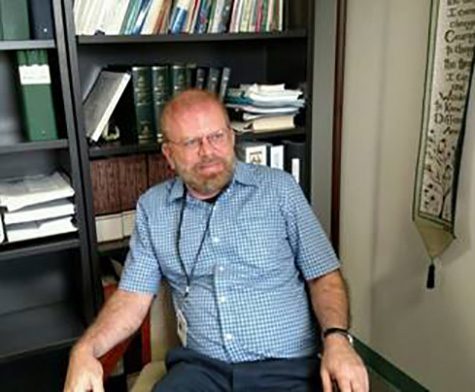
After 23 years as medical director for the Alcohol & Drug Council of Tompkins County (the Council), Dr. John Bezirganian is stepping away from his position there to lighten his heavy workload. He will be winding down his duties this month, having provided care and treatment to thousands of people over more than two decades.
In addition to his work at the Council, Dr. B, as he is affectionately known by the Council staff, also puts his skills into practice for the Tompkins County Jail, the Tioga County Department of Mental Hygiene in Owego, The ARC of Chemung-Schuyler counties and his own private practice.
Bezirganian, a native of Middletown, New York, earned his medical degree from Boston University School of Medicine and completed his residency at Albert Einstein College of Medicine/Montefiore Hospital in the Bronx.
He is board certified in psychiatry and addiction medicine. While still in residency, a fellow resident, Dr. Calvin Michael, convinced him to begin a duel recovery psychotherapy group, serving people with both mental health and addiction disorders. This was a new concept at that time, but Bezirganian saw a great need in the city where there was little access to these services for people who had limited financial resources but did not qualify for Medicaid.
The path from that experience to Bezirganian’s current practice seemed like a natural one, as the need for these services continued to grow in his work in our region.
In reflecting on a career that he considers very rewarding, Bezirganian focused on the past couple of years and the impact of COVID-19 on the people he treated.
“COVID took a heavy toll on people who were isolated and afraid,” he said. “Though the quick transition to telehealth was invaluable in our ability to continue providing services, it was more difficult to assess via telephone or computer how deeply people were struggling with their addiction, particularly when they were trying not to let it show.”
Bezirganian shared that his “personal experience with COVID” led him “to see how overworked I had become.”
“With the arrival of Dr. John-Paul Mead at the Council, I knew the agency’s medical treatment would be very well managed if I stepped away, so the timing seemed right for this change,” he said. “I look forward to spending more time with family, but I will miss my colleagues at the Council very much. The pleasure of working with them was a big part of what has kept me here for so long.”
Angela Sullivan, the Council’s executive director, expressed her deep gratitude for Bezirganian’s dedicated service.
“Dr. B has been a strong anchor and guiding force for the Council through years of tremendous growth and change,” she said. “His professional skill and wise insights have helped us to successfully navigate it all and become stronger. He will be greatly missed by our team.”
In contemplating the future of the Council and addiction treatment, Bezirganian said, “The Council’s Open Access Center will have the great advantage of offering 24/7 access to care, with its connection to detox and stabilization services. There is often a very small window of time when someone feels compelled to reach out for help. With immediate access to a wide range of in-house services, the chance of follow-through with treatment increases. We have learned that we need to meet people where they are and eliminate as many barriers to care as we can.”
In a final thought, Sullivan offered, “Our profound thanks and a very fond farewell to Dr. B, with the hope that our paths will overlap often in our shared service to this community.”
Learn more about the Council at alcoholdrugcouncil.org.
Food Bank of Southern Tier recognized by Feeding America

The Food Bank of the Southern Tier recently received national recognition at the Feeding America: The Annual Conference for optimizing dairy sourcing and distribution.
The 2022 Feeding America national conference was held in April 2022, in Louisville, Kentucky, and was a time for leaders from Feeding America’s 200 network food banks and countless network food pantries to gather and learn from one another.
Natasha Thompson, president and CEO, and Meghan Parsons, chief development officer, represented the Food Bank of the Southern Tier at this year’s in-person event.
With more than 500 attendees from across the country, this year’s national conference reflected the theme of Connected Together throughout all plenary and breakout sessions.
Aligned with the conference theme, the Food Bank of the Southern Tier was recognized with the Boundless Collaboration Award for its partnership with Feeding NYS and other New York state food banks.
Following a 2020 study that identified barriers to access of dairy products for low-income New Yorkers, primarily those dependent on charitable food distribution and those economically displaced by the pandemic, the New York food banks worked together and alongside dairy industry partners to reduce the primary barrier of access, including access to distribution and lack of ability to store dairy items. The Boundless Collaboration programs are a result of the information yielded by that study.
The Food Bank participated in the Direct Dairy Delivery pilot, testing the program with 13 partner agencies.
“We are honored to be recognized in partnership with our fellow New York state food banks for this innovative program that will allow us to provide nutritious dairy products to our neighbors in need,” Thompson said. “We know that we are stronger together and cannot do this critical work alone.”
Caroline Tolbert, the Food Bank’s food sourcing manager, noted one client quote that arrived through a pantry partner: “You have no idea how wonderful it is to get this gift. Everything in the store is so expensive, and to give us free milk is a blessing.”
And another Food Bank network partner shared, “Especially appreciative have been the families that have never had to use a pantry before and because of the rising cost of groceries and gas (the double whammy) have been turning to the pantry to supplement their food.”
Learn more about the Food Bank of the Southern Tier at foodbankst.org.
In this photo: Food Sourcing Manager Caroline Tolbert (left) holds the Food Bank’s Collaboration Award along with Thompson.
Tompkins Cortland approves six new microcredentials
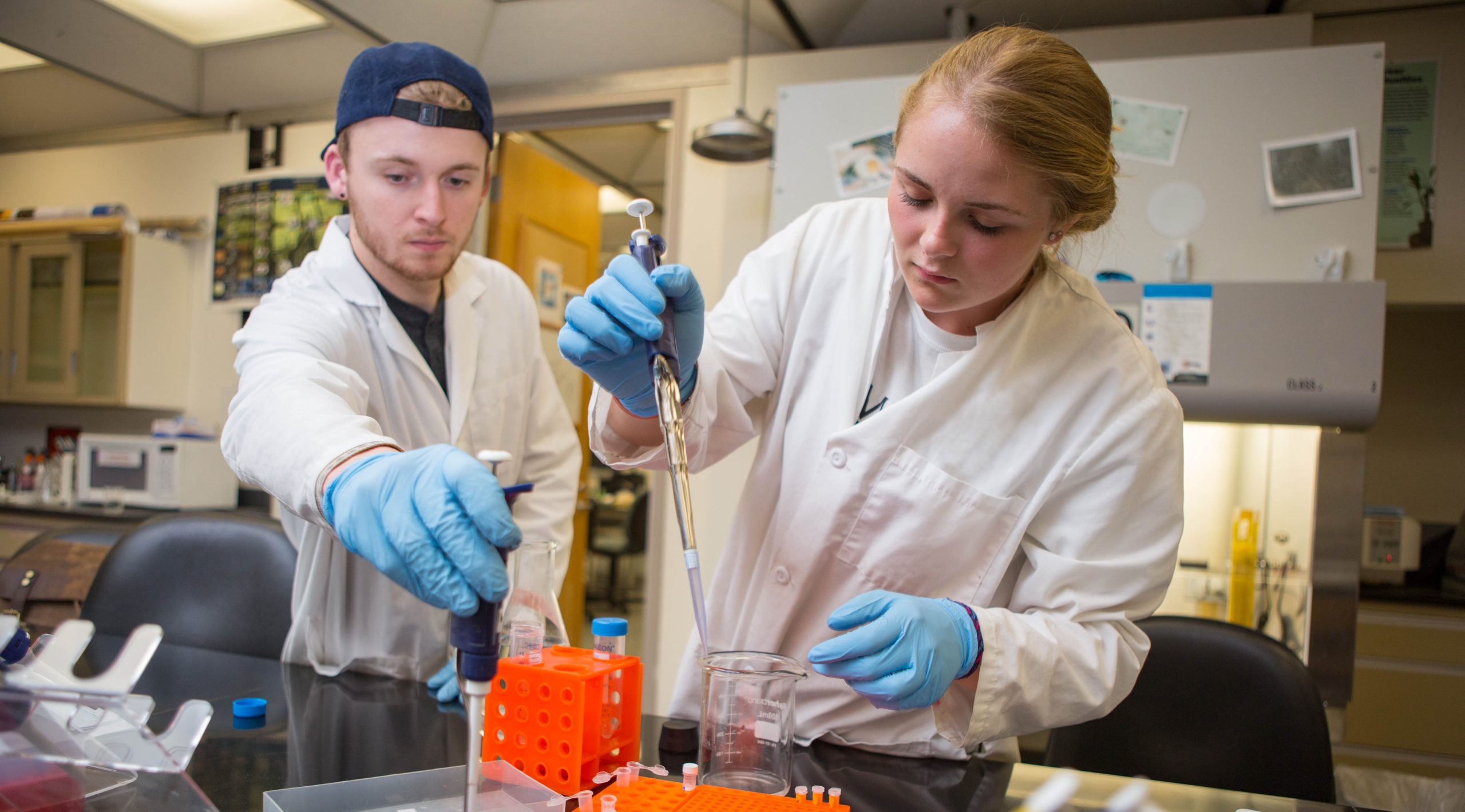
Tompkins Cortland Community College has approved six new microcredentials, bringing the total number of the streamlined education programs offered at the college to 12.
In response to local workforce needs, the college is adding the microcredentials Clinical Medical Assistant, Medical Office Administrative Assistant, Surveying Technician, Civil Engineering Technician, Electrical Engineering Technician and Geotechnical Lab Technician.
Each microcredential is a focused set of for-credit courses that can be completed quicker than a degree, often in as little time as one semester. Upon completion of these courses, students have developed high-demand skills and earned a credential that can be useful in obtaining employment or advancement in their current job. The credits earned from the courses can also be applied toward an associate degree if the student chooses to continue their education at some point.
The Clinical Medical Assistant microcredential program consists of four classes, including an internship, and will provide students with the skills and resources for employment as part of a healthcare team.
The Medical Office Administrative Assistant program prepares students for the specialized office work of a medical setting. Classes include computer skills, medical terminology and an internship.
The Surveying Technician microcredential can be earned with the completion of just two courses and aligns with needs expressed by local industry partners in public works and construction.
The Civil Engineering Technician program can be completed with three classes, preparing students for entry-level jobs by teaching how to read and interpret construction drawings, understand common construction materials, and draft and design plans using industry software.
The Electrical Engineering Technician microcredential requires the completion of four classes and gives students the tools needed to succeed in an entry-level position in advanced manufacturing and electronics.
The Geotechnical Lab Technician program provides students with an understanding of soil properties as related to the engineering of foundations, knowledge of the strength of various types of construction materials and training in technical writing. The microcredential can be achieved with the completion of three courses.
For more information, visit tompkinscortland.edu.
Women’s Opportunity Center condemns Roe v. Wade reversal
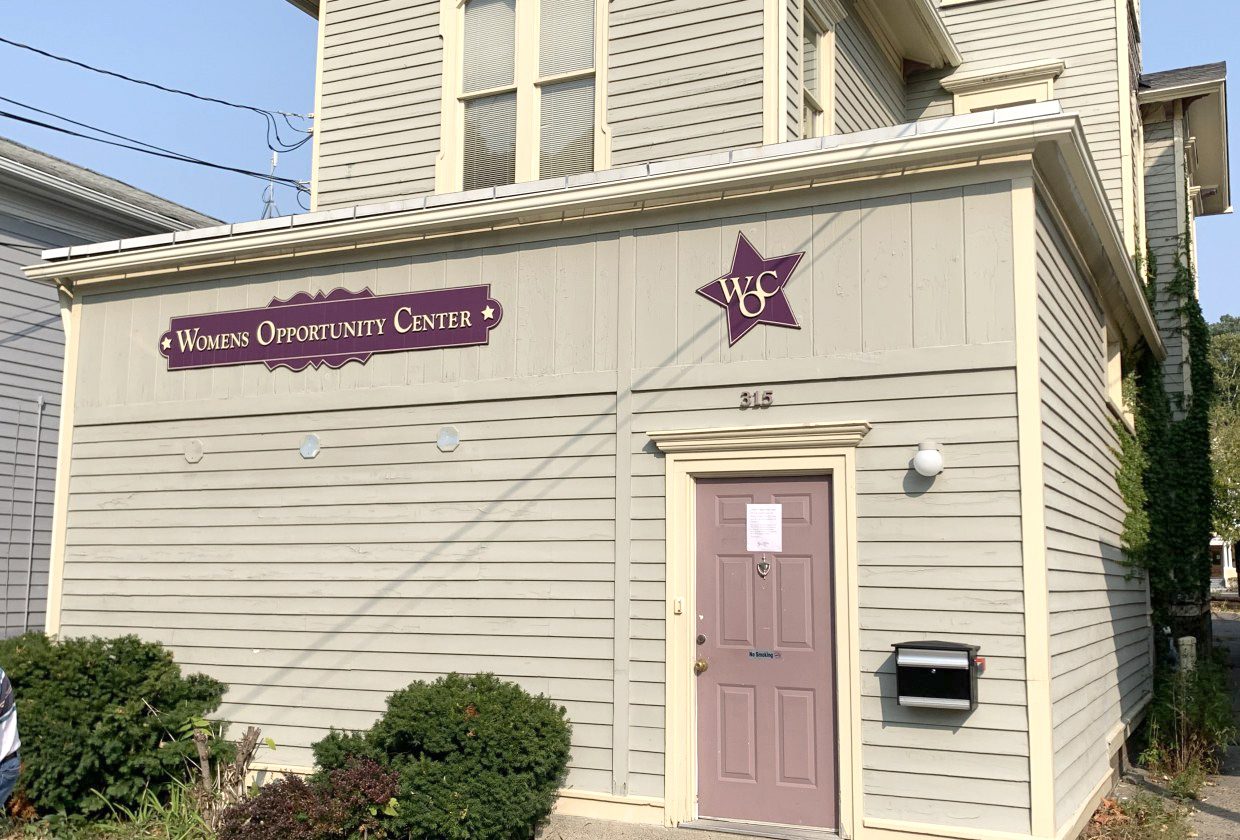
The Women’s Opportunity Center recently released a statement staunchly opposing the Supreme Court’s recent decision to overturn the landmark abortion rights case Roe v. Wade. It reads:
“Since its inception over forty years ago, the Women’s Opportunity Center of Tompkins and Onondaga Counties has championed the well-being of all women. On Friday, June 24, 2022, women residing in the United States suffered an assault that fundamentally altered their legal status based on their reproductive organs.
“The attack came in the form of the Supreme Court’s ruling on Dobbs v. Jackson Women’s Health Organization, which overturned the 1973 Roe v. Wade decision.
“Safe, affordable, medically supervised abortion services, which are vital to women’s overall health care, will now be radically restricted or denied to more than half the women of childbearing age residing in this country. This at a time when the United States has the highest maternal mortality rate among industrialized nations.
“By explicitly stripping a woman of the right to control what happens to her body, the court threw out a fundamental freedom that is protected in most liberal democracies. And we’re already witnessing the immoral consequences of this decision, which unfairly penalizes poor, rural, Black, Indigenous and LGBTQIA+ women.
“As an organization dedicated to promoting equality, we believe it’s time for a constitutional amendment guaranteeing a woman’s right to reproductive freedom. Without such protection the dismantling of Roe v. Wade translates into thousands of women being forced to accept coerced motherhood — an indecent assault hiding behind a reasoned legal argument.”
Learn more at womensopportunity.org.
CCE-Tompkins names Meg Cole as interim executive director
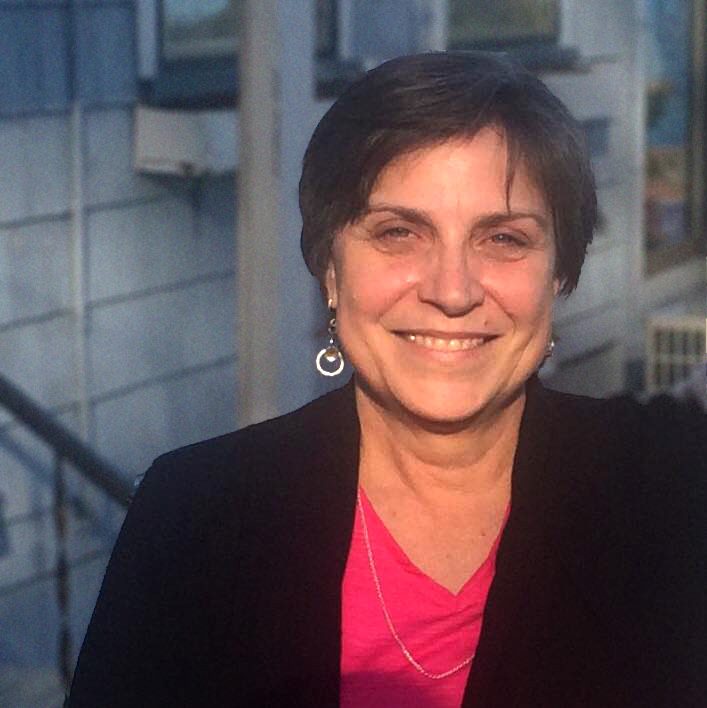
The Board of Directors of Cornell Cooperative Extension Tompkins County (CCE-Tompkins) recently announced the appointment of Meg Cole to serve as interim executive director for a two-year period beginning July 5. Cole takes on the role from Sharon Anderson, who returned from retirement to lead the organization after the resignation of its executive director in October 2021.
Over the past 38 years, Cole has worked with Cooperative Extension in multiple ways. She has served as an extension administrator in Rockland County, an extension support specialist in the Department of Horticulture at Cornell University, Youth Horticulture program manager with CCE-Tompkins, and later founding executive director of Ithaca Children’s Garden.
Cole brings to the role experience as a funder and community partner from her tenure as chief operating officer of United Way of Tompkins County, where she worked with volunteers, staff, funders and stakeholders to provide leadership and oversight for strategic planning, program and budget activities. In her current position at the Cornell Population Center, Cole administers more than 150 faculty, postdoctoral and student affiliations with a mission that includes disseminating research findings to policy practitioners and the public.
“We’re very excited to welcome Meg Cole as interim executive director,” said Sarah Barden and Tisa Fontaine Hill, co-presidents of the CCE-Tompkins Board. “Meg brings a wealth of knowledge and experience in public policy, successful organizational structures and budgets with multiple funding streams to this work, along with a deep understanding of the essential nature of strong partnerships and collaborations. She also greatly values CCE’s innovations to help people and communities thrive and is honored to return to her roots with this association.”
Cole is equally enthusiastic about her return to Cooperative Extension.
“I’m thrilled to come full circle and work with such a vibrant county extension office,” she said. “And I look forward to supporting the dedicated volunteers, staff and many collaborators who are working hard to build healthy and strong communities.”
The board acknowledged current Interim Executive Director Sharon Anderson with gratitude for her steadfast and compassionate leadership and tireless work in support of the organization and fiscal health of CCE-Tompkins over the past eight months. Anderson will assist in the leadership transition as she moves back into retirement and embraces new adventures.
For more information on the work of CCE-Tompkins, visit ccetompkins.org or contact tompkins@cornell.edu with questions.
Ethan Ash honored as June’s Community Hero of the Month

The Tompkins County Chamber of Commerce, in partnership with Tompkins Community Bank, has named Ethan Ash as the June Community Hero of the Month. This award recognizes individuals from Tompkins County who have significantly impacted our community.
In a volunteer capacity, Ash has served on a range of nonprofit boards and mission-driven organizations including the MindWell Center, State Theater, SimpliFed, Planned Parenthood and the Tompkins County Tourism Board. He helped raise funds for the Dryden Public Library and is also a partner at AGAVA Restaurant, Empowered Equity (EMPEQ) and Firelight Camps in Ithaca.
Most notably, Ash co-founded the Youth Entrepreneurship Market & Mentorship Program (YEM), along with Michael Mazza, to inspire Tompkins County youth in grades four through 12 to think with an entrepreneurial mindset through experiential learning and making connections with community members.
“Any recognition for the Youth Entrepreneurial Market has to be shared with co-founder Michael Mazza, without whom I would not be running it,” Ash said. “This has been a passion project of ours and an incredible partnership, so if we’re going to talk about YEM, we have to talk about my fellow community hero, Michael.”
Honored to be thought of as a community hero, Ash said he was grateful to live in a community that has so many of them, and that they are recognized for their efforts.
“I appreciate the spirit behind the award,” he said. “I would love to continue recognizing other people who inspire me and inspired me to get involved with public service to help shape Ithaca into the kind of community it can be.”
Tompkins Chamber President Jennifer Tavares highlighted that Ash’s high level of community involvement in so many ways will be felt long beyond his service.
“Ethan is planting the seeds for today’s youth to grow into the next generation of leaders in Tompkins County and beyond,” she said. “His work with Youth Entrepreneurship Market has taught our children how to have an entrepreneurial mindset and shown them new ways of thinking about their future and how our community bonds can be strengthened.”
Tompkins Community Bank President and CEO Greg Hartz echoed that sentiment, saying the work Ash has done in the past 12 years will have a long-lasting effect.
“There is no question his service to so many organizations in Tompkins County has improved the quality of life here,” Hartz said. “The youth certainly have benefitted, as have our cultural institutions. We are lucky to count Ethan as one of our community heroes.”
As noted, Ash has supported many types of organizations through his volunteerism, but he sees a common focus on their impact on youth.
“I have been very focused on things that can support young people in our community, to give them perspective on their choices and career paths that I did not have when I was growing up in Ithaca,” he said.
Ash continued.
“Outside of youth and entrepreneurial training, a lot of what ties into what else I’ve been involved with is the betterment of cultural opportunities, making the most of the land, the food and the social fabric that exists in this area,” Ash said. “Getting involved with any public service, it forces you to come up close to your neighbors and break down the barrier that is social media. One of the most valuable things about public service is having a personal connection to the community, and that is something I want my kids to see.”
Ash stressed that this recognition would not be possible without his wife, Rachel Ash.
“I want to thank my wife,” Ethan said. “There is no way to get involved with your community and take on public service without having someone that supports and helps you, while taking care of three young kids. I want to thank her for all of her support and love.”
Learn more at tompkinschamber.org.
Cornell professor turns yogurt byproduct into hard seltzer

Food scientist Sam Alcaine, associate professor of food science in Cornell University’s College of Agriculture and Life Sciences, recently launched a hard seltzer brand, Norwhey, which, as the name implies, is made from yogurt whey.
“It’s light, tart, with a little bit of fruitiness, depending on the flavor, between a tart seltzer and a sour beer,” Alcaine told the Cornell Chronicle.
Alcaine’s product is made from a product that would usually go to waste, and he hopes it can act as a model for future dairy farmers.
“It feels great to be able to see the arc of an academic research project that is really making that crossover to the real world,” Alcaine told the Chronicle.
Alcaine’s efforts began in 2016, when the New York State Department of Environmental Conservation (NYDEC) “asked Cornell to solve a problem: As the largest producer of yogurt in the country, how could New York deal with all the waste?” as the Chronicle’s Laura Gallup put it.
On average, each cup of yogurt creates three cups of whey byproduct, and if that whey is then dumped into waterways, as so often happens, it causes significant environmental damage. Thus, producers have to pay to dispose of it.
“Essentially, you’re taking 75% of the milk, and all the work that went into that milk is being thrown away,” Alcaine told the Chronicle. “That’s lost resources and value. So, how do we recapture that and turn it into something valuable?”
While in the past, yogurt whey has been “considered worthless due to its lack of protein,” as Gallup described, it does have “the majority of milk’s vitamins, minerals and electrolytes, including calcium, potassium, zinc, magnesium and vitamin B5.”
Those benefits ultimately inspired Alcaine’s mission. Whereas most wouldn’t think much of the byproduct, since he is an expert in fermentation and dairy microbiology, as well as a former employee at Miller Brewing Company, he immediately thought of brewing opportunities. His goal: convert the sugar in yogurt whey into alcohol and create a brew fit for health-conscious consumers.
“In the brewing world, we’ve always looked for developing better-for-you products,” Alcaine told the Chronicle. “It’s been kind of a hard space to play in, with alcohol. So, this is an opportunity. We just have to make it taste good.”
First, Alcaine researched the microorganism Brettanomyces, a yeast found in some wines, kombuchas and Belgian beers. His research earned him funding from NYDEC, the New York State Dairy Promotion Order Advisory Board and the U.S. Department of Agriculture.
Once he realized his research could lead to a retail product, Alcaine came up with Norwhey, a Nordic-inspired hard seltzer.
To learn more about Alcaine, read Gallup’s full article at tinyurl.com/27wftcq5.
In this photo: Alcaine holds cans of his new hard seltzer brand, Norwhey, in the pilot plant at Stocking Hall.
County United Way announces Community Care Fund recipients
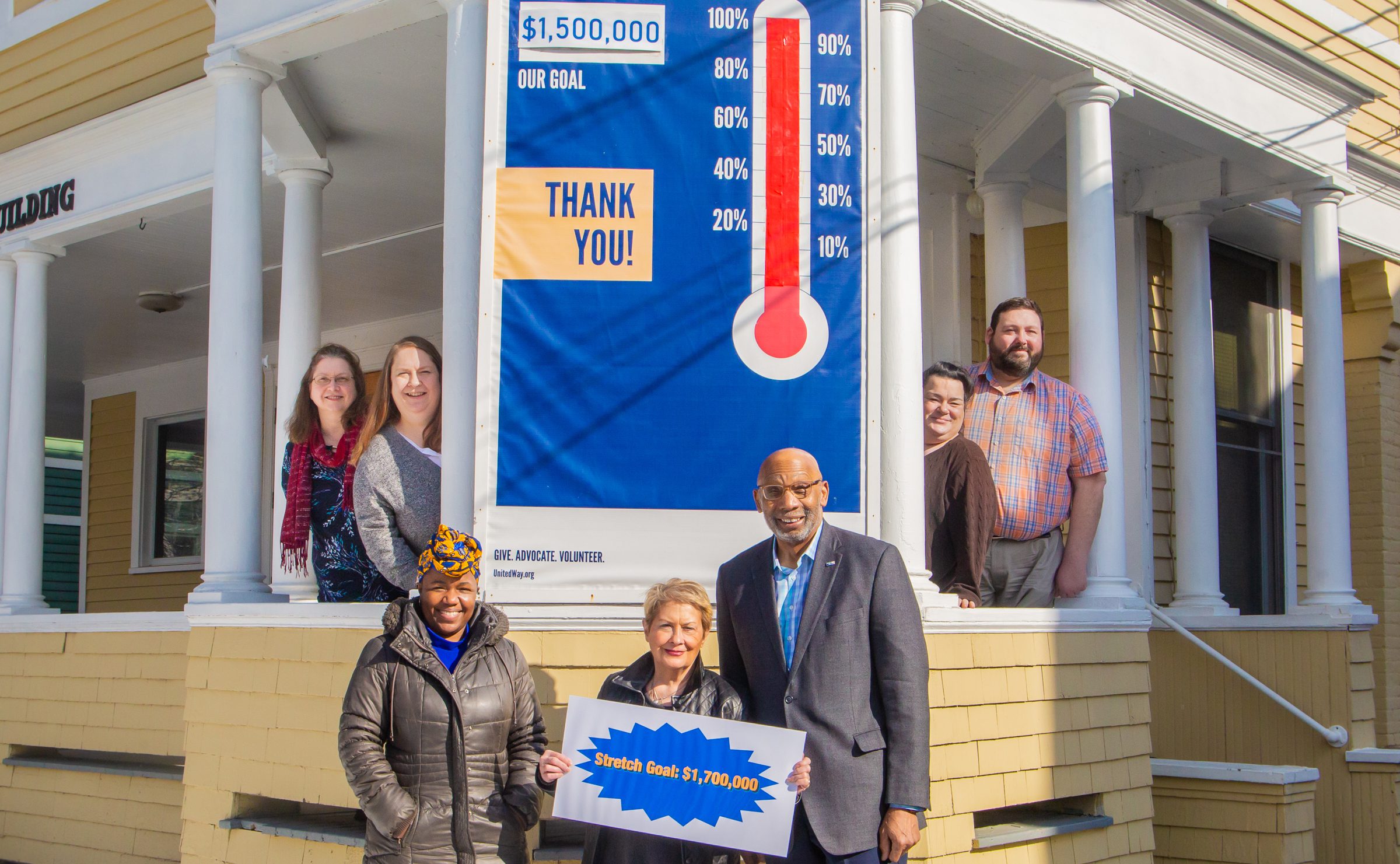
United Way of Tompkins County (UWTC) recently announced its volunteers recognized for their service to the Tompkins County community through UWTC activities, as well as grant allocations for the 2022-23 Community Care Fund.
UWTC annually recognizes its community campaign chair, volunteer of the year, a business or organization that was a key partner in its activities and an “unsung” hero whose volunteerism supported the community in a nonpublic-facing manner.
This year, the following were recognized for their service to the community through United Way of Tompkins County activities and collaborations:
– 2022-23 Community Campaign Chair: Pat Wynn (Cornell University)
– Pat Stage Volunteer of the Year: Simon Barrette (Borg Warner)
– Lynnette Scofield Key Contributor Award: Human Services Coalition
– Unsung Hero Award: John Mazzello (Human Services Coalition)
One of several community investments made annually by UWTC, the Community Care Fund (CCF) supports human services needs based on community needs assessments and a competitive application process driven by community volunteers.
The volunteers at the review team, committee and Board of Directors levels make their decisions based on identified priorities and measured outcomes to have impact on those priorities. A total of $580,150 has been allocated to programs for the period of July 1, 2022 through June 30, 2023.
This year’s 41 recipients will administer 58 programs and partner with an estimated 1 in 5 residents as they work to strengthen their lives. The funding priorities this year are to support mental and physical health, child care, crisis intervention services, family services, food security, reducing barriers to employment, as well as safe and affordable housing.
In additional to the Community Care Fund, UWTC has several other grant cycles and initiatives to meet community needs through the collective donations received annually. This includes the UW/2-1-1 ALICE Program to directly support working families.
For more information on these opportunities, visit uwtc.org.
Related Articles
AmeriCU proudly connects students with annual scholarship opportunity
AmeriCU scholarship program awards $1,000 to students pursuing college or vocational education. Applications are open through March 15.
Trumansburg schools consider regionalization as TST BOCES plan advances
Trumansburg school regionalization remains undecided as TST BOCES outlines goals for shared services and student learning.