
Campus life looking up for area college students, staff
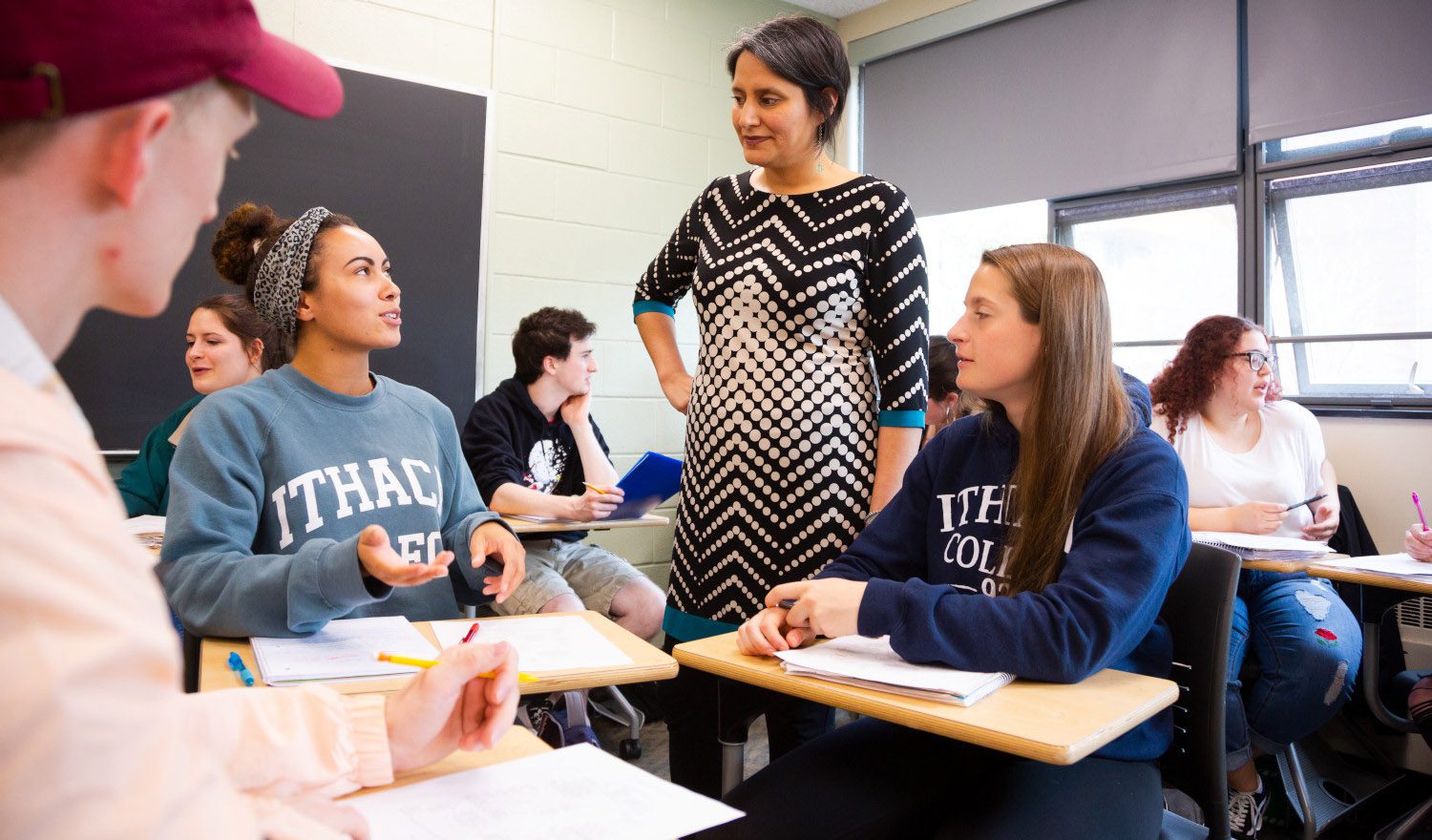
The spring semester is coming to a close for area college students, and in contrast to the first year and a half of the pandemic, campus life looked considerably closer to normal in 2022. Area seniors have in-person commencements to look forward to, and administrators are excited for what’s ahead. Tompkins Weekly spoke with area college leaders to see how we got here and what’s next.
Universally, leaders at the three area colleges — Cornell University, Ithaca College (IC) and Tompkins Cortland Community College — said that this academic year and this spring especially saw major improvements compared to last academic year.
“Overall, it has been an extremely successful semester,” said Joel Malina, vice president for university relations at Cornell. “Academically and student experience-wise, I think it has been as close to a normal semester as we could have expected. And I certainly sense that the morale on campus has been high. The feedback we’re getting not just from students and their parents but also from faculty and staff is lots of appreciation, ongoing appreciation for how the administration has approached what continues to be a challenging environment.”
Samm Swarts, assistant director of emergency preparedness and response at IC, also spoke to how much progress has been made in a relatively short amount of time thanks to the hard work of students, staff and faculty.
“Bringing students back fully in person and really trying to have a campus that was thriving this year, I will say, was really our goal, and we were able to really do that and do it safely and effectively,” he said. “And so, while we started out with some pretty serious challenges, we have definitely come to a place where I’m confident that we’ve learned a lot. … And God forbid, if we ever had another pandemic, I feel like we are far more prepared today for dealing with a situation of that nature than where we were two years ago.”
The pandemic had a significant impact on things like student enrollment numbers, especially at Tompkins Cortland. But with pandemic challenges lessening, Tompkins Cortland is optimistic for a bounceback.
“We had a very lively open house and admissions event,” said Deborah Mohlenhoff, associate vice president of college relations. “We had over 200 people on our campus. And for us, with the impact of the pandemic on our enrollment, it’s really important for us to get people back on our campus. Virtual tours were cool, but we think that bringing people actually physically to the campus might yield a better return on a potential applicant if they actually see the campus and talk to our faculty and learn a little bit more in person.”
Though these improvements are encouraging for many, several pandemic safety precautions are still in effect, such as vaccine requirements for staff and students. Cornell, for example, did see an uptick in cases toward the start of the semester, causing administration to raise the COVID-19 alert status to yellow. However, that status was back to green by the time spring break hit.
Overall, sources said that staff and students alike have been very receptive to and appreciative of the pandemic measures put in place to keep everyone safe and healthy. Area campuses reported that close to 99% of their student populations are vaccinated against COVID-19, with similar compliance among the faculty and staff populations. Some have been so accepting of the precautions that they’ve been hesitant to halt practices like mask wearing.
“When we got rid of our masking protocols here on campus, we definitely heard some concerns that folks weren’t quite ready for that,” Swarts said. “And so, we really have messaged and tried to convey a strong sense of community within the campus population about supporting each other through these difficult times and also recognizing that one’s comfort level is not the same as another person’s comfort level.”
Looking ahead to commencement, as previously alluded to, all area colleges are planning to have a completely in-person event. IC and Cornell are both opting for two ceremonies in one day to allow students to bring more guests. All administrators interviewed said they’ve heard nothing but positive feedback on their commencement plans.
“We’re very much looking forward to having a more normalized experience,” said David Maley, director of public relations at IC. “When a student comes in as a freshman, I think they expect to have a nice celebration when their … graduation time comes. And so, that’s been disrupted for the past couple of years. And I think they’re looking very much forward to having a normalized college celebratory experience.”
Students are similarly excited at Tompkins Cortland, Mohlenhoff said.
“We have a wonderful planning committee that is trying to jazz it up given that, for this set of students, there’s a good chunk of them that might have also possibly missed out on their high school graduation ceremony because of the pandemic,” she said. “Believe it or not, it’s been that long. So, we’re pleased to be able to offer an in-person [ceremony].”
This fall, area administrators are expecting campus life to look even closer to what it was before the pandemic. Swarts, for example, said that while IC’s Health and Safety Advisory Group has been instrumental in creating the health guidelines throughout the pandemic, that work is finally winding down.
“We’re finally getting to a place now where that group’s work is starting to wrap up, hopefully,” he said. “And it’s more of an advisory council to me, and then me making recommendations to senior leadership based on our next directions and steps with the hope and anticipation that one day, we won’t have to have a Health and Safety Advisory Group anymore. And so, that group has been hard and steady at work again for about two years’ time. So, hopefully, we’ll be able to rest soon enough.”
Mohlenhoff said that Tompkins Cortland is looking forward to having students back in its residence halls.
“Our residence halls were very impacted by the pandemic in terms of who was comfortable even coming away to college,” she said. “And [we’re] just kind of getting that population back and getting that vibrancy back on our campus again. So, we hope to take some of the atmosphere that we’ve generated in spring and just really quadruple that, quintuple it, for our fall opening semester.”
In regard to COVID-19, sources said that they believe they have the tools and experience needed to handle whatever the pandemic throws their way, including another outbreak. Of course, they’re hopeful it doesn’t come to that.
“The challenge going forward is for us not to let down our guard,” Malina said. “We want to continue to be ready to monitor, to analyze and to really be sure that, should there be a new turn in COVID, that we’re prepared and that we’re able to take those actions to minimize the risk to the public health of our community. Not just the campus community, but in all things, we are connected to the Tompkins County community as well.”
To learn more about Cornell, IC and Tompkins Cortland, visit their websites at cornell.edu, ithaca.edu and tompkinscortland.edu, respectively.
Jessica Wickham is the managing editor of Tompkins Weekly. Send story ideas to them at editorial@VizellaMedia.com.
Related Articles

AmeriCU proudly connects students with annual scholarship opportunity
AmeriCU scholarship program awards $1,000 to students pursuing college or vocational education. Applications are open through March 15.
Street Beat: What’s one of the best holiday gifts you ever received?
We asked five random people. Here’s what they had to say.

5 things to do in Tompkins County this weekend
Plan your visit and discover what’s happening this weekend.