
Candidates for Lansing town supervisor chime in on local issues

The future of the Town of Lansing will be shaped in part by the local economic horizon and town budget management, as well as the economic and environmental dynamics surrounding the Cargill Salt Mine.
Candidates for Lansing Town Supervisor — Republican Dennis Griffin, a longtime fixture of the Lansing Fire Department, and Town Board Councilperson Ruth Groff, a Democrat — fielded questions from Tompkins Weekly regarding their outlook on those pivotal issues.

By Eddie Velazquez
Both candidates have come into the fold as current Town Supervisor Ed LaVigne, who served two terms as supervisor, announced in the summer he would not seek re-election. Election day is Nov. 7.
Future town budgets and economic forecast
While figures closer to final for the town’s proposed 2024 budget are not expected until Nov. 8, the town board hosted a meeting in September and will host a meeting Oct. 18 to further discuss the budget. At the September meeting, LaVigne noted that this would be a budget with little wiggle room heading into next year.
“The way this budget is set up, there are very tight windows,” he said. “If someone wants something increased, we might have to decrease another line. We have found out in the past that budget modifications have taken off and might need a step back. This is why this is almost an austerity budget.”
Groff, who is a part of the budget process in her capacity as a board member, said that while the town is not in general financial trouble, the surge in costs after the COVID-19 pandemic is making budget modifications requested by town department heads harder to approve.
“Supply-chain issues have increased prices dramatically, especially for the highway department and the parks department,” she said. “We just need to pull back a little bit on some of the expenses we have incurred as of late.”
Groff said that the town has experienced recent infrastructure issues, such as water main breaks.
“So we’re trying to focus on keeping our infrastructure, getting it toward solid ground, and keeping it where the taxpayers are benefiting from our services from the highway department,” she said.
These tighter financial conditions, Groff added, mean that the town will have to focus more on “needs than wants” going forward. She noted that, despite the necessary financially cautious approach, the town is still moving forward with larger financial projects, such as approving raises to highway department employees in the next year.
For Griffin, who has experience working through yearly Lansing Fire Department budgets, the town board needs to be more thorough in explaining specific budget lines and potential areas for rollbacks and adjustments.
“I’ve also been trying to look at the tax rate from different towns and look at how they’ve saved money or how they look at creating revenue,” he said. “If I am elected as supervisor, I want to see how we are creating revenue that comes into town. Are we going to just try to live with what we have? I want to look at where we are growing and what we are planning to do to grow.”
Both Groff and Griffin noted that they want to keep close tabs on how the town’s capital improvement plan comes together. The plan is meant to guide the town’s financial investments for the next five years.
Groff sits on the capital improvement committee, which will eventually produce a public version of the plan. To put the plan together, the committee looks at the town’s infrastructure, assessing its current status and deciding when it would need to be replaced.
“The town has never had such a plan before,” Groff said.
Groff, a retired certified public accountant who has worked with small, medium and large companies, said that she is also in the process of creating a five-year financial plan for the town.
“I started building that last year, but it hasn’t gone into any kind of a formal process,” she said. “So as a super supervisor, I would be staying on top of those things.”
Griffin said that any financial planning for the town has to prioritize a lower tax rate for local residents.
“I always feel that raising the tax rates all the time doesn’t answer all the questions we have about our future,” he said. “We need to look at each line and say, ‘Can we cut this to take care of this and try to keep our tax rate low?’”
Cargill Mine closure
A report published in the summer by business news site The Deal suggested that the Cayuga Salt Mine in Lansing, owned by Cargill, could be for sale.
The Deal estimates that a sale of Cargill’s assets, which includes two salt mines, within its technologies division could yield about $375 million in revenue. Cayuga Salt Mine generates most of the company’s revenue, according to The Deal’s reporting.
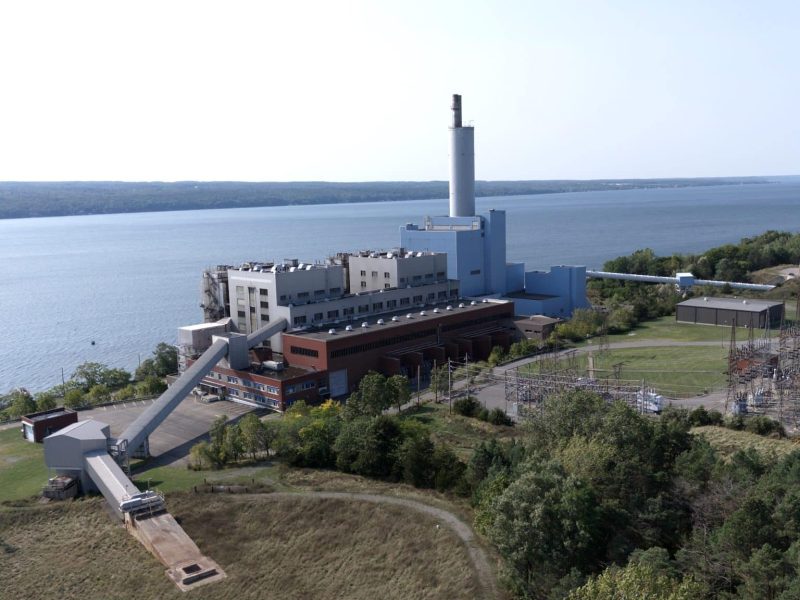
Both candidates said that they want to prioritize and ensure the well-being of local workers who could be impacted by the potential sale. Griffin compared the situation to what occurred at the end of last decade, when Lansing’s Cayuga Power Station shut down.
“All of a sudden, I know that some of the employees of the power plant were sent home, and now they had to figure out what they were going to do and change their life and career,” Griffin said. “If I am elected as a supervisor, I would be asking Cargill what is going to be happening to the employees.”
Groff said she wants Cargill employees to be protected regardless of the outcome.
“Cargill has been a good neighbor to Lansing; they’ve been good stewards of the lake,” she said. “The concern has been that they could be selling to an entity that would not not be as good as Cargill has been. Cargill is a major taxpayer and employer for Lansing. They have contributed a lot to the community, and it would be a shame to see them go. But we would like to make sure that the employees are protected.”
Griffin said there are many unanswered questions about the future of the mine.
“I’d like to hear the other side of things,” Griffin said, noting that he has heard environmental conservation arguments proposing the closure of the mine. “A lot of people don’t want to see Cargill leave. But they really haven’t come out and really said what they’re doing.”
A Cargill representative told Tompkins Weekly in the summer that the company does not comment on industry speculation.
Groff said that she would like to make sure state environmental authorities are involved in any potential outcomes surrounding the salt mine.
“We’d also want to make sure that all the communities that are surrounding the lake have some sort of a bonding in place to remediate any environmental effects that a sale or a closure of the mine would have on the lake.”
Lansing at Large appears every week in Tompkins Weekly. Send story ideas to editorial@vizellamedia.com. Contact Eddie Velazquez at edvel37@gmail.com or on X (formerly Twitter) @ezvelazquez.
In brief:
Lansing Boy Scouts of America Troops 48 and 39 are hosting their 33rd annual haunted house event on Oct. 28 at the Lansing Community Center from 6 to 8:30 p.m.
Organizers promise a “ghoulish time.”
“Get a little grossed out, frightened, and maybe even have a few laughs,” they say in a Facebook post.
More information on the event can be found at
Author

Related Articles

Local representatives push HEAP as winter nears
Lansing HEAP program applications are now open, helping low-income households cover heating costs and access energy assistance this winter.
Lansing’s $17M capital project advances amid construction challenges
Lansing Central School’s $17M BOBCAT capital project upgrades schools, athletic facilities, HVAC, and infrastructure.