
Celebrating 50 years of community co-ops
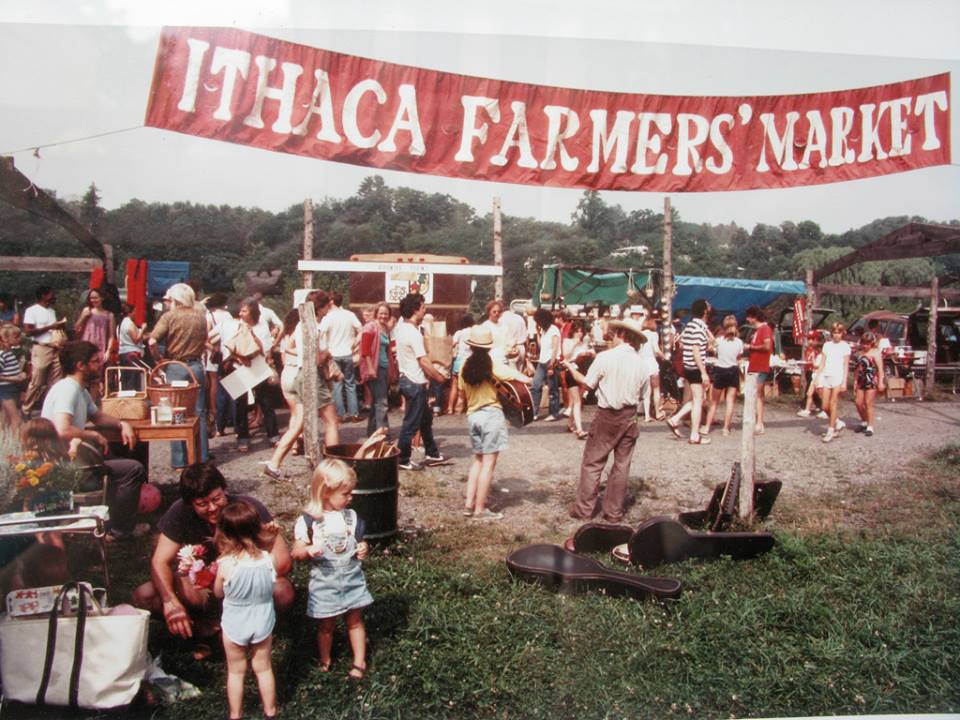
What started as an idea for community support and engagement in 1973 is now one of the largest tourism/local attractions in Tompkins County. This year, the Ithaca Farmers Market celebrates 50 years of operation.
In the spring of 1973, Ann Rider, and her neighbor, David Rendos, pulled together a few people on Rider’s porch and discussed the concept of a farmers market. They wanted to develop a truly unique market that was local products produced by the vendor within a 30 mile radius of Ithaca which could include produce, dairy products, meats, crafts, clothing and beverages.
These two rules are still the backbone of the market today. Monika Roth, a type of advisor for the market since 1980, said 60% of the vendors need to be farms or local farmers selling farm goods with the other 40% split between craft vendors and food vendors.
Roth is a retired agriculture extension educator from Cornell Cooperative Extension where she was the program leader. She has been an advisor to the market since she started the extension in 1980.
“I would go to national conferences and bring back ideas from around the country and have been on the board of the Farmer’s Market Coalition, which is a national organization, and the board of the New York State Farmers Market Federation,” Roth said. “Both of those organizations I helped to found. I had the privilege both of working with the market and building my own career on being a specialist in farmer’s markets.”
The first location of the Ithaca Farmers Market was set up in the Agway Farm and Home Center parking lot in the summer of 1973. There was a local farmer who was on an Agway board and a Cornell professor that advocated for the market to be in the lot. The market included 10 to 12 vendors with mostly baked goods and produce.
“And then pretty quickly the next season they moved to Taughannock Boulevard where the Island Health and fitness building is now, but it was an empty lot back then,” Roth said. As the market grew, there was pressure from vendors, locals, and the city to move because of immense traffic due to market demand.
It was not until the 1980s that the market found what is now their home at Steamboat Landing on the Cayuga Inlet.
Within the same season construction started. The land was cleared by farmers and their own equipment. The pavilion, designed by Steve Gibbon, was also built by the vendors and community volunteers with Gibbon as the project lead. A $50,000 state grant for market infrastructure also helped to fund the first phase of the pavilion.
Construction was done in phases as funding and worker availability shifted. A second grant was finalized in 1988 and after this, the pavilion was finished. During this construction period, the market moved around to various locations.
Rider was also involved in getting the market a longer term lease from the city for the Steamboat Landing site. The lease was for 20 years and helped vendors and the market’s board make long-term decisions for the market moving forward.
“When it was founded, the idea was to be a business incubator, which has grown and evolved over the years. This was my first experience with the farmers market and it really showed me that people could be self employed and creative with how they spend their life and what they do for work,” said Crystal Van Gaasbeck, a vendor since 2013 and board member since 2020. “I see it as a huge creative opportunity and as a way to connect local people with local food at its basic core.”
Van Gassbeck first learned about the market in 2008 when she was a Cornell student. She apprenticed with another market vendor at the time, who sold leather work which is how she learned to make leather goods. Her husband, Scott, has been at the market for 26 years and previously sold his pottery.
“When we kind of joined together, we shifted the business to leatherwork and planted a fruit orchard so we grow all sorts of fruits like apples and lots of garlic, mainly perennial crops,” Van Gaasbeck said. “We grow nursery plants in the spring, and then we make leather purses, belts, and accessories.”
Silk Oak, started by Robin Botti, and the Cat’s Pajamas by Jan Rhodes Norman, were involved in the early years of the market and are still active. Both were founded in the 1970s and became quickly intertwined.
“Back in the 70s, being like a 25 year old with a business and being a woman, there just weren’t a lot of us around then so we kind of gravitated towards each other,” Norman said. “The logical place to start to sell was the Ithaca Farmers Market, which, at that point, was a bit of a vagabond troop that was located in different spots.”
Norman has also been on the market’s board and became the owner of Silk Oak in 1996 when Botti gave her the business. She said one of the special things about farmers markets is the community connections locals and local businesses can make with one another.
“That you can week after week access the public and people walk by to see your things was just a great leg up for so many different businesses, not just farmers,” Norman said. “It was a terrific outlet for young farmers, but also for chefs who went on to, you know, open their own restaurants as well as artisans that were crafting goods locally.”
Van Gassbeck, Roth, and Norman all expressed that what keeps the market going, in addition to the visitors who support it, is the vendors, the members of the market, which operates as a cooperative. Everyone, from the board members, cooperative members, and the employees, were described as a family because they all work together for each other’s and the market’s success.
“After 50, it’s time to renew and upgrade so that we’re able to continue to operate and be a viable market for the community over the next half century,” Roth said. “You can have direct interactions with people who produced the product and I think that is something very special about these markets and especially ours.”
Two other local businesses are celebrating 50 years of operation, Greenstar and Moosewood.
“I feel like the things in place at that time kind of stimulated these food related entities. It’s a Back to the Earth movement that was happening with a lot of young people going back to the land,” Roth said.
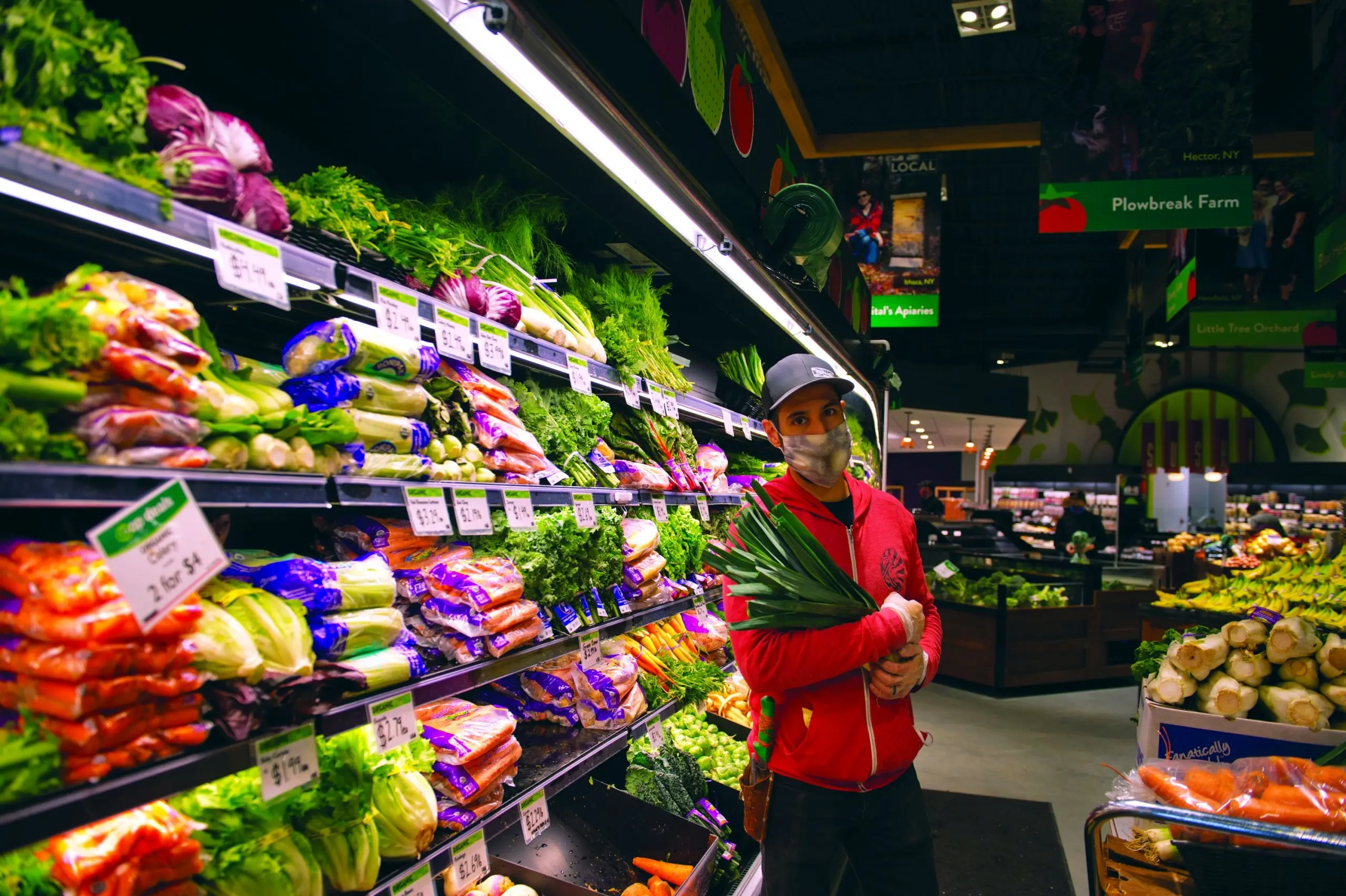
Greenstar was founded in 1971 so this is their 52 year anniversary, but due to the pandemic, they are celebrating 50 years now.
The cooperative started as a buying club where a group of neighbors came together to buy from local farms in bulk where it was then delivered to someone’s house. The group then divided up the produce based on who needed or wanted what.
“It was really the only option then for getting great local organic food with less packaging compared to what was available in supermarkets,” said Jeff Bessmer, Greenstar’s general manager. “There became such a demand for that in the 70s that we opened our first storefront and have continued to grow since then.”
Nationally, Greenstar is considered an extra large co-op with around 170 staff across three locations and about $26 million a year in sales. They have a storefront in the DeWitt mall, Collegetown, and their largest storefront on Cascadilla Street, which opened in 2020. Greenstar also works with dozens of local farms and brings a variety of organic, fairtrade and sustainable items to the community.
“It’s really great that we’re able to build this whole industry of sustainability that didn’t exist before and it’s been so successful that it’s been taken up by the mainstream when for most of our history places like this have been considered counterculture or alternative,” Bessemer said. “20 years ago, no one had all this organic, local, sustainable stuff, and now it’s everywhere, which is really, really awesome. That’s the goal we had. We want the regular grocery store to have the organic, sustainable stuff, and we fought for that for generations. And now they do.”
Moosewood has also made itself widely available for over 50 years through their world famous cookbooks meaning anyone can enjoy Moosewood without being in Ithaca.
All three businesses will be sharing more information in the spring on their anniversary celebrations.
Related Articles

Cayuga Medical Center nurses to rally, alleging anti-union tactics by hospital management
CMC nurses plan a rally, alleging unsafe staffing and illegal anti-union tactics as the hospital highlights recent patient-safety gains.
Beginnings Credit Union holds ribbon cutting
Beginnings Credit Union celebrates a branch rebrand in Ithaca, providing improved services and engaging with the local community.