Center for Transformative Action celebrates 50 years
This year marks the Center for Transformative Action’s (CTA) 50-year anniversary, and the organization is celebrating with several planned events, a new webpage dedicated to CTA’s history and an upcoming podcast.
CTA, previously known as the Center for Religion, Ethics and Social Policy, is an independent education-based 501(c)(3) organization affiliated with Cornell University and based in Ithaca. It grew out of local protests against the Vietnam War, and it’s come a long way since then.
CTA has fostered over 100 transformative social justice initiatives throughout Tompkins County and the rest of the state and currently supports 30 projects through its incubator and fiscal sponsorship programs, according to a recent press release. CTA services include grant management, accounting, insurance, payroll, educational programming and networking with other social entrepreneurs.
CTA has recently welcomed projects like Jahajee Sisters, Queer Detainee Empowerment Project, the Christopherson Center for Community Planning, Open Doors English and others. Some of its longstanding projects include the Tompkins County Workers Center, the Women’s Opportunity Center and Ithaca City of Asylum, which is celebrating its 20-year anniversary this year.
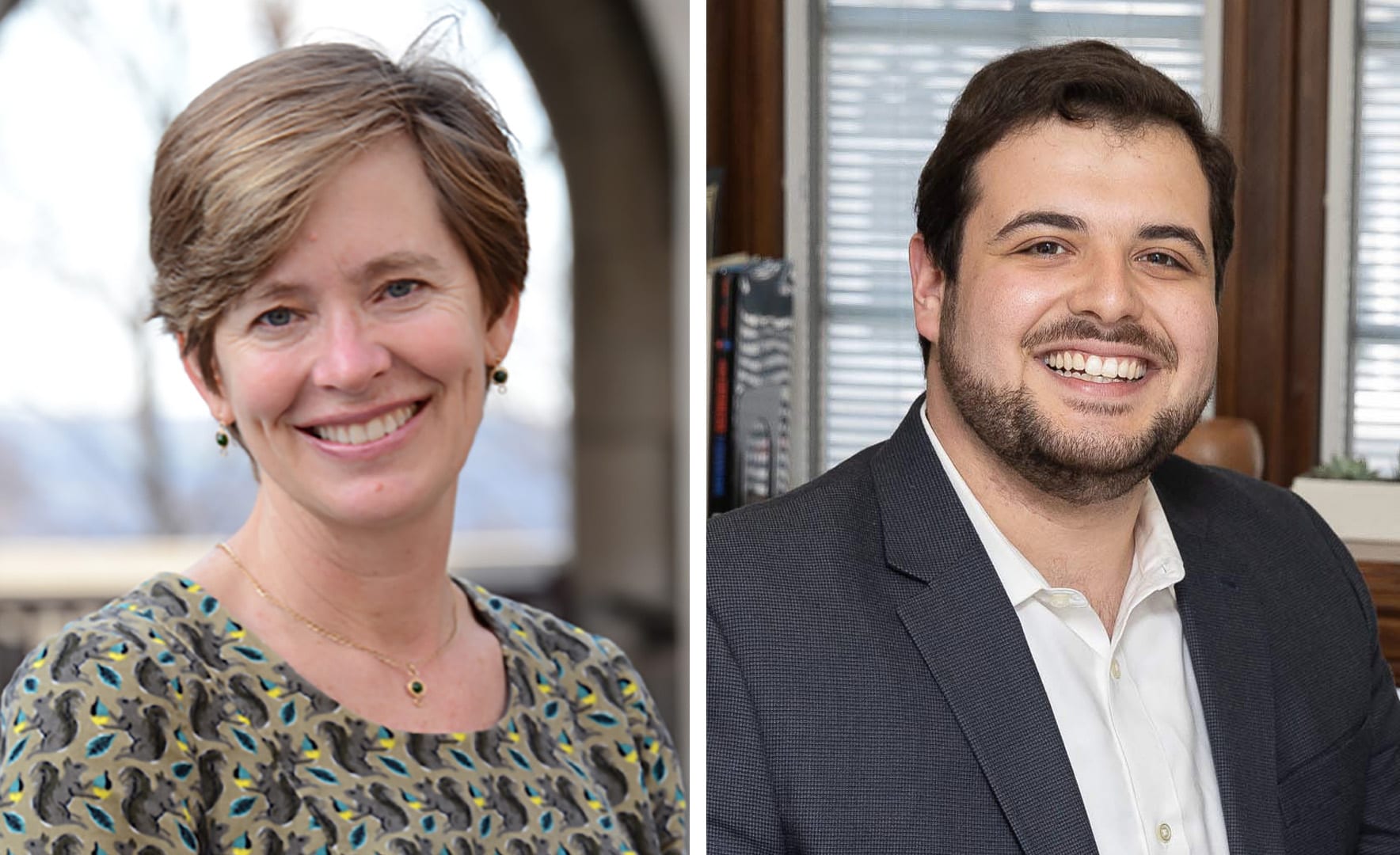
“These are now all pillars in our community in terms of nonprofits,” said Executive Director Anke Wessels. “In that regard, CTA is a bit like an incubator for innovative social change initiatives. They come under us. They can test whether or not their model works. They can establish themselves, build capacity and resources and then, when they’re ready, become their own 501(c)(3)s. And I think that’s a valuable contribution to the community, that we serve this role.”
CTA has five core staff members and is supported by its Board of Directors and Advisory Board of volunteers. Wessels, a visiting lecturer at Cornell’s Charles H. Dyson School of Applied Economics and Management, has been CTA’s executive director for the past 23 years and shared why she’s so dedicated to CTA’s mission.
“I really enjoy working with people who see possibility, who have ideas about how to effect positive social change, who are doing meaningful work in their communities, who are passionate about that work,” she said. “That’s very uplifting and enjoyable for me to be there, to work with them and to support them in the ways that CTA offers support through its fiscal sponsorship services. So, it’s always extremely inspiring to work with these folks.”
For Wessels, transformative action has three components: having the courage to “break the silence that surrounds injustices,” building relationships and bridges focused around understanding and empathy, and envisioning what’s possible to inspire others and improve communities.
Wessels said that CTA couples this understanding of transformative action with social entrepreneurship, which brings in skill sets like thinking outside of the box and addressing unmet needs.
“It’s solutions-focused, and the solutions are trying to get at the root causes of the problem, not simply addressing the outcomes of those root causes,” she said. “And the social entrepreneur is someone who takes initiative with others to develop an initiative, a program, a venture that is trying to address persistent problems by getting at their root causes, and then rallying resources to that solution in such a way that’s compelling and visionary.”
Within the time that she’s been with CTA, Wessels has overseen and helped spearhead various changes in the organization, including its expansion outside of Tompkins County, with some of its current projects based in New York City.
The pandemic certainly presented plenty of hurdles for CTA’s members and staff, but Wessels sees a silver lining as well in that the pandemic forced CTA and its members to adopt different ways of communicating. This has in turn “brought new people into the conversation [and] allowed projects to reach people that they hadn’t been reaching before,” she said.
And some projects have even risen to the challenge to meet new needs, as Board President Dominick Recckio explained.
“I think there are some of our project directors who are thinking even more widely and even more critically about the work they do and the populations they serve with the pandemic, which is a really exciting thing,” Recckio said.
As far as what has helped CTA to continue growing for five decades, Wessels attributed it to CTA’s willingness to take a chance on innovative projects.
“Some fiscal sponsors only work with organizations that already have proven their success. We work with startup projects and initiatives,” she said. “So, I think part of our success is that we really give a home to people, and we believe in people. We invest in people who want to effect change and want to create communities that work for everyone that are ecologically sound and socially just. We give people who just have an idea a place to start.”
Recckio added that CTA has always worked to provide the best services possible to its projects, which sometimes involves taking stock of what’s possible.
“I don’t think that the CTA has ever bit off more than it could chew,” he said. “I think it’s a real strength of the organization to say, ‘Hey, we know our strengths as an organization, and we want to do our best to bring them forth to our stakeholders.’ And we stay within where we see our value proposition as an organization. So, I think those contribute to longevity.”
And that perspective has helped cement CTA’s positive reputation both within and outside of the county. Hilary Boyer co-directs Open Doors English, which provides English as a second language (ESL) classes in Tompkins and surrounding counties, and she spoke to the important work CTA has done for her organization.
“They’ve taken a lot of things off our hands as a new organization so that we can focus on what we want to focus on, which is providing English classes and creating community,” Boyer said. “But they’re so much more than that. You can have a financial agreement with an organization, but, for them, they’ve been our mentors. They’ve helped us learn how to manage as a brand-new organization.”
The Ithaca City of Asylum, which provides refuge in Ithaca for writers and artists whose works are suppressed and lives, languages and cultures are threatened, also credits much of its success to CTA’s support. David Guaspari, Ithaca City of Asylum board president, expressed his gratitude for the role CTA has played in his organization since its start 20 years ago.
“They do lots of things for us and for other groups that would be just onerous to do so [ourselves],” he said. “First of all, they provide the 501(c)(3) status. They do bookkeeping and all kinds of things, which just frees us to do our job.”
Jonathan Miller, an Ithaca City of Asylum board member, said that “they enable us to exist,” but more than that, CTA speaks to similar goals of Ithaca City of Asylum.
“For me, the CTA represents idealism made real,” he said. “It starts with this conviction that you can change the world by doing things, but conviction is relatively easy to have. Organization is not so easy to have. And they provide that ongoing, continuing foundation of support for so many idealists who are doing their work. And that in itself is an idealistic project.”
Nicaraguan political cartoonist Pedro X. Molina, the most recent artist in residence of the Ithaca City of Asylum, will speak at CTA’s anniversary gala scheduled for this October. The event will also include cartoonist and graphic novelist Thi Bui.
Moving forward, sources expressed hope for CTA’s continued expansion. Recckio expressed that the soon-to-be-released podcast titled “In Between Places” will help inspire others to approach things similarly to CTA’s model as well as the model its projects uphold, like that of the Dorothy Cotton Institute.
“We have this Dorothy Cotton Institute locally, which does incredible work and uplifts the history and legacy in a transformative way,” he said. “And the more we can share about the model that organizations like that do, I think the more we can inspire other people and nonprofit organizations to do work that is transformative, communication that is nonviolent and collaboration that is sustainable.”
To learn more about CTA and for a full list of its projects, visit centerfortransformativeaction.org.
Related Articles
Quantera’s new tech promises faster, safer chemical testing
Quantera Analytical is developing faster, safer chemical testing technology in Ithaca with roots at Cornell University.

“A Silent Force”: Gail Belokur brings creative leadership to the United Way
Gail Belokur, a Hometown Hero, brings compassionate and creative leadership to the United Way of Tompkins County.