
Chicago labor fight finds friends in Ithaca
By Jamie Swinnerton
Tompkins Weekly
Two years ago, the largest Nabisco bakery in the United States was closed and moved across the southern border to Mexico and hundreds of Chicago workers were left jobless. Since then, union workers from that bakery have been traveling the country in a grassroots effort to get their jobs back and convince consumers to help them through more conscious buying tactics. Last week the effort found a few friendly ears right here in Tompkins County.
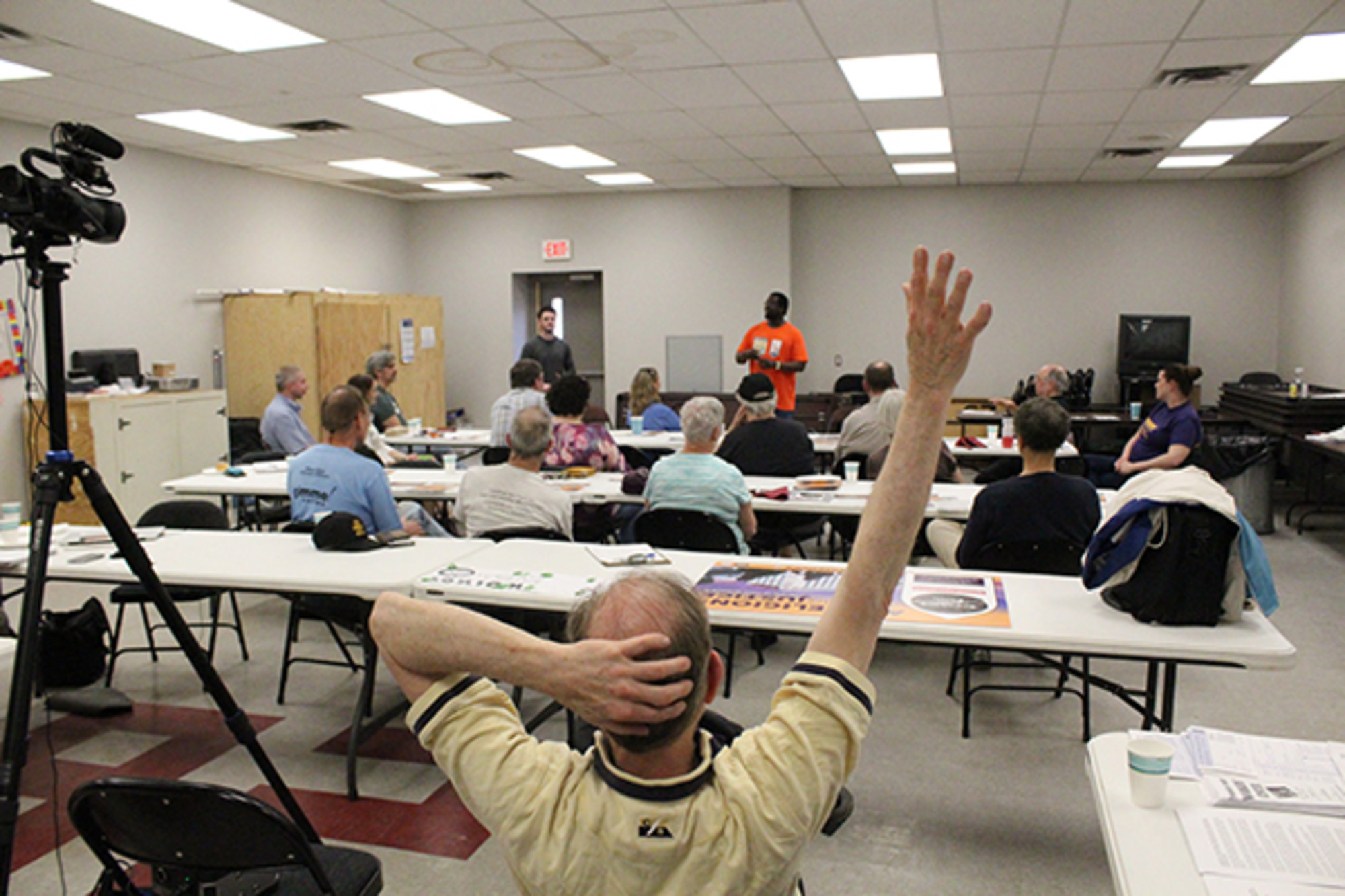
Wednesday, May 2, at the local Plumbers Union Hall on West State Street, the public was invited to hear from Anthony Jackson, one of the Chicago bakery union workers, talk about the efforts being put on Nabisco to bring jobs back to the Windy City. Locally, Catholic Charities, the organization that sponsored the event, has been very involved with labor issues. Laurie Konwinski, chair of the Labor-Religion Coalition of the Finger Lakes and a member of Catholic Charities, said that this specific issue was brought up locally at a breakfast between religious and community leaders a few years ago.
“We focused on ethical buying,” Konwinski said. “We always choose a timely topic of social concern and that year it was about how we can use our consumer power to do good.”
Among the many instances where consumers could use their buying power to influence change was the Chicago bakery mass layoff. The members of the Labor-Religion coalition got involved and wanted to learn more, so they reached out to the local baker’s union in Auburn.
“It speaks to a real moral issue about how corporations do business,” Konwinski said. “That’s it’s really about the bottom-line and profits – profits for shareholders – that human dignity, the common good, gets tossed aside. That’s why Catholic Charities is involved. It’s about human dignity for us.”
One of the actions that the Chicago group is urging people to do, and Catholic Charities has been educating people locally on, is to check the label of their favorite Nabisco products. If it’s made in Mexico the grassroots campaign wants people not to buy them.
While the specific labor issue at the heart of this movement happened in Chicago, what labor leaders locally say is that the problem could still end up being a local one. Undermining local labor could happen anywhere. Dave Marsh is the President of the Trades Union Council here in Tompkins County.
“When employers can find ways to outsource work, and in this case, a pretty extreme example of taking work from workers in a factory in Chicago all the way to Mexico, when it does happen that is obviously impactful to many people in the community,” Marsh said. “Obviously what all of this is about is finding cheaper labor.”
For Marsh, this issue of outsourced labor has already hit locally as large construction projects in the area choose not to use local construction workers. When local people aren’t getting local jobs, it’s the local economy that suffers, Marsh said because money is leaving the area instead of circulating within. While the two situations may not be exactly the same, they have similar outcomes.
Anthony Jackson, one of the hundreds of workers laid off when the Chicago bakery was moved to Mexico, has traveled to around 30 states so far spreading this message. At the Wednesday meeting, he said the intent was not to start a fire and burn it all down, but to create heat that will last for years, keeping pressure on companies like Nabisco who might consider moving jobs out of the United States in the future, to “kill the corporate run to the bottom.”
But for Jackson, this message is not just for the workers of Chicago who lost their jobs. It is also for the workers in Mexico who are working for much lower wages and benefits if any.
“They are making less than $1.50 an hour,” Jackson told the crowd. “Now I ask you, who here would work for anywhere from $0.80 to $1.36? Who here would work for no benefits? The only benefit that they have in Mexico, that we know of right now, is that they get bussed to work.”
This movement, Jackson said, was about moral responsibility as much as it is about bringing back the bakery jobs.
“That means us as a labor group, us as Americans, are picking everybody up where globalization didn’t,” Jackson said.
Part of that is about using the power of where you spend your money, Jackson argued. Not eating Oreos doesn’t hurt the consumer, just the company that owns Oreos, a company named Mondalese.
Right now, Jackson said Mondalese is talking about bringing back jobs to the Chicago bakery, but haven’t given the union what they need to sign a contract. One of the main issues on the table for the Chicago workers that still needs to be finalized is job security. For Jackson, the fight won’t be over until the workers in Mexico are also given better pay and benefits, and companies stop shipping production to other countries for cheaper labor.
“This model has to be destroyed,” Jackson said of the corporate race to the bottom for American companies. “Today it’s Mexico. Tomorrow it’s Vietnam.”
Related Articles

5 things to do in Tompkins County this weekend
Plan your visit and discover what’s happening this weekend.

Tompkins Chamber announces Rob Montana as new vice president
Rob Montana, community leader and communications professional, has been appointed vice president of the Tompkins Chamber, where he will help drive economic growth, workforce development, and community engagement.