
Child care leaders hopeful for recovery with state aid

Earlier this month, Gov. Andrew Cuomo’s office released highlights of the governor’s 2022 state budget (release at https://t.ly/rIWB), which includes $2.3 billion to be invested in expanding child care availability and affordability across the state. Though the specific allocation to Tompkins County is still unknown, county leaders view the long-awaited state aid as crucial to helping struggling local providers and families over the next year.
County’s child care situation
Tompkins Weekly covered some of the challenges families and child care providers were facing back at the start of 2021 (article at https://t.ly/WlfA), and as sources for this story described, the sector has seen improvement since then but continues to face a variety of challenges both due to the pandemic as well as pre-pandemic factors.
Sue Dale-Hall, director of the Child Development Council (CDC), said that thanks to financial aid and local efforts, many of the child care providers that had to halt services last year have been able to open their doors again. However, they’re still not operating at full capacity because of the continuing health restrictions.
One child care center hit particularly hard by the pandemic is Cayuga Heights School Age Program (CHSAP), which had been closed for over a year before finally reopening last week. Leah O’Connor, CHSAP’s program director, described how the pandemic affected her center.
“When it first started, everybody thought in three weeks, we’d be back. So, we paid staff through April, and then, it became clear that we probably weren’t opening for the rest of the school year,” she said. “So, I laid off all of the staff to save the program money. And then, myself and my assistant director were still on payroll, and then, as things kind of moved on, it became clear that probably we weren’t going to be able to open in the fall. And so, myself and my assistant director were also laid off from the program in order to keep our funds for when we eventually could reopen.”
O’Connor also had to cancel health insurance and liability insurance and turn off the office phones to save as much money as possible until it was safe to reopen. About two months ago, encouraged by loosening restrictions, CHSAP’s Board of Directors reconvened to discuss reopening. Eventually, the Board decided to reopen in April, O’Connor explained, with the current plan being to be outside most of the time so there’s more space to spread kids out.
Sherri Koski, executive director of the Ithaca Community Childcare Center (IC3), said the restrictions on group size have also greatly affected her center.
“They are saying you can’t have any more than 15 children per group,” Koski said. “In the older ages, in pre-K and school-age, that’s proving to be a bit challenging financially because you have to still maintain your child-to-adult ratios, but they’re not in alignment with the maximum group size. So, we’re actually turning people away who need care because we can’t have more children than we normally would under regular operating conditions.”
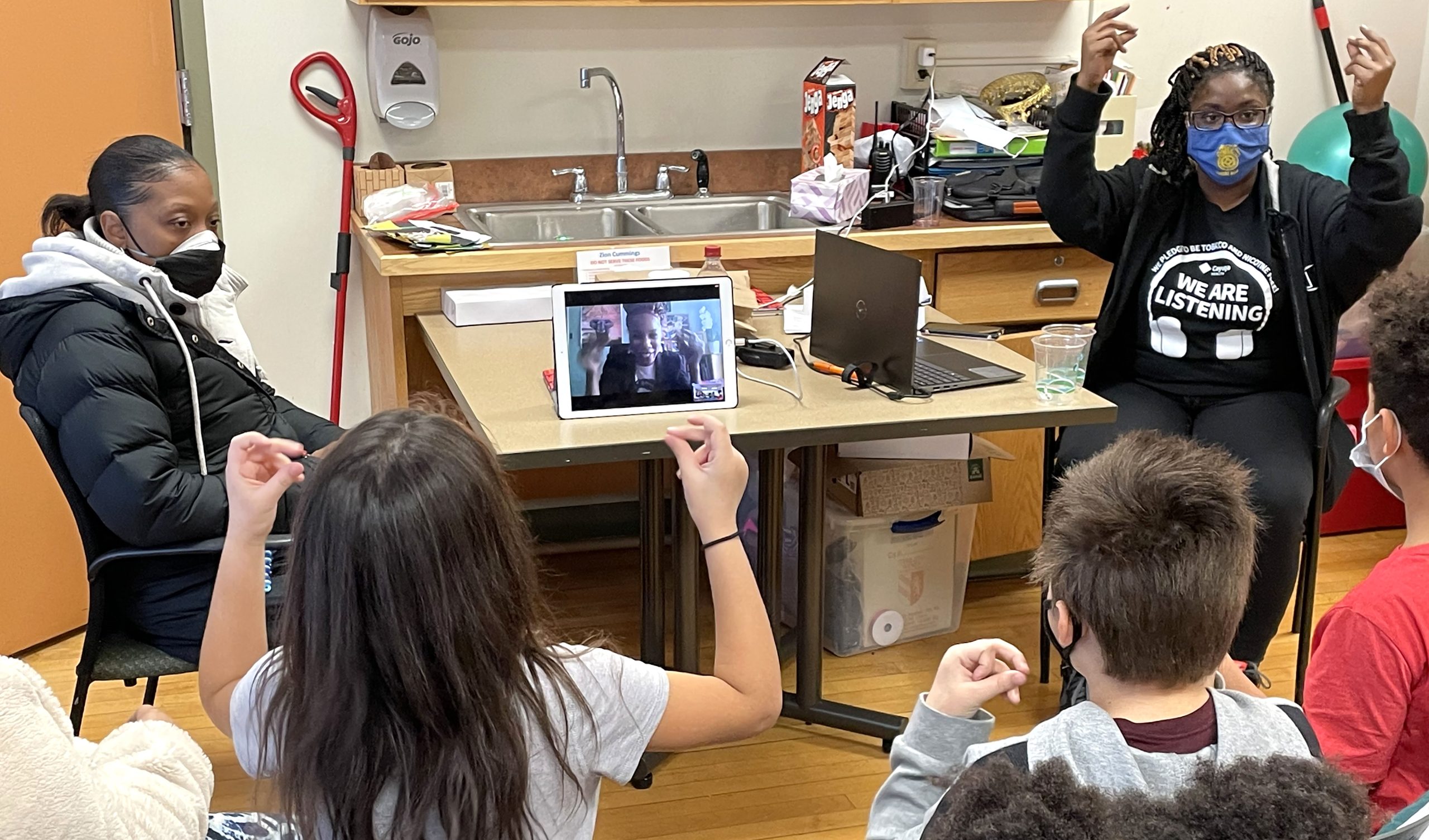
Leslyn McBean-Clairborne, director of the Greater Ithaca Activities Center (GIAC), described another challenge — the financial hardships many families continue to face, which affects GIAC’s finances. Still, staff remains dedicated to providing what it can.
“Where the difficulty lies for us is caregivers are recovering as well, many of them financially, and so, we really can’t lean on them hard for paying fees,” she said. “And that makes it difficult for us to pay for the things we have to pay for. But we’re doing OK.”
Cris Donovan, associate executive director at Racker in Ithaca, said one of Racker’s biggest hurdles right now is a mental one.
“We’re feeling more hopeful with the vaccines, and at the same time, we know we’re not done,” she said. “That emotional toll is really having an impact on us and how we’re working through that with staff and how we’re working through that with families — really thinking about trauma and the yearlong trauma we’ve all gone through, thinking about how we can continue to have the safest possible program when we know that children and families haven’t necessarily been vaccinated.”
Still, like other child care providers, Donovan is celebrating the services Racker has been able to provide.
“We’ve been able to maintain the special education end of things, which has been a bright spot, and we started the year with a big chunk of those children remote, where parents were not comfortable having their children come in,” she said. “And at this point, we’re down to one child who is still remote — everybody else in our program is in person. They’re coming in and getting the supports and services that they need. So, I do think that that’s an incredible bright spot.”
Budget and policy
The increased aid is largely thanks to the $1.9 trillion coronavirus relief package President Joe Biden signed last month, bringing much-needed aid to states that can then provide aid to their municipalities.
According to the governor’s website, the aid will be distributed to both families and providers. For families, the budget includes increases in child care subsidies, lowering of copays and child care tuition support. Also included are meaningful incentives to employers to provide child care for their employees as well as efforts to increase capacity in child care “deserts,” where there isn’t enough child care to meet demand.
The budget allocates $1.3 billion to child care providers in stabilization grants to support expenses and additional funds for cleaning and safety measures.
State Assemblyperson Anna Kelles, who previously worked as a Tompkins County legislator, has advocated for child care support since joining the Assembly. She said that the $2.3 billion the governor has allocated is significantly larger than past state aid for this sector.
“The funding for child care in this year’s budget was unparalleled to anything I have seen and took a holistic approach supporting child care providers, workers and families alike,” she said. “This significant investment in child care is a huge and significant step towards enabling parents and primarily women to reenter the workforce as we come out on the other side of this pandemic.”
The New York State Office of Children and Family Services will hold three virtual public hearings on child care aid May 3, 4 and 6 to address state residents’ comments, questions and concerns. To submit a public comment for consideration or to learn more about the public hearings, visit https://ocfs.ny.gov/programs/childcare/stateplan/hearings.php.
Effects on county
Sources interviewed for this story said that all of the investments planned in the state budget for child care could benefit the county’s child care sector. At GIAC, for example, McBean-Clairborne said the aid could go a long way toward addressing GIAC’s financial challenges.
“For many of our families, the subsidies that are included in that from employers or the support that might come to a child care organization like day care and Child Development Council, that helps caregivers to be able to pay their fees,” she said. “So, for a place like GIAC, that will make a huge difference to us in terms of our revenues and being able to then turn those revenues around for programming. So yes, it will help us. It will help us in a major way.”
Providers Matt and Carrie Armstrong at Teachable Moments Daycare in Groton also said they expect to benefit from the state aid. Matt explained that all the aid money they’ve previously received this past year has helped them expand their programming, and they’re hoping for more expansion with this new state aid.
“We’re limited, obviously, because we’re home-based. We can’t take on more children,” Matt said. “But we can certainly make our program better in any way we can, whether it be just more supplies, games, toys, anything like that. And certainly helping with the cost of the cleaning supplies would be huge because, obviously, that was a big undertaking for all the programs when this all happened.”
O’Connor said that she plans to use the state aid to help ensure her center’s longevity and hopefully prevent another shutdown. She said she’s seen the effects reopening has had on families, and she hopes state aid will help her continue providing much-needed services.
“I’ve been home not working for 13 months, so being back at work is amazing,” she said. “And the parents have said they can now get a full day of work done because the kids are going to afterschool after school gets out. … I serve the working parents, so if I’m not working, they’re struggling to work.”
Specifics on the plan like county allocation and how providers and families can go about receiving the aid is still up in the air as of the publication of this story, and sources expressed some concern regarding the eventual details.
Koski, for example, said she wants the qualifications for aid to be loose enough to help as many providers as possible or have the aid catered to local needs.
“We have seen pools of money come through that actually are so specific in the way that they need to be spent that it’s not helpful to some providers,” she said. “So, either get feedback to the state level so that they understand, [for] each region, what the needs are and how they could allocate that money to be sent, or have much looser parameters around them.”
Matt shared Koski’s concern and added that he hopes the aid comes quicker than past forms of aid.
“Qualifications is a big one, and being able to get the money before spending it,” he said. “A lot of the grants and stuff that we’ve had up to this point, we’ve had to front the money and then get reimbursed. So, it would be nice to be able to get some of the money first because not a lot of people have the means to fork out thousands of dollars to get reimbursed.”
Dale-Hall added that she hopes the funds allocated to addressing child care deserts will help fill gaps that have existed in the county for a while.
“We only have enough space for 1 in 3 children in our community,” she said. “And what I would really like to see with this new state budget, particularly that addressing the child care deserts, is, what are we really going to do to shift the needle [and] think about the 2 out of 3 that don’t have access to quality child care?”
Future progress
Beyond this state aid, sources said that more assistance will be needed to address the many gaps within the child care sector, many of which were there long before the pandemic hit.
Dale-Hall explained that while the state aid is undeniably a step in the right direction, she wants to see further aid measures aimed more at “universality” to help address the whole sector rather than just pieces of it.
“We need to look at diversity and equity issues that really are enmeshed in child care, just like they are in most systems in the United States,” she said. “[We] need to have improved business systems, we need to have more child care, and we need to make the whole system work as one as opposed to all these disparate parts, which is basically what is happening now.”
The CDC will continue to address these needs throughout the next year, Dale-Hall explained, like creating an incentive package to help cover startup costs for summer camps. She also encourages residents to reach out to the state using the website provided previously to make their voices heard.
“We really want people to speak up because if we don’t, there’s a lot of different needs that are being shouted at the federal level and at the state level, and we want our needs to be heard,” she said. “So, we’re really encouraging people to take action and just provide that public comment. In the end, it really will make a difference if we get enough people out to do it.”
Dale-Hall said that the pandemic has shined a light on challenges that have existed for many years, and she’s hopeful that focus won’t wane when the pandemic’s over, a perspective also shared by Kelles.
“The field of child care must be seen as part of a robust economic development strategy and not just a bonus service available for those who can afford it,” Kelles said. “We need to continue to fight for fair pay and benefits for child care workers and a robust financial support system so that child care facilities can thrive rather than continuously running at a deficit to provide care for all of our children.”
Related Articles

Scottland Lights: 15 years bringing Christmas in lights and music to Groton
Scottland Lights Groton offers 15 years of synchronized Christmas lights and music, a beloved holiday tradition in the Groton community.
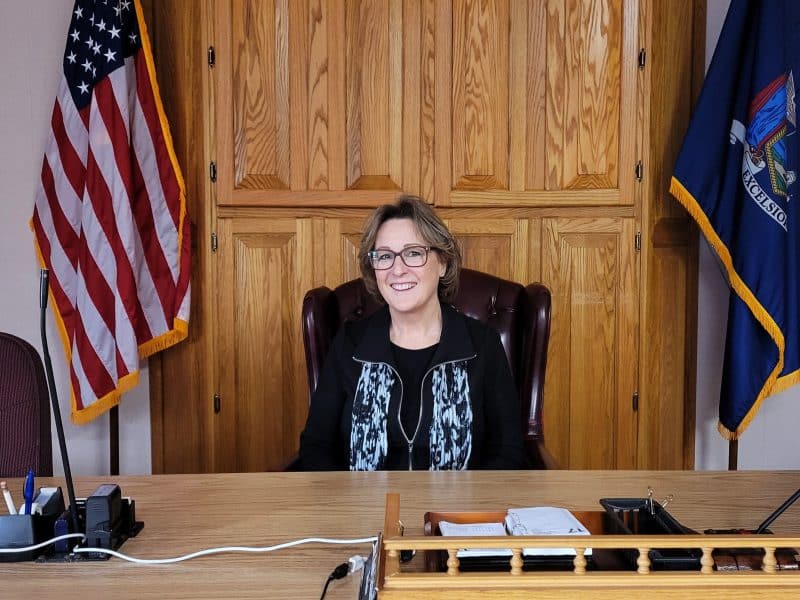
Crystal Young prepares to become Groton’s new town supervisor
Groton town supervisor Crystal Young shares her plans to continue community service, green energy initiatives, and local improvements starting January.

Groton’s Jeremiah Timmins of Old Chatham Creamery garners international award
Old Chatham Creamery’s cheddar ranks in the top 14 at the 2025 World Cheese Awards, a major honor for the Groton creamery.