
Citizens are enlisted to help protect the lake
By Pete Angie
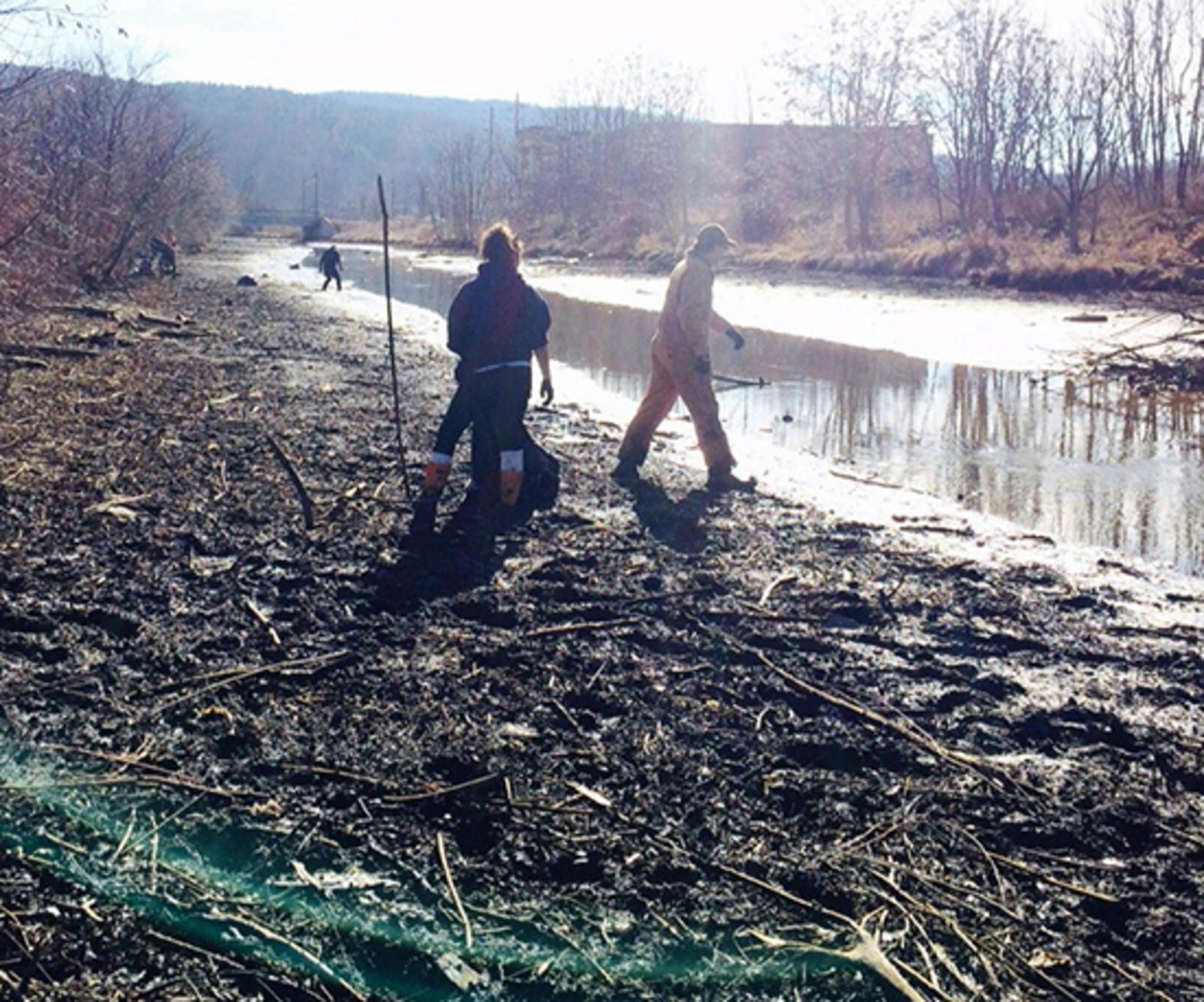
On a cold February day this winter, local paddle sports enthusiasts wearing rubber gloves picked their way along the narrow watercourse between Tops and Walmart in Ithaca, collecting discarded plastic bags, soda bottles, lighters, beer cans and other trash. Though the Inlet channel looks like little more than a footnote to the web of parking lots and big-box stores, it is home to ducks, herons, turtles and fish.
The cleanup effort, and others like it, are supported by the Cayuga Lake Watershed Network’s Embrace the Lake effort. The organization provides gloves, promotion, posters, and hauls away the collected refuse at the end.
“There seems to always be trash there, no matter how many times we hit it,” says Paul Closs of Ithaca, who has been organizing Inlet cleanups with the help of the Cayuga Lake Watershed Network for six years. The paddlers that join him are from the Cayuga Outrigger Canoe Club, the Ithaca Dragon Boat Club and SUP Cayuga, a stand-up paddle boarding club.
They have done five cleanups this year alone along the length of the inlet, including by the old Jungle, and behind Pete’s laundromat. Embrace the Lake seeks to enable anyone who cares for the lake to help clean it up, including Scouts, college students, churches, or other community groups. Cleanups do not only occur on the lake, but also in the streams that feed it.
There are 34 major creeks and hundreds of small streams that feed Cayuga Lake; the watershed is over 750 square miles, spanning parts of six counties, and encompassing 43 municipalities. The Network was founded in 1999 with the purpose of getting citizens throughout the watershed directly involved in protecting the lake, and providing a locus for study and research about the lake.
According to executive director Hilary Lambert, the Network has about 500 members, a board of directors and a number of committees. They work with municipal governments, local and state agencies, and citizens’ groups on a number of water quality related issues. During the fight to prevent fracking in New York State, members submitted comments, attended hearings and organized with other watershed protection groups. Currently they actively support We Are Seneca Lake’s efforts to stop gas storage from expanding in salt caverns beside Seneca Lake.
The Network is working closely with the Town of Ithaca and the Intermunicipal Organization—a group of representatives from across the watershed—to update the area watershed plan. The plan, first developed in 2001, is a guide to help the many governing bodies and stakeholders in the watershed work together to maintain the health and integrity of the waters.
“The challenges facing our watershed today were not even on the radar when the plan was written in 2001,” says Lambert, citing invasive species such as the emerald ash borer and woody adelgid, and extreme weather associated with climate change. Public input into the plan is being sought through a survey, available on the Network’s website, which includes several questions specifically for youth.
To monitor the health of the lake and what pollutants may be entering it, the Network, along with the Community Science Institute, recently helped train a group of volunteers called the Canoga Shoreliners to monitor five streams on Cayuga Lake’s northwest shore. Samples will be collected in each of the creeks four times a year and tested at the Institute. The Shoreliners are the first such group to sample streams in that section of the watershed. Fall Creek, Six Mile Creek and others near Ithaca are already tested regularly.
The Network is working to establish a group to sample the waters of Milliken Creek in Lansing as well, which flows past the landfill that contains waste from the coal-fired power plant formerly known as Milliken Station. “We want to find out if the creek has become contaminated by wastes from the landfill,” says Lambert, adding that they are looking for volunteers.
They are also seeking people who are interested in learning how to identify and report the presence of hydrilla, especially in the lake’s northern portion. The invasive species, first found in the Cayuga Inlet in 2011, could potentially turn the shallows of the lake into a green mat of vegetation, making swimming, paddling and power boating impossible. Spotting it early is essential to stopping its spread.
To raise funds and awareness of the challenges facing the lake, as well as what opportunities exist to help, the Network will host the fifth annual Can You Canoe Cayuga challenge on Sept. 11. This year, instead of paddling the length of the lake from north to south, participants will start and finish at Stewart Park, in Ithaca, executing a long loop that stretches to Taughannock Park and back. There will also be shorter paddling events for children and beginners, and a picnic.
The event provides an opportunity for those who love the lake to meet one another and network, which in essence is one of the most important functions of the Network. “We’re trying to get people to work across municipal boundaries, and get people to understand that what you do in Newfield or Dryden affects the water quality in Cayuga Lake,” says Lambert.
To register for Can You Canoe Cayuga, to participate in the Watershed Plan questionnaire, to plan your own Embrace the Lake cleanup, or to learn more about the Cayuga Lake Watershed Network, go to www.cayugalake.org.
Related Articles

5 things to do in Tompkins County this weekend
Plan your visit and discover what’s happening this weekend.


Tompkins Chamber announces Rob Montana as new vice president
Rob Montana, community leader and communications professional, has been appointed vice president of the Tompkins Chamber, where he will help drive economic growth, workforce development, and community engagement.