
City and railroad tasked with homeless encampment cleanup and solution
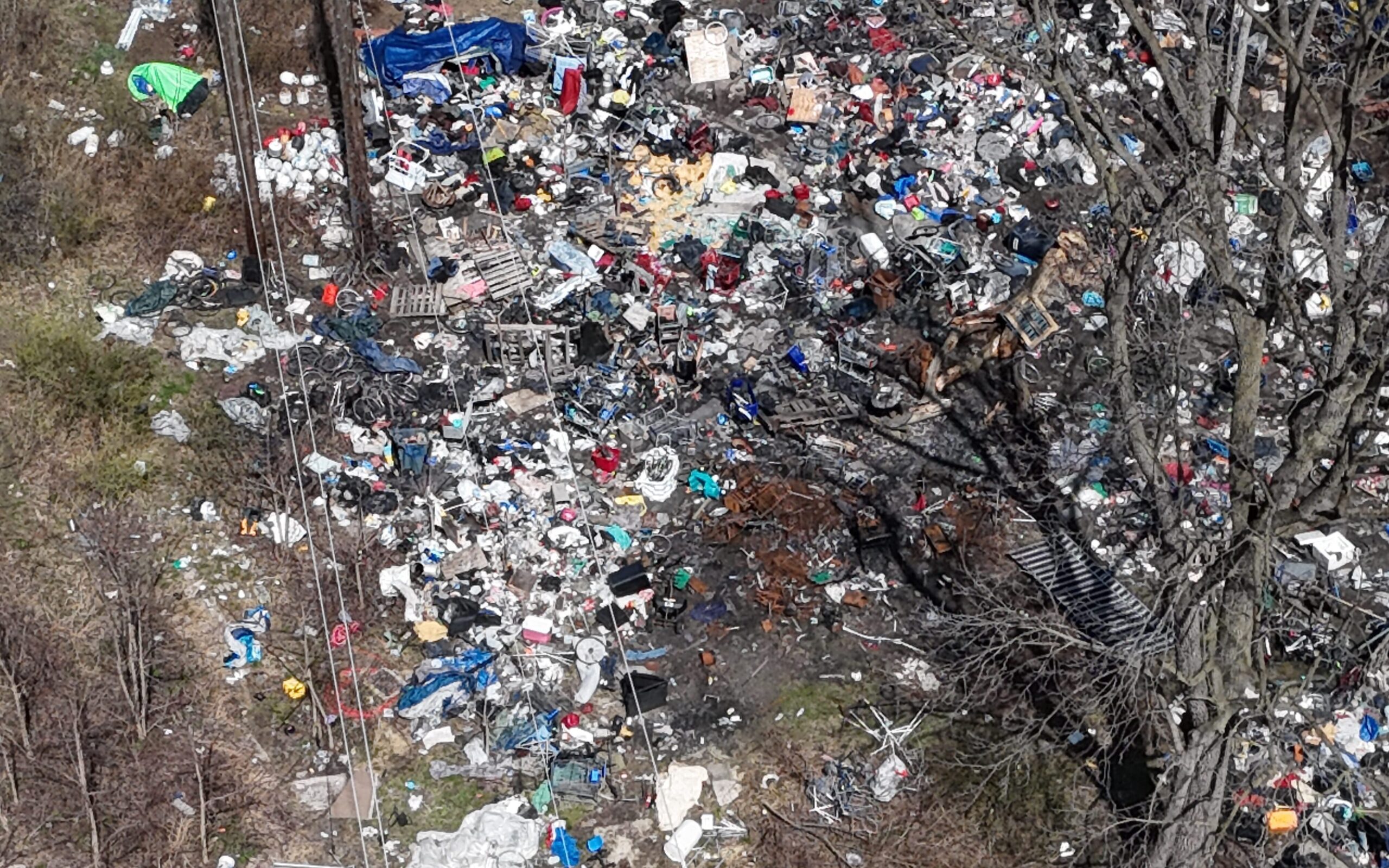
“It’s an environmental nightmare,” Andrew Boerman, owner of Ithaca Agway on South Fulton Street, said Thursday. “There’s carts, and hypodermic needles in the water.”
Boerman is referring to the homeless encampment adjacent to his property, next to Six Mile Creek by the railroad tracks and Cecil Malone Drive. He estimates there are about 10 to 15 people currently living at the site. It is not located close enough to the store to affect customer experience, he said, but a building he uses for storage is very close to the area where unhoused people have been living.

“In the 23 years I’ve been here, it’s gotten progressively worse in the last five,” Boerman said. “They’ve been here since I’ve been here, and I’ve been here 23 years.”
Tompkins County took action on the matter recently, issuing a letter from Elizabeth Cameron, Tompkins County director of environmental health, to Deb Mohlenhoff, Ithaca city manager. The letter does not mention imposing a fine but asks the city to submit by May 10, for review and approval by Tompkins County Environmental Health, a plan and a timeline for cleaning up the property. The county issued a similar letter to Watco, the company that manages a portion of the property owned by Ithaca Central Railroad.
“It’s the worst I’ve ever seen it,” Boerman said of the situation at the encampment. “Years ago, they were locals that would live there and not cause trouble and would even kind of keep an eye on things, but now there’s vandalism, trash and, you know, just a huge mess. That’s gotten a lot worse in the last five years.”
The county’s letter states, “Tompkins County Environmental Health (TCEH) has received multiple complaints and has witnessed conditions on property you own in the area bounded by Six Mile Creek, the railroad tracks, the Cayuga Lake flood control channel and Cecil Malone Drive. The refuse cited in complaints and observed by TCEH in this general area includes trash; garbage; shopping carts, discarded bicycles, and other metal objects; sharps (hypodermic needles); propane canisters; and the remains of various fires. This refuse is a public health nuisance and/or hazard and is a violation of Article IV of the Tompkins County Sanitary Code (TCSC).”
The purpose of TCSC Article IV — refuse disposal — is to “protect public health and the environment by avoiding public health nuisances and public health hazards caused by refuse accumulation, collection, and disposal,” the letter to the city states.
Boerman said that people who care about the waterfront should be concerned about the environmental impact the refuse is having on the waterways.
“Literally, at the launch ramp down the road you will find hypodermic needles in the water,” Boerman said. “It’s a huge environmental hazard. And a safety hazard.”
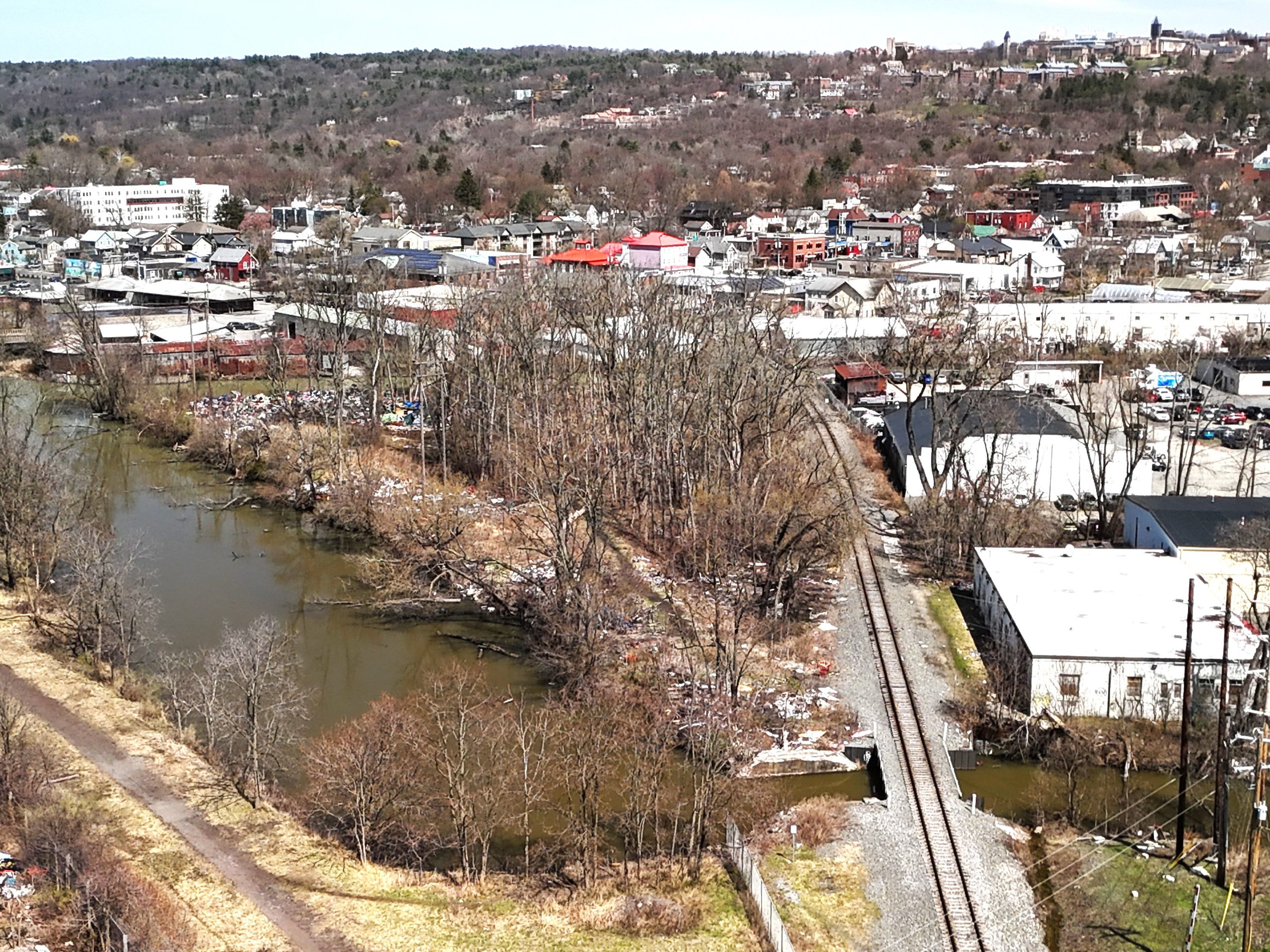
Cameron said the area detailed in her letter is the land that the county thinks currently presents the most concern from an environmental and public health perspective.
“Tompkins County Whole Health appreciates the efforts the city has put into addressing the complex issues connected to the encampment area,” Cameron said. “It is the role of TC Environmental Health to protect public health by addressing environmental hazards. EH has received multiple complaints about the encampment and investigated this complex situation.”
“Environmental Health will continue to work with the city of Ithaca, Watco, and others involved to address this issue,” she added.
The issue could potentially be further complicated by Code Blue ending on April 15 until it resumes again next October. The statewide policy requires counties to provide shelter to anyone who needs it when the temperature or wind-chill dips below 32 degrees Fahrenheit between October and April.
“I’ve been going to the encampments since 2020, and they are an incredibly dangerous place to be, both for the people who go in there to provide emergency responses but also for the people who are living there,” said city of Ithaca Alderperson Patrick Kuehl at the April 10 meeting of the Ithaca Common Council.
“I am dismayed, though, that we’ve been having this conversation about encampments for this long and we haven’t been … actually making moves towards infrastructure to support the people who are living there. We haven’t, as far as I know, had any moves towards emergency housing provided by the city or an increase in emergency housing stock, and the question still lingers in my mind that we will be removing these people from the place where they are residing, and I’m still unsure of where they’re going to go.”
The letter to the city makes no mention of the unhoused population living on the site, focusing on the actual condition of the land itself.
“As you are aware, [the encampment] is one location in a larger area that may present a public health nuisance or public health hazards,” states the letter to the city. “Considering the complexity of the problem, we are currently limiting the scope of this Notice of Violation and focusing on the location noted above where some of the most significant violations have been observed.”
City officials are considering first steps to address the issue.
“One of the first things that we want to do is put up a fence parallel to the railroad tracks,” said Michael Thorne, city of Ithaca superintendent of public works, at the April 10 meeting. “We were looking at where that might go. We may have to take a few trees down in order to do so; the logistics of getting a fencing company out there are a little bit tricky. There’s not a road that really lends itself to that.”
In addition to garbage on the land, the county said the city’s plan should address materials entering the waterways adjacent to the property and should also include measures to prevent or minimize the recurrence of refuse accumulation at this location and potential obstacles to implementation, adding, “Because of the multiple property owners and the multiple involved agencies and organizations, we encourage a coordinated response. The refuse needs to be removed in the time frame denoted in the plan and as approved by TCEH and with initial action no longer than 30 days after TCEH approval.”
“It does make me hopeful,” Boerman said of the official action being taken by the county. “I think if they clean up the environmental hazard and hopefully eliminate the traffic from that group down the tracks, my hope is it will eliminate the theft and all the trash that’s left behind in the area.”
Author

Related Articles

Holiday traditions bring community cheer
Tompkins County holiday traditions light up homes, farms, and schools with festive cheer and community spirit.

The gift of an experience: Local businesses offer hands-on holiday fun
Holiday experience gifts in Tompkins County include candle making, gourd crafts, and pottery workshops for creative seasonal fun.
Code Blue shelter opens amid praise, concerns and ongoing debate
Ithaca’s Code Blue shelter opens with larger space, showers, and case management to help residents during cold weather.