City of Ithaca Common Council enacts Good Cause Eviction law
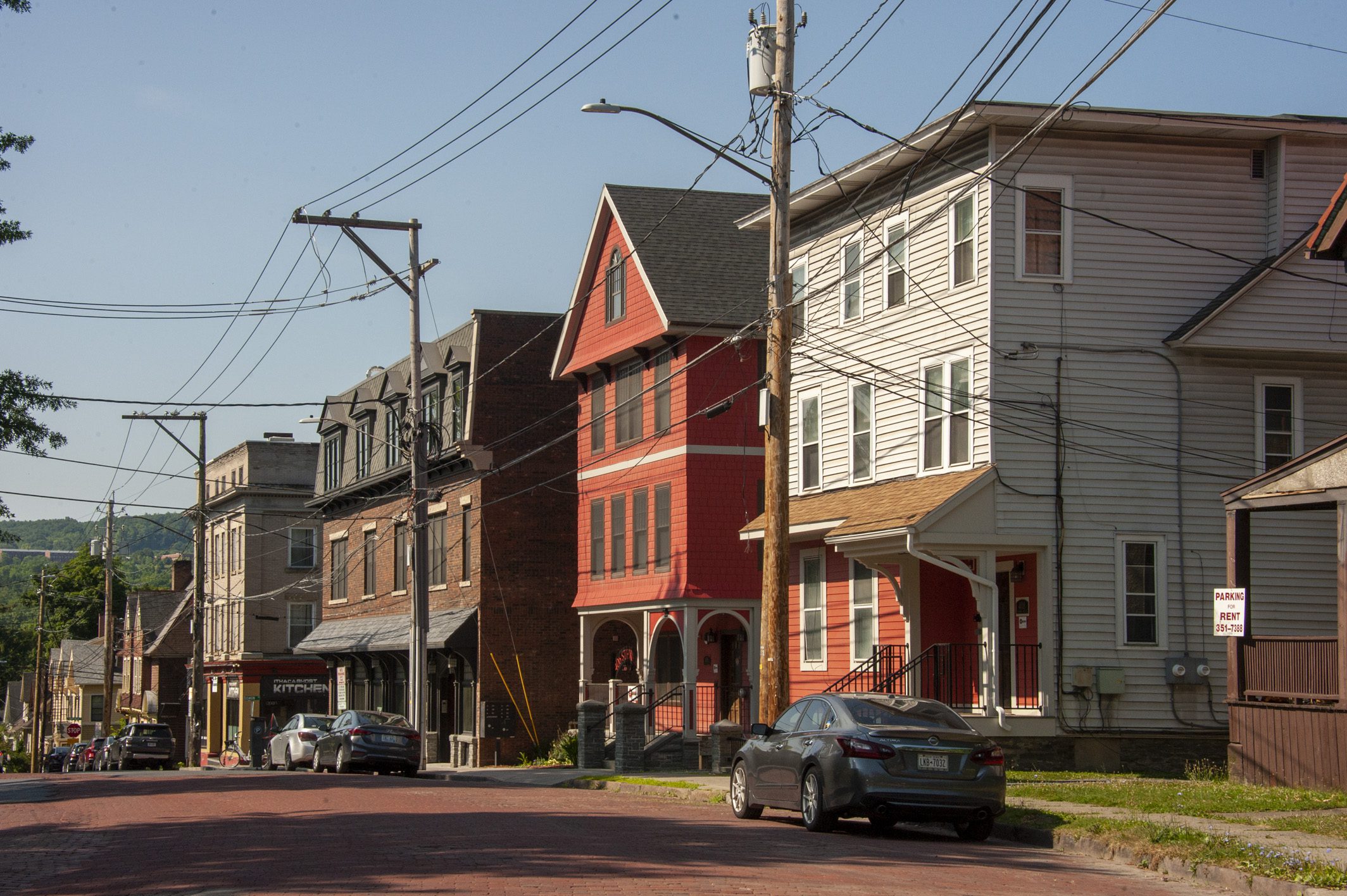
Ithaca City Common Council voted in favor of opting into the recently passed New York State Good Cause Eviction law at a meeting July 10, making the city the fourth municipality in the state to do so.
Under the new law, landlords cannot evict or refuse to renew a lease unless there is “good cause,” as defined by the law. Two “good cause” reasons for eviction are “nuisance” and failure to pay rent.

Managing Editor
The Good Cause Eviction law also establishes a local rent standard, which is the amount of rent increase considered reasonable in a given year based on inflation in the local area. The local rent standard is set every year at the rate of inflation plus 5%, with a maximum of 10% total. A rent increase is considered unreasonable under Good Cause Eviction if the rent increase is higher than the local rent standard.
To use an example on the New York City Housing Preservation & Development website, if the inflation rate was 3%, the local rent standard would be 8% (5% + inflation).
If a covered tenant’s rent were $1,000 in this situation, an increase of more than 8%, or $80, would be above the local rent standard.
Local lawmakers have been careful to point out that this does not mean landlords are now unable to raise rents more than the calculation outlined above, but a tenant could take their landlord to court in the event of a higher rent increase, and the landlord would be required to prove that there were improvements made to the property that justify the higher rent.
Ithaca’s Good Cause Eviction law applies to all landlords with two or more rental units. The state law allows municipalities to set the number of units a landlord must own in order to fall under the Good Cause Eviction law at any number between two and 10, and local lawmakers chose to set that number as low as possible, thereby applying Ithaca’s law to all landlords with multiple rental units in New York State.
The law also exempts all rental properties that were built in 2009 or later for 30 years from the time they get their certificate of occupancy. This was built into the state law, and though Ducson Nguyen, 2nd Ward Alderperson for the City of Ithaca Common Council, has been a vocal proponent of the law and voted for it at last week’s meeting, he said he is opposed to this exemption.
“I think the logic was that newer buildings are expensive to construct and still have mortgages on them, so they are exempt for the duration that the landlord is paying off the building,” Nguyen said. “But the exemption is 30 years, which seems ridiculous.” He said that perhaps 15 or 20 years would be a reasonable amount of time, but he does not believe that most mortgages for new apartment buildings are 30 years long.
“There’s been accusations that New York state legislators, many of whom are landlords themselves, made the carve outs themselves,” Nguyen said. “That’s one thing that’s come up quite a bit.”
The law also does not apply to properties at or above 345% fair market rent as calculated by the U.S. Department of Housing and Urban Development. Affordable housing is also excluded.
David Shapiro, 3rd Ward Alderperson for the City of Ithaca Common Council, stood with Councilmember Margaret Fabrizio as one of two council members who did not vote in favor of opting into the law. “One of my first objections was that this was a corrupt process [on the part of the state],” he said.“ New York State is one of the largest housing providers that entertains the largest amount of evictions and the largest amount of rent increases, and those properties are all exempt.”
Before the law was passed, a landlord could notify their tenant that they have decided not to renew the lease without needing to provide a reason. A tenant may have then moved out voluntarily, but if they did not, the landlord was required to go to eviction proceedings, explained Keith McCafferty, managing attorney of LawNY, Inc., a local nonprofit civil legal aid office.
In the case described above, the tenant would have been given an opportunity to raise any defense that they might have in court, McCafferty said. Under good cause eviction, a landlord can still notify their tenant that they have decided not to renew the lease.
“The only difference is that the landlord has to provide a good cause reason,” McCafferty said. The process will be the same, he reiterated; the difference is that the landlord will have to prove they have good cause, and the tenant will be given an opportunity in court to raise any defenses they might have.
The proposed grounds for eviction are as follows:
• The tenant has failed to pay rent due, which did not constitute an unreasonable increase
• Violation of a substantial obligation of one’s tenancy
• Nuisance
• Occupancy of the housing accommodation is in violation of or causes a violation of the law
• Tenant is using or permitting housing accommodation for illegal purposes
• Tenant has unreasonably refused access to the landlord for making necessary repairs or improvements as required by law or for the purpose of showing the housing accommodation to a prospective purchaser
• Good faith efforts at demolition
• Landlord seeks in good faith to recover possession of a housing accommodation for the landlord’s own personal use and occupancy as the landlord’s principal residence, or the personal use and occupancy as principal residence of the landlord’s immediate family
• Good faith effort to withdraw the residence from the housing market
• Tenant fails to agree to reasonable changes to a lease at renewal
Before and after the Good Cause Eviction law, a tenant can only be evicted through an eviction proceeding.
“When a lease ends, the landlord can’t just change the locks and force the tenant out,” McCafferty said. “Unless the tenant leaves voluntarily, the landlord has to go through the eviction process.”
Anita Graf, an Ithaca landlord since 2000 who owns three rental properties, said that she has always been very careful when it comes to choosing her tenants, and in the future she will be even more cautious. In all her years as a landlord, Graf said she never needed to evict anyone. Still, she said, the new law makes her uneasy.
“The level of challenge dealing with the very population they want to have security for is already so high that honestly there’s very little incentive in my opinion in the first place,” Graf said. “The more restrictions, the less incentive you give for people to rent to those demographics in the first place, and no one will take risk on anyone even remotely marginal.”
Graf’s specialty is renovating and maintaining 19th-century multi-unit apartment buildings. Her houses create living situations whereby a problem tenant could cause great distress to other residents in the building, she explained, adding that in one instance there were frequent, ongoing shouting matches between a couple in one of her apartments. The situation was reported by a neighbor, who was very upset by the disruption, and was corroborated by others in the building, according to Graf.
She said that had the couple not chosen to move out on their own at the end of their lease, she can only imagine the headache it could have caused her if the other tenants moved out because of the disturbances and/or the couple took her to court because she tried to end her lease with them.
Graf said her business could be bankrupted by one case due to legal fees, while a tenant could likely find representation for free.
“In the case that the property owner prevails at the end of the court case, he now has to recoup the property, which might include added time and money for a sheriff escort and likely also means getting back a very dirty, if not very damaged, unit, and he has had to pay the lawyer $300 to $700 per hour plus court costs, lost rents, and now repair and renovation costs, along with the regular marketing time and cost to secure a new tenant,” Graf said.
Local landlord David Filiberto echoed Graf’s concerns.
“When facing eviction, it is often a good idea to consult an attorney,” recommends the Residential Tenants’ Rights Guide issued by New York state, adding, “There are many free legal service providers across New York State that can represent tenants who qualify for their services.”
“If [a lease nonrenewal] winds up as a dispute of some sort, and the tenants stay in the property indefinitely and decide to stop paying rent, that could bankrupt someone pretty quickly,” Filiberto said. “It’s going to have a chilling effect on people who want to provide housing.”
3rd Ward Alderson Pierre Saint-Perez sees it differently. “It just helps with the conversation, where it changes the power balance a little bit,” he said of the law, adding that he does not believe it will greatly impact legal situations for most landlords. “Litigation is a last resort, but it’s not that different, and the vast majority of cases are not going to end in litigation,” he said.
According to the NYS Unified Court System, which maintains a website with information about eviction filings in every jurisdiction from January 2019 to the present, updated weekly at https://ww2.nycourts.gov/lt-evictions-33576, the majority of evictions that go to court in the city of Ithaca are nonpayment cases.
McCafferty pointed to the following data from the court system website, which he said he also shared on a Belle Sherman-Bryant Park listserv in an effort to disseminate information about the proposed Good Cause Eviction law prior to its passing. A holdover case is any case that is brought before the court for a reason other than nonpayment.
2019: 178 total evictions (167 nonpayment cases, 11 holdover cases)
2022: 152 total evictions (104 nonpayment cases, 48 holdover cases)
2023: 131 total evictions (116 nonpayment cases, 15 holdover cases)
2024 (so far): 110 total evictions (89 nonpayment cases, 21 holdover cases)
“I left out 2020 and 2021 because the numbers were skewed due to the pandemic and the eviction moratorium,” McCafferty explained.
He pointed out that in 2024 the city of Ithaca is on pace to far exceed the eviction numbers for 2022 and 2023.
McCafferty said he believes there are two main reasons for this.
First, coming out of the pandemic, there was an emergency rental assistance program funded by New York state and the federal government that paid nearly $5 million in back rent to Tompkins County landlords.
“Second, for people at the lower end of the income spectrum [the people LawNY serves], rents in Ithaca have risen much, much faster than income,” McCafferty said. “As a result, more people are falling behind this year, and there is a scarcity of financial resources available to help them catch up.”
Nguyen said that despite his opposition to some aspects of the state law, he believes it will benefit the Ithaca community overall.
He pointed out that his home state of New Jersey has had its own version of Good Cause Eviction in effect for 50 years.
“I would say New Jersey’s law goes even further than New York’s,” Nguyen said. “It has less carve-outs. It does not have the 30-year clock on when buildings become eligible, does not exclude affordable housing, and the thresholds for owner-occupied exemption is higher. So when I say that New Jersey’s law is more permissive than New York’s, I think people aren’t aware of that, and that might alleviate some concern about the New York law.”
Author

Related Articles

FOUND reopens at SouthWorks as Ithaca’s former factory enters next chapter
FOUND SouthWorks Ithaca opens as the first commercial tenant in the former factory, marking a major milestone in the site’s redevelopment.
Cayuga Medical Center nurses’ vote for unionization approaches
The Cayuga Medical Center nurses union vote approaches as nurses cite workplace concerns, leadership changes, and national labor issues.