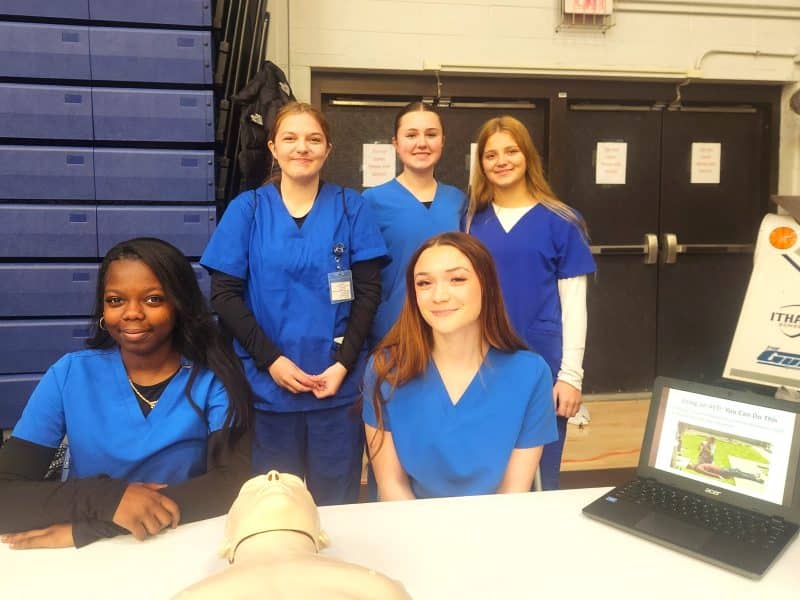
College administrators eager for fall after successful spring
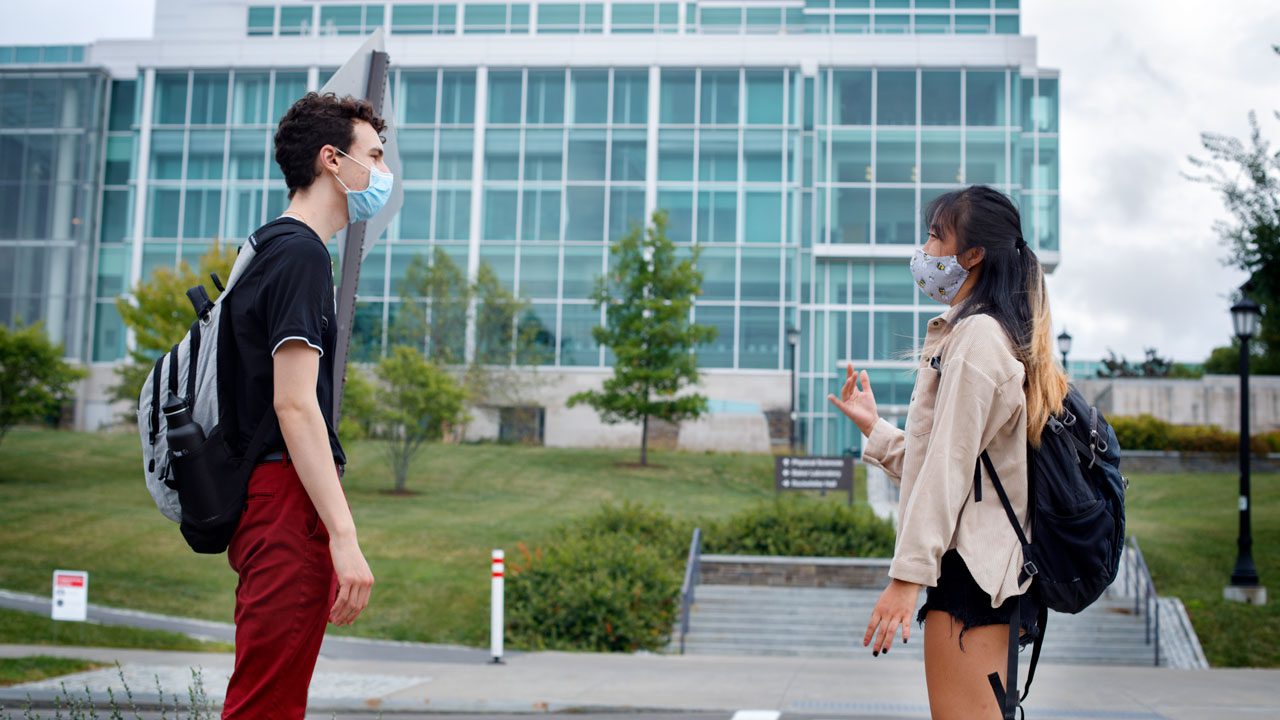
May is just a few days away, which means it’s now only a few short weeks before college students head home for summer vacation. Looking back on the past semester and academic year, area college leaders shared that their campuses have come a long way since last fall and even since the start of 2021. And with the spring semester coming to a close, leaders are hopeful that success will continue when students return in the fall.
Challenges and progress
Many of the challenges facing colleges have remained generally consistent since last semester, as sources interviewed for this story shared. At Tompkins Cortland Community College, for example, Deborah Mohlenhoff, associate vice president of college relations, said many at TC3 are coping with the stress associated with a yearlong pandemic.
“I think COVID fatigue is legitimate, and it is impacting literally everyone in a number of different ways,” she said. “But we’re muddling through and making it work.”
At Ithaca College, Rosanna Ferro, vice president for student affairs and campus life, also spoke to that mental toll, especially with much of students’ time being spent in their dorms.
“We haven’t been able to have the open door to the in-person programming, the social engagement, just the natural, organic things that happen on a college campus where students could just see each other and socialize,” she said. “Most of our students have a mix of hybrid courses and in-person courses, so that helps a little bit so they’re not totally isolated in their room in front of a screen all day. But that’s still not what a college student expects when they go to college.”
Despite the challenges, all sources spoke to the resiliency of staff, administrators and students alike.
“[There’s] this really having to drastically shift what you’re used to thinking of as normal college, or even a normal classroom or normal operations on campus and everybody really being innovative and persistent in figuring out how we continue to give our students the support that they need,” Mohlenhoff said. “In order to succeed, we continue to deliver high-quality academic programs in this literally changing-every-day-all-the-time landscape that is behind us.”
This persistence is especially the case at IC, Ferro said, which had been mostly remote until this semester.
“We obviously took the fall to really prepare and to have the infrastructure in place — a lot of education was put out, a lot of information was communicated — and we’re seeing the fruits of that,” Ferro said. “A lot of that investment around testing is paying off and especially our way of quarantining and isolating students and asking folks, obviously, faculty and staff, to do the same at home.”
Joel Malina, vice president for university relations at Cornell University, said the increase of COVID-19 vaccine eligibility to those 16 and up has had an uplifting effect on students, as many of them were left out of previous eligibility groups. He said the positive response from students shows that they are taking the virus seriously.
“The first thing that we saw was excitement, relief,” Malina said. “Our concern all along was that there wasn’t necessarily adequate supply to meet what was a very restricted eligibility cohort. Certainly, with the eligibility now open to all over 16, that’s one factor that is no longer of concern. Now, it’s a question of continuing to encourage and communicate about the importance of vaccination, to try to ensure that we have opportunities in place to facilitate vaccination.”
Another bright side sources shared was the lessons learned along the way throughout the past semester and academic year. Malina said he and other administrators have seen the value of listening to health experts.
“This is a pandemic that is unpredictable, and our job — which we’ve done a real good job, I think, of — is following the science, leading with science and making public health decisions in partnership with the local health department, with our hospital system partner, really with an eye on protecting the health and safety of our Cornell and greater communities,” Malina said.
The biggest takeaway, Ferro said, is to be ready for anything.
“We’ve just learned to be fluid and flexible,” Ferro said. “I think any time we think we’ve had it sorted out, we have this great plan in place, for the most part, it works, but there are some things where we have to just quickly get together and be flexible, understand that things change in a matter of minutes.”
Commencement, summer and fall
All area colleges plan to have at least some form of in-person commencement for seniors this spring, with Cornell and IC opting to have in-person ceremonies for students without guests in May and TC3 opting to have a series of smaller in-person ceremonies throughout April to allow students to bring up to four guests, with a virtual, full ceremony to be released in May.
For IC and Cornell, both Ferro and Malina said that parents and other family members were saddened by the news that they can’t attend graduation, but students are largely grateful just to be able to walk across the stage.
“There are parents who are hoping we will reconsider the restrictions on their attendance, but … overall, it’s been a very encouraging and not surprising expression of excitement [from students],” Malina said. “As the weather gets nice, as the semester winds the corner towards its completion, looking ahead to something like these celebrations will be really, really nice.”
At TC3, Mohlenhoff said the small groups and multiple sessions throughout April were largely based on student input.
“We have always been really student-focused,” she said. “We always know that there’s a real point of pride for our families and friends and supporters of our graduates. And we did a lot of finding more information or opinion collecting from our students and really trying to get out of them what was the most important piece of graduation for them.”
Looking ahead to summer, only IC plans to hold any kind of in-person summer courses, which Ferro said will be good preparation for IC’s in-person fall semester. As for the fall, much of the planning right now centers around vaccinations.
Cornell and IC both announced earlier this year that all students and staff must be vaccinated before they can return to campus in the fall. TC3 has not issued a similar mandate, as Mohlenhoff and others are waiting on more guidance from SUNY.
As of the time of publication, SUNY has not announced a vaccine mandate. But even though it’s not mandated, Mohlenhoff said TC3 will continue to work with students and staff to get as many people vaccinated as possible between now and the fall.
All sources said that vaccine preparations are centered around access equity, as some students may not be able to get vaccinated once they go home for the summer. Ferro and others said the governor’s announcement earlier this month to provide an “initial allocation of 35,000 vaccine doses to address the college student population at SUNY schools and private colleges” will go a long way to address that discrepancy and reach herd immunity on campus.
“If colleges and universities are requiring this, we needed to make sure that they had access to it,” Ferro said. “So, that was extremely encouraging for us to be able to hear that that was being prioritized. And it was extremely well-received because, again, having access to the vaccine is a major factor in all of this actually happening.”
Final thoughts
Overall, sources expressed hope for the next semester, especially after the success they’ve seen this spring. They also shared what they’re envisioning college life will look like in the fall.
For Mohlenhoff, she and others plan to keep many of the virtual offerings that students have been able to utilize the past year even as restrictions loosen around in-person attendance.
“We have opened up more ways for students to be tutored that sometimes might potentially be more convenient, so I don’t think we’re going to toss all things remote into the trash bin as soon as the pandemic is over,” she said. “I think some of the ways we were forced into this utilization of technology and remote work and remote operations will actually be able to increase flexibility of support for our students.”
For Malina, he and others at Cornell are hoping for a college life more similar to pre-pandemic days.
“Our hope is for it to be as close to a normal pre-pandemic semester as possible,” he said. “A lot depends on what the pandemic looks like at that point of time. And we will be very clear in the specific requirements what will be expected of our community members. But we are hopeful that it will be a return to normal.”
Ferro expressed a similar hope, adding that students and community members will need to pitch in to help make that possible.
“I know the summer is coming and there’s a lot of yearning to be outside and socializing,” she said. “I just hope people continue to practice good judgment so we can actually be in person in the fall and obviously [encourage] folks when possible to please get vaccinated. That’s going to help us get there.”
For more information about spring, summer and fall plans for area colleges, visit IC at ithaca.edu, Cornell at cornell.edu and TC3 at tompkinscortland.edu.
Related Articles
AmeriCU proudly connects students with annual scholarship opportunity
AmeriCU scholarship program awards $1,000 to students pursuing college or vocational education. Applications are open through March 15.
Trumansburg schools consider regionalization as TST BOCES plan advances
Trumansburg school regionalization remains undecided as TST BOCES outlines goals for shared services and student learning.