
Colleges express optimism for fall as students return
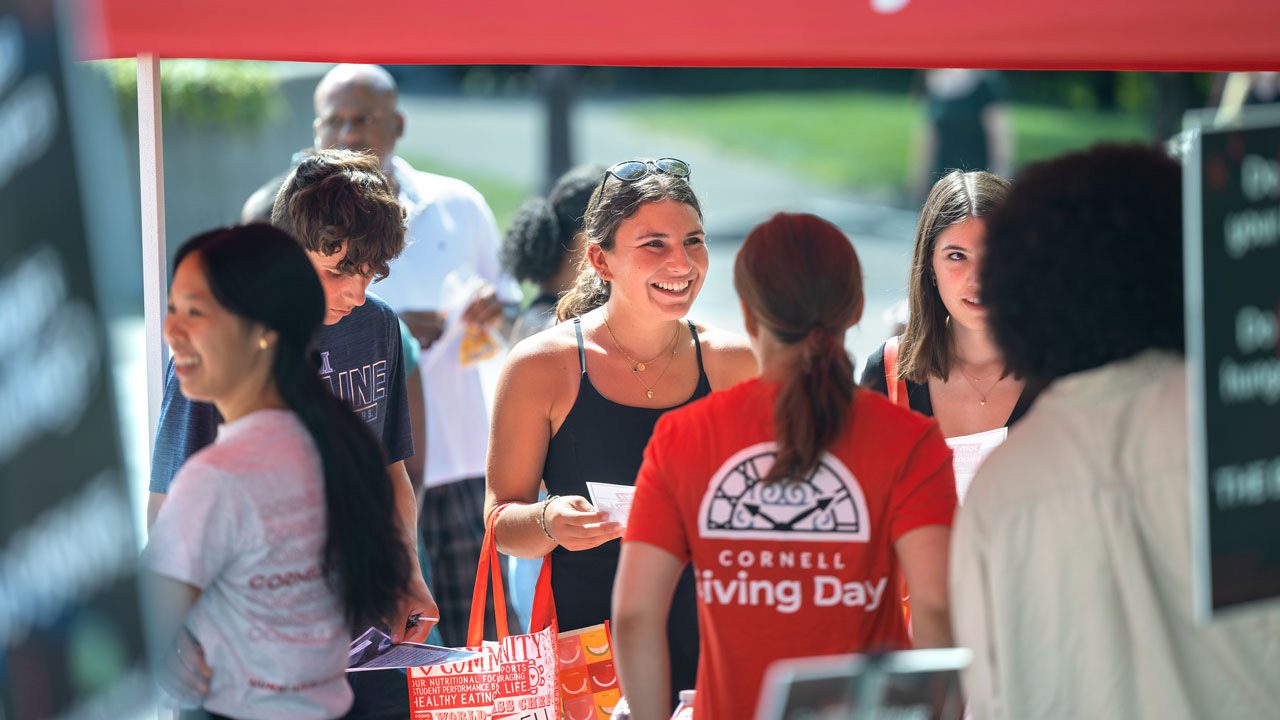
This week and next, classes begin at the county’s three area colleges, bringing thousands of students back into the county. Although Tompkins Cortland Community College, Cornell University and Ithaca College (IC) have all tried to maintain some level of optimism throughout the pandemic (see tinyurl.com/2qbsmdjn), staff, students and families alike are excited for the next academic year, which is expected to be closest to the “normal” they were used to pre-pandemic.
The past several months have seen some significant changes at area campuses that are expected to affect this year’s students. For example, Tompkins Cortland recently added several microcredentials — a response to needs that campus leadership was hearing from employers at that time (tinyurl.com/2loee4je) — and welcomed a new president, Amy Kremenek (tinyurl.com/2k9e64st).
“I just think we have a wonderful opportunity with our new president,” said Deborah Mohlenhoff, associate vice president of college relations. “In addition to being really student focused, she is looking at being very community focused. … So, we’ll be doing what we can in order to get our new president into both the communities in Tompkins and Cortland County and seeing what we can do in order to really meet the needs of local workforce and what our local businesses and families and students need.”
IC also recently welcomed a new president, La Jerne Terry Cornish (tinyurl.com/2nxlml9e), who began her role this past March, as well as three new deans — Anne Hogan as the inaugural dean of the School of Music, Theatre and Dance (tinyurl.com/2nytrqaq), Amy Falkner as the dean of the Roy H. Park School of Communications (tinyurl.com/2gjxry2d) and Michael Johnson-Cramer as the dean of the School of Business (tinyurl.com/2fdujxxy).
“The three new deans [are] very much still in the learning mode of getting to learn their new schools, their students, faculty and staff and our returning deans,” said David Maley, director of public relations at IC. “We’ve got great programming and educational opportunities for our students, and so we’re very happy with what we expect to be a great fall and great start to the new year.”
Other changes at area colleges largely center around COVID-19 precautions, especially in light of the CDC’s new guidance regarding quarantining (tinyurl.com/2ow9yr6b) and an overall lessening of pandemic-related health concerns. Cornell, for example, plans to close its surveillance testing program by the end of August, though antigen testing will still be available throughout the next semester.
“Not to suggest that we’re going to become complacent — we still have our COVID leadership structure in place, and we will continue to regularly meet to make sure that we are still comfortable in our procedures and protocols,” said Joel Malina, vice president for university relations. “But I do think … [the spring semester] was certainly a more normal semester, and this semester is already off to a far more normal feel. … I think people are kind of getting to this stage … where we’re just understanding the impact that COVID will continue to have but also a bit more comfortable with our individual and collective abilities to manage it.”
That sentiment is evident in campus leadership as well as among students, families, faculty and staff, sources said.
“We’re not, frankly, hearing as many concerns or complaints,” Malina said. “We had a good showing of students and parents [at the recent COVID-19 town hall], but it was a far smaller number than had participated in the past. I think that reflects, as I suggested, a lower level of concern and probably confidence having read our plans and our messages, perhaps. We have a good handle on how we will proceed this semester, so I think certainly a notable decrease in concern.”
Other leaders shared a similar enthusiasm from students and their families.
“The general feeling is, ‘I’m so excited to have our campus be full of people,’” Mohlenhoff said. “That’s essentially the number-one thing that we hear from everybody — ‘It’ll be so great to have classrooms full and people walking the hallways.’ And we got a little taste of what that looks like by running a relatively normal commencement ceremony, and being able to bring that back full circle and start a semester with full classrooms and full library and full cafeteria and full residence halls will be exciting for us.”
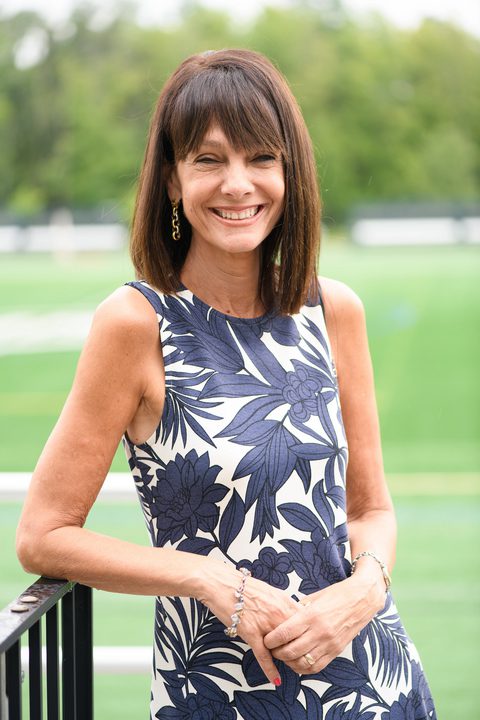
Maley said he heard much of the same sort of feedback during move-in weekend recently.
“From what we’ve heard, they’re eager to get started,” Maley said. “The incoming class, they had their high school years interrupted by COVID, and I think they’re very much looking forward to what they have sort of considered and learned and expected to be a ‘normal’ college life, and we’re going to do our best to provide it to them.”
The lessening of COVID-19 concerns has also affected colleges’ enrollment numbers. Tompkins Cortland and IC, which both saw decreases in enrollment during the pandemic, reported a significant bounceback this year.
“One of the things that we are going to have to deal with over the next several years is the smaller incoming class that did enter last year, the COVID class,” Maley said. “So, as they go through their time here, the total student population, that will affect it, make it lower. But we’re happy that we have about 1,400 new first-year and transfer undergraduates. That’s a good number that we have coming in. So, that’s going to help our overall student population, again, going forward over the next four years.”
Though sources said they aren’t expecting any significant challenges this next semester, all campuses are keeping an eye on the evolving Monkeypox situation, including issuing guidelines to incoming students and their families on ways to prevent transmission. Still, there isn’t the same sort of panic with Monkeypox as there was at the start of COVID-19, sources said.
“The good news is we know how to manage a pandemic, so if something does take a turn to a bad place, we have all of these wonderful mechanisms, and we know how to do isolation, we know how to do quarantine, we know how to do messaging, we know how to do all of this,” Mohlenhoff said. “We have really appreciated that the Health Department has shared some language for us also, some language specifically for the LGBTQIA+ community to just be aware that that might potentially impact that group more than others.”
Overall, area campuses are glad to have put the worst days of the pandemic behind them and are looking forward to what’s expected to be a successful semester and academic year.
“I’m looking forward to the regular rhythm of the academic year,” Malina said. “As lovely as the summer was, I have to say it is far lovelier to see lots of young people, lots of parents all excited. [They’re] a little apprehensive about their transition, especially those for whom they’re new coming to Cornell and experienced in college. But it’s just an exciting time and it should be a terrific, exciting year.”
Learn more about Cornell, IC and Tompkins Cortland at cornell.edu, ithaca.edu and tompkinscortland.edu, respectively.
Jessica Wickham is the managing editor of Tompkins Weekly. Send story ideas to them at editorial@VizellaMedia.com.
Related Articles
Holiday traditions bring community cheer
Tompkins County holiday traditions light up homes, farms, and schools with festive cheer and community spirit.
The gift of an experience: Local businesses offer hands-on holiday fun
Holiday experience gifts in Tompkins County include candle making, gourd crafts, and pottery workshops for creative seasonal fun.
Code Blue shelter opens amid praise, concerns and ongoing debate
Ithaca’s Code Blue shelter opens with larger space, showers, and case management to help residents during cold weather.