
Combating climate change in your own backyard
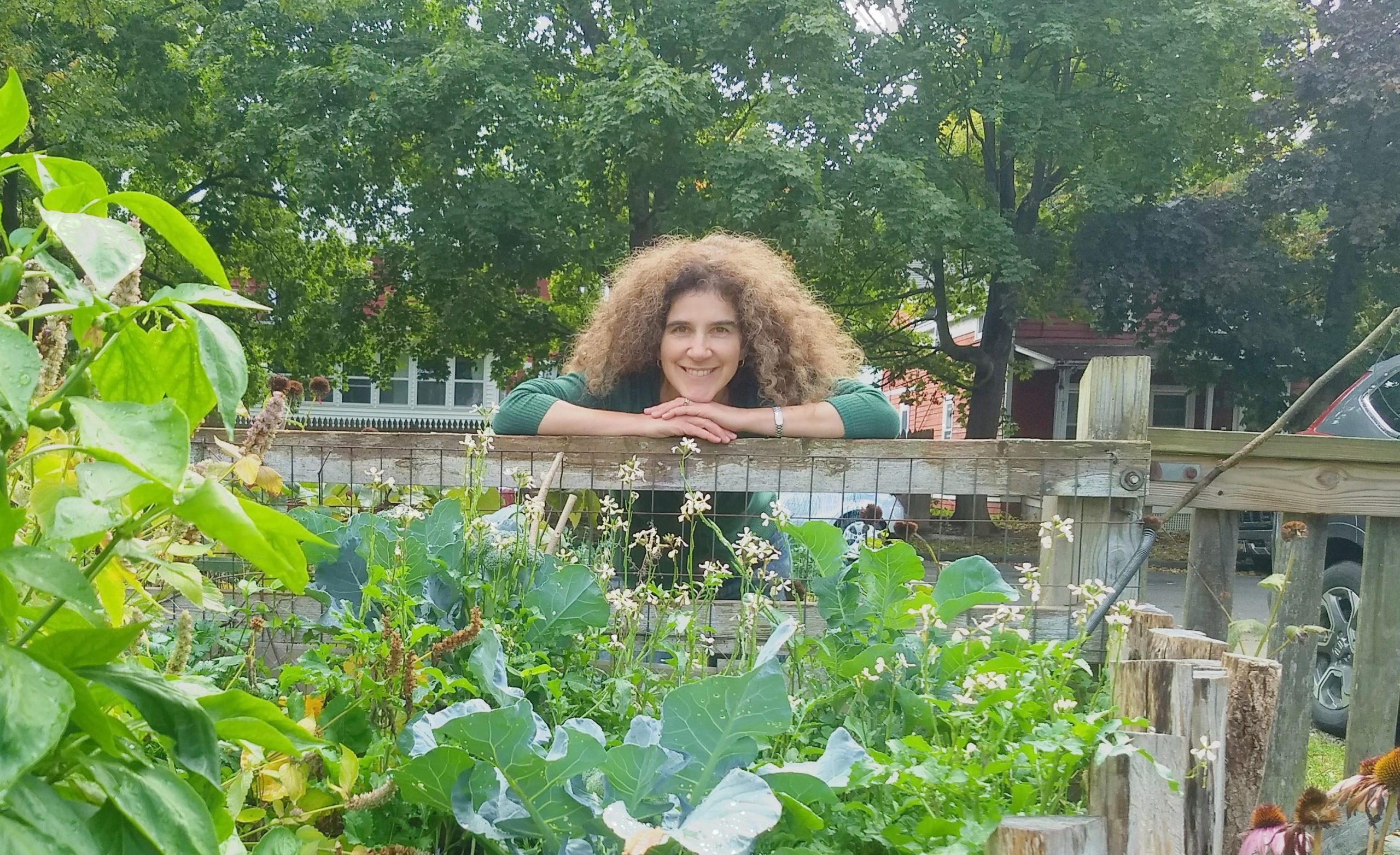
After growing up in San Diego, Miranda Phillips was surprised by how connected she became during her college years at Cornell University. Leaving Cornell, she and her husband, Bobby Kleinberg, spent eight years in the Boston area working and completing graduate school. They returned happily to Ithaca in 2006 for Bobby’s position as a Cornell computer science professor.
Though her background was in teaching elementary school, Miranda was concerned about how climate change would impact her young children, so she shifted to advocacy. She was excited to find Citizens’ Climate Lobby (CCL), a volunteer organization that advocates bipartisan federal solutions to reduce emissions at the pace and scale needed without hurting low- or middle-income people.
When Miranda co-founded a local chapter here, CCL had 10,000 supporters nationwide. Seven years later, there are now 200,000 supporters in 60 countries around the world.
Miranda’s Southern Finger Lakes Chapter fosters conversations with community leaders about national climate policies. She encourages these leaders to share their climate concerns and wishes with our federal legislators.
In response to this outreach, 25 Finger Lakes wineries (including household names like Sheldrake Point, Lucas Vineyards and Dr. Konstantin Frank) have endorsed a bipartisan federal climate bill, the Energy Innovation and Carbon Dividend Act.
Others have joined them, including the NYS Brewers Association and 19 municipalities across the political spectrum. The response from local leaders has been so heartening, Miranda feels newly hopeful.
“As CCL leadership tells volunteers again and again, climate can be a bridge, not a wedge,” she said. “There is yet hope for the climate and for bipartisanship.”
As Miranda moves forward on CCL projects, she also plans simple, fun, climate-friendly family projects she, Bobby and their children Julia, 11, and Will, 8, can do together. After moving to Fall Creek, Miranda and her family designed a play structure using local materials for their compact yard.
“A friend told us about a field of Black Locust trees slated to be cleared,” she said. “The owner generously delivered the trees to our yard. We hosted several barn-raising parties with friends and neighbors to construct teepees, swings and [a] bridge over a fishpond. Our kids and their friends are often seen swinging and talking in the yard. Having outdoor playing space, built from sustainable, local sources gives us great pleasure.”
When Julia wanted to include cats in their family, neighbor Tom Shelley, who knows lots about composting and cats, offered a handout prepared for Cornell Cooperative Extension to explain how to compost cat poop safely and divert it from our landfill.

Animal refuse, like any organic matter, produces climate-harming methane emissions if sent to the landfill where it can’t decompose naturally. If your compost bin can be far from food and play areas, cat poop compost can be safe, simple and enriching for inedible plants.
Don’t have a large enough yard? Perhaps a rural friend wouldn’t mind taking your cat’s poop if you ask nicely enough or offer some other kindness in return.
Miranda also has another sustainable hack that she practices. Tired of mowing? Over the years, Miranda has also buried her grass bit by bit.
“We cover the grass with free cardboard which neighbors provide by setting out recycling,” she said. “We spread wood chips over the cardboard, which city workers share freely as they trim trees near electrical wires each year. We see how much fun it is to use what is available while reusing cardboard, so less will require recycling. By mowing less, we save money and energy (our own energy and the planet’s) and add no emissions to the air we all breathe.”
In the spring, Miranda has rich soil in place of the grass.
“And there, slowly but surely, we’ve grown more and more food instead,” she said.
This includes currants, raspberries, pawpaw, cold-hardy kiwi, sorrel, strawberries, blackberries, native persimmon, chinkapin (a native bush chestnut), thimbleberry, hostas, goumi berries and amaranth, in addition to hedges of bush cherry and hazelnuts.
“Look for us on the Fall Creek garden tour one of these years,” Miranda said. “We want to share what’s easy, tasty, perennial, native, locally available and maybe even makes you say, ‘I didn’t know you could grow that in an urban backyard!’”
Miranda offered some final reflection on all her activities.
“The devastation climate change is causing — wildfires, hurricanes, local flooding and drought — is immense and scary,” she said. ”I’ve responded by finding ways to help that also bring me joy — nationally and in my backyard — and it’s keeping me hopeful. I invite you to do the same.”
Related Articles
Cayuga Medical Center nurses to rally, alleging anti-union tactics by hospital management
CMC nurses plan a rally, alleging unsafe staffing and illegal anti-union tactics as the hospital highlights recent patient-safety gains.
AmeriCU proudly connects students with annual scholarship opportunity
AmeriCU scholarship program awards $1,000 to students pursuing college or vocational education. Applications are open through March 15.
Street Beat: What’s one of the best holiday gifts you ever received?
We asked five random people. Here’s what they had to say.