
Community Recovery Fund set to open for applications this fall
Back in September, the Tompkins County Legislature announced that it had approved the “use of up to $7 million of the county government’s unassigned fund balance to fund a Community Recovery Fund Program” (tinyurl.com/y9velyt5). After almost a year of trying to work out the logistics, the program is nearly ready to launch, with the first round of applications set to open this fall.
We spoke with county leaders involved in the process to help break down what the program is and what’s been done in the year since it was first announced.
How we got here
After the program, currently titled the Community Recovery Fund (“Tompkins Community Recovery Program” in the draft document), was announced, the next announcement came out in October, when the Legislature issued a request for proposals to bring on a consulting firm to help draft the program (tinyurl.com/2878ha57).
In the interim, the Legislature announced that the total amount of the fund had been shifted to $6.53 million, with “some funds being taken out to support over-target requests in the 2022 budget” (tinyurl.com/29sj7yp5). The fund balance has not changed since that update.
In January, County Administrator Lisa Holmes announced that four applicants answered the county’s request for proposals, and the Legislature finalized its decision this April, bringing on the consulting firm MRB Group (tinyurl.com/27dr9yar).
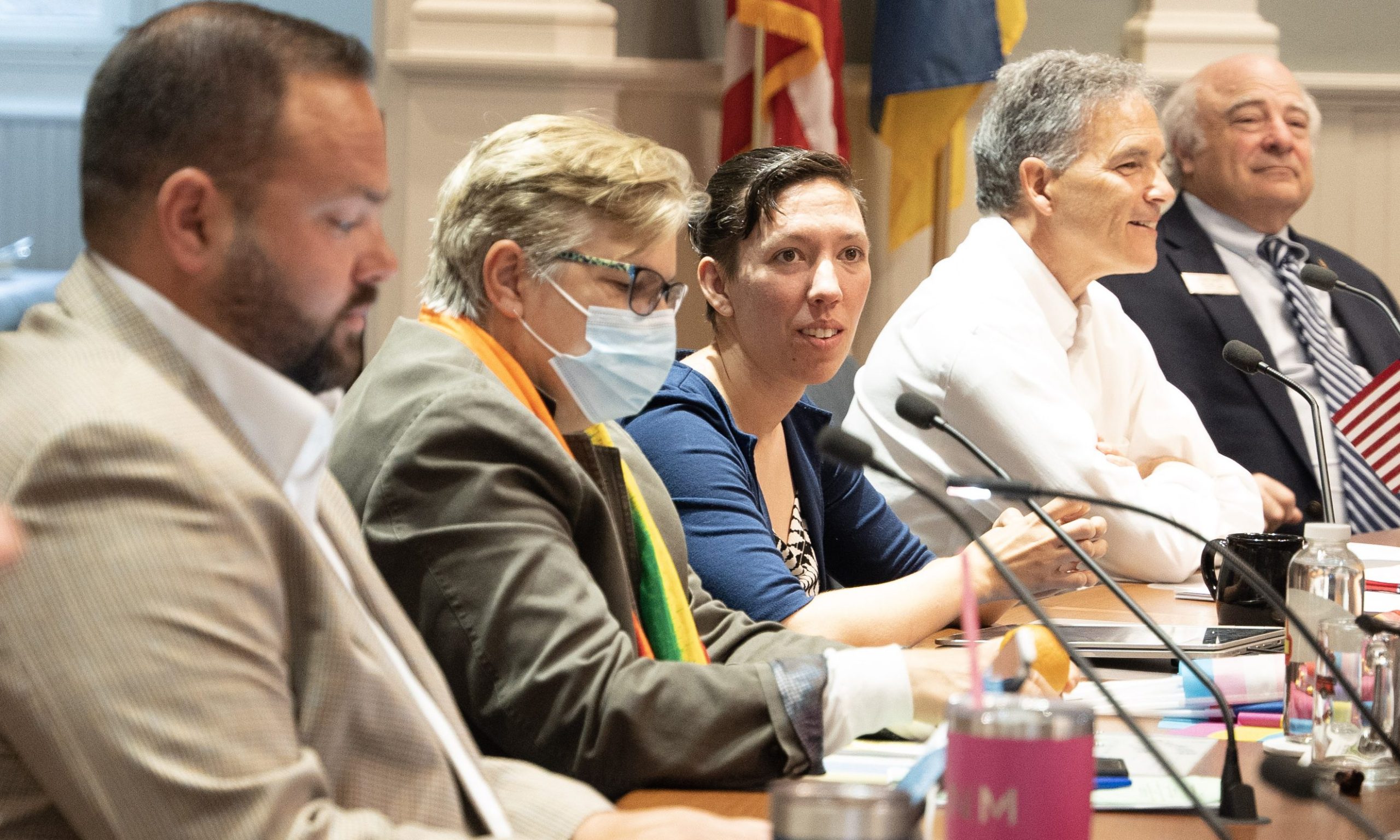
In May, the Legislature announced the creation of a Recovery Advisory Committee, a group of legislators tasked to work directly with MRB Group in drafting the program (tinyurl.com/22m3xcym). The committee is chaired by Legislator Dan Klein, with Legislator Lee Shurtleff serving as vice chair and legislators Shawna Black, Anne Koreman and Veronica Pillar as the remaining members.
In June of this year, the Legislature voted unanimously to authorize the use of $6.53 million of American Rescue Plan Act (ARPA) funds — versus the previously allocated funds from the county’s fund balance — to support the program (tinyurl.com/257apz6n).
“We actually were going to do it in house, so it was money directly from the county,” Koreman explained. “And then, we found out as we’re going through the process and waiting this long time to do it that going through the ARPA process, the American Rescue Plan avenue, that actually is going to be less restrictive than what we can do so that we can open it up some more for organizations in the community.”

That brings us to this month, when the Recovery Advisory Committee held its first meeting Aug. 1 (full recording available at tinyurl.com/26wol8ap). The meeting primarily centered around discussions among committee members, along with other community leaders, regarding the draft program’s (view at tinyurl.com/2csw3rae) guidelines, which will be adjusted in the coming weeks in accordance with the feedback provided during that meeting.
“Most of the discussion at Monday’s meeting was about the system of points that the contractor was proposing,” Legislator Deborah Dawson said. “You have to have some more or less objective criteria for awarding these things so that the public and the people who apply for these grants, whether they get them or not, understand why they were successful and why they weren’t and why we made the decision.”
Also during that meeting, MRB Group announced a schedule for the program, with applications for the fund set to open this fall with awards granted at the start of next year. The Recovery Advisory Committee is set to meet again later this month and then will meet monthly for another few months to oversee the program as it is carried out.
“We’re going to take all that feedback, come back next time with a revised packet of guidelines and see if the committee will vote yes on that, which I … predict we will because we really weren’t that far off from [it] already,” Klein said. “We [had] a lot of agreement. So, as soon as we do that, then the program is launched. And then they immediately begin to publicize it and get everything ready for its final form.”
The program
As it stands in its draft form, the Community Recovery Fund will primarily seek to fund projects that attend to the short- or long-term impacts of COVID-19; respond to diversity, equity, inclusion and justice needs and impacts; build long-term capacity of local communities; support local nonprofit organizations and small businesses; and address long-term, critical needs and identified gaps in local services like child care, job training, affordable housing, broadband expansion, etc.
“These were already problems that got worsened by the pandemic and also highlighted by the pandemic,” Pillar said. “There were some new … things specific to COVID-19, but a lot of the problems [we] may be thinking about when we think about pandemic recovery, they already existed for years, and so, it’s like, yes, it’s been two years [since shutdowns], but we’re looking at issues that are of just a much bigger magnitude than a couple years.”
According to the draft, grants will be awarded in three categories: $10,000 to $25,000, $25,001 to $250,000 and $250,001 or more. Matching funds aren’t required, but projects “that are able to leverage additional sources of funding will be scored more favorably,” per the draft.
Klein added that those involved are working to make the application process as easy as possible to serve organizations that may not have been able to benefit from other forms of aid due to onerous application processes.
“One thing that we’ve talked about since the beginning as we formed this is that we know that there’s organizations and agencies in Tompkins County that are really good at getting grants, and good for them, and we support them,” he said. “But we want to make sure that some of the other, maybe smaller not-for-profits and maybe small businesses that don’t usually compete in the grant world have a shot at getting these funds too.”
Looking forward
Overall, sources expressed general optimism for what’s ahead, especially considering it’s taken nearly a year to get to this point. Holmes, for example, said that county administration has fielded many questions from residents about the program over the past several months, so she’s glad to finally see this come to fruition.
“Understandably, people have been wanting more details, and we have been working through our process here to make sure that we’ve gotten it right,” Holmes said. “I know that some people would have liked to have seen it sooner. And at the same time, there were a number of details that we needed to make sure we worked out including the source of funding, which we changed up midstream.”
Sources acknowledged that $6.53 million isn’t nearly enough to address all the needs the county has right now, including the numerous lingering effects of the pandemic, but it can make a difference for a lot of organizations and projects. Some legislators also expressed hope for continued community support well after the Community Recovery Fund concludes.
“If it works, I would love for us to look for a longer-term, structural funding source so we could continue it because this is not just a way to get some money into the community, but to get the community to think really hard about, ‘How do we transform where are we now? Where do we need to go?’” Legislator Rich John said. “And that shouldn’t just be the province of government. It’s, I think, a good, healthy development if you get community members understanding that there’s a mechanism for sort of grassroots thinking about what should we do.”
In the meantime, sources encourage residents to continue looking out for updates on the program and offer their feedback on the current draft of the program.
“I hope folks come sooner rather than later, if they have any input, to help us make this process easier for them or more fair for the community,” Koreman said. “And so, please reach out as soon as possible so that we don’t get too far into it and then realize that it’s not meeting some needs in the community.”
For more information about submitting public comments to the Legislature, visit tinyurl.com/239hm7bp.
Jessica Wickham is the managing editor of Tompkins Weekly. Send story ideas to them at editorial@VizellaMedia.com.
Related Articles
Holiday traditions bring community cheer
Tompkins County holiday traditions light up homes, farms, and schools with festive cheer and community spirit.
The gift of an experience: Local businesses offer hands-on holiday fun
Holiday experience gifts in Tompkins County include candle making, gourd crafts, and pottery workshops for creative seasonal fun.
Code Blue shelter opens amid praise, concerns and ongoing debate
Ithaca’s Code Blue shelter opens with larger space, showers, and case management to help residents during cold weather.