Cornell ash tree removal makes progress
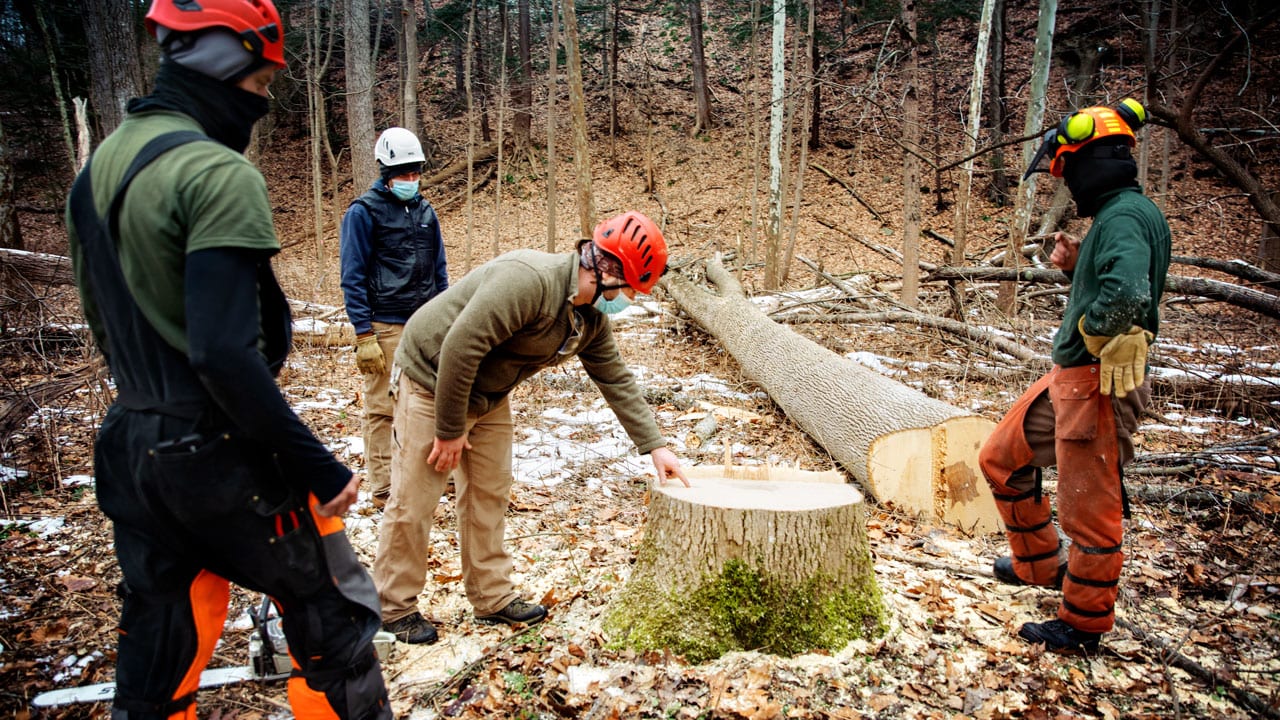
This month, Cornell University began the process of removing more than 1,700 of its ash trees — which have been infested by an invasive species, the emerald ash borer — and planting additional trees to replace them.
The project, meant to reduce potential harm to residents, natural areas and property, is set to last through March of this year. As Todd Bittner, director of natural areas for Cornell Botanic Gardens, explained, Cornell staff and others have already made significant progress, and he’s hopeful that success will continue.
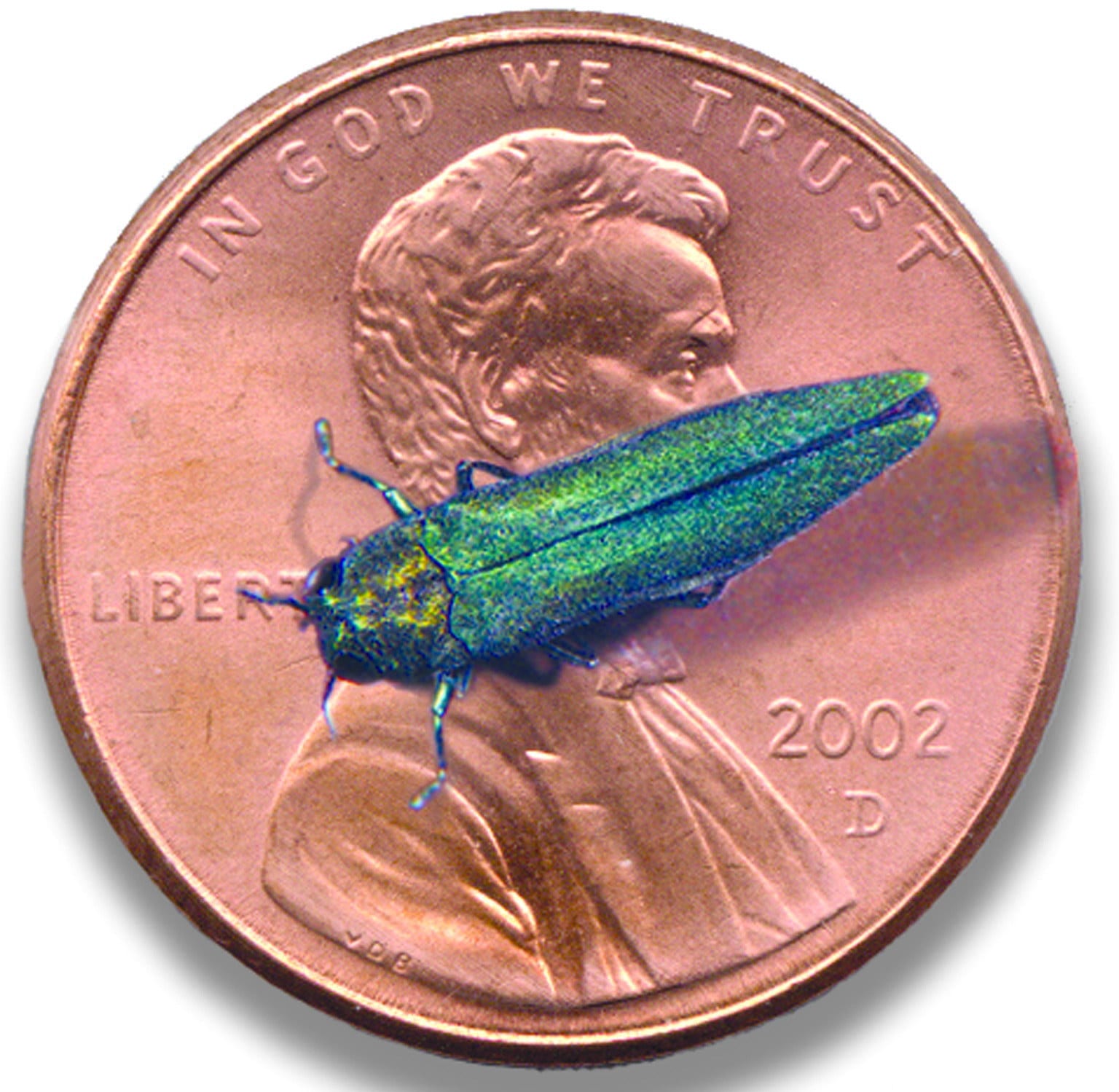
According to the Cornell Chronicle late last month, the emerald ash borer (EAB) has long devastated ash trees throughout the country and was first detected in Tompkins County in 2018 in Cornell’s Arnot Teaching and Research Forest.
The insect poses a large threat not just to the trees it infests but also to the surrounding area, as Bittner explained.
The beetle’s larvae feed on the inner bark of ash trees, the Chronicle reported, which disrupts water and nutrient flow, eventually killing a tree in three to four years. After that tree dies, it falls, which poses a safety risk to surrounding property and residents.
“Because it is a lot more difficult to cut down a dead tree or a half-dead tree than one that’s still alive, it’s a lot safer for the folks taking it down to do it earlier than later,” Bittner said. “And it’s obviously safer for what is considered the target, if you will — what the tree could strike on — if you get it down on the ground sooner.”
Beyond that, because about 30% of all trees in state forests are ash trees, losing ash trees to the EAB will greatly affect natural areas, Bittner said.
“A lot of the areas in New York had been cleared previously for agriculture and then abandoned and allowed to grow back,” he said. “Those prior, converted agricultural lands have a huge amount of ash, and losing those is going to create a lot of changes, significantly increasing the amount of light that’s available below and changing, obviously, the species composition as a result.”
Removing the infested ash trees will similarly thin county forests and natural areas, Bittner explained, which is why Cornell Botanic Gardens also launched the Future Forests Initiative, a fundraising effort to plant trees that will be more resilient to future climate changes and will replace the dead ash trees.
“We actually started this effort a year ago, knowing what we were faced with,” Bittner said. “With donations that we’ve received already, we planted 200 trees this past year. And that’s despite the pandemic. So, I think we’ve been off to, I would say, a very solid start in that effort. … We’re not just starting this today, and we’ve already made tremendous progress.”
The latest ash tree removals are part of phases 2 and 3 of Cornell’s EAB Action Plan to manage thousands of on- and off-campus ash trees infested with the insect, the Chronicle reported.
Phase 1 of the EAB Action Plan began in 2019 and continued through 2020. In this phase, Cornell staff treated 172 high-value trees with pesticides in various campus areas, an expensive process that must be repeated every two to three years.
In phase 2, ongoing, contractors hired by the university will remove infested off-campus trees in high-priority areas adjacent to private property, including the Ithaca Tompkins International Airport, Varna, Ellis Hollow and Baker Hill, according to the Chronicle.
Concurrently with phase 2, phase 3 of the action plan takes place in campus natural areas in two stages. The first includes the removal of 505 trees by contractors, and the second includes the removal of up to 300 trees by university staff. Future phases will be required to address all of the over 3,800 ash trees identified as high-risk trees.
Removed trees will either be left in the woods or processed to be turned into compost or firewood, Bittner said.
Bittner explained that the EAB Action Plan was the result of years of preparation by campus staff and partners.
“We had a lot of information and plans in place in anticipation of emerald ash borer showing up,” he said. “After 2018, what we really needed to do was to come up with a prioritized approach for how we were going to address it based on how fast emerald ash borer was spreading and where.”
Phase 1 was purposely made to be a small step to allow for adjustments based on experience, Bittner said. With phase 1 over, phases 2 and 3 are at a significantly larger scale, making them a much more complicated undertaking.
While the action plan began well before the pandemic hit the county, COVID-19 hasn’t significantly affected progress, Bittner said.
“The good thing is it’s outdoors, which is the safest place to work under the pandemic conditions, and as long as folks are keeping their distance or wearing masks if they’re in close proximity to each other, it doesn’t pose that significant of a risk for that,” he said.
In addition, the weather has been favorable for workers’ efforts so far.
“Binghamton got 42 inches of snow. Obviously, something like that would definitely impact our ability to complete what work we have to do,” Bittner said. “Right now is actually ideal conditions for us. It has been in the 20s and lower 30s, with a little bit of snow, but not something that precludes us from doing work. So, we’ve been very fortunate so far in terms of the weather cooperating with us.”
While the action plan includes the removal of hundreds of ash trees, some infested trees will remain untouched. As Bittner explained, many of the trees not scheduled for removal are in Cornell outdoor classrooms or research areas.
“It provides opportunities for studying how the forest changes over time in response to losing one of its primary species, so, in that way, it can still serve the academic purpose,” he said. “If we were to go in there and, say, log those areas, [that] could create a lot of additional disturbance that isn’t natural to the system and negatively impact the future value of those forests for academic use.”
Moving forward, Bittner cautioned that EAB should act as a cautionary tale for the effects invasive species can have on the county.
“Emerald ash borer is just the most recent out of several invasive species that have been negatively impacting our forests,” he said. “As a society, we really need to reevaluate how all of these invasive species are arriving in our local areas and what the impact is. We can’t continue to allow more and more in here, or the integrity of our natural systems will just fall apart.”
For now, Bittner advised residents to inspect ash trees on their property for signs of EAB, as “it’s more likely that you have emerald ash borer in your tree than not.”
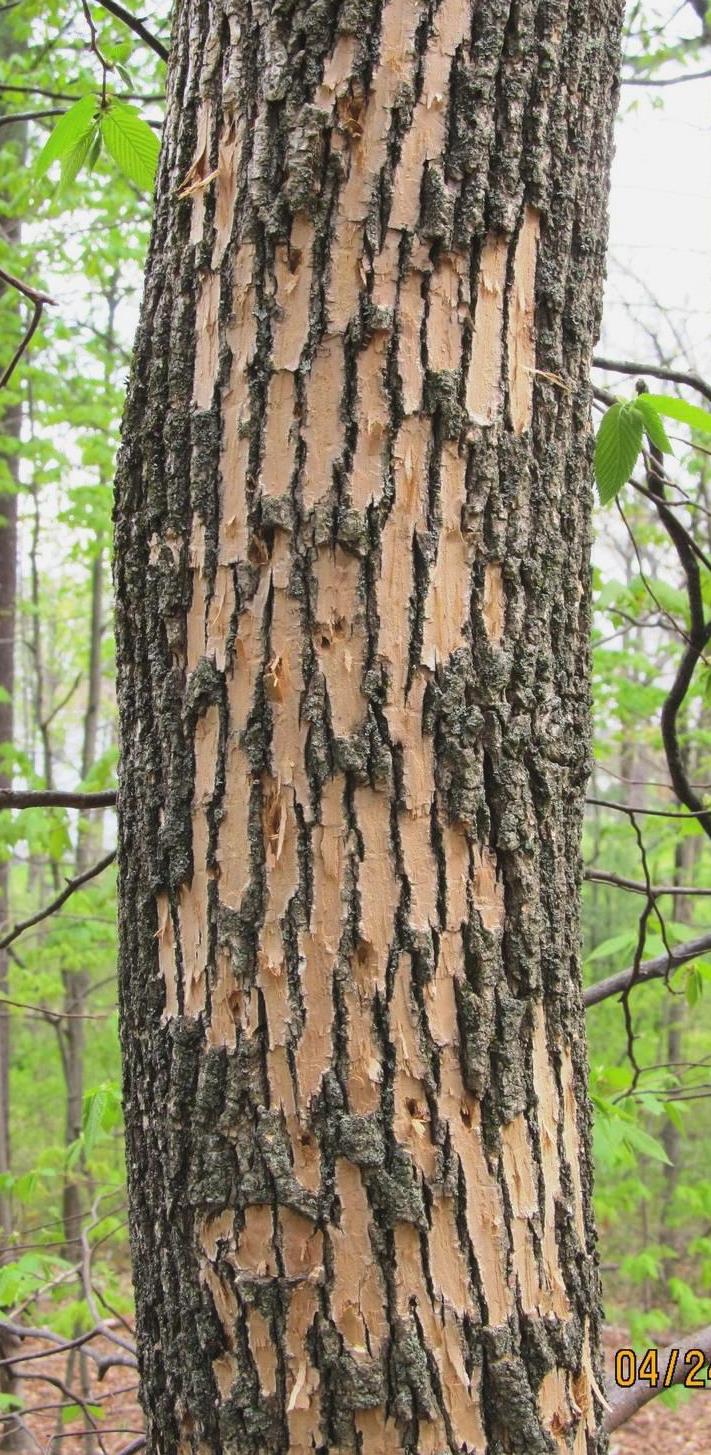
Generally, the infestation starts toward the top of the tree, which makes the D-shaped entry point hard to see. So, Bittner suggests looking for other signs of infestation, like woodpecker damage or blonding, where the bark has been peeled off and the lighter wood below is exposed.
If you suspect a tree on your property is infested, visit the Cornell Cooperative Extension of Tompkins County at ccetompkins.org or https://t.ly/4z0b.
Additional information on Cornell’s ash tree removal efforts can be found at news.cornell.edu/stories/2020/12/cornell-removing-ash-trees-replanting-effort-launches. To donate to the Future Forest Initiative, visit cornellbotanicgardens.org/conserve/plant-conservation/future-forests-initiative.
Related Articles
Quantera’s new tech promises faster, safer chemical testing
Quantera Analytical is developing faster, safer chemical testing technology in Ithaca with roots at Cornell University.

“A Silent Force”: Gail Belokur brings creative leadership to the United Way
Gail Belokur, a Hometown Hero, brings compassionate and creative leadership to the United Way of Tompkins County.